The latest analysis of 12.7 million U.S. death records across 503 occupations finds flight attendants have the highest share of radiation-related cancer deaths, with pilots second. Researchers link the pattern to increased cosmic ionizing radiation at flight altitudes—aircrew are estimated to receive ~3–6 mSv/year—while noting the study is observational and does not prove causation. Experts recommend enhanced medical monitoring and consideration of occupational dose protections for aircrew.
Study Finds Flight Attendants Face Highest Share Of Radiation-Linked Cancer Among 500+ Jobs — Pilots Second

(Hinterhaus Productions/DigitalVision/Getty Images)
New research analyzing U.S. death-certificate data finds that flight attendants have the highest proportion of radiation-related cancer deaths across more than 500 occupations, with pilots ranking second. The analysis, led by Vishal Patel of Harvard Medical School and published in JAMA Internal Medicine, highlights cosmic ionizing radiation at commercial flight altitudes as a likely occupational contributor.

YouTube Thumbnail
What the Study Did
The investigators examined 12.7 million death records from the U.S. National Vital Statistics System for deaths occurring between 2020 and 2024, covering 503 occupations. They divided cancer deaths into those plausibly linked to environmental ionizing radiation (including breast, thyroid, prostate cancers, multiple myeloma, leukemia and melanoma) and those less likely to be radiation-related, then ranked occupations by the proportion of radiation-associated cancer deaths.
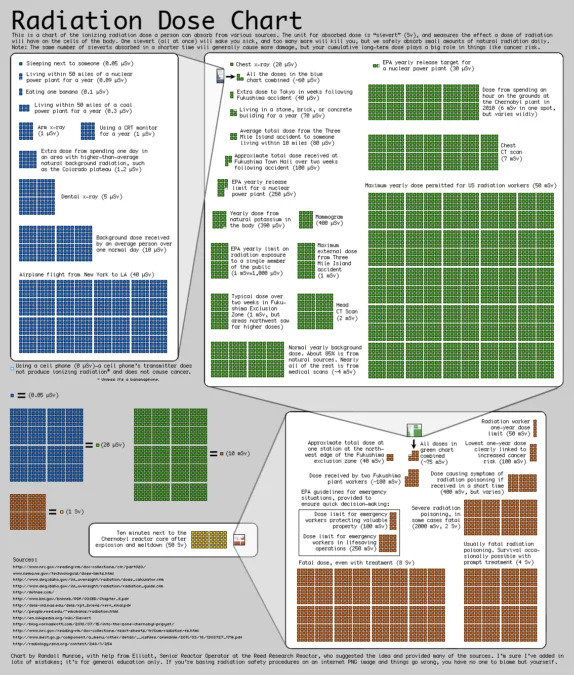
(XKCD, public domain)
Main Findings
Flight attendants had the largest share of radiation-related cancer deaths, followed by pilots. In the study’s comparisons, flight attendants were about 50% more likely and pilots about 36% more likely to die from radiation-associated cancers than workers in other occupations included in the analysis. By contrast, these aircrew occupations were near the median for non–radiation-related cancer mortality.
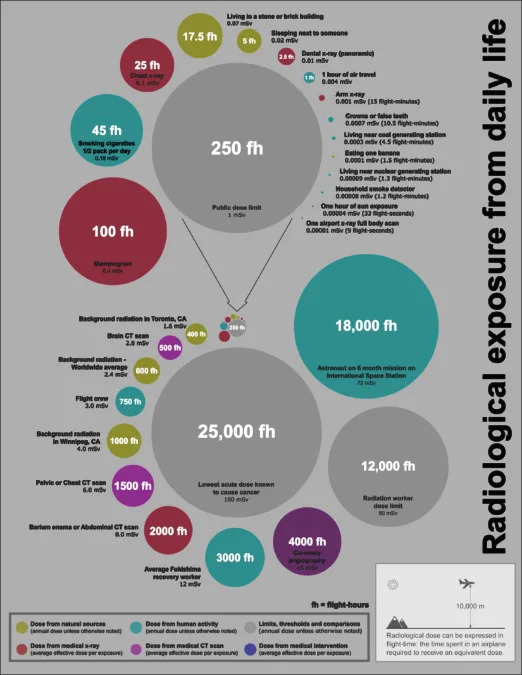
We are exposed to different sources of radiation in daily life, but some activities, occupations, and procedures involve greater exposure. (Wolfpaw98/Wikimedia Commons/CC BY-SA 4.0)
“Aircrew members receive the largest mean annual effective dose of ionizing radiation of any occupational group in the US, primarily due to cosmic rays encountered at commercial flight altitudes.” — Patel et al.
Why Aircrew Are At Risk
Cosmic ionizing radiation increases with altitude and with flight hours; atmospheric shielding is reduced at cruising altitudes and at higher latitudes. The authors cite estimated annual doses for aircrew of roughly 3–6 millisieverts (mSv) per year, compared with about 0.4 mSv for a frequent ground traveler taking ~10 cross-country round trips annually.
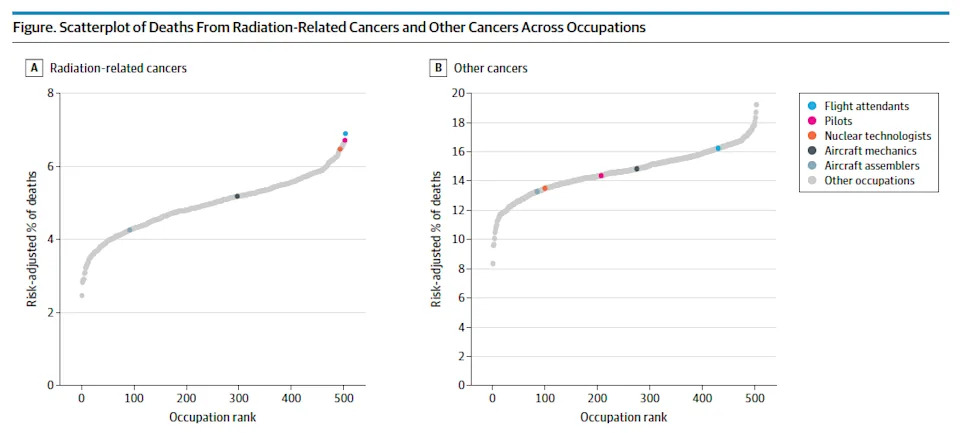
Flight attendants and pilots ranked first and second for radiation-related cancer deaths (left), above nuclear technologists. Aircraft assemblers and mechanics who are not exposed to air travel and cosmic radiation served as a negative control group. (Patel et al.,JAMA Internal Medicine,2026)
Other Factors, Controls, and Limitations
The team used aircraft assemblers and mechanics (who do not routinely fly) as a negative control group to help separate risks from flying versus other occupational exposures. Commentators not involved in the study note that additional occupational hazards—such as ultraviolet exposure through cockpit windows and circadian rhythm disruption from night and shift work—might compound risks.

Subscribe to ScienceAlert's free fact-checked newsletter
Important limitations remain: the analysis is observational and based on death-certificate data, so it cannot prove causation. The pattern of radiation-associated cancers is, however, consistent with an occupational radiation effect and supports further study and protective action.
Implications and Recommendations
- Experts suggest enhanced medical monitoring for aircrew, including documentation of cumulative flight years, regular skin checks and appropriate breast screening for female crew.
- The authors note a regulatory gap: the U.S. Federal Aviation Administration recognizes aircrew as occupationally exposed to ionizing radiation, but U.S. aircrew are not subject to federal dose limits or mandatory monitoring comparable to protections in some other countries.
- The findings support consideration of occupational radiation protections for aircrew commensurate with their exposure levels and call for more research into causal pathways and mitigation strategies.
Source: Patel et al., JAMA Internal Medicine (analysis of U.S. National Vital Statistics System death certificates, 2020–2024).
Help us improve.