A Nova Scotia parent discovered her Grade 2 child had been assigned a school Google account for three years without parental knowledge and was told it could not be deleted because educational apps depended on it. Educators and parents warn that unsupervised or excessive device use can lead to off-task behavior, attention problems and privacy risks. Some jurisdictions, including parts of the U.S. and Scandinavia, are limiting device use or returning to physical textbooks for younger students. Experts recommend age-appropriate, purpose-driven technology use, stronger privacy rules and better teacher training.
Nova Scotia Parent Says Child Had School Google Account For Three Years, Sparking Debate Over Classroom Screens

Photo Credit: iStock
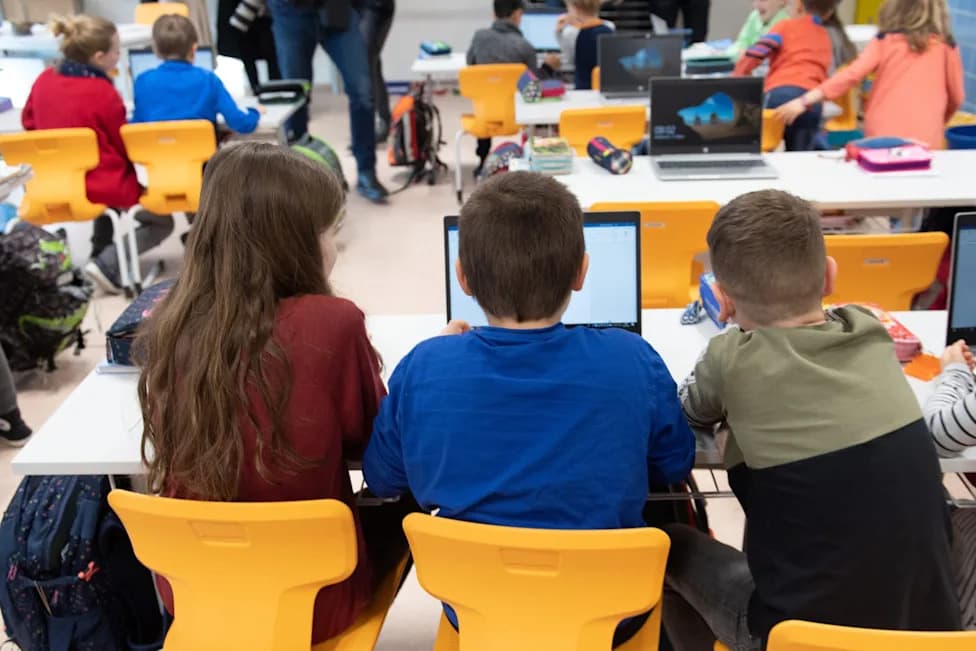
A Nova Scotia parent and substitute teacher says she was stunned to learn her daughter had been assigned a school Google account three years earlier without the family's knowledge. The discovery has renewed debate about mandatory school accounts, classroom screen time and student privacy.
What Happened
According to CBC News, Kim Herrick found out her daughter, now in Grade 2, had a school Google account created when the child was in kindergarten. Herrick said she was unable to access or delete the account and that school staff told her removal or refusal was not possible because multiple educational apps relied on the account and it was considered "a requirement" for learning.
"We do not need a Google account to learn," Herrick said.
Concerns From Parents and Educators
Herrick, who occasionally substitutes at middle and high schools, also reported observing students using school devices for activities unrelated to lessons, including social media, online shopping, gaming and even cryptocurrency trading. Such off-task use has alarmed parents, educators and privacy advocates who warn about behavioral impacts, reduced attention spans and potential privacy risks from school-managed accounts and third-party educational apps.
Expert Views and Policy Responses
Johanathan Woodworth, an assistant professor at Mount Saint Vincent University in Halifax, cautioned that technology can boost engagement at first because of a "novelty effect," but that this benefit often fades. "The first step is to think about, 'Do I even need to use it? What is the purpose of me using it? Does it actually help me in my classroom?'" he said.
Tom D'Amico, an education consultant and former head of education at the Ottawa Catholic School Board, said schools must prepare students for a digital world while ensuring device use is intentional and not a distraction. He recommended limiting early-grade device time, teaching AI literacy and digital citizenship, and giving teachers clear guidance and training on technology use.
Broader Trends
Some jurisdictions are already scaling back device reliance. In the United States, the Los Angeles Unified School District has set screen-time caps across grades, and New York has limited one-to-one device programs for Grade 2 and younger students. In Europe, Norway and Sweden have moved to reintroduce physical textbooks and reduce screen time for younger learners.
What Parents Should Know
The episode raises broader questions about parental consent, transparency and the governance of school-issued accounts. Experts and advocates call for clearer policies on account creation, stronger privacy protections for student data, age-appropriate technology plans, and improved communication with families about what tools students are using and why.
As districts balance digital readiness with developmental needs, many leaders emphasize that technology should support, not replace, classroom relationships: "What's the number one technology in a classroom? It's the student and their brain," said D'Amico.
Help us improve.