In 1998 Brad Lancaster illegally sawed six channels into a Tucson curb to divert rain into streetside basins. Over decades, that simple retrofit helped create a connected, rain‑irrigated "food forest" that cools streets and yields edible plants. Tucson later formalized the approach with its Storm to Shade program, rebates for homeowners, and updated construction standards that require rainwater harvesting in many new projects.
How One Man’s Illegal Curb Cuts Turned Tucson Into A Model For Urban Rainwater Harvesting
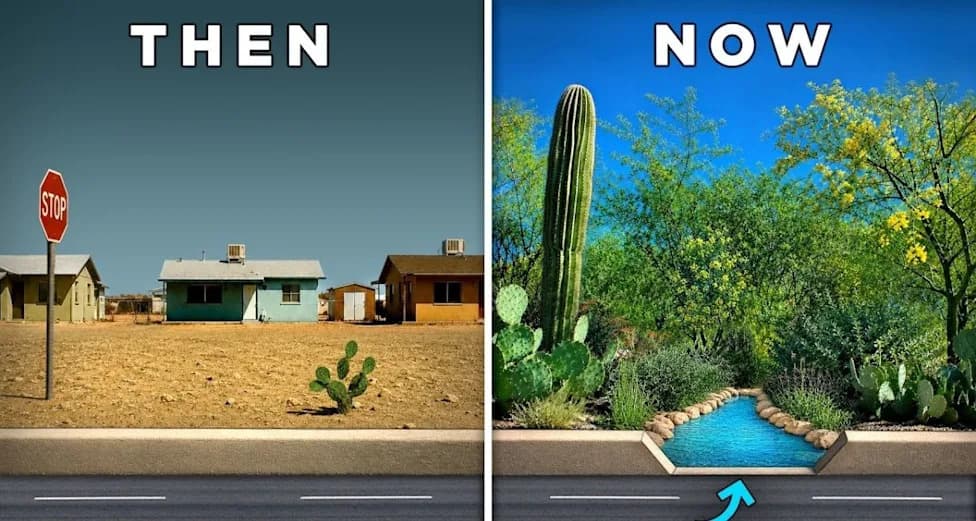
Rainwater harvesting has transformed a Tucson neighborhood into a thriving ecosystem.
In a hot desert city that receives only about 11 inches of rain per year, every drop counts. In 1998, Tucson resident Brad Lancaster took a handsaw to the curb in front of his house and created six channels that diverted stormwater from the street into the planting strip between the sidewalk and the road. What began as an unsanctioned, DIY experiment helped reshape neighborhood landscapes and eventually influenced city policy.
From Guerilla Curb Cuts to Thriving Streetscapes
Lancaster's curb cuts moved water away from storm drains and into soil, where native trees and plants could use it. For nearly three decades, those simple channels helped establish a connected system of streetside basins and swales that capture successive flows of rain. Each basin supports plantings—many native and many producing edible flowers, fruit or seeds—creating a shaded, cooler street and an informal neighborhood food forest.
"This is the neighborhood rain‑irrigated food forest street," Lancaster says. "We're using the street to water the street trees that shade, cool the street, and feed all those living along the street."
Ancient Practices, Modern Application
Rainwater harvesting has deep roots in the region. Indigenous and ancestral communities built canals, earthworks and other landscape features to direct and store water for irrigation. Lancaster and permaculture practitioner Andrew Millison adapted those long-standing techniques for an urban setting, adding earthwork basins (even one in the middle of a roundabout) that capture and retain stormwater for plants rather than sending it away.
From Illegal Act to City Policy
Although cutting curbs was technically illegal when Lancaster began, he kept quiet until the visible transformation of his block made the approach impossible to ignore. Tucson eventually adopted and institutionalized the idea. The city launched the Storm to Shade program to promote rainwater capture and expand the urban tree canopy. Homeowners can receive a $2,000 rebate to add streetside rainwater-harvesting basins, and many new commercial developments and road projects are now required to incorporate rainwater harvesting into their designs.
Blue Baldwin, manager of the Storm to Shade program, credits Lancaster's pioneering work: "The Storm to Shade program truly is the city's adoption and institutionalization and elevation of all of the pioneering work that Brad did over years and years, below the radar but then bringing it to the city. He did it so well with the technology he had available to him. And now we have standard details and construction documents that actually tell construction contractors exactly how to cut a curb."
Why It Matters
Although Tucson gets roughly 90% of its drinking water from underground aquifers and the Colorado River, capturing local rainfall can reduce storm runoff, recharge soils, cool streets, support local food production and strengthen neighborhood resilience. Lancaster's project demonstrates how small, inexpensive changes to public and private landscapes can scale up to citywide benefits.
For more on techniques and design details, see Brad Lancaster's resources at harvestingrainwater.com and Andrew Millison's permaculture videos on YouTube. This piece was originally published in July and has been updated.
Originally reported by Upworthy.
Help us improve.