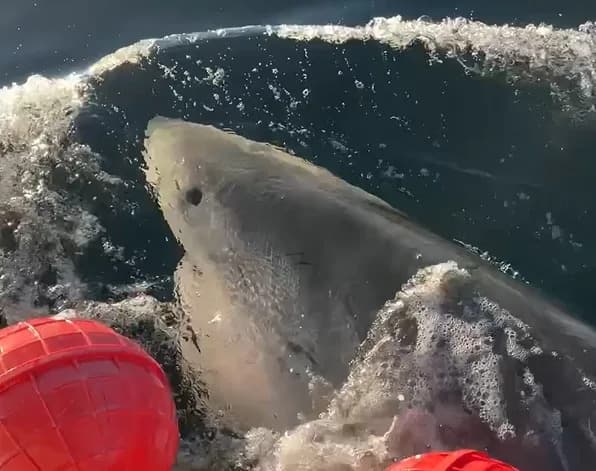
Researchers deploying 32 acoustic receivers in and around Flower Garden Banks National Marine Sanctuary recorded nine tagged white sharks between 2022 and 2025, some traveling more than 2,299 miles (3,700 km) to reach the outer shelf. Detections—mainly from January to August with peaks in spring and summer—were brief, typically under a day, suggesting reefs act as stepping stones in long-distance migrations. Two sharks returned across multiple years to the same seasons, underscoring the potential importance of these offshore waypoints and the need to protect migratory routes as well as isolated habitats.
White Sharks Use Gulf Reefs as Stepping-Stone Highways: New Acoustic Data Reveals Migration Links
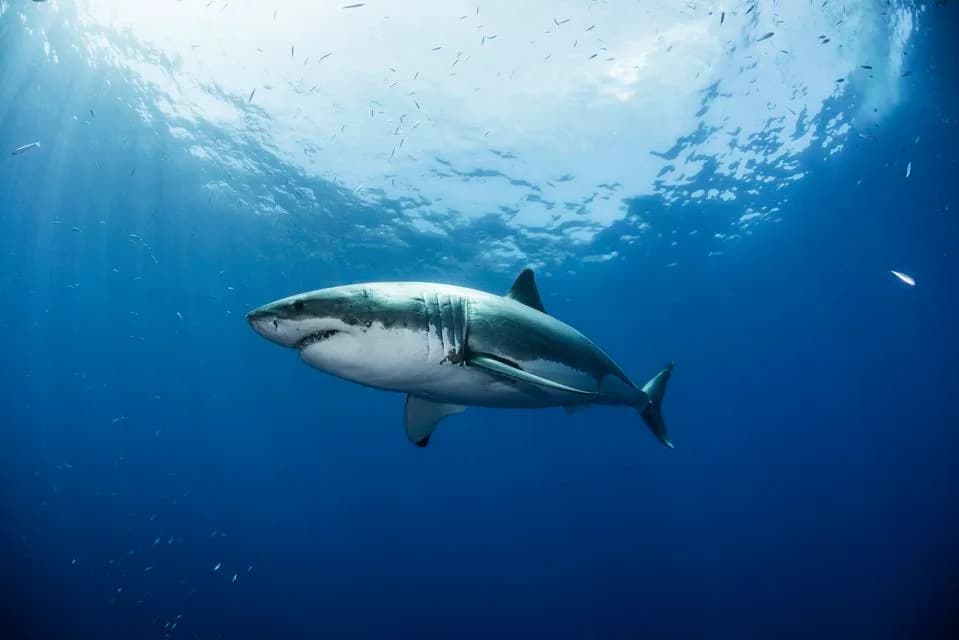
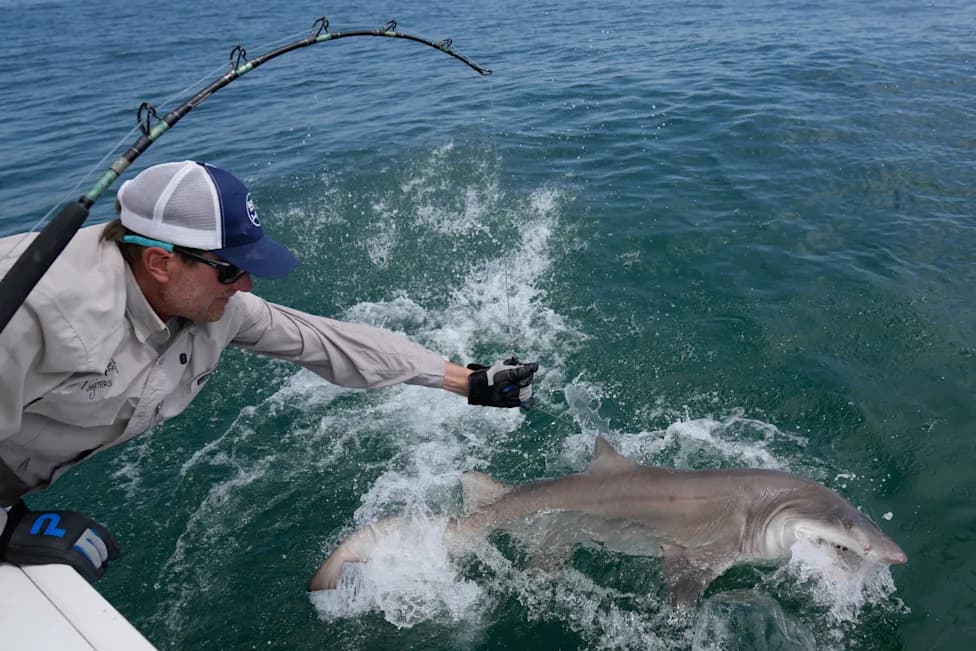
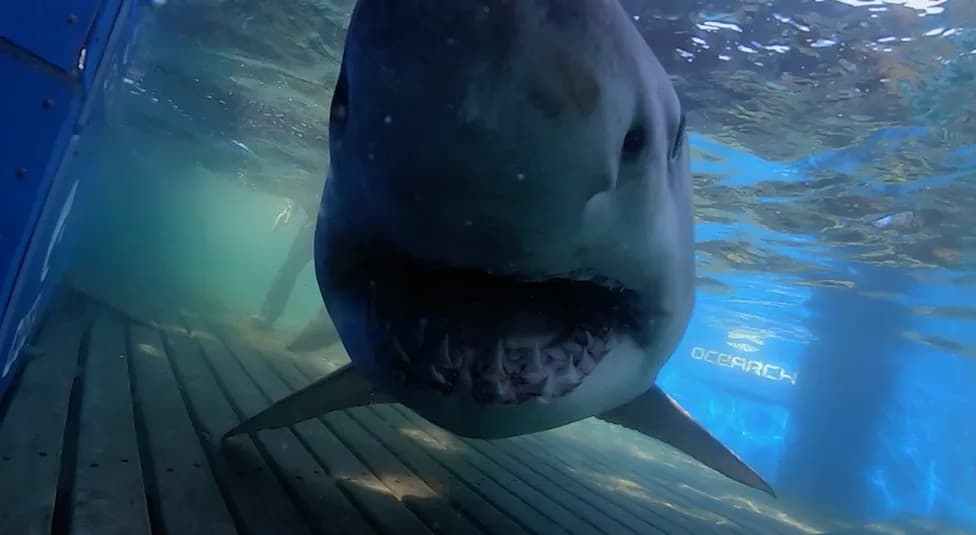
Conservation is often drawn on maps using fixed boundaries, while the animals we are trying to protect move through constantly changing seascapes. For highly migratory species like white sharks, protecting individual habitats may be only one piece of the puzzle. Understanding the connections between those habitats could be just as important.getty
New acoustic detections suggest offshore reefs in the northwestern Gulf of Mexico help connect distant habitats for migrating white sharks. Researchers documented the first confirmed records of Carcharodon carcharias in the Flower Garden Banks National Marine Sanctuary (FGBNMS) and adjacent outer continental shelf, revealing that a network of natural and artificial reefs may act as seasonal waypoints during long-distance migrations.
What Researchers Did
From 2022 to 2025, scientists deployed an array of 32 acoustic receivers across the sanctuary and surrounding outer shelf, positioned at natural banks, artificial reefs, and other structures. Separately, white sharks tagged along the eastern coast of North America—between South Carolina and New Brunswick—carried acoustic transmitters. When a tagged shark passed within range, a receiver recorded its unique signal.
Key Findings
Nine tagged white sharks were detected in the Gulf data. Some individuals had traveled more than 2,299 miles (3,700 km) from their tagging locations to reach the outer shelf. Five sharks were recorded at seven banks inside the sanctuary, including East Flower Garden, Horseshoe, Bright, Geyer, Rezak, Sidner and Alderdice, and others were detected at nearby banks, shipwreck-associated reefs and oil-and-gas platforms.
Detections occurred between January and August, with most observations in spring and summer. Individual visits were brief—no shark remained at a single receiver site for more than a day—consistent with the idea that these reefs function as stepping stones rather than long-term destinations.
Repeated Returns
Two sharks (one male, one female) returned to the Gulf across multiple years during similar seasons: the male was detected each spring for three consecutive years, and the female returned in summer in two successive years. One male’s annual round trip between the Gulf of St. Lawrence and Flower Garden Banks was at least 5,717 miles (9,200 km).
Why This Matters
These detections reinforce that protecting migratory species requires more than isolated reserves: managers must understand and preserve the connections between habitats. Acoustic telemetry—listening arrays that detect passing tagged animals—made these discoveries possible because the receivers were already in place as part of broader connectivity research. The findings suggest the outer shelf banks could be important waypoints when prey aggregate around reefs, though direct links between shark movements and other migrating predators (e.g., bluefin tuna) remain unproven.
Next Steps
Researchers will need to determine what draws sharks to these banks (prey concentrations, environmental cues, or both) and how often and under what conditions the reefs are used. That knowledge can inform conservation strategies that protect both key sites and the migratory corridors linking them.
In short: acoustic receivers revealed a hidden chapter of white shark migrations—one where offshore reefs connect vast ocean regions and may play an outsized role despite only brief shark visits.
Help us improve.