Vineyard workers in Portugal have shifted to night-time grape harvesting to avoid extreme daytime heat linked to climate change. At Herdade das Servas in Alentejo, about 20 workers harvest under headlamps — midnight temperatures near 28°C compared with daytime highs around 40°C. The change, adopted after 2024 trials, protects staff and keeps grapes cooler, delaying fermentation and improving aroma extraction. While experts expect the practice to persist in Mediterranean regions, it is mainly feasible for larger, well-organized estates.
Portuguese Vineyards Turn to Night Harvests to Beat Extreme Heat
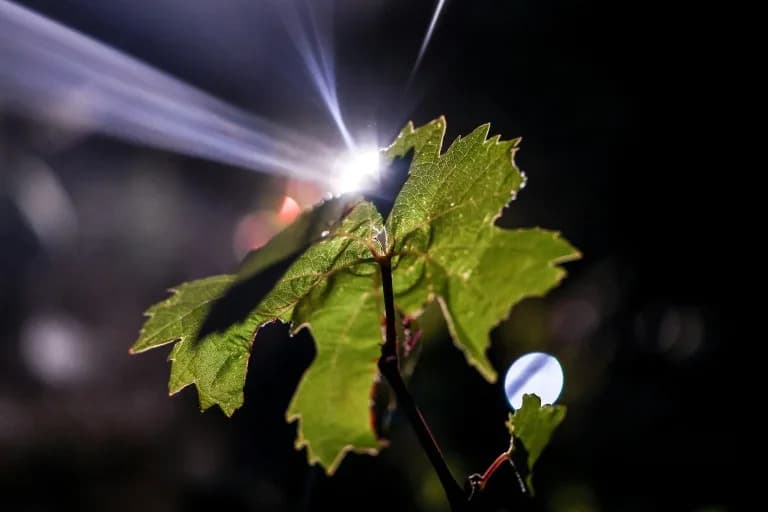
Climate change is intensifying and lengthening spells of extreme heat and drought across Europe (Patricia DE MELO MOREIRA)
Wearing headlamps and carrying pruning shears, teams of vineyard workers now move through pitch-black rows of vines to harvest grapes at night — an increasingly common adaptation to Portugal's intensifying summer heat.
"At night, it's much cooler, and with this light we see the bunches of grapes better," said Maria Jeronima Mendes, 70, who spoke to AFP at Herdade das Servas, a rural estate ringed by dense vine rows. Mendes, who began working in the fields at age 12, is the oldest member of the harvest crew.
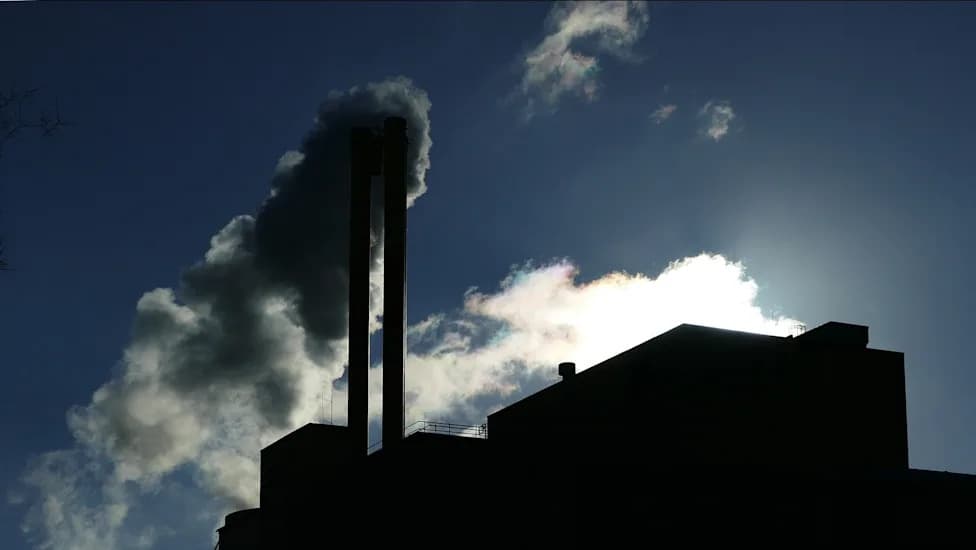
Climate change is producing longer, more severe spells of extreme heat and drought across Europe. The EU's climate monitor reported that western Europe experienced its warmest summer this year and that August was the hottest single month on record globally. Those rising temperatures are forcing wine regions across southern Europe — including Portugal, Spain, Italy and Greece — to change long-standing practices.
Night Harvests: Practical and Beneficial
At Herdade das Servas, a roughly 350-hectare (865-acre) estate about 150 km (93 miles) east of Lisbon, nighttime harvesting was fully adopted last year after a successful trial in 2024. The estate's harvest team of about 20 workers, drawn from Portugal, Romania and Southeast Asia, initially resisted the switch but have largely adapted to the new routine.
Under a clear sky lit by stars and the Moon, temperatures at the estate still reached around 28°C at midnight — substantially cooler than daytime peaks near 40°C that have crept into September as well as summer months. "Nighttime harvesting has become a necessity to spare workers from temperatures of more than 40 degrees," said Renato Neves, the estate's director of production.
Beyond protecting staff, nocturnal picking benefits the winemaking process: grapes arrive cooler and fresher, which delays the onset of fermentation and can improve aroma extraction and overall wine quality. Herdade das Servas produced approximately 277,000 litres of red, white and rosé wine in 2025.
Other Adaptations and Operational Advantages
In addition to changing harvest hours, the estate has stopped removing weeds at the vine base to help retain soil moisture amid hotter, drier conditions. At daybreak, harvested grapes are taken to the cellar, washed, sorted and crushed. Night harvesting also helps with logistics because the cellar operates at full capacity during daytime hours when the estate's solar panels generate maximum power.
"This is a response to climate change," said oenologist Rui Reguinga, noting that nocturnal harvesting is likely to remain common in Mediterranean climates as part of a move toward more sustainable viticulture.
However, experts caution the approach has limits. Oenologist Tiago Macena, a specialist in Portuguese grape varieties, said night harvesting demands specific organization and a workforce willing to work overnight. For now, the practice is mostly limited to larger estates in southern Portugal and has not been widely adopted by smaller producers in the north.
As heatwaves become more frequent and intense, the shift to nocturnal harvests illustrates how traditional agricultural practices are being redesigned to protect workers, preserve crop quality and adapt to a warming climate.
Help us improve.