VIA Rail’s Ca$4.7B order for 313 Alstom-built passenger cars, to be made in Thunder Bay and La Pocatière, will replace aging equipment and modernize long-distance and regional services. The purchase includes 143 sleeping cars, 38 panorama lounges and 56 coaches, and complements a prior Ca$1.6B order for 45 diesel–battery hybrid locomotives. While the order supports Canadian manufacturing and could enable more frequent service, expanded operations will require federal action on freight-priority rules and a mechanism to compensate freight rail owners for added capacity and priority.
VIA Rail’s Ca$4.7B Canadian-Built Order: New Cars Could Unlock More Service and Modern Amenities
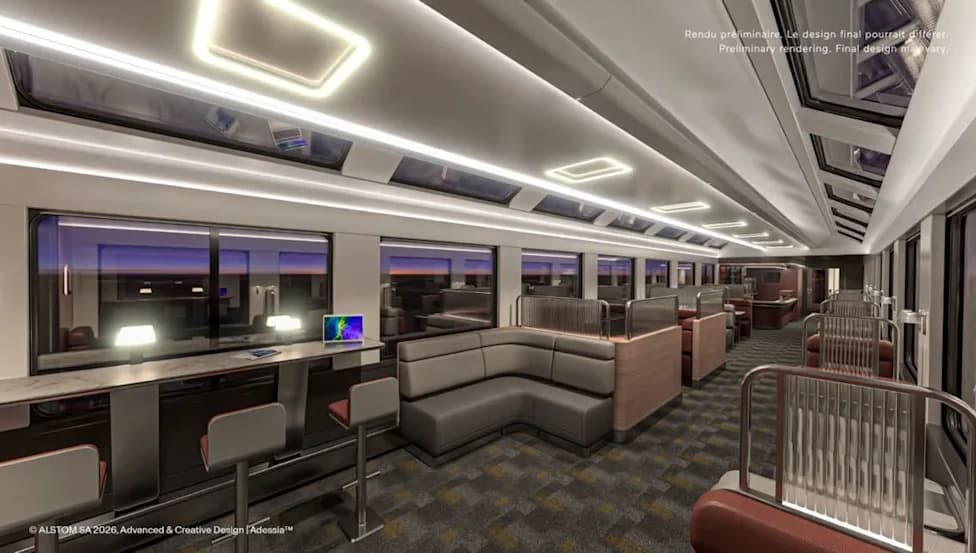
A preliminary rendering of a new VIA lounge car - presumably one of the "panorama" cars included in the 313-car order to be built by Alstom - shows VIA's interest in shared space that also will include domes. Alstom/VIA Rail Canada
Montreal — VIA Rail Canada’s landmark Ca$4.7 billion order for 313 passenger cars from Alstom — to be designed near Montreal and built in Thunder Bay and La Pocatière, Quebec — promises to modernize long-distance and regional services and create Canadian manufacturing jobs. With deliveries not expected until 2031, precise deployment plans remain to be finalized, but the new fleet could enable higher frequencies on flagship routes and improved comfort on remote and regional trains.
What Was Announced
The federal government announced the procurement at Alstom’s Thunder Bay plant, positioning the investment as both an industrial jobs initiative and a move to sustain passenger rail across the provinces VIA serves. The order follows a 2022 business case to Transport Canada and a collaborative procurement process led by VIA’s fleet renewal team.
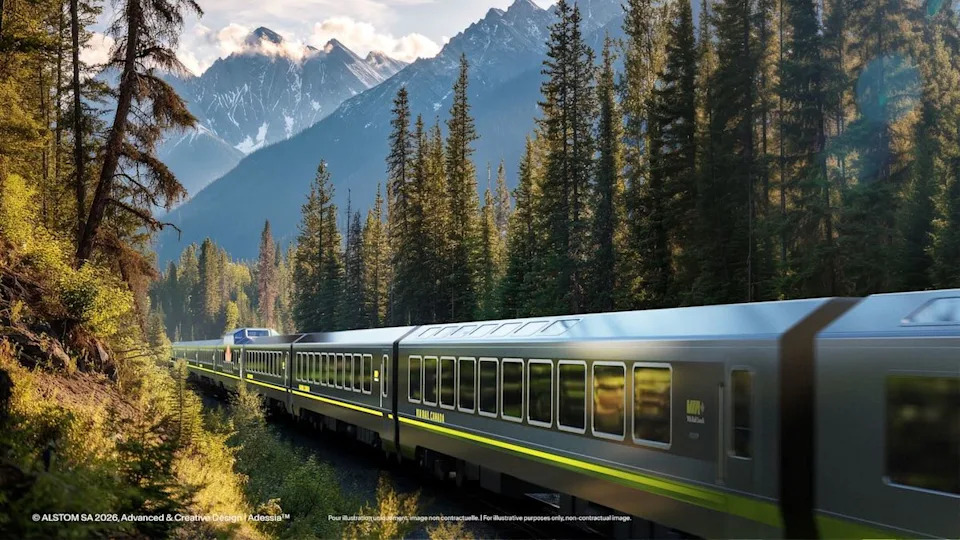
Some of the VIA cars will feature skyline windows, rather than the wraparound glass of its three current Panoroma cars. Alstom/VIA Rail Canada
Fleet Details
The 313-car order includes a heavy emphasis on sleeping accommodations and scenic lounges, preserving VIA’s signature long-distance service features while replacing some very old equipment:
- Total cars: 313
- Sleeping cars: 143 (78 rooms of various configurations, 26 accessible sleepers, 20 Prestige-class sleepers, 19 berth-only cars)
- Panorama lounge cars: 38 — communal lounges with large windows (designed for Canadian climates, not wraparound glass)
- Coaches: 56 — additional coach capacity to support new routes or higher frequencies
Separately, VIA previously ordered 45 diesel–battery hybrid locomotives from Stadler (Ca$1.6 billion), and it is investing Ca$150 million in sleeping-car modernization while the new fleet is built.
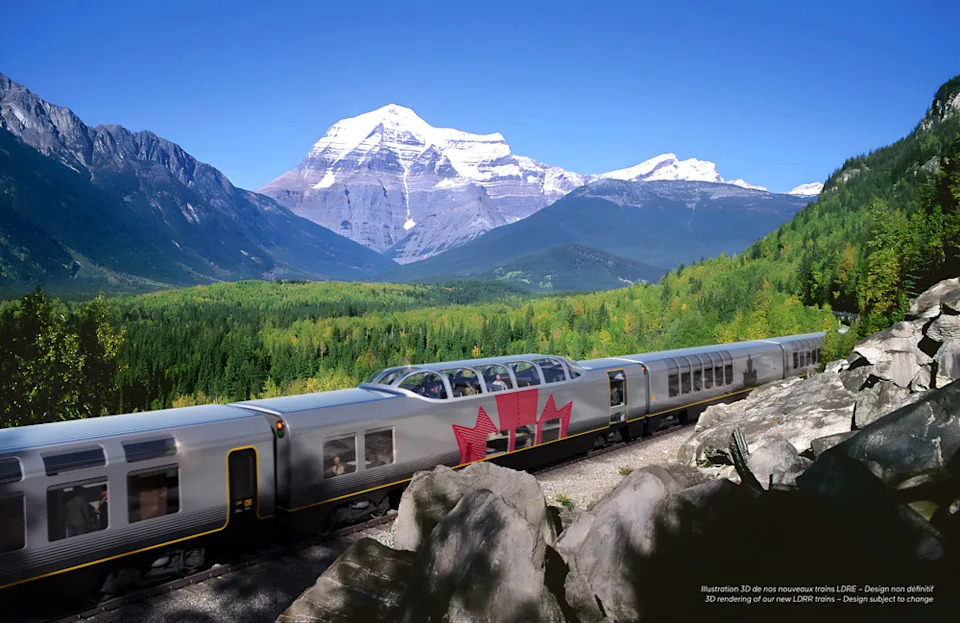
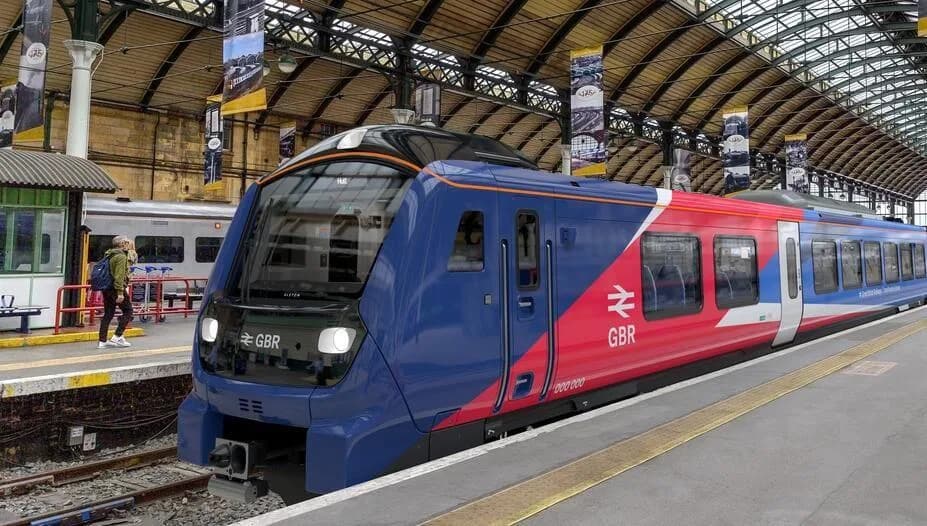
Not surprisingly, the latest renderings look little like the illustrations that accompanied VIA's annoucement that it was seeking a builder for new equipment. VIA Rail Canada
Where the Cars Will Be Built
Design work will be done at an Alstom facility near Montreal, with assembly at plants in Thunder Bay and La Pocatière. Both sites have deep ties to North American rail manufacturing, and the procurement includes an all-Canadian production commitment.
Service Implications
Once in service, the new equipment could allow VIA to:
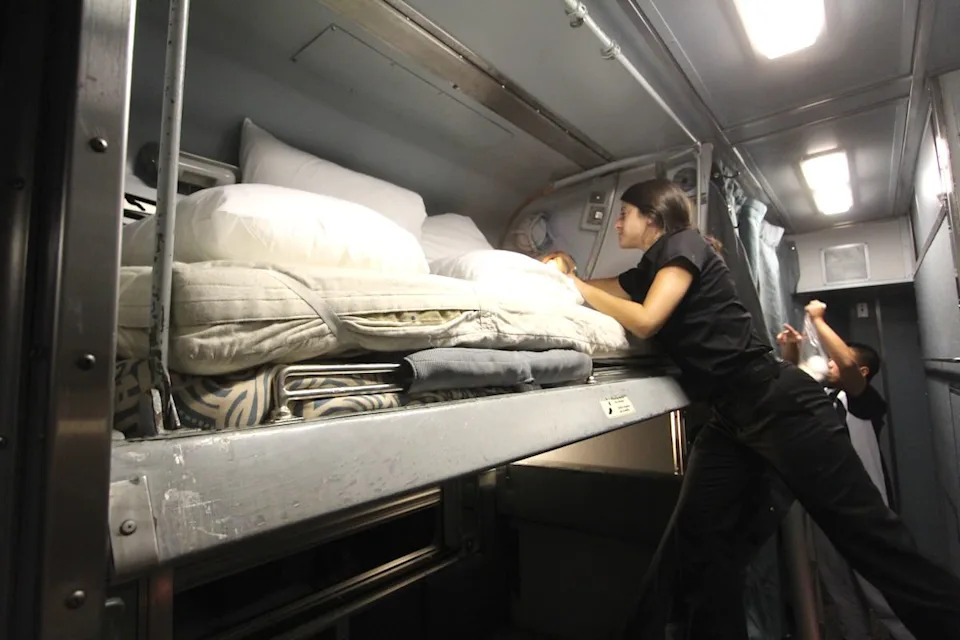
VIA sleeping car attendant Eva Kuhn prepares an upper berth on the eastbound Canadian out of Vancouver on Aug. 16, 2015. VIA's new order includes 19 all-berth cars. Bob Johnston
- Increase frequencies on long-distance routes such as The Canadian (Toronto–Vancouver) and The Ocean (Montreal–Halifax)
- Introduce panorama-lounge space on regional and remote routes (including potential Winnipeg–Churchill service)
- Reequip and stabilize remote services previously plagued by failures of 1950s-era Budd cars
- Add a second weekly Canadian round trip or extend regional services (for example, Calgary–Edmonton with summer extensions to Banff or Jasper)
Challenges and Conditions for Expansion
New cars alone will not guarantee expanded service. The federal government must address two structural issues to realize the full benefits of the order:
- Freight-Priority Rules: Current operating practices give freight railways priority on many lines, limiting on-time performance and feasible scheduling for passenger trains.
- Track Access And Compensation: A clear mechanism is needed to fairly compensate CN and CP for added capacity and priority if passenger frequencies increase.
Context And Comparisons
VIA’s procurement follows growing interest in North American single-level fleets: Amtrak has an RFP for more than 800 single-level cars and is exploring new passenger concepts such as a single-passenger “solo suite.” Though coordination between VIA’s and Amtrak’s procurements could be efficient in theory, Buy America rules and political constraints complicate direct cross-border sourcing.
Conclusion
The Alstom order is a long-overdue replacement program that preserves VIA’s distinctive sleeping-car tradition while adding modern lounge spaces and coaches to support growth. It also reinforces Canadian manufacturing capacity. To convert new equipment into meaningful service expansion, Ottawa will need to pair fleet investment with policies that secure track access, fair compensation for rail owners, and operational priority for passenger trains.
Delivery timeline: Initial cars not expected before 2031; extensive design and production phases will follow.
Help us improve.