NASA’s rovers and orbiters continue to deliver high-resolution images and data that reshape our view of Mars’ ancient past. Highlights include a 61-frame Perseverance selfie, bedrock layers in Jezero older than 3.9 billion years, extensive polygonal ground textures, and a potential biosignature announced in September 2025. Orbiters like MRO and Odyssey keep monitoring seasonal and surface changes while MAVEN ended after a loss of signal in Dec. 2025.
NASA’s Latest Mars Images Reveal Ancient Landscapes — and a Possible Biosignature
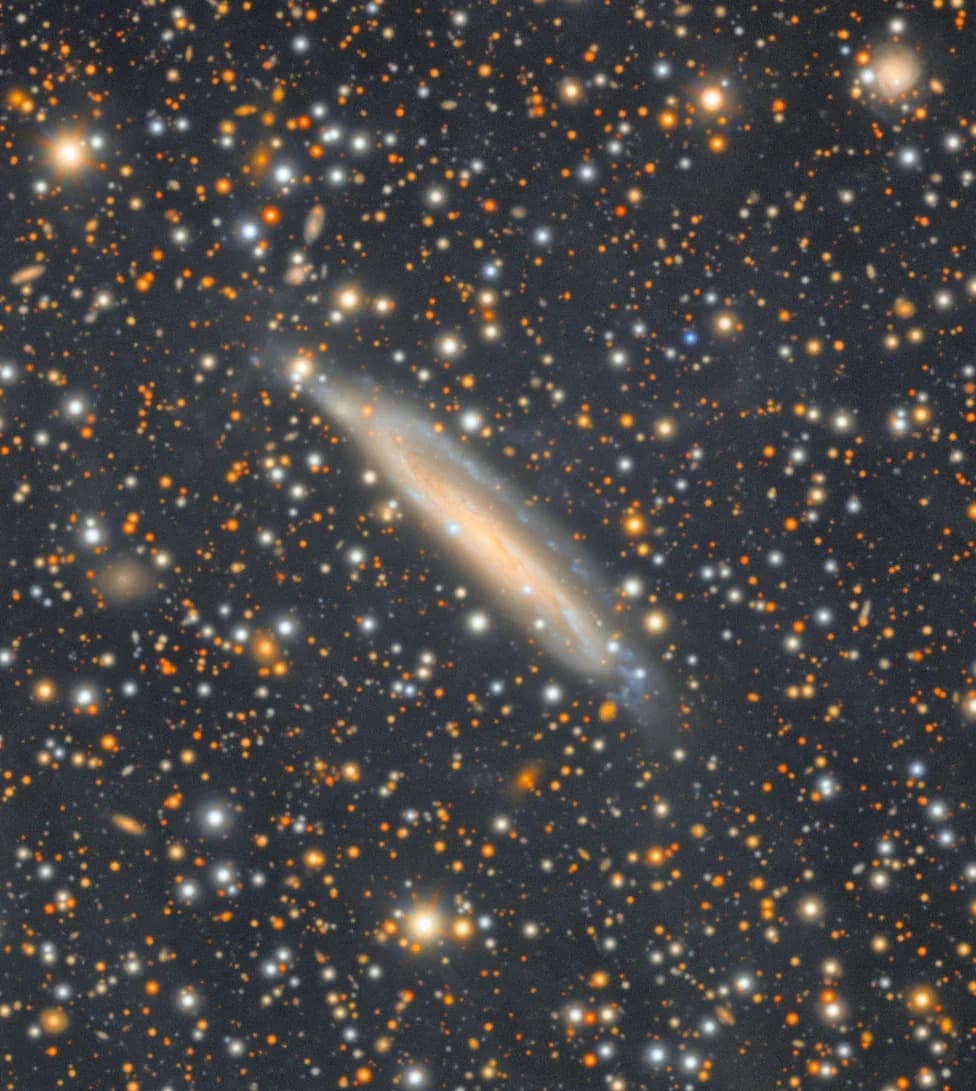
This is a section from a larger image the Vera C. Rubin Observatory captured referred to as the "ocean of stars." The view shows millions of multi-colored stars against a backdrop of galaxies close to the Milky Way’s plane, the crowded disk of the galaxy.(NSF–DOE Vera C. Rubin Observatory/NOIRLab/SLAC/AURA)
Mars can look like a barren world of red dust and rock, but recent images and data from NASA’s fleet of orbiters and rovers continue to reveal a far more dynamic past. From meter-scale bedrock layers older than 3.9 billion years to unusual surface textures and a newly reported potential biosignature, the Red Planet’s story is being investigated in unprecedented detail.
Rovers on the Surface
Perseverance: On March 11, 2026, NASA’s Perseverance rover assembled a 61-frame selfie while pushing westward from Jezero Crater. After arriving at Jezero in February 2021 following a ~200-day, 300-million-mile cruise, Perseverance summited a steep section of the crater rim at the end of 2024 and continues to search for signs of ancient microbial life and other clues to Mars’ earliest environments. On May 15, 2025, the rover photographed the outer lip of Jezero’s 490-foot rim and exposed bright-toned bedrock of the “Broom Point member,” a roughly 245-foot-thick sequence likely older than 3.9 billion years.
Curiosity: Operating in Gale Crater since August 2012, Curiosity photographed a 20-foot sand-capped butte nicknamed “Miraflores” on June 11 and captured multilayered sedimentary rocks formed from migrating sand ripples (image dated Dec. 12, 2024) — a finding later featured on the cover of the journal Geology (July 1, 2026). On June 19–20, 2026, Curiosity produced a 360-degree view showing abundant polygonal surface textures (2–4 inches across) and on Sept. 26, 2025, it returned a stitched panorama of boxwork ridges made from 179 frames. Curiosity has collected dozens of powdered rock samples (42 recorded) and reported previously unseen organic compounds.
Orbital Views and Long-Running Missions
HiRISE and MRO: The Mars Reconnaissance Orbiter (MRO) — in orbit since 2006 — reached a milestone when its HiRISE camera captured its 100,000th image over Syrtis Major. HiRISE continues to provide high-resolution context that helps scientists track surface changes and seasonal processes.
Odyssey and MAVEN: NASA’s Odyssey orbiter, launched in 2001 and managed by JPL, remains the longest-running mission at any planet except Earth and now focuses on atmospheric phenomena and surface mapping to support future crewed missions. MAVEN, which studied Mars’ upper atmosphere for more than 11 years, ended after an unexpected loss of signal on Dec. 6, 2025.
Selected Highlights and Context
Orbital images continue to monitor seasonal frost and dune activity (for example, northern-hemisphere dunes imaged Sept. 8, 2022). The European Space Agency’s Mars Express provided a notable view of the south polar ice cap in 2015 and later reported a subsurface signal interpreted as a possible subglacial lake. Volcanic landforms such as scoria cones in regions like Ulysses Colles testify to Mars’ ancient volcanism.
Potential Biosignature: In September 2025, NASA announced that Perseverance had recovered a sample containing a potential biosignature — the closest evidence yet suggesting the possible presence of past life on Mars. That result is being studied and vetted by the scientific community.
Why It Matters
Together, high-resolution imagery and in-situ measurements from orbit and the surface refine our picture of Mars’ ancient environments and habitability and help prepare for future human exploration. Each new photograph and sample deepens our understanding of how Mars—and by extension Earth—evolved.
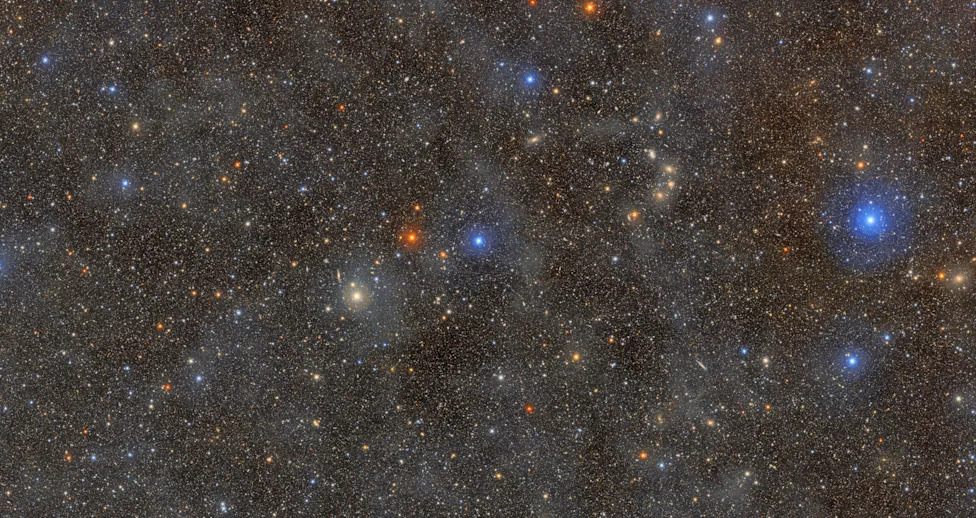
A field of stars in the constellation Lupus showcases the unprecedented view of the universe that the Vera C. Rubin Observatory provides. Rubin combines a wide view of the sky with the ability to detect extremely faint objects, revealing details of the cosmos across an enormous range of scales.(NSF–DOE Rubin Observatory/NOIRLab/SLAC/AURA)
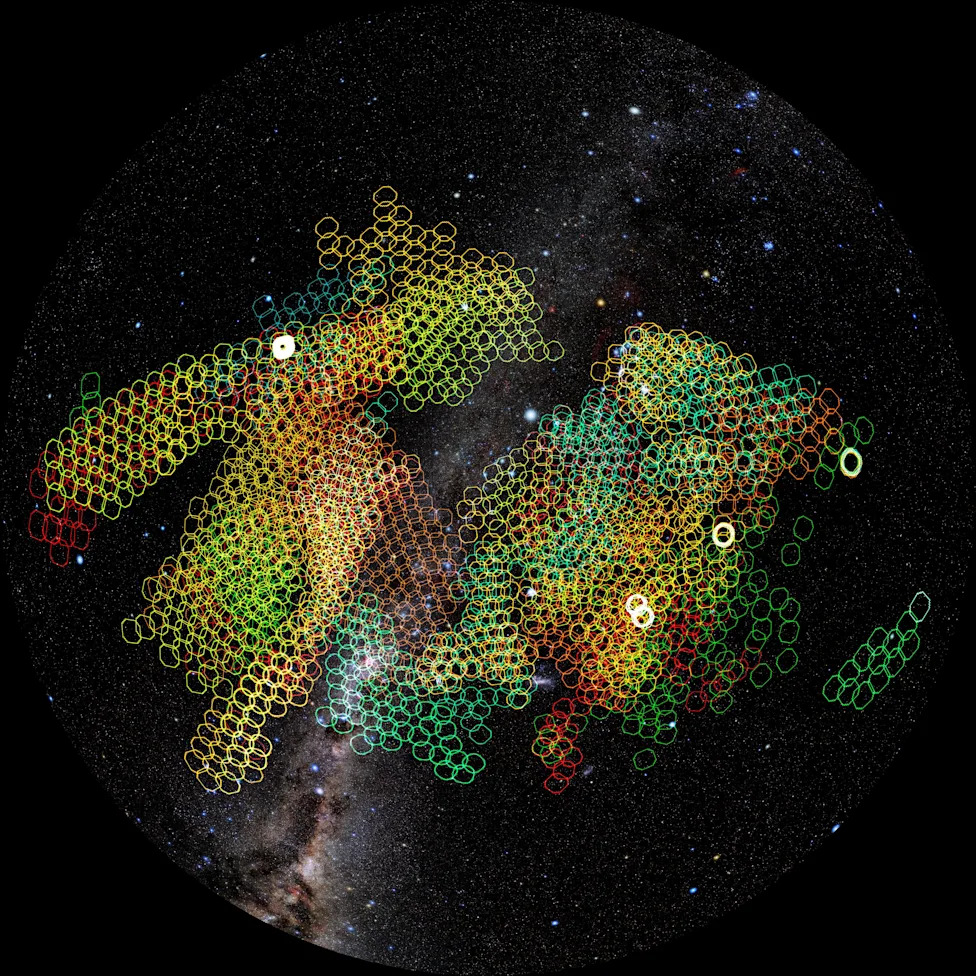
This map represents how much sky the Rubin Observatory can map in one week, with he color of the tile representing the filter used for each exposure as the Observatory rapidly builds a multicolor map of the universe.(NSF–DOE Rubin Observatory/NOIRLab/SLAC/AURA)
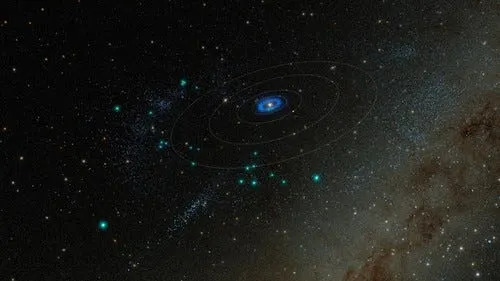
A model of the Solar System showing the roughly 380 trans-Neptunian objects (objects orbiting beyond Neptune) discovered using observations taken during Rubin’s early optimization surveys in summer 2025.(NSF–DOE Vera C. Rubin Observatory/NOIRLab/SLAC/AURA/R. Proctor)
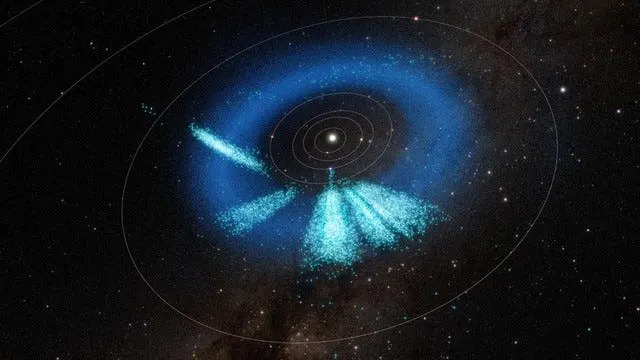
A model of the inner Solar System showing the asteroids discovered by Rubin in light teal. Known asteroids are dark blue. The model shows almost 12,700 asteroids that were discovered with Rubin over the span of a year and a half.(NSF–DOE Vera C. Rubin Observatory/NOIRLab/SLAC/AURA/R. Proctor)

This image shows comet 3I/ATLAS, the third interstellar object ever discovered, on June 21, 2025 — ten days before its official discovery was announced.(NSF–DOE Vera C. Rubin Observatory/NOIRLab/SLAC/AURA; Image Processing: C. Chandler (University of Washington), M. Zamani & D. de Martin (NSF NOIRLab))
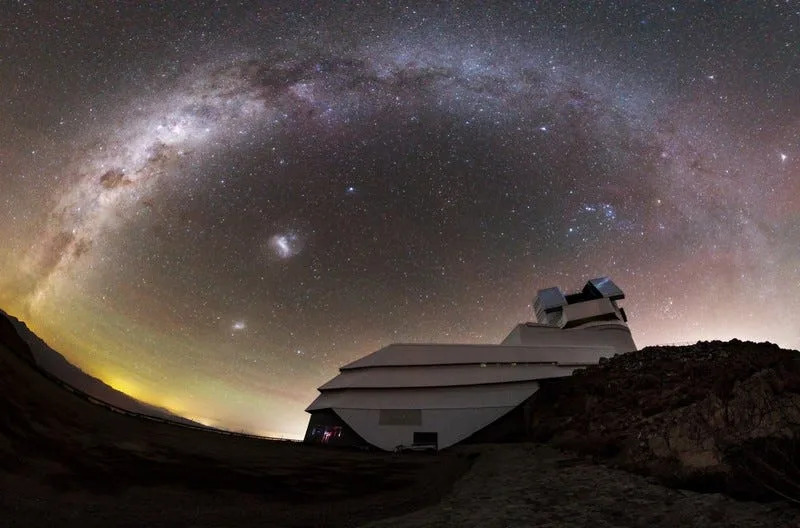
In this photo captured in February 2026, the Rubin Observatory observes the Chilean night sky above Cerro Pachón beneath the dazzling view of our home galaxy, the Milky Way.(NSF–DOE Rubin Observatory/NOIRLab/SLAC/AURA/P. Lago)
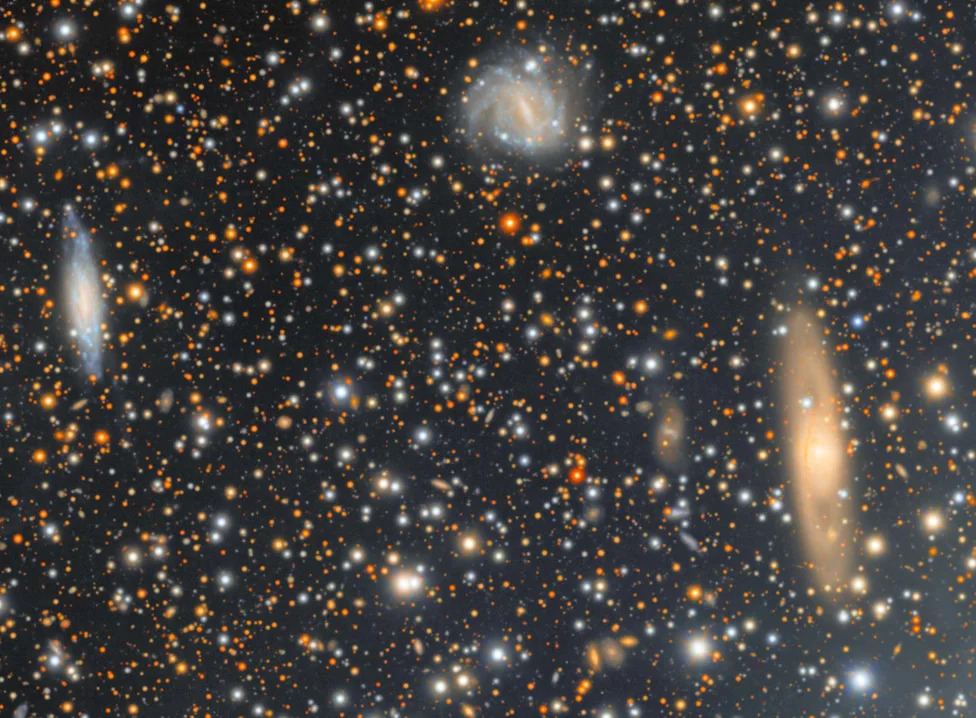
This is a section from a larger image the Vera C. Rubin Observatory captured referred to as the "ocean of stars." The view shows millions of multi-colored stars against a backdrop of galaxies close to the Milky Way’s plane, the crowded disk of the galaxy.(NSF–DOE Vera C. Rubin Observatory/NOIRLab/SLAC/AURA)
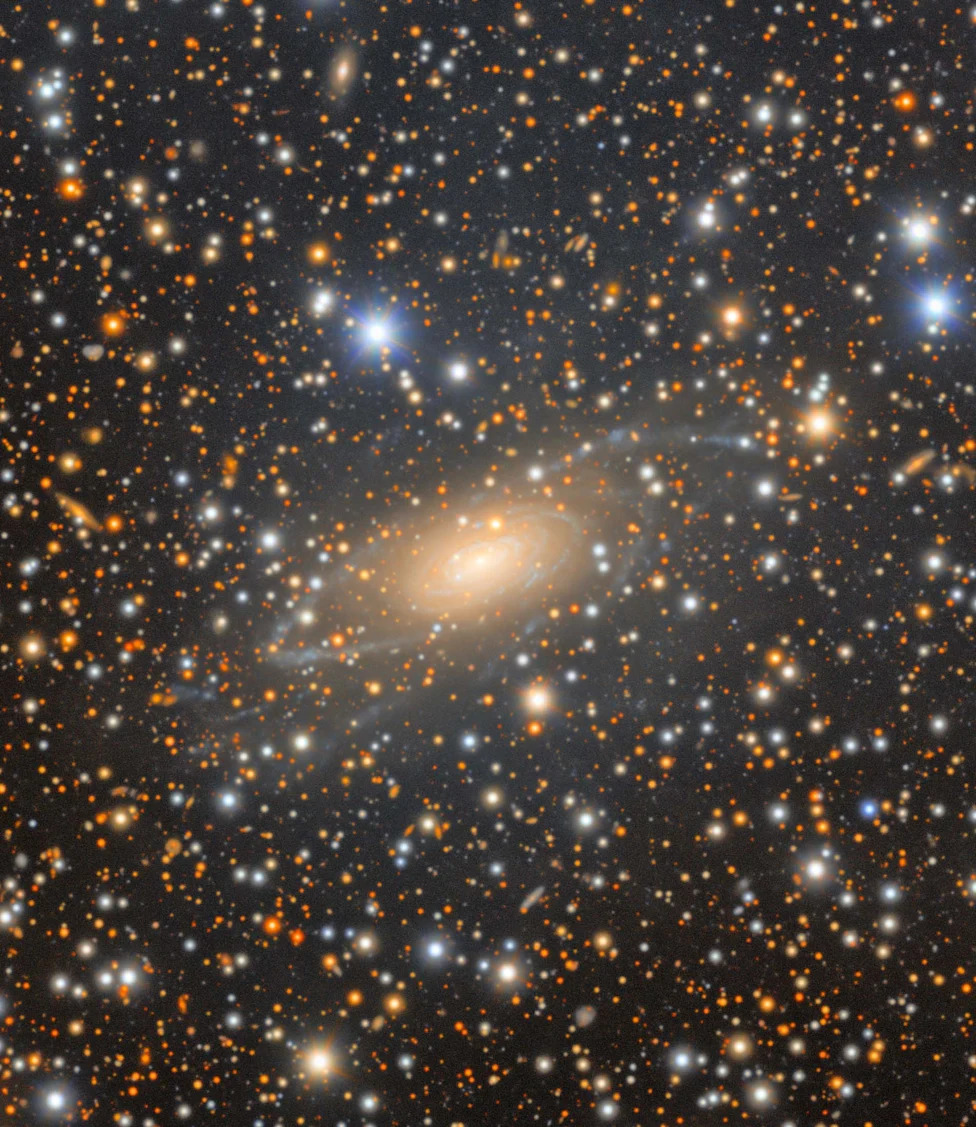
This is a section from a larger image the Vera C. Rubin Observatory captured referred to as the "ocean of stars." The view shows millions of multi-colored stars against a backdrop of galaxies close to the Milky Way’s plane, the crowded disk of the galaxy.(NSF–DOE Vera C. Rubin Observatory/NOIRLab/SLAC/AURA)
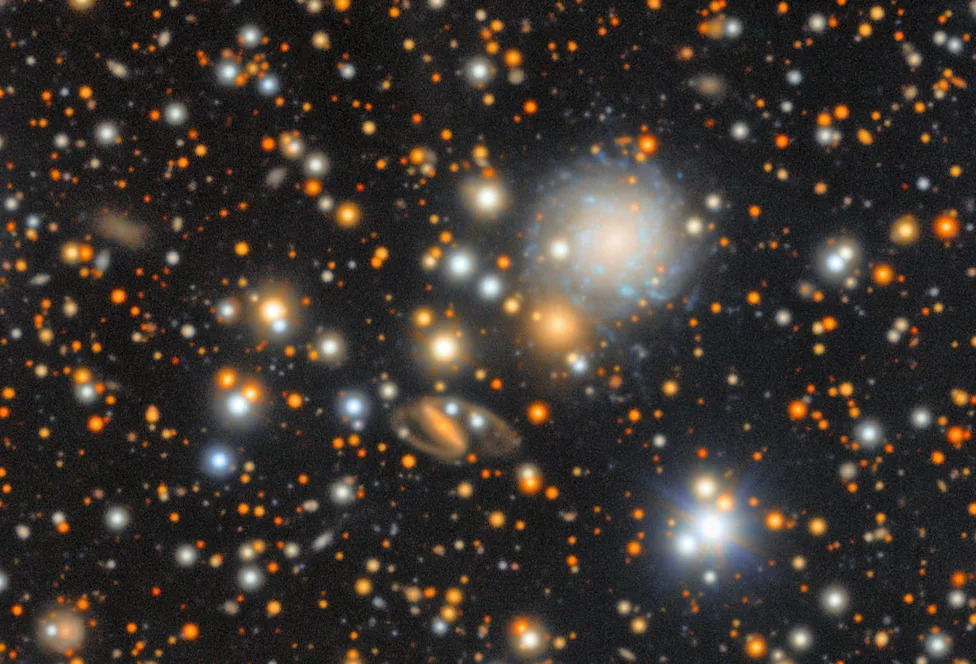
This is a section from a larger image the Vera C. Rubin Observatory captured referred to as the "ocean of stars." The view shows millions of multi-colored stars against a backdrop of galaxies close to the Milky Way’s plane, the crowded disk of the galaxy.(NSF–DOE Vera C. Rubin Observatory/NOIRLab/SLAC/AURA)
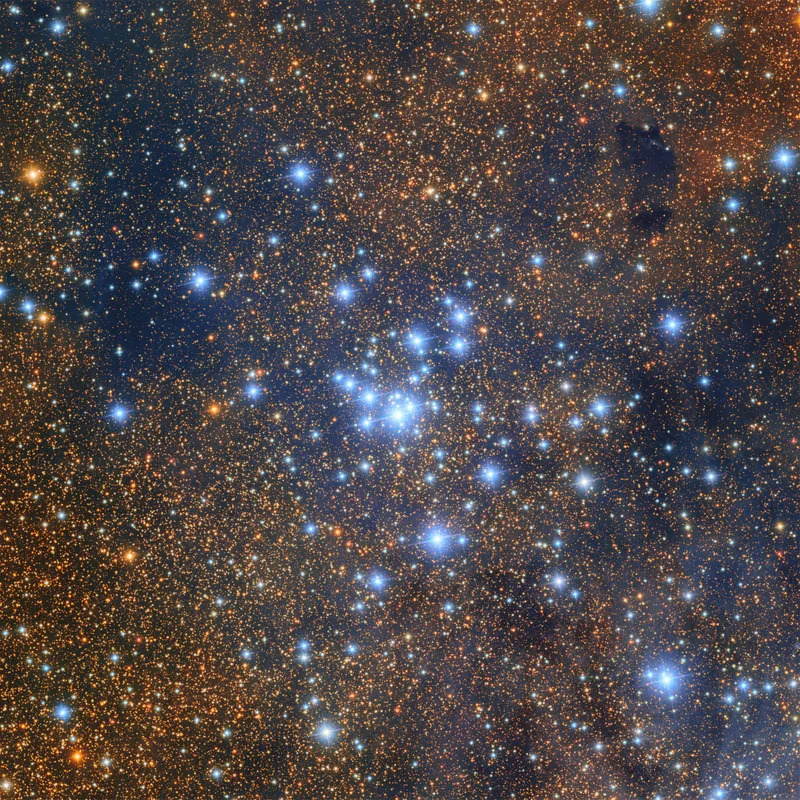
The open star cluster Messier 21 as imaged by NSF–DOE Vera C. Rubin Observatory. Located near the Trifid Nebula, Messier 21 is relatively young and tightly packed with small, dim stars.(RubinObs/NOIRLab/SLAC/NSF/DOE/AURA)
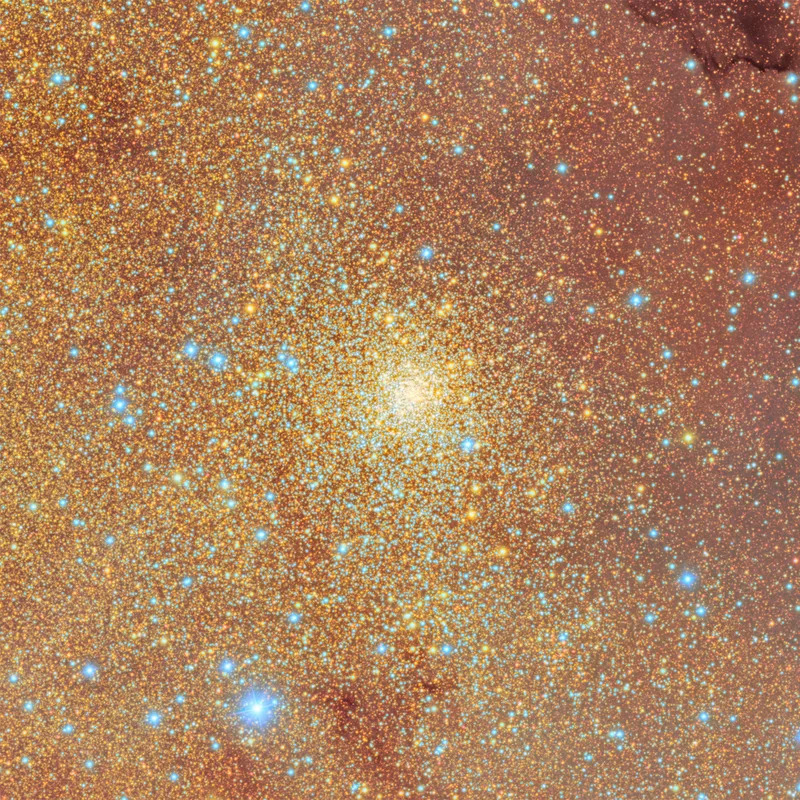
Globular cluster NGC 6544 as imaged by NSF–DOE Vera C. Rubin Observatory. This tightly packed globular cluster is home to tens of thousands of stars.(RubinObs/NOIRLab/SLAC/NSF/DOE/AURA)
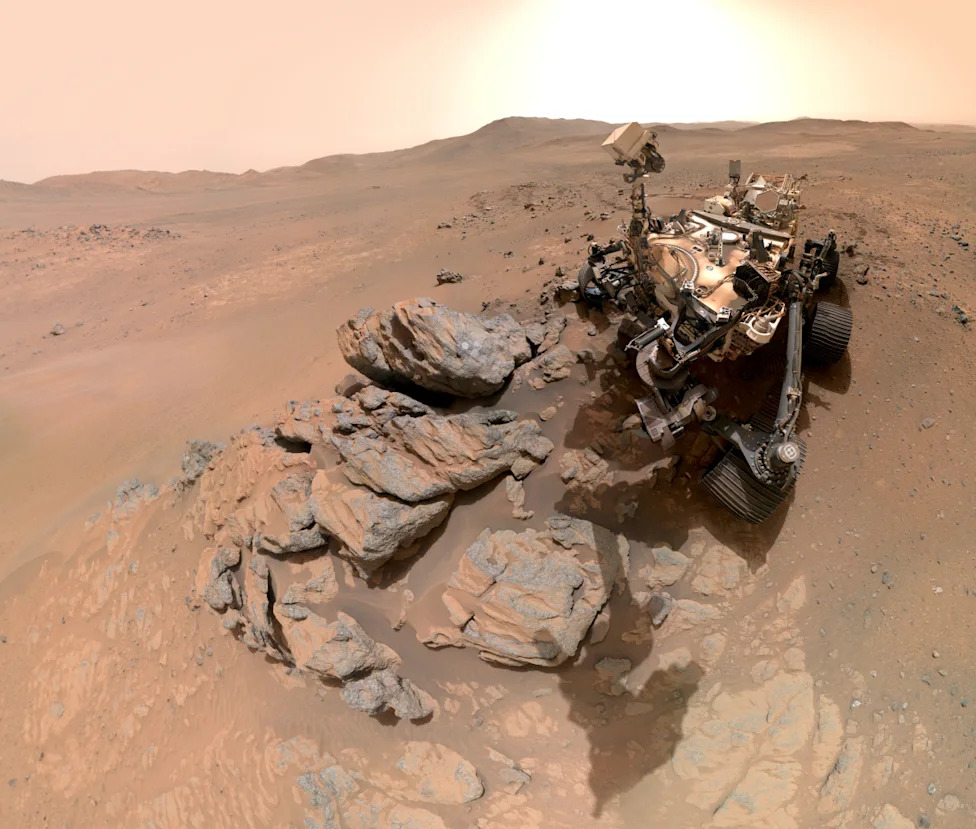
NASA’s Perseverance Mars rover took this selfie on March 11, 2026, during the rover’s deepest push west beyond Jezero Crater. The photo was assembled from 61 individual images.Perseverance, along with Curiosity, isone of two NASA roversthat have spent years exploring Mars' surface to uncover secrets about Earth's planetary neighbor and find evidence that Mars once harbored life.(Provided by NASA)
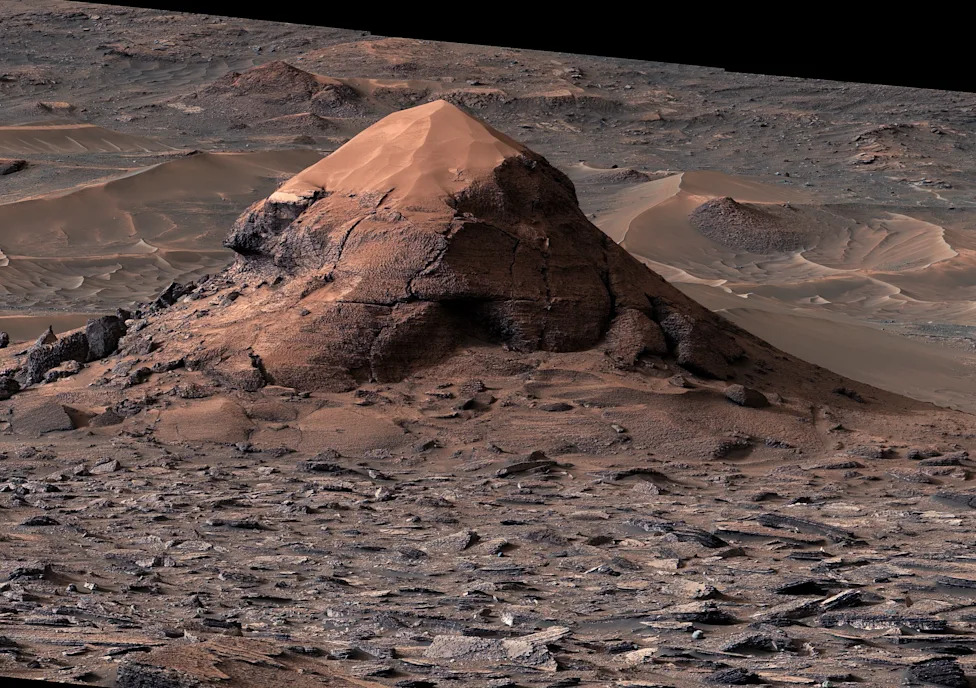
NASA’s Curiosity Mars rover captured thissand-capped butte, nicknamed “Miraflores,” estimated to be about 20 feet tall, on June 11. The butte was left behind as surrounding rock eroded away over time, deepening the broad valley Curiosity is climbing through.Curiosity is among NASA's fleet of uncrewed vehicles that have been sent to the red planet. In the years ahead, though, NASA is planning tosend the first humans to Marsunder its Artemis program.(NASA/JPL-Caltech/MSSS)
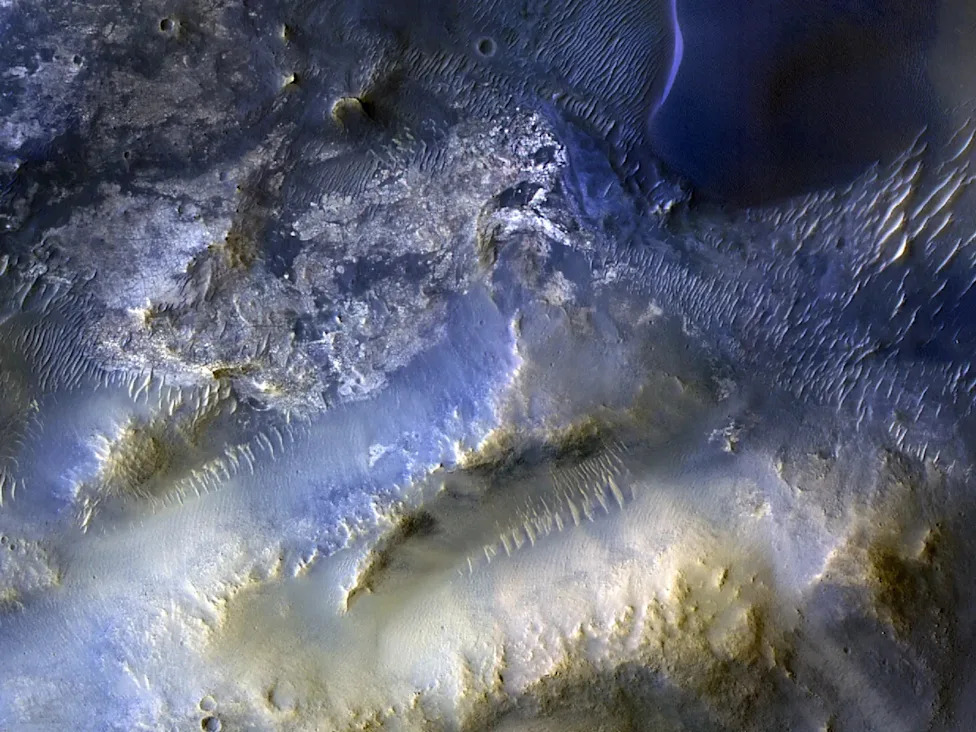
This view of a region called Syrtis Major is from the100,000th imagecaptured by NASA’s Mars Reconnaissance Orbiter using its HiRISE camera (High Resolution Imaging Science Experiment.)For nearly 20 years, HiRISE has helped scientists understand how the Red Planet’s surface is constantly changing.(NASA/JPL-Caltech/University of Arizona)
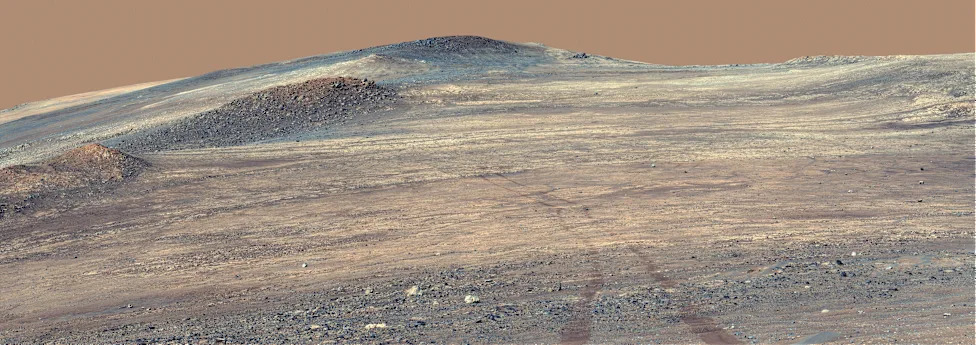
This view looking back upat the outside lip of the 490-foot-tall rim of Jezero Crater was taken by NASA’s Perseverance on May 15, 2025.The bright-colored rocks exposed across the slope, running from middle left to middle right of the image, belong to a formation NASA calls the “Broom Point member,” a 245-foot-thick stack of ancient rock. This sequence of layered bedrock is likely more than 3.9 billion years old, making it among the oldest terrain ever examined by a Mars rover.(NASA/JPL-Caltech/ASU/MSSS)
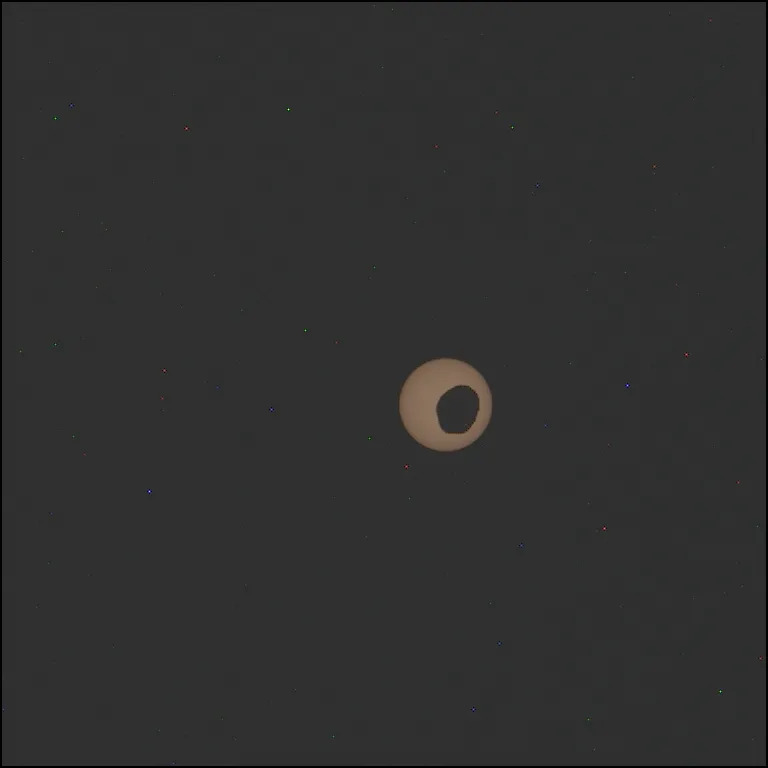
NASA’s Perseverance Mars rover used its Mastcam-Z camera tocapture the silhouette of Phobos, one of the two Martian moons, as it crossed in front of the sun Aug. 13.Perseverance hascapturedseveral Phobos transitssince its landing at Jezero Crater in February 2021.(NASA/JPL-Caltech/ASU)
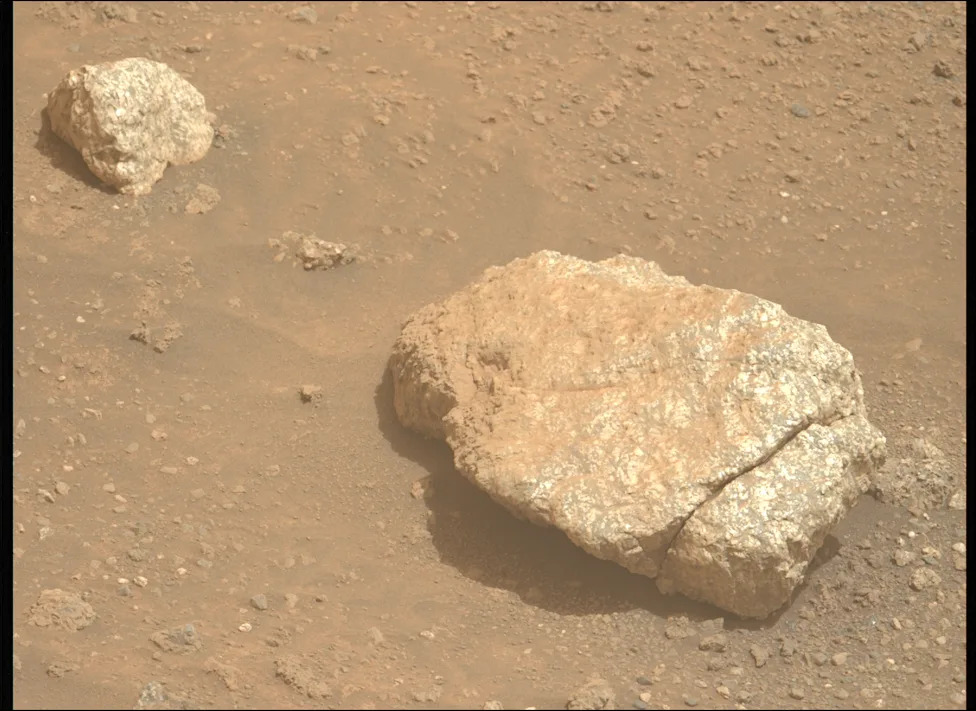
An image captured Aug. 20 by the Perseverance rover shows some rocks on the Martian surface.Perseverance and Curiosity are exploring very different areas of Mars 2,300 miles apart – the distance from Los Angeles to Washington, D.C. – to find new clues that will help scientists on Earth solve mysteries about the red planet's history.(NASA/JPL-Caltech/ASU)
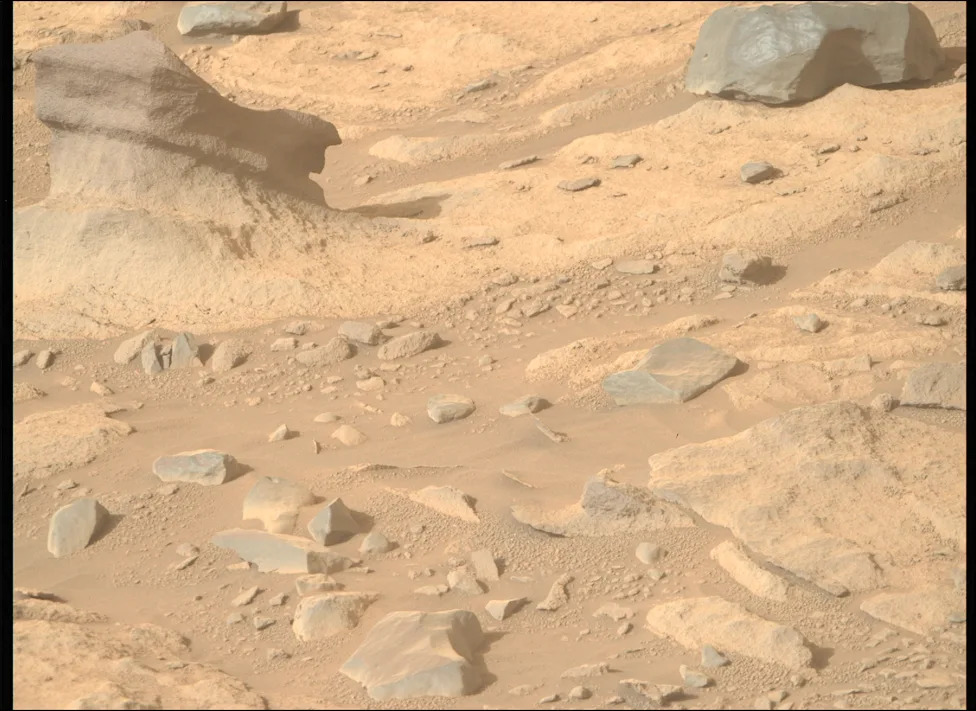
NASA's Perseverance rover captured this image July 22 of the Martian landscape.After launching in 2020,Perseverancemade a 200-day, 300-million-mile journeyto reach Mars' Jezero Crater in February 2021.(NASA/JPL-Caltech/ASU)
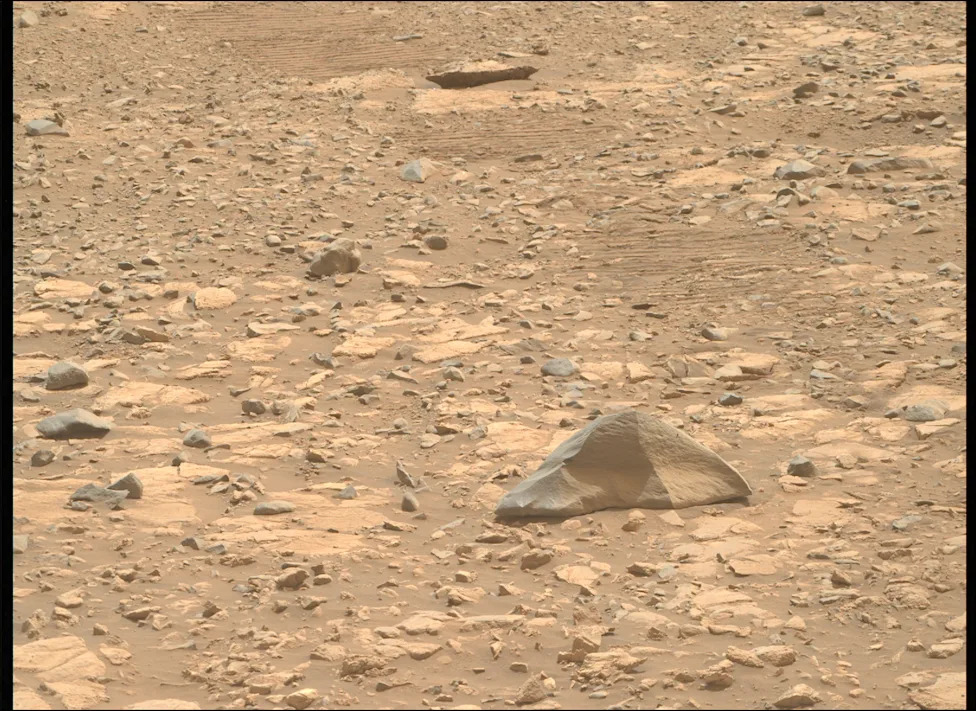
NASA's Perseverance rover captured this image Aug. 4 of the Mars landscape.At the end of 2024, after years in the trenches of Jezero, Perseverancesummited the steep Martian craterto begin the next leg of its journey on the rim.(NASA/JPL-Caltech/ASU)
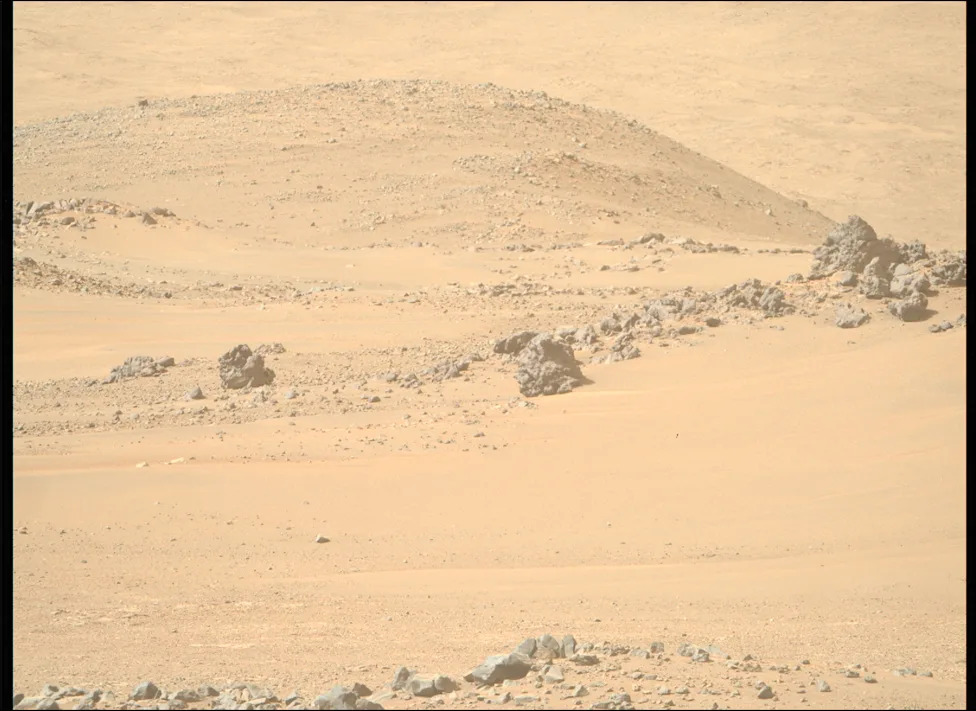
NASA's Perseverance rover captured this image June 24 of the Mars landscape.(NASA/JPL-Caltech/ASU)
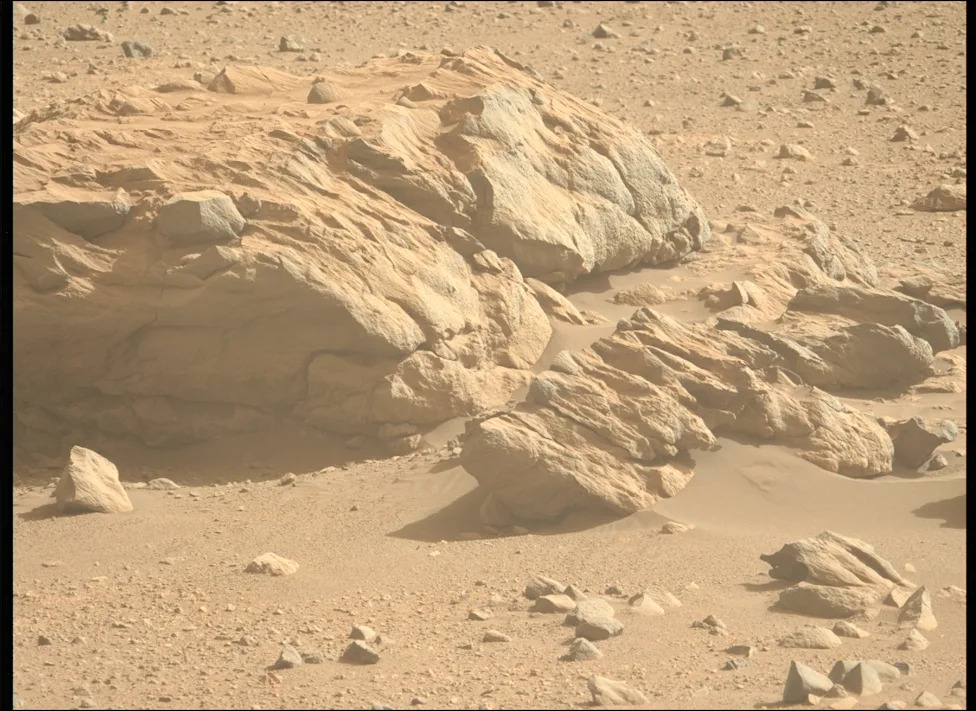
NASA's Perseverance rover captured this image May 26 of the Mars landscape.(NASA/JPL-Caltech/ASU)
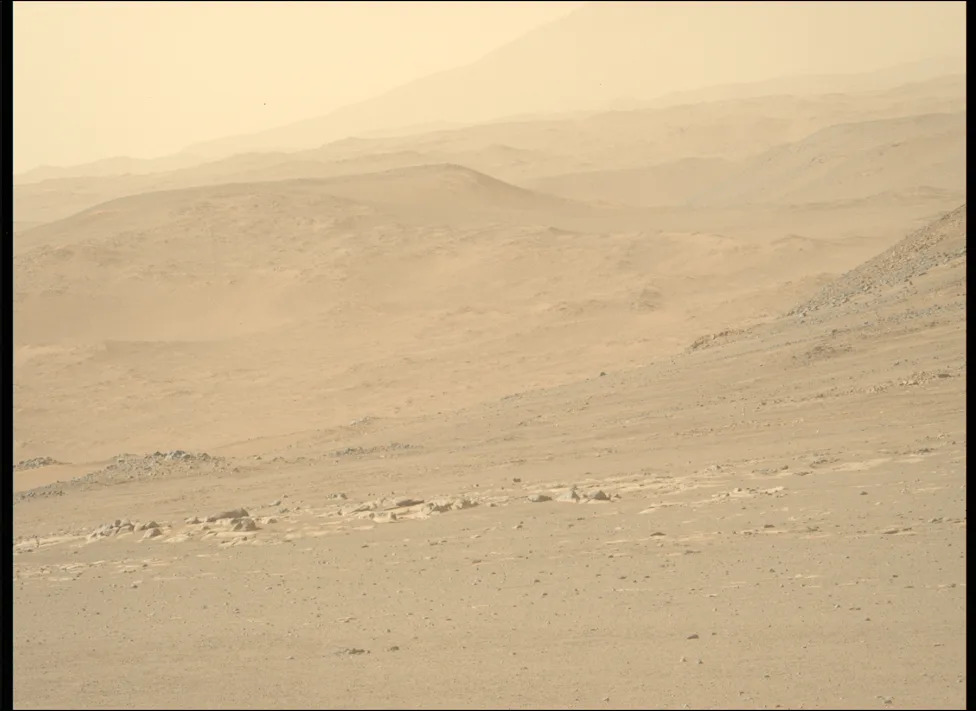
NASA's Perseverance rover captured this image April 8 of the Mars landscape.(NASA/JPL-Caltech/ASU)
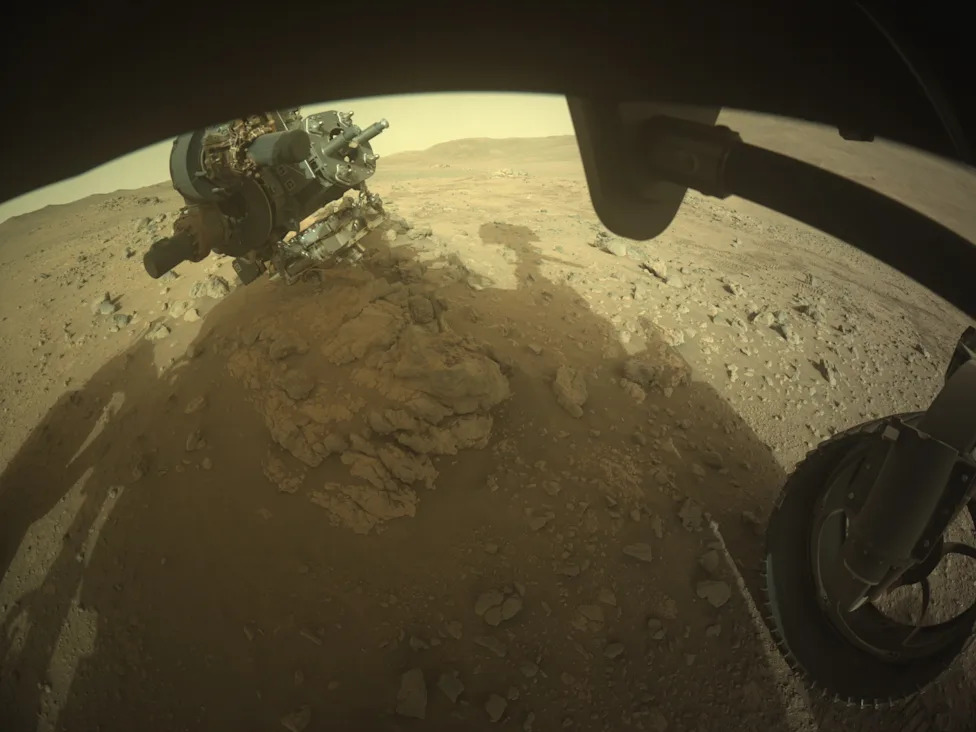
NASA's Perseverance rover captured this image March 24 using an instrument known as theFront Right Hazard Avoidance Camera A.(NASA/JPL-Caltech)
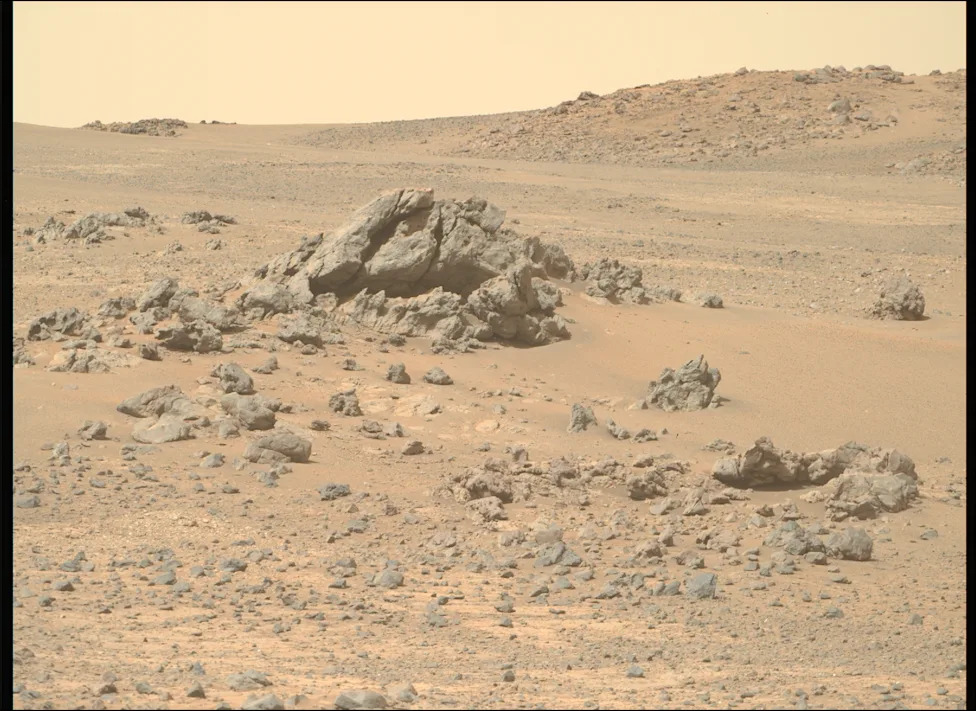
NASA's Perseverance rover captured this image Feb. 20 of the Mars landscape.(NASA/JPL-Caltech/ASU)
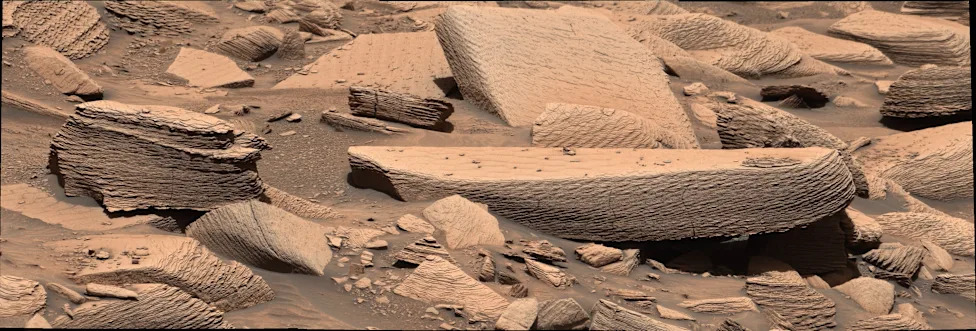
Billions of years ago, an hours-long Martian sandstorm blew so intensely that sand ripples began to climb upon one another as they moved across the surface. These layers of sediment eventually hardened into the multilayered rocks seen in this image, which wastaken by NASA’s Curiosity roveron Dec. 12, 2024.Apaperdetailing the discovery was featured on thecoverof the journal Geology on July 1, 2026.(NASA/JPL-Caltech/MSSS)
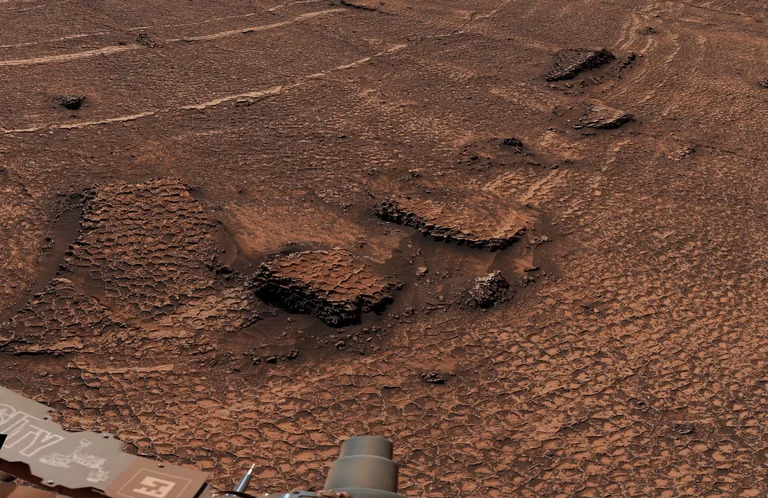
NASA’s Curiosity Mars rover captured this 360-degree view of an expanse of terrain covered in surfacefeatures called polygonson June 19 and 20, 2026. The rover has found the honeycomb-like textures several times in the past, but never so many in one place. Across the center of this image, the surface is covered by shapes ranging in size from roughly 2 to 4 inches in diameter.East of Perseverance, theCuriosityroverbegan its voyage to Mars in November 2011, landing in August 2012 in the Gale Crater on the boundary between Mars' cratered southern highlands and its smooth, northern plains.(NASA/JPL-Caltech/MSSS)
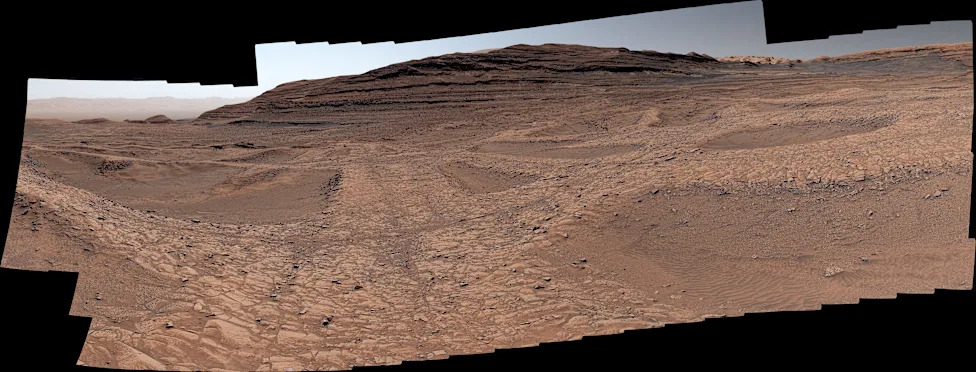
NASA’s Curiosity Mars rover captured this panorama of low ridgesknown as boxwork formationson Sept. 26, 2025. These boxwork formations were created billions of years ago. This particular image is a panorama made of 179 individual images stitched together after being sent back to Earth.As it climbs the 3-mile-high Mount Sharp, Curiosity is searching for evidence that Mars was ever hospitable to life.(NASA/JPL-Caltech/MSSS)
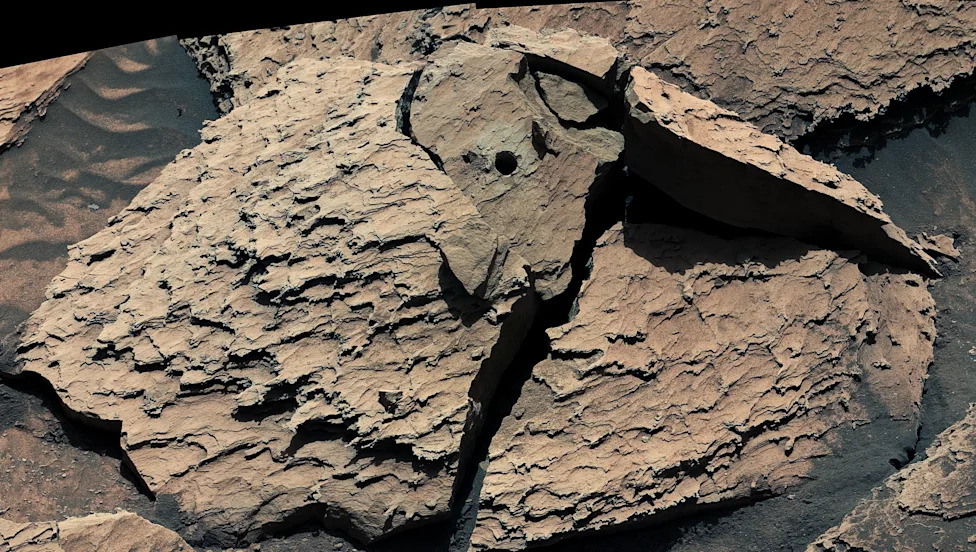
NASA’s Curiosity Mars rover used its Mast Camera, or Mastcam, to capturethis view of a rocknicknamed “Atacama” on May 6, 2026.The rock had gottenstuck to the drillon the end of Curiosity’s robotic arm on April 25. Engineers spent several days repositioning the arm and vibrating the drill to try and get the rock loose, finallydetaching the rockon May 1.(NASA/JPL-Caltech/MSSS)
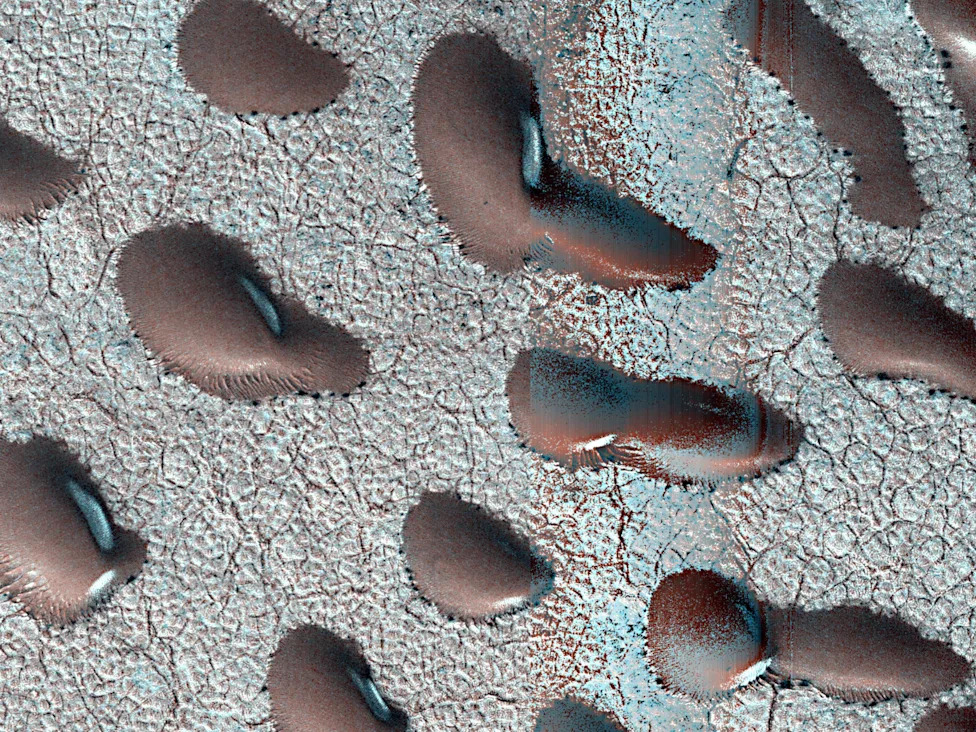
These Martian dunesin Mars' northern hemisphere were captured from above by NASA's Mars Reconnaissance Orbiter on Sept. 8, 2022. Scientists use such images to track the amount of frost that settles on the landforms and then disappears as the weather warms in spring.(NASA/JPL-Caltech/University of Arizona)
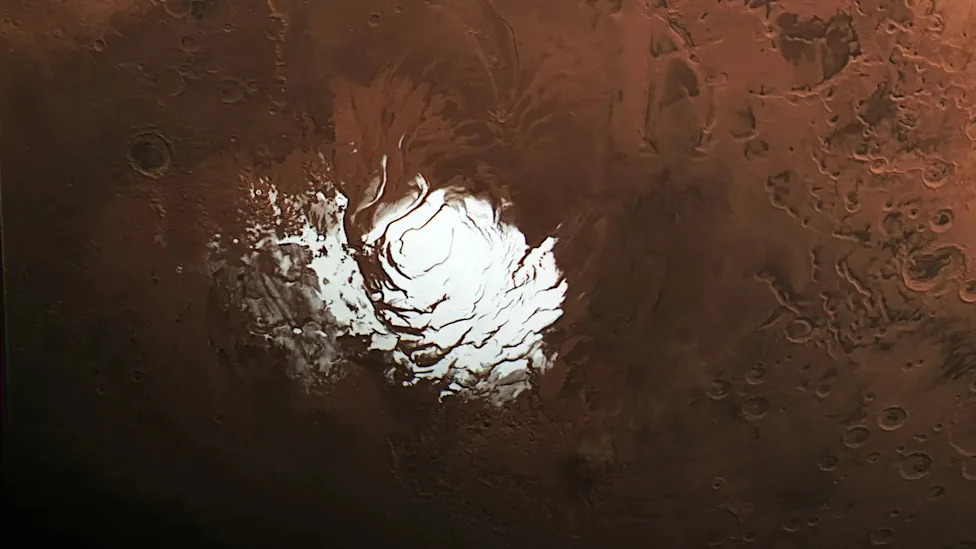
The European Space Agency’s Mars Express orbitercaptured this viewof Mars’ south polar ice cap Feb. 25, 2015. Three years later, the spacecraft detected a signal from the area to the right of the ice cap that scientists interpreted as an underground lake.(ESA/DLR/FU Berlin, CC BY-SA 3.0 IGO)
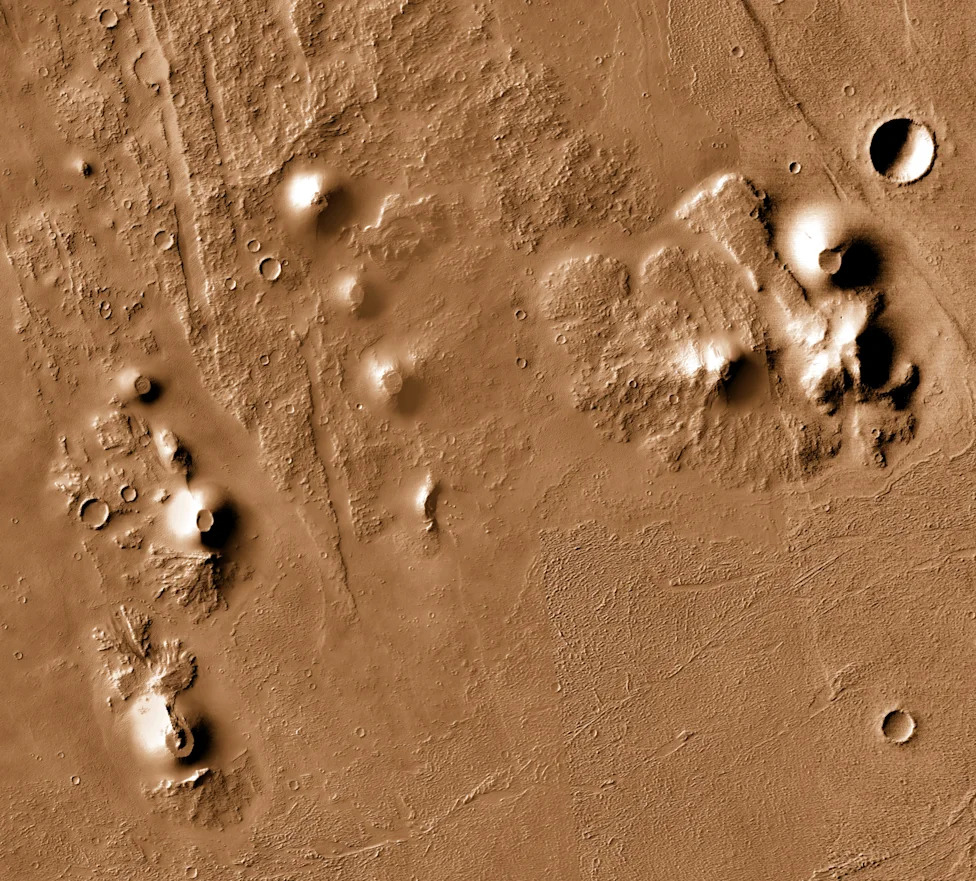
Since the 1970s, planetary geologists have known that volcanic features cover large swaths of Mars.This scoria conein Mars' Ulysses Colles region, formed through explosive volcanism, is thought to be billions of years old.(NASA/JPL-Caltech/University of Arizona)
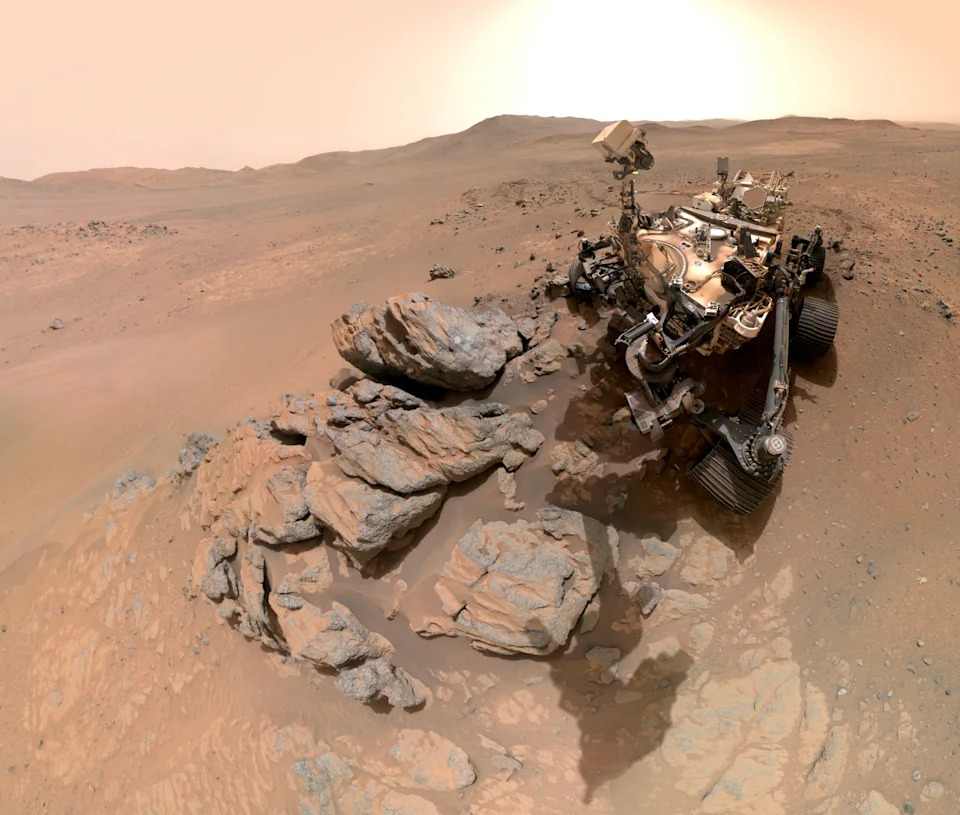
NASA’s Perseverance Mars rover took this selfie on March 11, 2026 during the rover’s deepest push west beyond Jezero Crater. The photo was assembled from 61 individual images
Help us improve.