Carbon credit financing is helping make clean cooking affordable for millions across Africa by allowing companies to subsidize stoves with future emissions revenues. Nearly 1 billion people still cook with charcoal or firewood, contributing to an estimated 850,000 deaths annually from household air pollution. The IEA reports $900 million in new commitments and widespread policy momentum, but experts warn carbon finance is not a standalone solution due to timing, regulatory and verification risks.
Carbon Credits Are Scaling Clean Cooking Across Africa — But Risks Remain
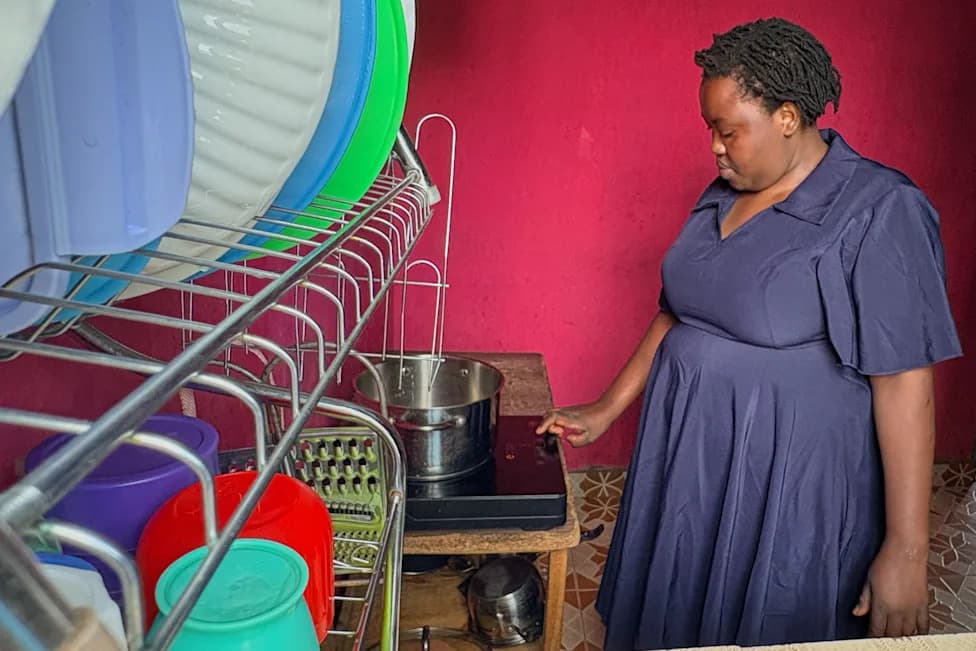
Mary Kavutha prepares breakfast using a fuel-efficient cookstove made by BURN in Kiambu, Kenya, on July 31, 2026. (AP Photo/Allan Olingo)(AP Photo/Allan Olingo)
NAIROBI, Kenya — Every morning Mary Kavutha prepares breakfast for her two young children on an induction cooker in her Nairobi home. Two years earlier she relied on a charcoal stove that filled the kitchen with smoke and cost about $1.15 a day in fuel. Today she says she can cook several meals for roughly 80 cents in electricity tokens.
"It cooks much faster, and is much safer because I have young children," Kavutha said. "With charcoal there was always smoke in the house. Now I can cook indoors comfortably, and I spend much less."
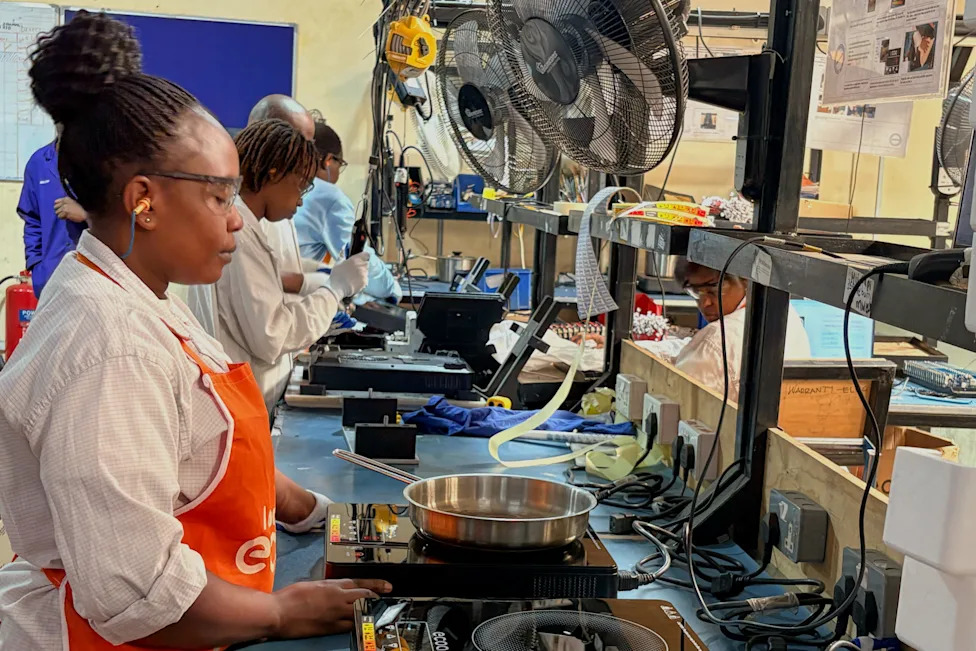
Workers assemble fuel-efficient cookstoves at BURN, a manufacturer of clean cooking appliances, in Kiambu, Kenya, on July 31, 2026. (AP Photo/Allan Olingo)(AP Photo/Allan Olingo)
How Carbon Finance Makes Stoves Affordable
Nearly 1 billion people in Africa still rely on charcoal or firewood for everyday cooking. The International Energy Agency (IEA) estimates household air pollution from these fuels contributes to about 850,000 deaths on the continent each year.
Clean-cooking companies increasingly use carbon credit financing to lower retail prices. In this model, investors provide upfront capital to subsidize stoves; in return they receive revenue from carbon credits tied to measured reductions in emissions as households switch away from charcoal, wood and other polluting fuels. That finance can reduce the upfront cost of an efficient biomass stove from roughly $40 to as little as $5 for consumers, while induction cookers are often offered via short-term pay-as-you-go plans.
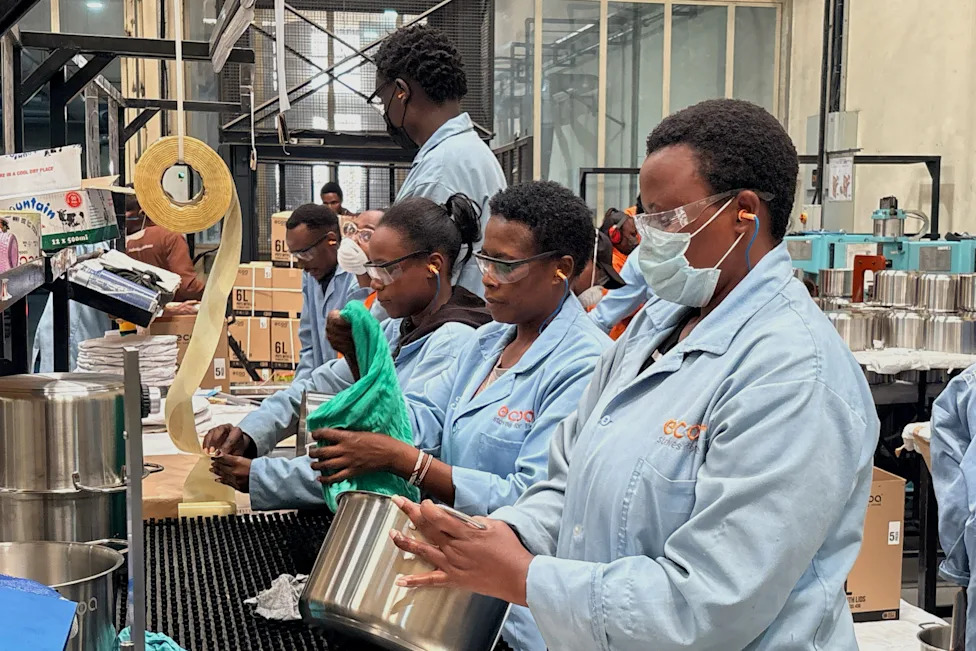
Workers assemble fuel-efficient cookstoves at BURN, a manufacturer of clean cooking appliances, in Kiambu, Kenya, on July 31, 2026. (AP Photo/Allan Olingo)(AP Photo/Allan Olingo)
Scale, Commitments and Policy Momentum
The IEA said in June that Africa secured about $900 million in new financial commitments for clean cooking technologies. Since the 2015 Paris climate summit, more than 30 governments — representing roughly 80% of Africans who still lack access to clean cooking — have introduced 121 new clean-cooking policies. The African Union's Dar es Salaam Declaration and an IEA conference co-hosted by Tanzanian President Samia Suluhu highlighted that leaders now see clean cooking as a priority for health, climate and economic development.
Industry Innovations and Monitoring
Companies such as BURN say the biggest innovation is not the stove design alone but the financing that makes them affordable. BURN reports distributing over 7.3 million stoves across 11 countries. The sector has also adopted stricter standards and more advanced monitoring — including Bluetooth tracking, digital verification and near-real-time usage data — to improve credibility and guard against over-claiming of emissions reductions.
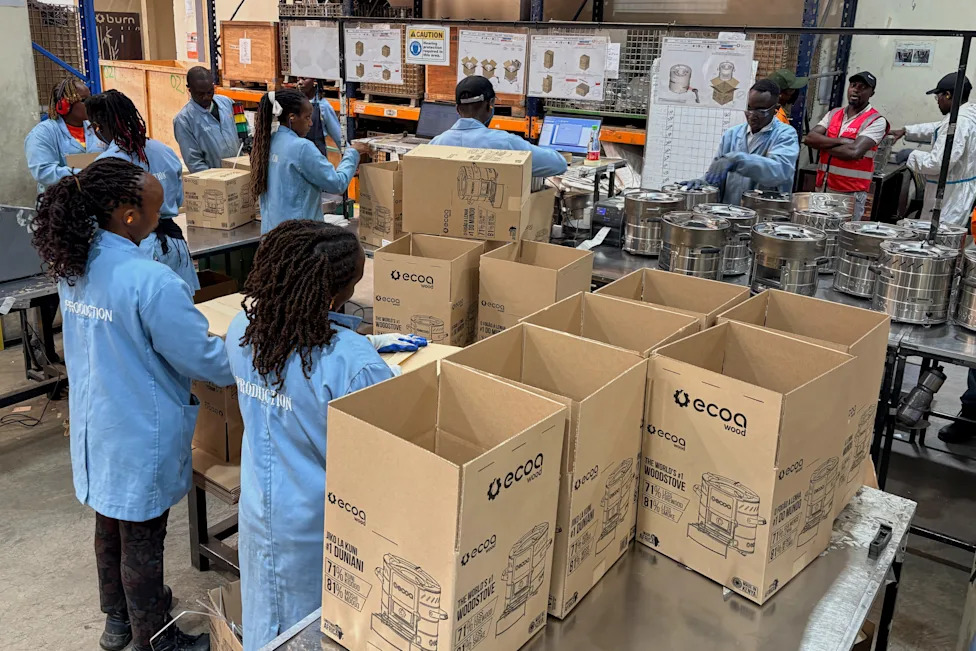
Workers assemble fuel-efficient cookstoves at BURN, a manufacturer of clean cooking appliances, in Kiambu, Kenya, on July 31, 2026. (AP Photo/Allan Olingo)(AP Photo/Allan Olingo)
Valid Concerns and Limitations
Despite successes, experts caution that carbon finance is not a silver bullet. Carbon revenues typically materialize only after verified emissions reductions occur, meaning companies must first find capital to manufacture and distribute equipment. "Carbon financing is more of a second financing source," said George Mwaniki of WRI Kenya. He warned that relying solely on carbon credits will slow the transition.
One high-profile setback: Koko Networks, once hailed as a model for Africa's clean-cooking transition, closed after failing to secure a government letter of authorization needed to sell carbon credits.
That example underscores operational and regulatory risks that can undermine projects and investor confidence.
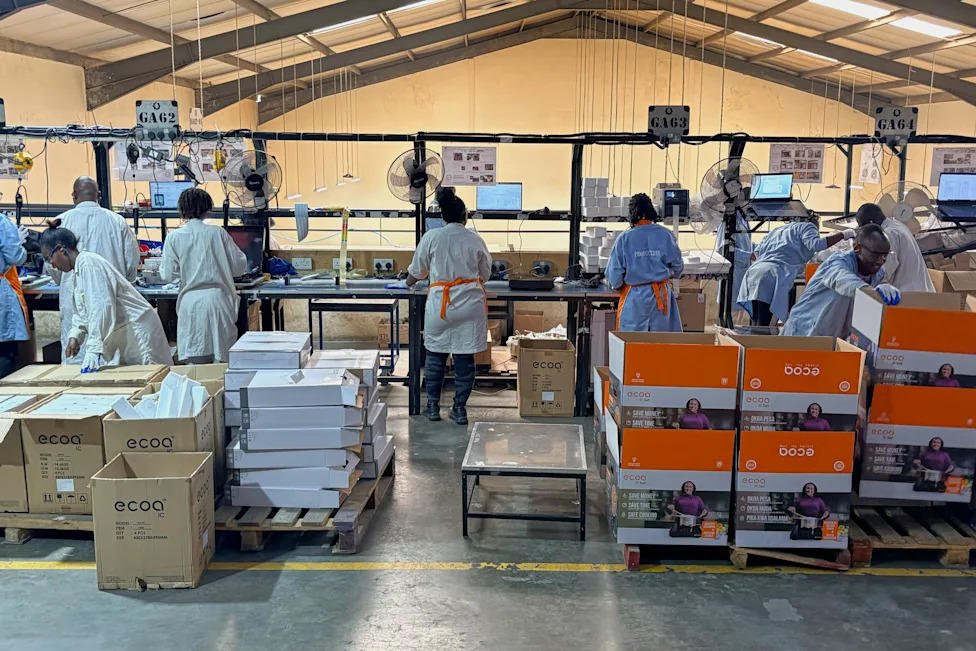
Workers assemble fuel-efficient cookstoves at BURN, a manufacturer of clean cooking appliances, in Kiambu, Kenya, on July 31, 2026. (AP Photo/Allan Olingo)(AP Photo/Allan Olingo)
Adapting To Local Needs
Companies are tailoring solutions to local conditions. BURN sees electric cooking as more viable in Kenya and Tanzania, while improved biomass stoves are preferred in the Democratic Republic of Congo and Madagascar. Eco Safi provides forced-draft pellet stoves and renewable fuel from agricultural waste in Uganda, Kenya and Malawi. In Rwanda, BioMassters and ENEDOM produce solar-powered pellet stoves, biomass-residue fuel and agricultural-residue briquettes respectively.
For households such as Kavutha's, the immediate benefits are tangible: cleaner kitchens, fewer health risks for children and lower household energy costs.
"My kitchen is cleaner, my children are safer, and I spend less. That is all that matters," she said.
The Associated Press' climate and environmental coverage receives financial support from multiple private foundations. AP is solely responsible for all content. Find AP's standards for working with philanthropies, a list of supporters and funded coverage areas at AP.org.
Help us improve.