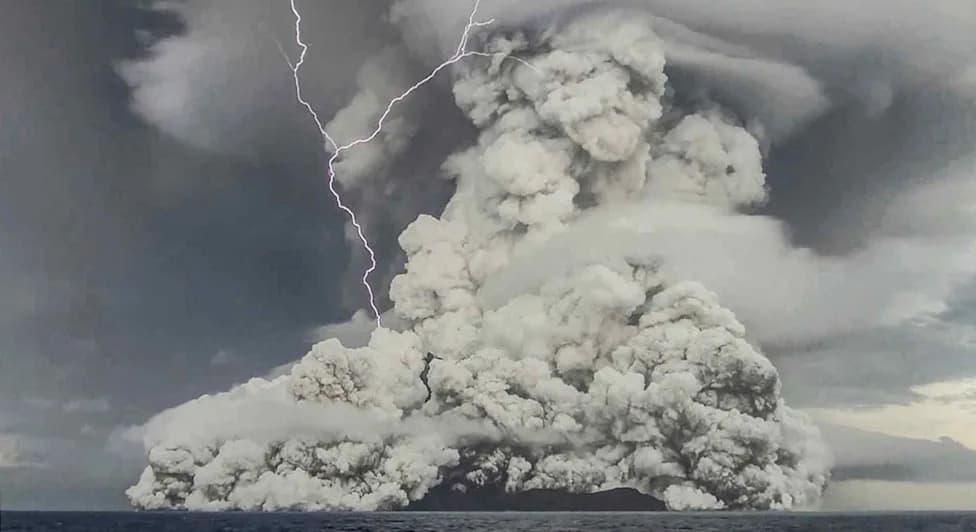
In 2018 a 22 cm borehole in the South China Sea produced a methane plume more than 1 km high after a failed sealing attempt. Within one to two years, methane-oxidising microbes, followed by burrowing worms and crustaceans, formed a living filter that reduced the plume from about 1,200 m to 800 m by 2023. Sampling around the site found elevated methane up to 500 m away and a >30% drop in microbial richness, highlighting ecological risks from drilling and abandoned seabed wells.
Ocean Life Rapidly Sealed a Methane Leak Under the South China Sea — What It Means For Drilling
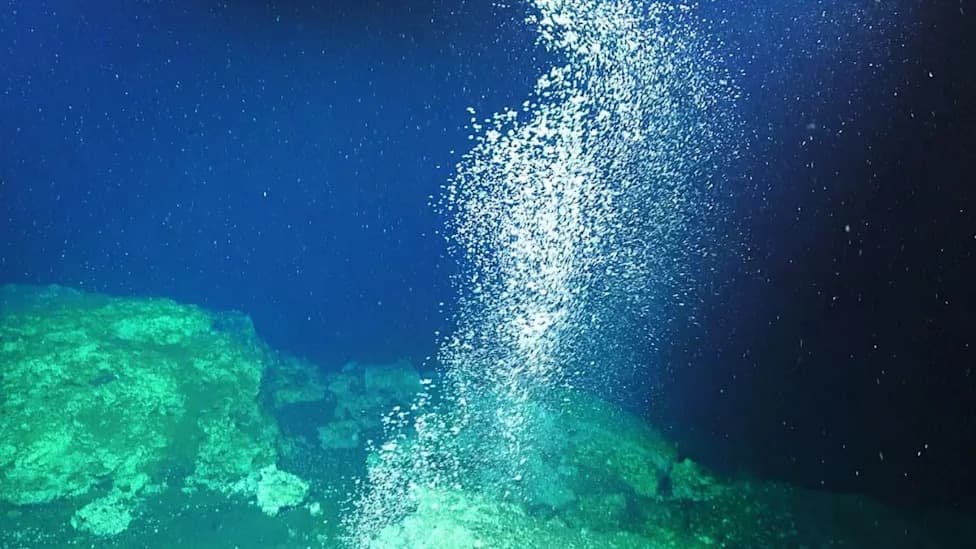
A natural cold methane seep. (Schmidt Ocean Institute/ROV SuBastian)
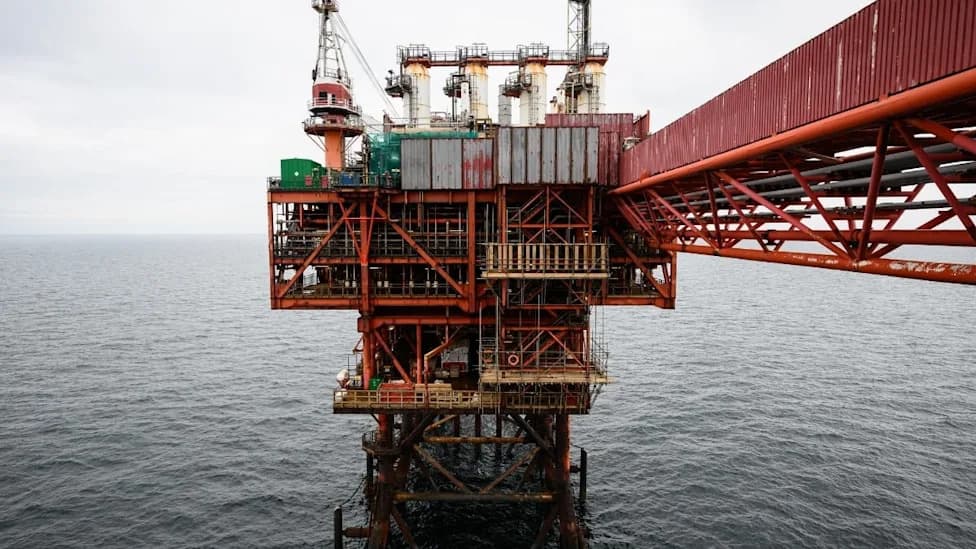
In 2018, Chinese geologists working for the China Geological Survey unintentionally punctured the seafloor in the South China Sea while assessing natural-gas potential. The borehole was small — just 22 centimetres (9 inches) across — but an initial attempt to seal it with heavy mud failed and a dramatic methane plume formed within a year.
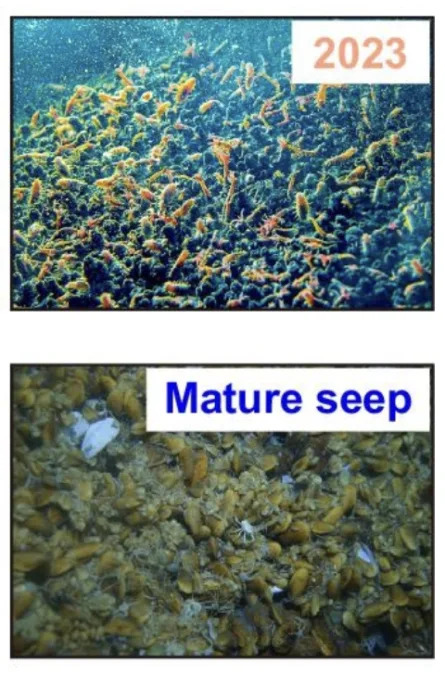
The human-made methane leak in 2023 compared to a mature and naturally occurring cold seep for comparison. (Liang et al.,National Science Review, 2026)
Researchers deploying echosounders, underwater cameras and chemical sensors watched the site closely. What followed surprised scientists: within one to two years a dense, methane-consuming biological community established itself around the leak, curbing the plume far faster than ecological models had predicted.
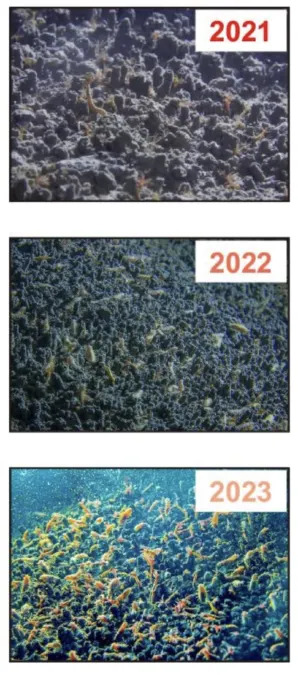
The expansion and thickening of the worm bed from 2021 to 2023. (Liang et al.,National Science Review, 2026)
Rapid Biological Response
The first colonisers were methane-oxidising bacteria and archaea. Although overall microbial diversity in nearby sediments declined, methane-specialist microbes proliferated. These microbes were then joined by burrowing invertebrates that created an extensive "worm bed," and by various crustaceans drawn to the new food source.
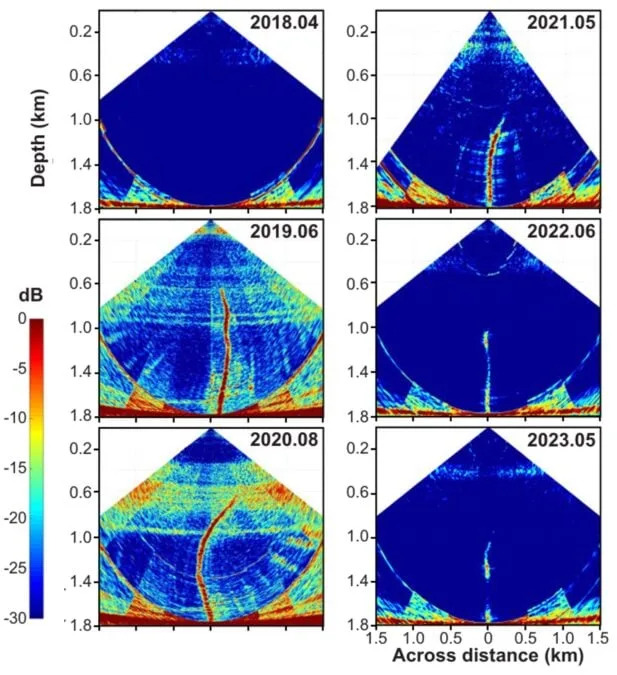
Acoustic imaging of the methane plume, which was still leaking as of 2023. (Liang et al.,National Science Review, 2026)
"Within just one to two years, an effective methane-consuming ecosystem had already formed," says microbial ecologist Emil Ruff of the University of Bremen.
As tube worms burrowed they mixed sediments and likely transported oxygen, nitrate and sulfate into deeper layers — processes that supported further microbial methane oxidation. Together, microbes and animals formed a living filter that reduced the height of the methane plume from roughly 1,200 metres above the seafloor to about 800 metres by 2023.

Subscribe to ScienceAlert's free fact-checked newsletter
Wider Impacts And Remaining Concerns
Despite the rapid biological containment, the site showed notable ecological impacts. Sampling at more than 40 sites around the discharge centre revealed elevated methane concentrations in surface sediments up to 500 metres from the source and a greater than 30% reduction in microbial richness near the leak.
YouTube Thumbnail
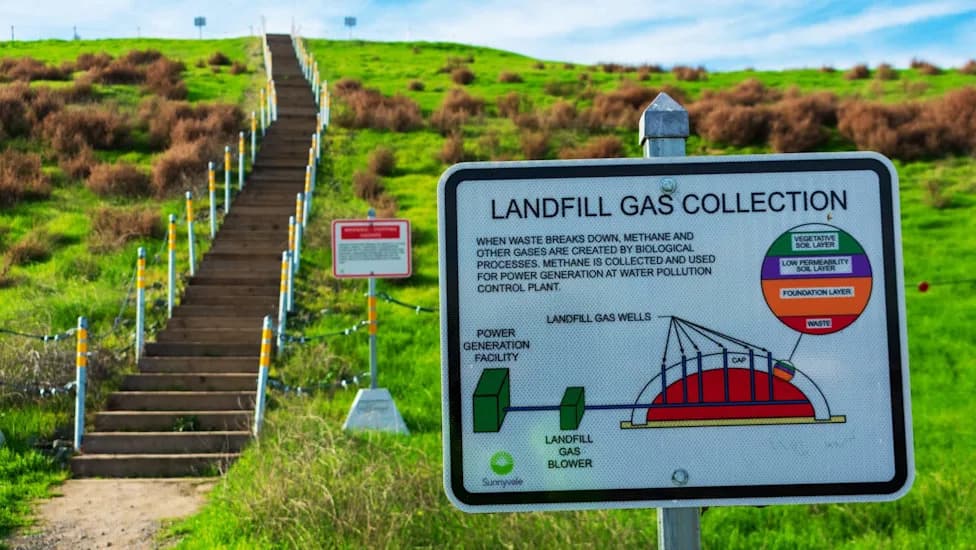
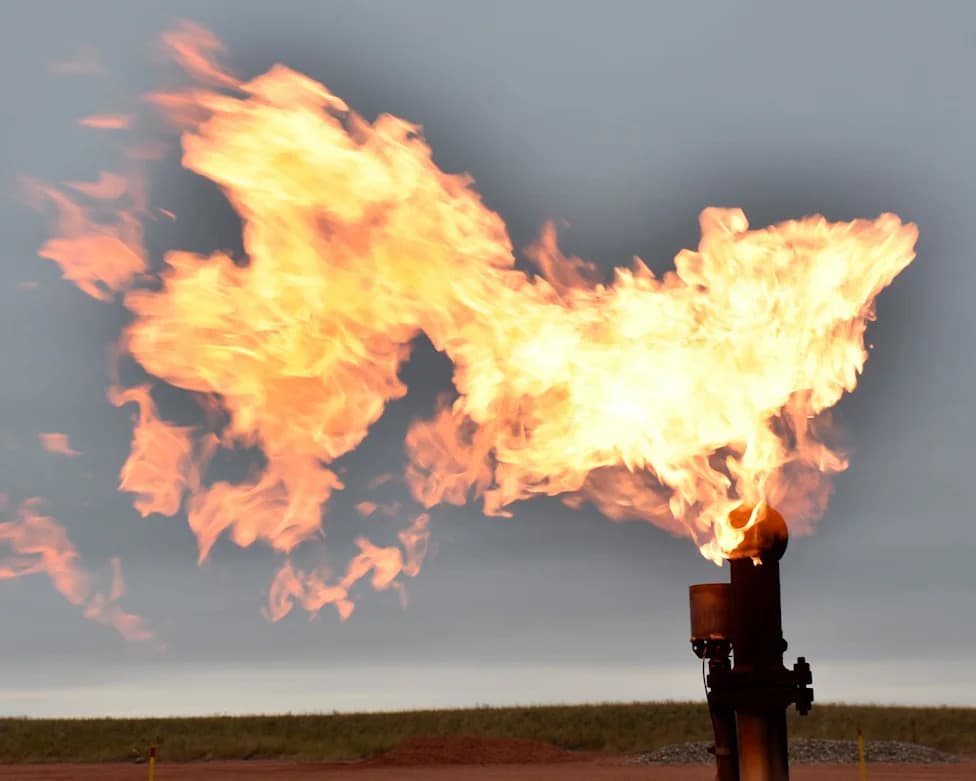
Seafloor sediments contain Earth’s largest methane reservoir, and natural seeps already support unique deep-sea ecosystems. But methane is also a potent greenhouse gas — responsible for roughly 11% of global emissions and much more effective than carbon dioxide at trapping heat over short timescales — so subsea releases remain a climate concern.
Abandoned oil and gas wells on the seafloor are increasingly recognised as important methane sources. In the North Sea, researchers found leaks at 28 out of 43 abandoned wells examined, and estimated that thousands of tons of methane could leak from old drill holes each year. Models published in 2025 suggest that leaks originating deeper than ~300 metres are likely to dissolve in the water column and supply little atmospheric methane; however, large subsea releases can still cause local oxygen depletion, acidification and community restructuring.
Implications For Methane-Hydrate Development
The South China Sea is the focus of commercial interest in methane hydrates: between 2010 and 2020, Chinese programmes completed more than 80 drilling evaluation wells in the region. It remains unclear how many of those wells were successfully sealed or what their ecological consequences are. This multi-year study — published in National Science Review (Liang et al., 2026) — is among the first to follow a single human-caused subsea leak over several years and shows how quickly local ecosystems can reorganise in response to disturbance.
Further monitoring and stronger regulations for drilling, well abandonment and leak mitigation are warranted to manage both ecological risk and potential climate impacts.
Source: Liang et al., National Science Review (2026). Monitoring methods included echosounders, underwater imagery and chemical sensors; findings reported through 2023.
Help us improve.