The UCLA Emmett Institute used Tanager-1 satellite data to detect 1,097 methane plumes across the Permian, Appalachian and Haynesville-Bossier basins from January 2025 to June 2026. An Energy Transfer facility near Shreveport averaged 1.56 tonnes/hour — roughly 15 times the EPA's "super-emitter" threshold. Researchers could assign operators for only about one-third of plumes, underscoring transparency gaps; experts say stronger monitoring and regulation are needed to curb costly, climate-warming leaks.
Satellite Study Identifies U.S. Methane 'Super-Emitters' — Energy Transfer Site Tops List
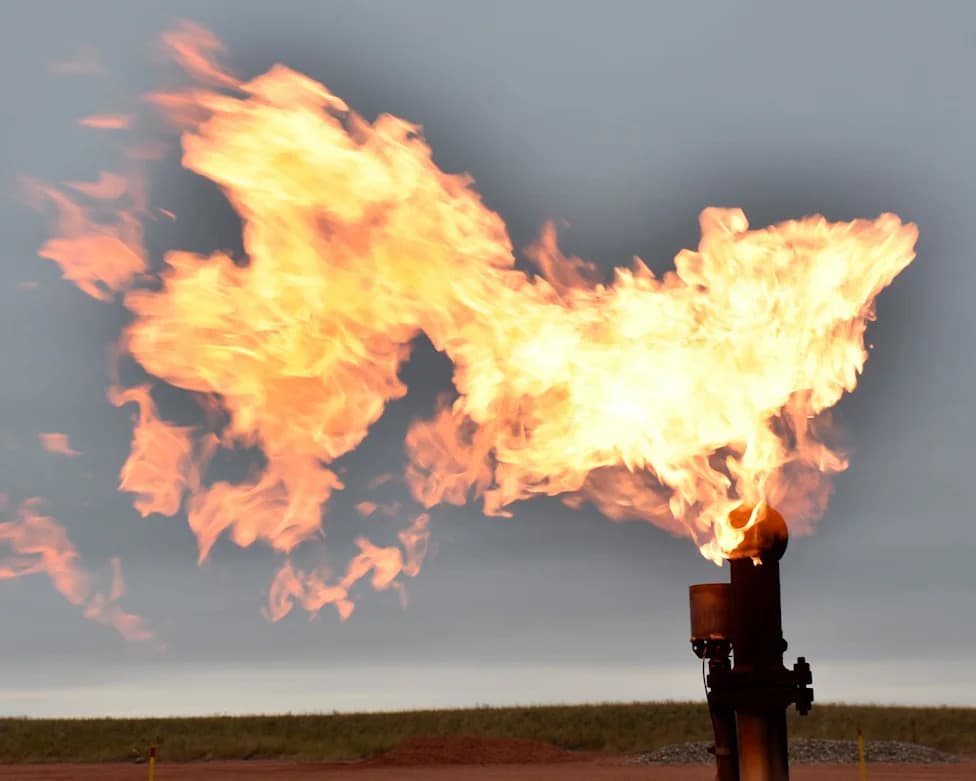
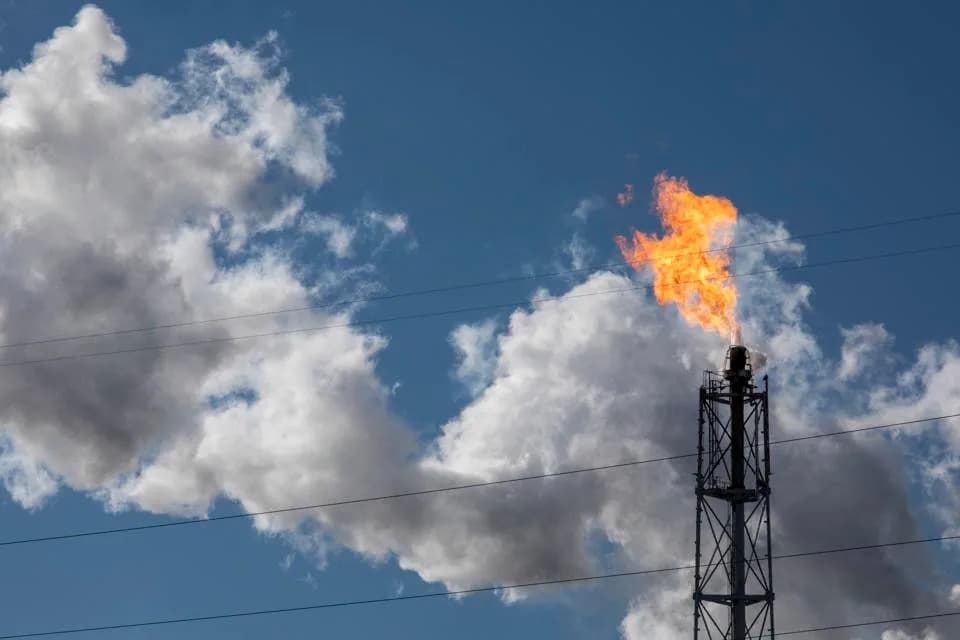
A flare burns natural gas at an oil well in August 2021, in North Dakota.Photograph: Matthew Brown/AP
Down a short gravel lane in an otherwise unremarkable corner of Louisiana sits a gas-processing complex that a new UCLA satellite analysis identifies as possibly the largest single methane source in the United States. The Energy Transfer facility, near Shreveport, ranks highest in fresh data showing major releases of methane — a potent greenhouse gas linked to rapid warming.
Key finding: From January 2025 through June 2026, the UCLA Emmett Institute found the Shreveport site emitted methane at an average rate of 1.56 tonnes per hour — roughly 15 times the level the US Environmental Protection Agency (EPA) under the Biden administration defined as a "super-emitter" event.
How the analysis was done
The report combines observations from the Tanager-1 satellite, operated by the non-profit Carbon Mapper, with public records and lease data to identify large methane plumes across three major US basins: the Permian, Appalachia and Haynesville-Bossier. Between January 2025 and June 2026, satellites detected 1,097 methane plumes from oil and gas operations in those regions.
Using public location and lease records, the UCLA team was able to assign a "potentially responsible operator" for about one-third of those plumes — a transparency gap the authors say is cause for concern given the scale of detected emissions.
Who Is Linked To The Biggest Releases
Dallas-based Energy Transfer was linked to four of the top 15 facilities and to 75 plumes overall during the study period — about three times the number attributed to the next-largest operator. Other companies repeatedly identified in the analysis include Enterprise Products, Targa Resources and Enlink.
Energy Transfer's CEO, Kelcy Warren, is a major donor to former president Donald Trump. The company did not provide detailed responses for this report about the Shreveport site's emissions, whether those emissions were intentional venting or accidental leaks, or immediate mitigation actions at that location. Energy Transfer has previously reported using measures such as optical gas imaging inspections across many facilities.
Why This Matters
Methane is a powerful short-lived climate pollutant: over a 20-year horizon it traps roughly 80 times more heat per molecule than carbon dioxide and is estimated to be responsible for nearly one-third of historical warming since the industrial era. Because methane decays faster than CO2, cutting its releases can produce relatively rapid climate benefits — an "emergency brake" on warming, experts say.
Satellite detection has exposed large, previously hidden releases, but the record remains incomplete. Cloud cover, intermittent venting, and gaps in reporting mean satellites can miss events and that true emissions are likely higher. Recent research cited by UCLA estimates US oil and gas methane emissions may be roughly 64% greater than official EPA inventories.
"Many of these sites are repeat offenders linked to not one but multiple mega plumes," said Cara Horowitz, executive director of the UCLA Emmett Institute. "Now they are plainly visible; they deserve public and regulatory attention."
Industry, Policy And Response
The UCLA team focused on the three basins because they account for about two-thirds of US natural gas production and are central to the country's expanding liquefied natural gas (LNG) export industry. While some industry actors argue LNG is cleaner than coal when combusted, repeated methane losses during production, transport and export can undermine those climate advantages.
The report notes signs of mitigation at some sites: three of the top 10 sites in the UCLA ranking — including the first- and second-ranked locations — had no plumes detected in the most recent satellite passes, indicating targeted fixes may already be taking effect.
However, policy changes under the current administration have rolled back Biden-era enforcement and reporting measures aimed at cutting methane. Critics warn that without strong regulatory or financial incentives, routine venting and leaks will likely continue.
Examples And Follow-Up
Activists and field monitors document frequent blowdowns and visible plumes that often go unreported. Sharon Wilson, director of Oilfield Witness, cited on-the-ground footage of Energy Transfer sites and others showing sustained releases the satellites sometimes miss because of weather or timing.
Boardwalk Pipeline Partners — owner of a gas storage site near Shreveport ranked 10th in UCLA's list — said its Bistineau Storage Station follows required inspections and maintenance, and that some releases occur during safe pressure-relief activities. The company said it is working to reduce emissions and comply with regulations.
Conclusion
The UCLA satellite analysis highlights a mix of chronic and episodic methane pollution concentrated in a few production hubs. The findings reinforce calls for improved transparency, stronger monitoring, and action to fix leaks and limit venting. Given methane's outsized short-term climate impact, targeted mitigation offers some of the fastest potential gains in slowing near-term warming.
Help us improve.