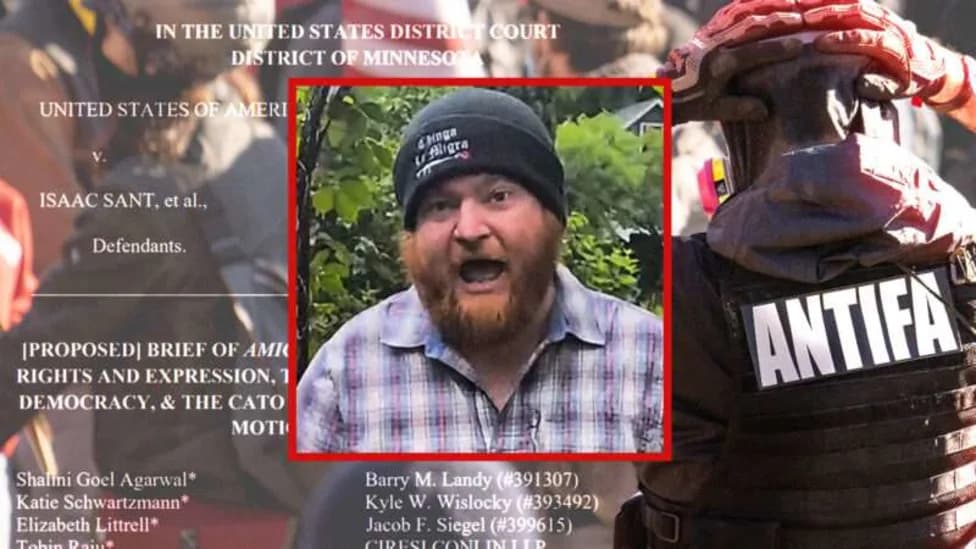
A Minnesota court battle may force disclosure of Department of Homeland Security surveillance tied to immigration enforcement, potentially revealing monitoring of churches, unions, nonprofits and activist networks. Defense attorney Kevin Riach has asked Judge David Schultz to order broader production of records to prepare the defense for 15 defendants, including Isaac Sant, and to probe whether prosecutors acted vindictively. Prosecutors say they have already produced vast amounts of material, including terabytes of Signal messages. A decision for the defense could place wider surveillance details into the public record.
Minnesota Case Could Reveal Scope Of DHS Surveillance On Activists, Churches And Unions

Photo Credit: iStock
A courtroom dispute in Minnesota could force the federal government to disclose how broadly the Department of Homeland Security monitored anti-immigration-enforcement activists — potentially exposing surveillance of churches, labor unions, nonprofits and activist networks.
Defense attorney Kevin Riach asked U.S. District Judge David Schultz to order additional discovery in the case, seeking records that Riach says are necessary to prepare the defense for all 15 defendants and to determine whether prosecutors acted selectively or vindictively. The defense represents Isaac Sant, one of the 15 Minnesotans charged with conspiring to assault or obstruct federal agents; all have pleaded not guilty.
Riach's motion requests a range of materials, including communications between local prosecutors and federal officials in Washington, D.C.; surveillance files on Minnesota activists, nonprofits and labor unions; and data recovered from undercover agents' phones and laptops. If released, these records could illuminate how information was collected and whether monitoring extended beyond individual suspects to broader community organizations.
Assistant U.S. Attorney Sommer Honeycutt said prosecutors already have produced a substantial volume of material — including terabytes of Signal messages and numerous undercover reports — and maintained that the charges arise from alleged criminal acts rather than impermissible targeting.
Some documents already disclosed in the case show that undercover agents logged license-plate numbers of vehicles attending anti-ICE meetings, including gatherings held at churches. The defendants' actions grew out of opposition to former President Donald Trump's winter immigration crackdown, Operation Metro Surge, an operation during which two Americans were killed and others were arrested or injured.
Why The Discovery Fight Matters
Through discovery, the defense is pressing for public visibility into how DHS and federal prosecutors gathered and used intelligence. Riach argues that fuller disclosure could show whether enforcement decisions were influenced by improper motives and whether the prosecution has chilled lawful political organizing and protest.
Riach: "The purpose of this prosecution is to chill the conduct of the defendants and others and to squash dissent in this district. We are in times these days where that presumption… it's evaporated."
Judge Schultz said he will issue a ruling as soon as possible but did not give a specific timetable. If he orders broader disclosure, additional details about the surveillance campaign could enter the public record, potentially revealing the extent to which federal agents monitored organizing activities in Minnesota and possibly beyond.
Outside the courthouse, relatives and supporters of the defendants gathered and chanted against Immigration and Customs Enforcement (ICE), underscoring the case's high public and political stakes.
Help us improve.