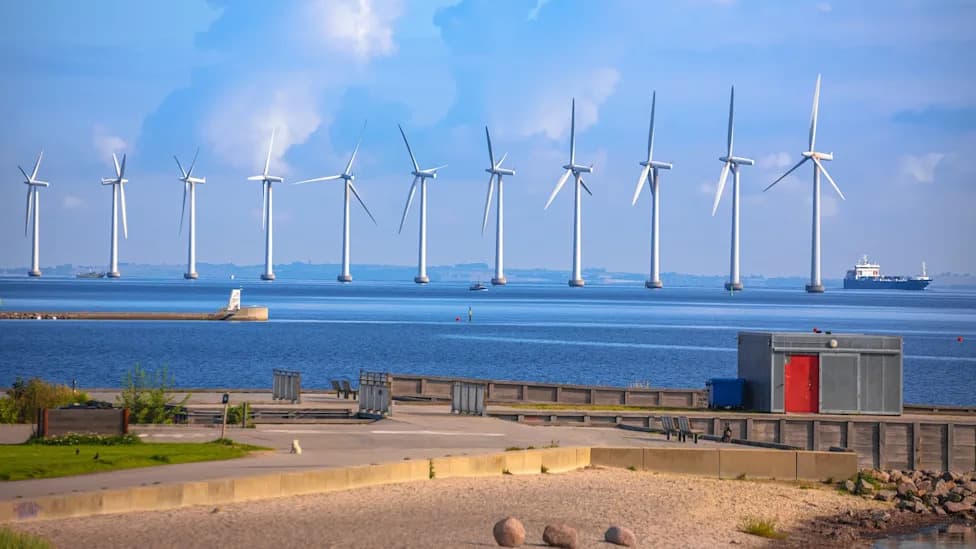
Britain is pushing a major expansion of floating offshore wind as shallower seabeds are exhausted, targeting some 3,000 turbines and about 30GW of capacity over the next 10–15 years. Developers have bid at roughly £270/MWh under current rounds, around three to four times typical wholesale rates, which could raise consumer bills. Supporters cite jobs, industrial growth and energy security; critics warn of high long-term costs, disruption to fisheries and industrialised coastlines. The debate now focuses on whether scaling will deliver the expected cost reductions without unacceptable social or environmental impacts.
UK Accelerates Floating Wind Rollout as Shallow Sites Fill Up — 3,000 Turbines and £270/MWh Subsidies Loom
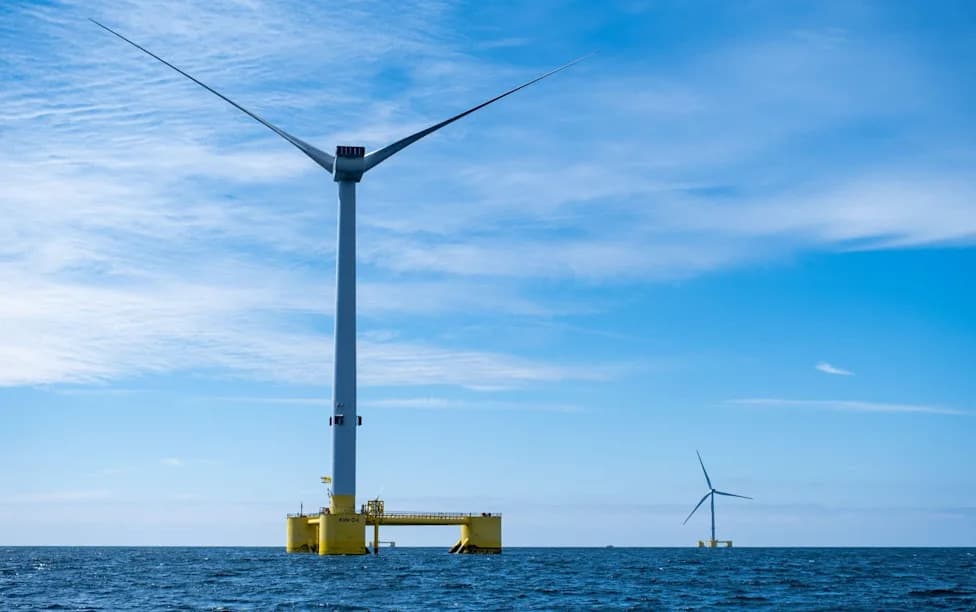
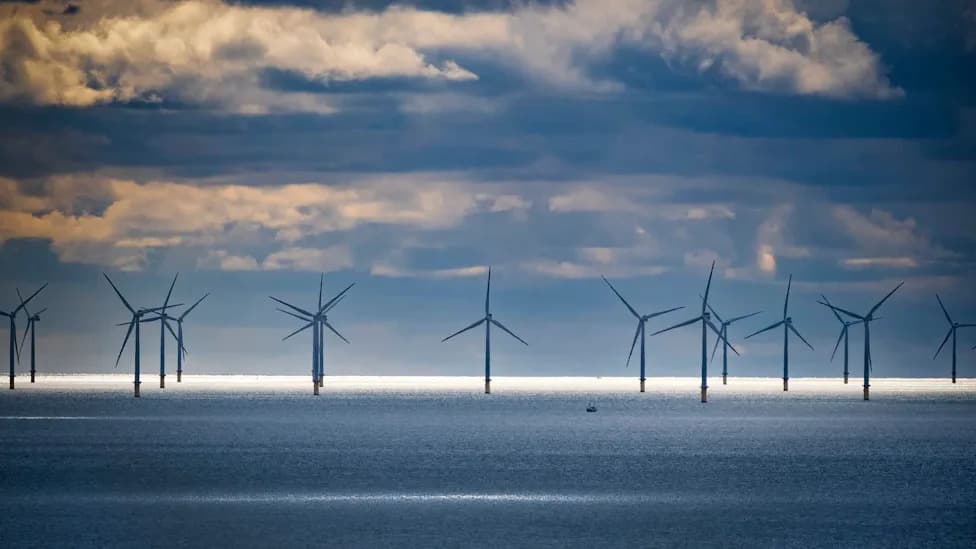
The Kincardine floating offshore wind farm. Supporters argue that floating wind is the obvious next step in Britain's pivot away from fossil fuels - Charlie Cameron/Alamy
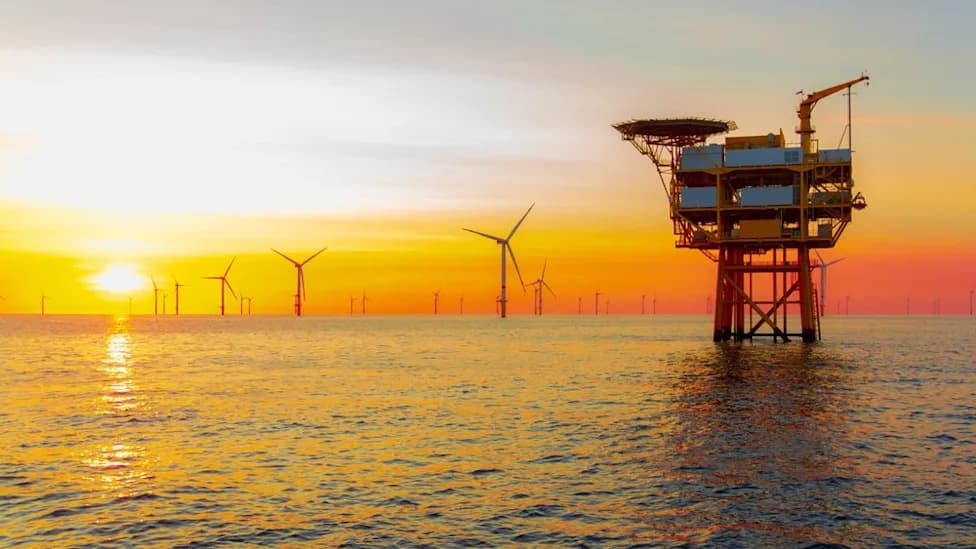
Britain is preparing a large-scale expansion of floating offshore wind as shallower seabeds suitable for fixed turbines become fully developed. The government has approved generous subsidy arrangements intended to kick-start an industry of floating platforms anchored in deeper waters off Scotland, Wales and Cornwall.
Shortly before his reassignment to the Foreign Office, former Energy Secretary Ed Miliband signed off plans for hundreds — and ultimately thousands — of floating turbines. The policy promises guaranteed prices for generators of roughly three to four times current wholesale rates for up to 20 years to make projects commercially viable.
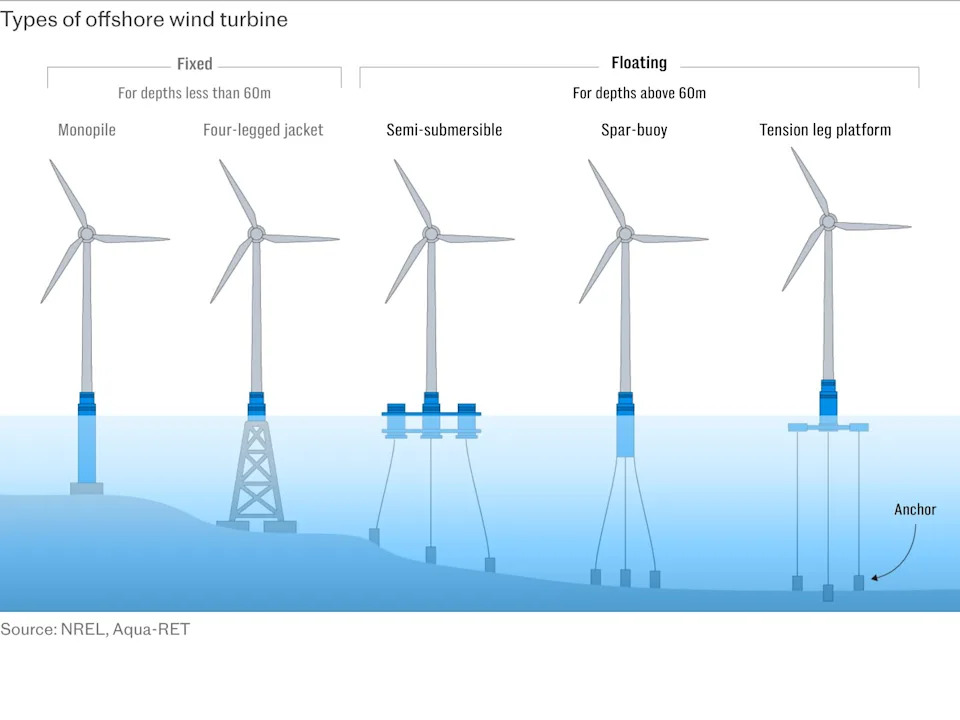
Types of offshore wind turbine
"Floating offshore wind is at the heart of the Government's mission to make Britain a clean energy superpower,"
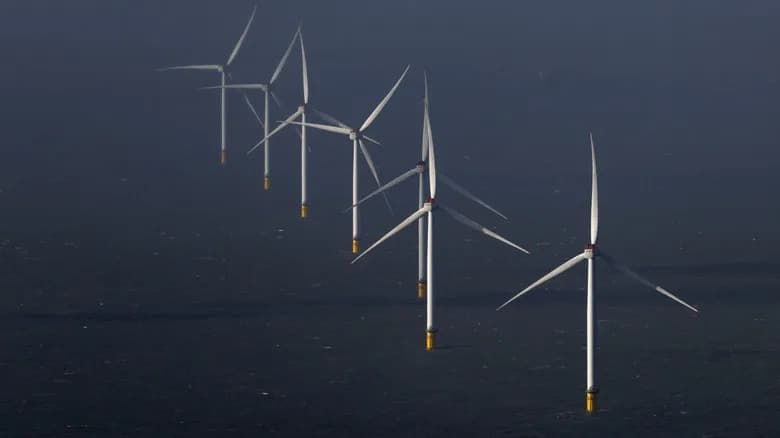
In practice, ministers aim for about 3,000 floating turbines around UK coasts over the next 10–15 years, with roughly 500 installed by 2030. That capacity would total about 30 gigawatts (GW), connected to the mainland by thousands of miles of subsea cable and routed into the grid through a network of new onshore substations.
Costs, Contracts and Consumer Impact
The financial details will become clearer when the results of the latest allocation round are published later this autumn. Developers have bid at around £270 per megawatt hour (MWh) in current rounds — about three to four times typical wholesale prices. Earlier pilot projects received guarantees of up to £230/MWh under an older scheme.
When large commercial projects come online under such contracts, the additional costs are likely to be passed on to consumers through energy bills, which are already high by international standards.
Supporters' Case
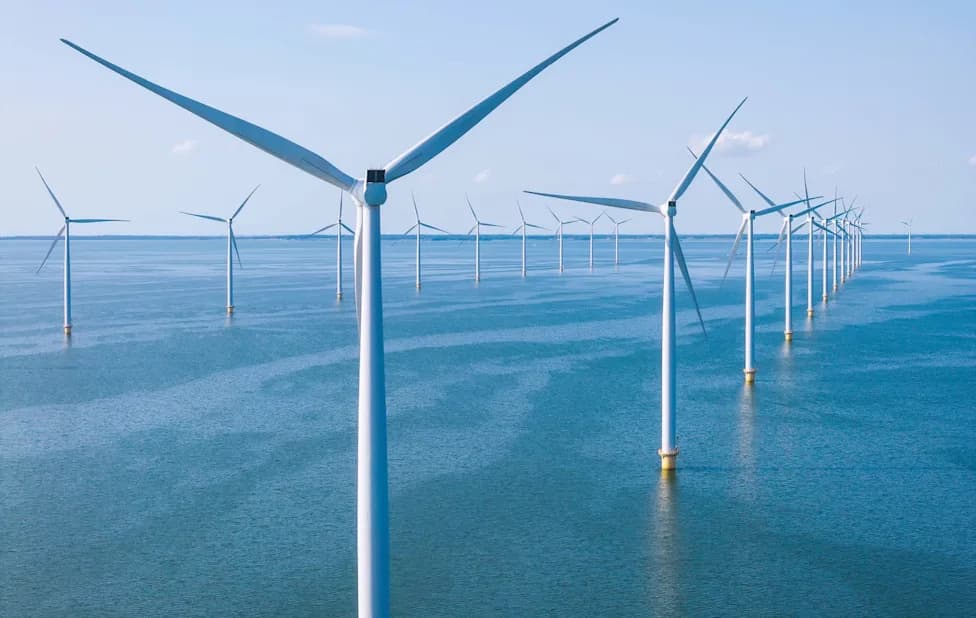
Proponents say floating wind is the natural next step after fixed-bottom turbines filled waters up to about 60 metres deep. Floating platforms would open access to vast tracts of deeper ocean around much of Scotland, the Irish Sea and the Celtic Sea off Cornwall. Supporters also argue the technology will follow the cost-decline trajectory seen in fixed offshore wind and solar as supply chains scale and manufacturing matures.
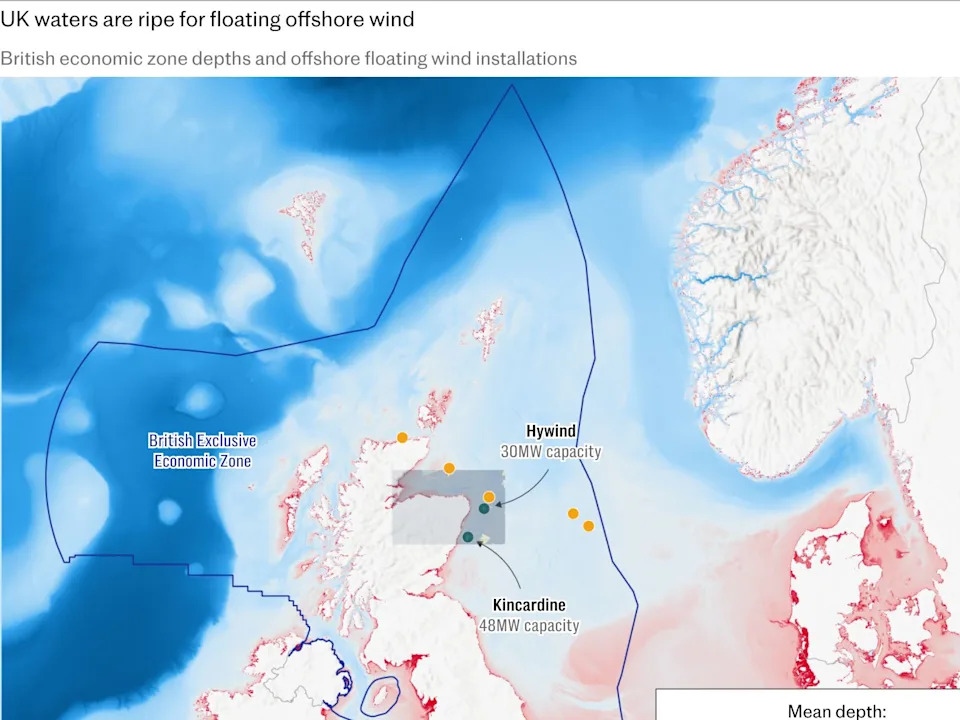
2108 UK waters are ripe for floating offshore wind
Trade body Renewable UK tracks several projects: nine floating farms have planning permission, eight are seeking consent and 25 more are in development. Renewable UK estimates foundation design and manufacturing could add over £10bn to the economy in a decade and suggests the sector could employ roughly 97,000 people and contribute up to £47bn to the economy by 2050 if it scales as projected.
Criticism and Local Impacts
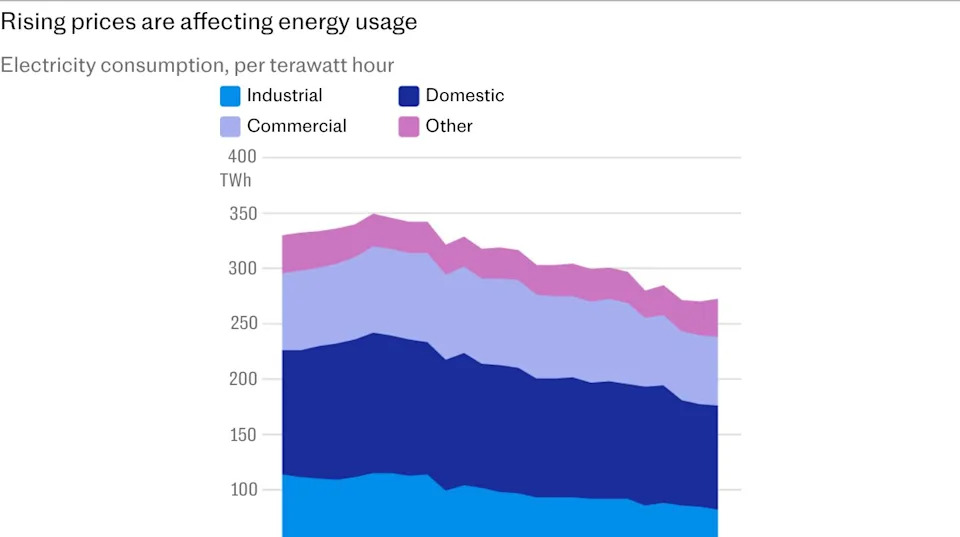
Critics question the value for money. Dr John Constable of the Renewable Energy Foundation warns that floating wind faces a harsh marine environment and lower power density, keeping costs high compared with conventional offshore wind. Some opponents also note that UK electricity consumption has fallen by about 20% in the past two decades, raising questions about the scale of new capacity required.
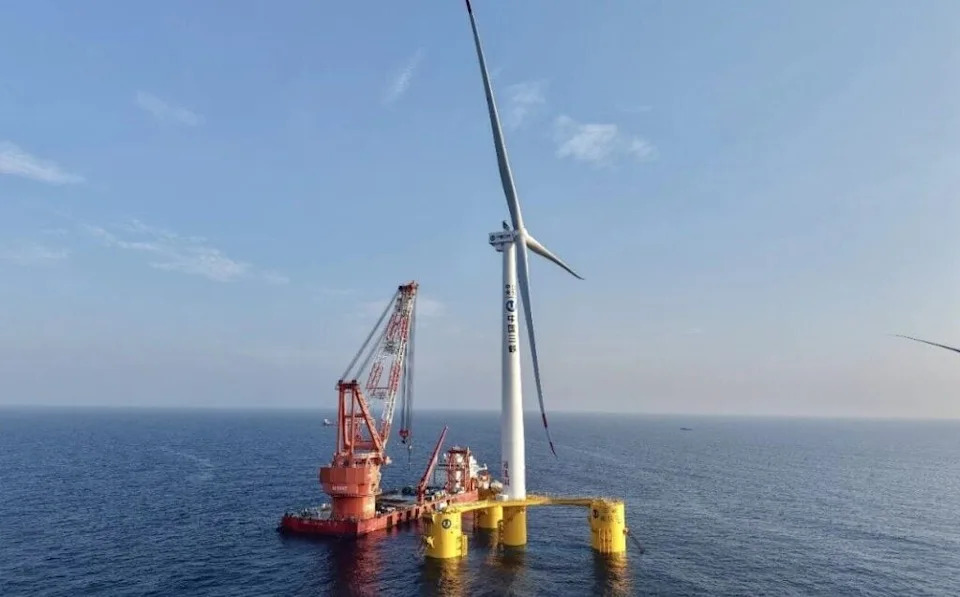
Floating wind turbines can be anchored in waters that are too deep for fixed turbines
Environmental and maritime users warn of practical disruption. Planned arrays can require hundreds of anchors and extensive seabed cabling. One proposal foresees 260 turbines between South Wales and North Cornwall anchored by around 1,000 moorings and linked with more than 500 km of cable. Oil and gas operators, commercial shipping, leisure sailors and inshore fishing fleets could be displaced or forced to alter routes and operations.
Fishing organisations are especially concerned. The National Federation of Fishermen's Organisations and the Scottish Fishermen's Federation warn that moorings, hanging cables and associated infrastructure will make traditional fishing methods impossible inside arrays and could threaten coastal food-supply livelihoods.
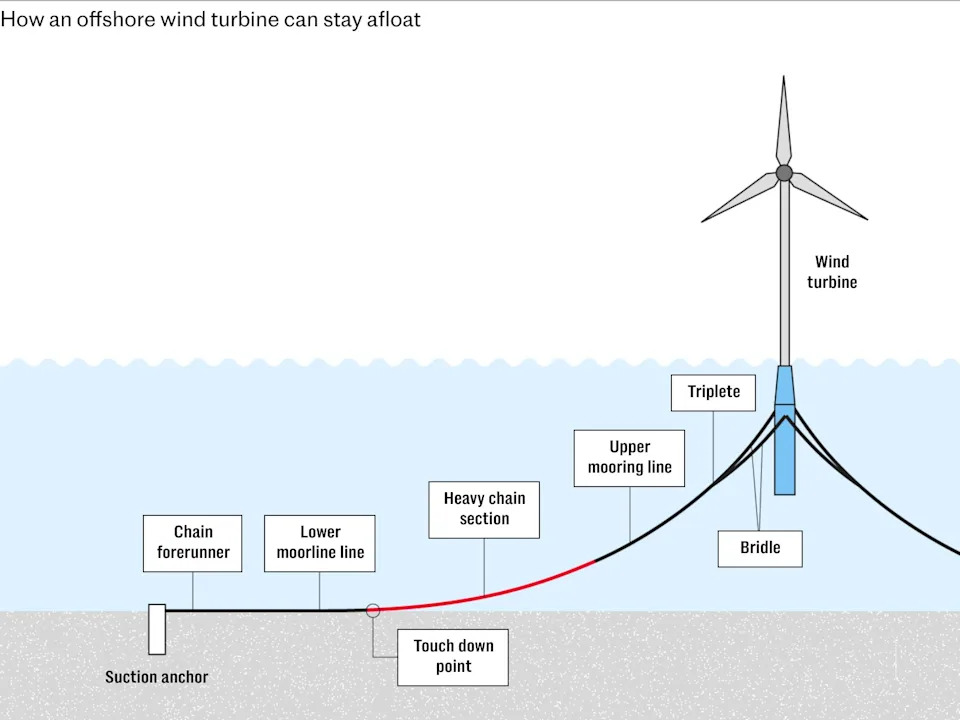
0407 How offshore wind turbine can float
The infrastructure footprint extends onshore: construction, staging and maintenance zones — including deep-water quays, heavy lifting gear and assembly yards — will be needed close to ports. The government has offered a £160m capital grant scheme for port upgrades to support these activities.
Where Things Stand
Early floating projects have demonstrated technical promise. Hywind, off Peterhead, has five turbines operating since 2017 in waters up to 120m deep and has achieved around a 54% capacity factor in favourable conditions. The Kincardine array has also been operational and provided valuable lessons, though both were heavily subsidised under earlier schemes and remain relatively small testbeds.
The policy choice now hinges on whether the industry can achieve rapid cost reductions and scale without imposing unsustainable costs on consumers and without unacceptable impacts on coastal communities and maritime users.
A Department for Energy Security and Net Zero spokesperson said the sector can build on expertise from oil and gas to create jobs, attract investment and strengthen Britain’s energy security.
Help us improve.