Record-low water levels on Europe’s inland waterways — notably the Rhine and parts of the Danube — have forced barges to carry far lighter loads, cut capacity and driven up transport costs. Low-water surcharges at bottlenecks such as Kaub and Cologne have exceeded €1,000 per container, and alternatives by rail or road are limited, especially for bulk cargo. Sustained disruptions could push some costs down the supply chain to consumers, while long-term resilience will depend on vessel design, intermodal capacity and water management.
Europe’s Rivers Run Dry: Rhine, Danube Low Waters Force Shipping To Adapt — And Costs Rise
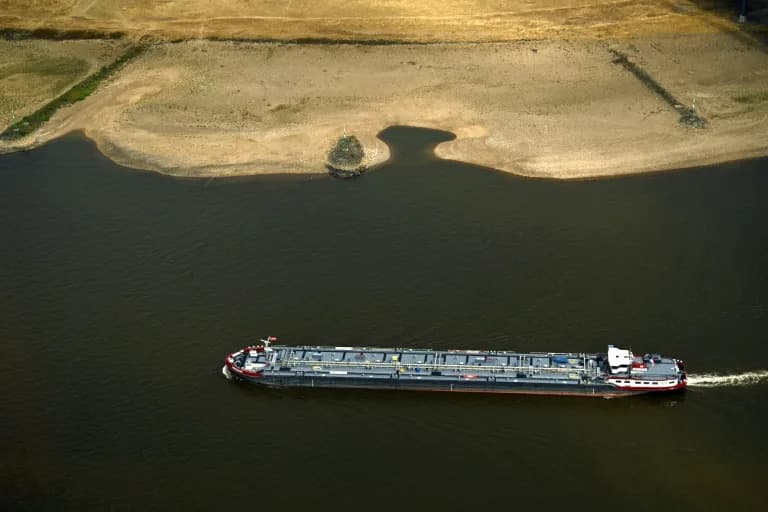
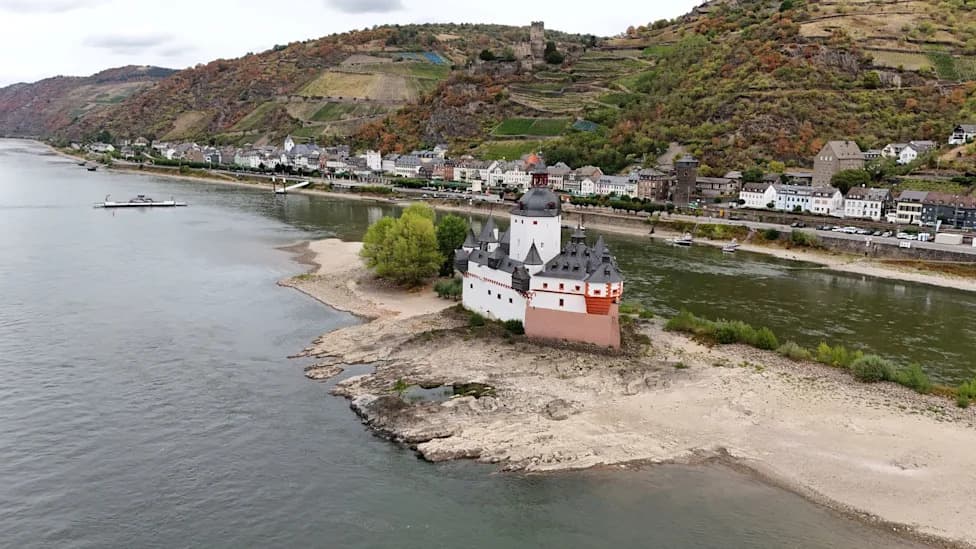
A vessel sails past receding riverbeds on the Rhine near Duesseldorf, western Germany, on Thursday (Ina FASSBENDER)
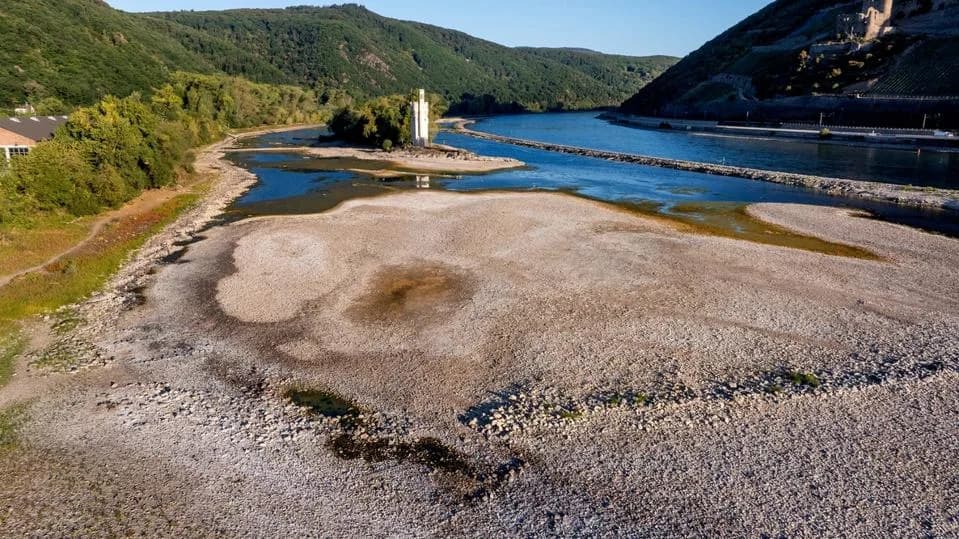
Exceptionally low river levels across Europe this summer, driven by drought and record heat linked to climate change, have thrown inland freight operators into disarray and pushed up logistics costs that may ripple to consumers.
Major waterways — above all the Rhine and parts of the Danube — are operating far below normal levels, disrupting a transport network that moves huge volumes of bulk goods between industrial hubs and seaports.
Impact On Shipping
Germany’s Rhine, the backbone of Europe’s inland waterway system, has been especially hard hit. A Maersk spokesperson told AFP that the situation was “unprecedented,” and that most inland ports along the Rhine were no longer reachable by barge in places.
“The situation is unprecedented. Today, most of the inland ports along the Rhine cannot be reached by barge anymore.” — Maersk spokesperson
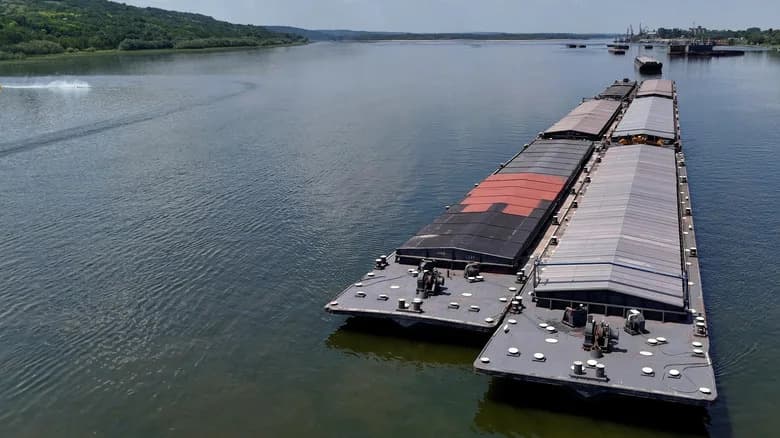
At Kaub — a critical chokepoint for river traffic — the water gauge dropped to about 6 cm on August 14, well below the previous low of 25 cm recorded in 2018. VNF Strasbourg reported that average loads on Rhine vessels fell from roughly 1,500 tonnes to about 400 tonnes in August.
No Easy Alternatives
Operators have tried to move cargo from rivers to rail and road, but options are constrained. Jean-Laurent Kistler, development director at the French waterways authority (VNF) in Strasbourg, estimated that replacing the cargo of a single barge could require 100 to 200 trucks.
Many commodities moved on the rivers — including chemicals, hydrocarbons, construction materials and grain — are bulk, non-containerized goods that are difficult and costly to shift into containers or onto other modes of transport.
Rising Costs And Surcharges
Barges must sail with lighter loads to reduce draught, which increases unit costs because fixed operating costs stay the same. Transport consultants say these effects rapidly push up per-tonne and per-container prices.
Operators have introduced low-water surcharges that climb as river levels fall. In the most strained locations, like Kaub and Cologne, surcharges have topped €1,000 per container, according to Contargo. Logistics directors warn that bulk cargo can face even steeper increases.
Will Consumers Pay?
Clecat, the freight forwarders’ association, cautions that whether higher transport costs reach shoppers depends on the disruption’s duration, the commodity, and companies’ ability to absorb or pass on costs. For many bulk goods, transport is a significant component of the delivered price, so sustained increases would filter down the supply chain.
Building Resilience
Industry responses include developing vessels better suited to low-water conditions, expanding intermodal options (greater use of rail and trucks), and, crucially, improved water management. France has built reservoirs and diversion channels on its stretch of the Rhine to regulate flows. By contrast, much of the German Rhine remains free-flowing and therefore more vulnerable to dry spells.
As Kistler put it: “We went from 10 ships a day to 25, 14 of them loaded — still far from the optimal load. This doesn’t save the day.”
What To Watch
- How long low-water conditions persist and whether autumn rains restore flows.
- Whether surcharges remain elevated and for how long.
- Investment and policy moves to improve water management and inland transport resilience.
Help us improve.