A World Weather Attribution study finds a severe marine heat wave across parts of the Atlantic and Mediterranean, with some locations more than 42°F above average. July saw record sea-surface temperatures—Mediterranean averages topped 27°C and a buoy west of Mallorca exceeded 33°C. Scientists say human-caused climate change greatly increased the likelihood and intensity of these conditions, which threaten corals, seagrasses and fisheries while favoring species such as jellyfish.
Study: Climate Change Drives Record Marine Heat Wave Across European Waters
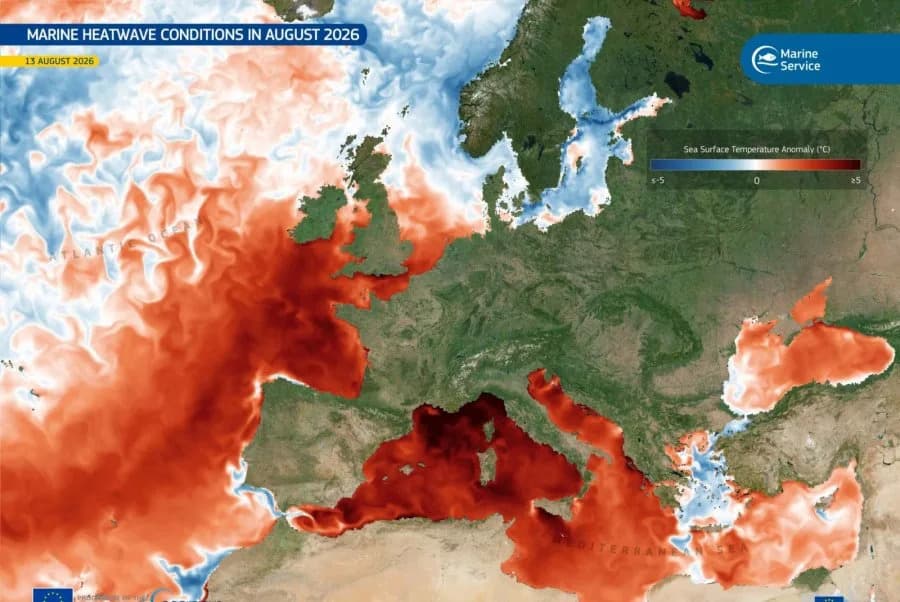
Marine heat wave conditions have been affecting the western Mediterranean Sea and parts of the Atlantic through the summer. This data visualisation, based on Copernicus Marine Service data for Aug. 13, shows sea surface temperature anomalies across the Mediterranean Sea and the adjacent Atlantic. Red and dark red tones indicate areas where sea surface temperatures were above the long-term average. Image courtesy of European Union, Copernicus Marine Service Data
A new analysis by the World Weather Attribution consortium finds that parts of the Atlantic and Mediterranean surrounding Europe are experiencing an exceptional marine heat wave, with some areas registering more than 42°F above average this week. The study points to human-caused climate change as the primary driver of these extreme ocean temperatures, which threaten marine ecosystems and coastal communities.
The research team examined four regions: the Eastern and Western Mediterranean, the Atlantic waters around the Bay of Biscay and the Iberian Peninsula, and the seas around Ireland and western Britain. By July, the average temperature of the entire Mediterranean Sea exceeded 27°C (80.6°F), the highest July value on record, and a buoy west of Mallorca measured more than 33°C (91.4°F) in open water.
"This summer, we've seen some really exceptional ocean temperatures around Europe," said Catherine Gregory, a climate scientist at the University of Bern and a contributor to the study.
The scientists report that July brought record marine heat wave conditions for the Western Mediterranean, the Celtic region (the seas around Ireland and western Britain), and the Bay of Biscay–Iberian Peninsula region. The study's attribution analysis concludes that human-driven warming substantially increased the likelihood and intensity of these marine heat waves.
Oceans absorb most of the excess heat generated by burning fossil fuels. Warmer surface waters force mobile species to move in search of cooler conditions while stationary organisms—such as corals and seagrasses—face increased risk of mass die-offs. Changing temperatures also favor some species (for example, jellyfish) and can alter food webs, fisheries and coastal storm behavior later in the season.
"We have what we call winners and losers. A lot of species wane in abundance or completely disappear while others bloom and proliferate," said John Bruno, an ecologist at the University of North Carolina at Chapel Hill and a co-author of the study.
Note on reported figures: some earlier summaries included unusually large attribution numbers that appear inconsistent with the observed anomalies; the study's main conclusion—strong attribution of this event to human-caused warming—remains robust, but some specific numeric values reported by secondary sources may be typographical errors.
Help us improve.