Record sargassum blooms have overwhelmed Miami Beach cleanups, producing odors and potential health risks from hydrogen sulfide and contaminants like arsenic. University of Miami researchers propose using black soldier fly larvae to convert beach-collected seaweed into products such as aquaculture feed and fertilizer. Initial trials using five mixed waste diets showed 94%–99% larval survival over 15 days, but the experiments did not use pure sargassum. Major obstacles remain, including contaminant reduction, moisture and microbial control, and scaling climate-controlled processing units.
Miami Beaches Choked by Record Sargassum — Researchers Test Black Soldier Fly Recycling
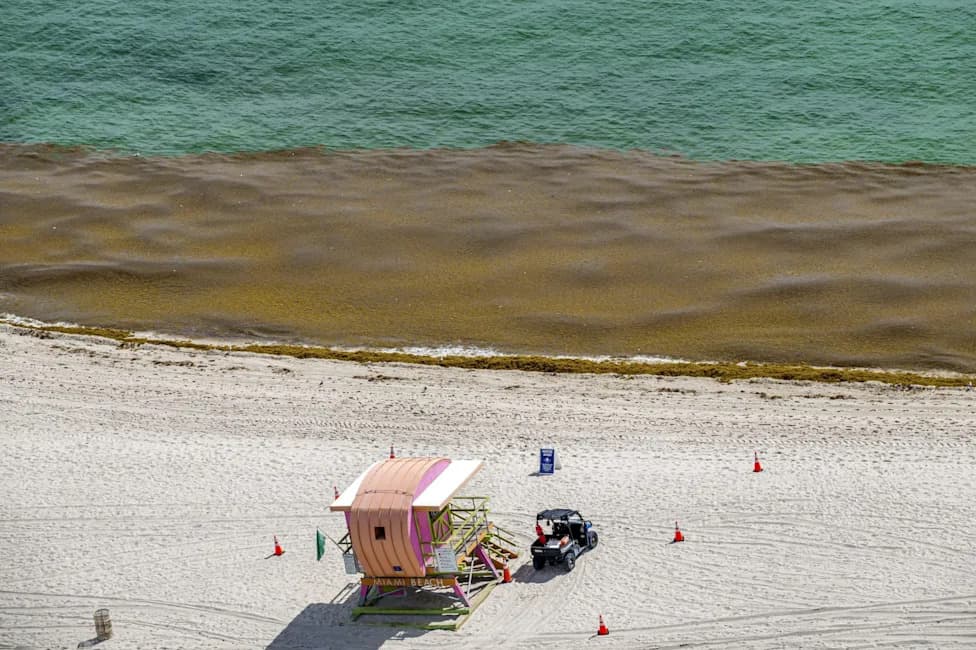
A wall of sargassum deters would-be bathers from entering the Atlantic Ocean.
Record volumes of sargassum seaweed have inundated Miami Beach, overwhelming municipal cleanup crews, disrupting tourism and producing a foul odor that raises public-health concerns. City workers are racing to remove thick mats of the brown algae, but the volume often outpaces removal efforts.
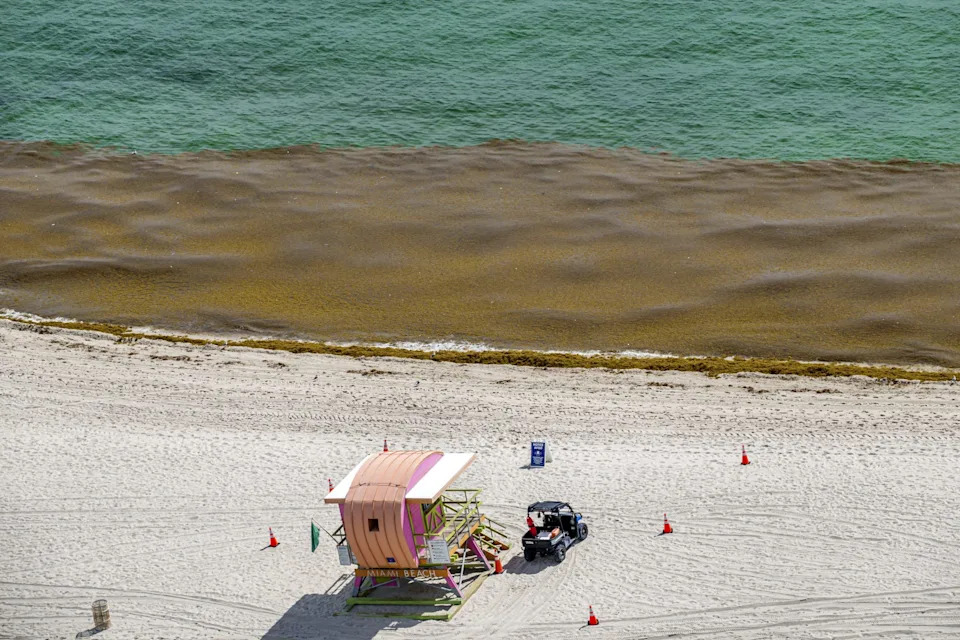
A wall of sargassum deters would-be bathers from entering the Atlantic Ocean.
Why This Matters
Sargassum is a naturally occurring brown macroalgae that travels in large floating mats and has become a recurring problem across the Caribbean Sea, the Gulf of Mexico and the Atlantic Ocean, according to the National Oceanic and Atmospheric Administration. When it decomposes onshore, the seaweed can emit hydrogen sulfide — a rotten-egg smell that can irritate the eyes, nose and throat and pose risks for people with respiratory conditions. Washed-up sargassum can also contain arsenic, heavy metals, organic pollutants and marine debris.
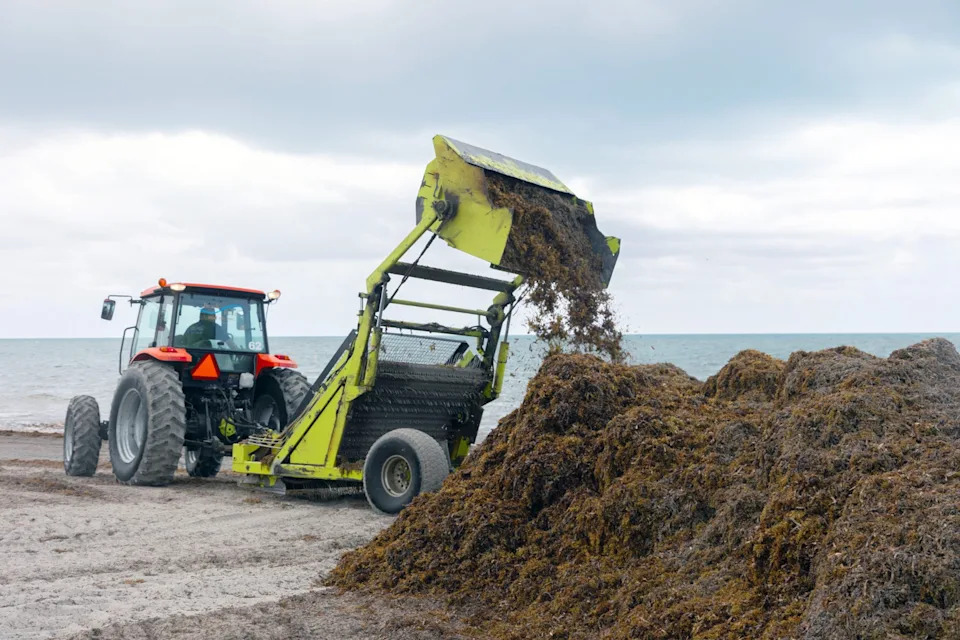
Swaths of sargassum, or seaweed, washed up in Key Biscayne on Thursday, April 24 and was raked into piles to be taken to the landfill.
A Potential Solution: Black Soldier Fly Larvae
Researchers at the University of Miami’s Rosenstiel School of Marine, Atmospheric and Earth Science are exploring whether black soldier fly larvae can help convert beach-collected sargassum into useful products. The larvae are known to consume and convert organic waste into nutrient-rich biomass that can be used for aquaculture feed, fertilizer and other bio-based products.
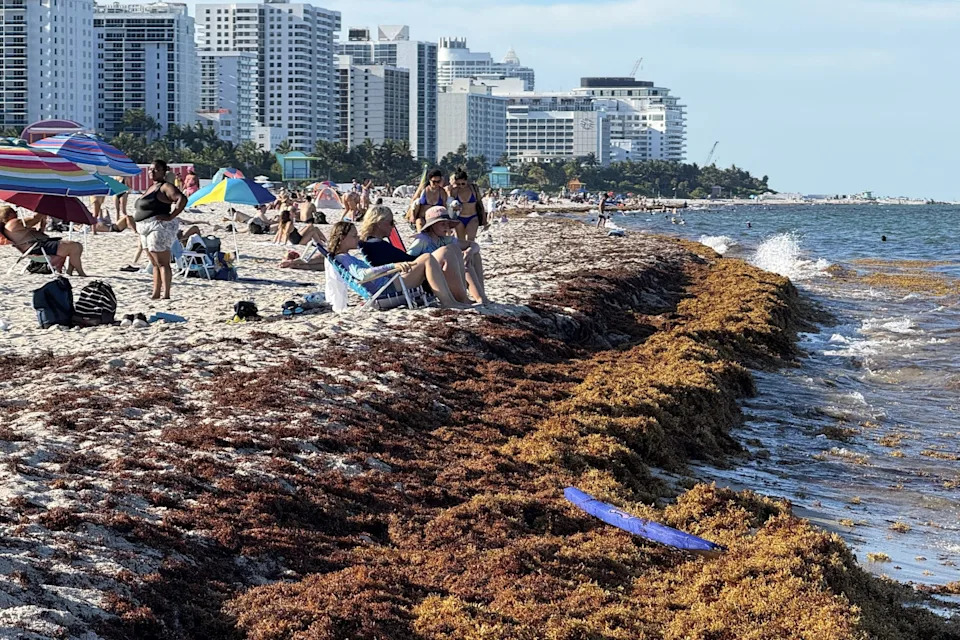
People sit on the sand in south beach, Miami during the seasonal surge of Sargassum seaweed.
"Our goal is not just to provide a solution to reducing sargassum impacts to our shoreline, but to help redesign Florida's response to it," said Professor Daniel Benetti, who leads the project.
Pilot Trials And Early Findings
As an initial step, the team tested five mixed waste diets — including kitchen scraps, agricultural produce, waste from salmon-farming tanks, and organs and other remains from salmon processing — to evaluate larval growth and survival. The researchers placed 200 black soldier fly larvae in each mixture for 15 days. All five diets supported larval growth, with survival rates between about 94% and 99%.
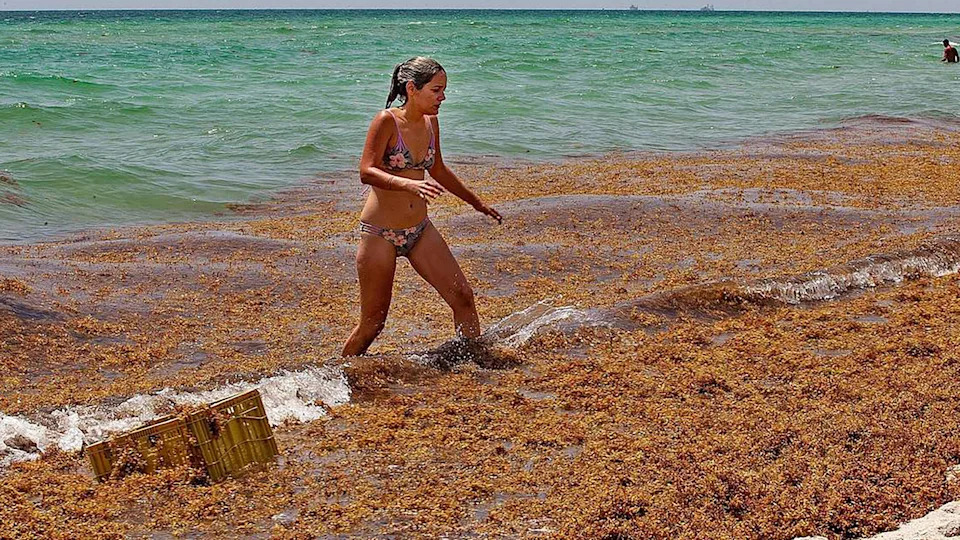
Monica Madrigal find her way out of the ocean through a thick raft of Sargassum seaweed that washed up on the seashore by the 71st Street area in Miami Beach.
Importantly, these experiments did not use pure sargassum; rather, they established a baseline showing the larvae can thrive on mixed organic waste streams. The results provide a foundation for follow-on trials that will include sargassum mixed with other wastes.
Challenges Before Scale-Up
Significant hurdles remain before this approach can be applied at scale to shore-collected sargassum. Key challenges include:
- Reducing contaminants such as arsenic and heavy metals to safe levels.
- Controlling moisture, temperature and microbes in large volumes of wet seaweed.
- Designing coastal processing systems that can handle unpredictable surges of material and produce consistent, safe end-products for aquaculture or agriculture.
The Environmental Protection Agency estimates Miami-Dade County spends about $35 million annually collecting, transporting and disposing of sargassum. Researchers hope that repurposing the seaweed could reduce disposal costs while generating valuable inputs for aquaculture, agriculture and other bio-based industries. The team is aiming to develop climate-controlled processing units capable of converting sargassum reliably into usable products.
Next Steps
Future work will test mixed diets that include sargassum, evaluate contaminant-removal methods, and pilot larger processing units. If successful, the approach could turn an environmental burden into a coastal-value solution — but careful testing and safeguards will be essential to protect public health and product safety.
Help us improve.