President Luiz Inácio Lula da Silva praised a major offshore oil discovery at the mouth of the Amazon as a "passport for the country's future" while visiting a Petrobras drilling vessel. Petrobras reported hydrocarbons at about 2,900 metres deep and 175 km off Amapá but said the full size of the reserves remains unknown and further exploration is needed. Lula framed the discovery as an issue of national sovereignty as he campaigns for a fourth term, while environmentalists and Indigenous rights groups warn of biodiversity, climate and social risks.
Lula Hails Major Oil Discovery Off Amazon Coast as a 'Passport for the Country's Future'
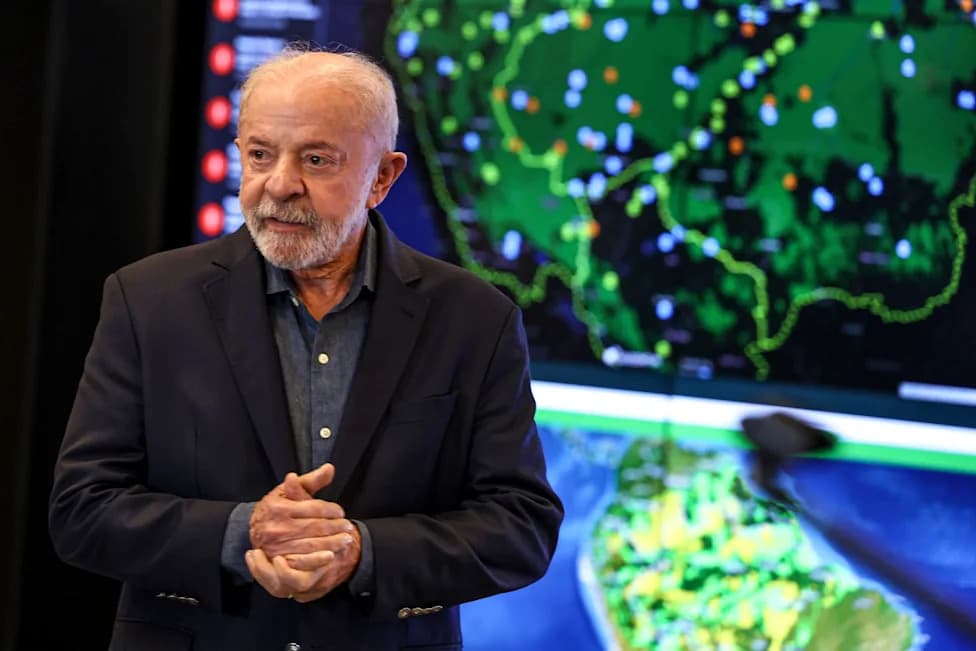
FILE PHOTO - Brazilian President Luiz Inacio Lula da Silva visits the Amazon Regional Observatory at the headquarters of the Amazon Cooperation Treaty Organization (OTCA). (is associated with: «Lula fetes major oil discovery off Amazon coast despite green backlash») Marcelo Camargo/Agencia Brazil/dpa
Brazilian President Luiz Inácio Lula da Silva celebrated a major offshore oil discovery at the mouth of the Amazon, calling it a "passport for the country's future" during a visit to a Petrobras drilling vessel on Tuesday.
Petrobras, the semi-state oil company, said hydrocarbons were found roughly 175 kilometres off the coast of the northern state of Amapá at a depth of nearly 2,900 metres. The company cautioned that the full extent of the reserves is not yet known and that further exploration will be necessary to map the discovery fully.
Lula: "This is about national sovereignty. A country that has oil of this quality will not allow anyone to interfere in that."
Petrobras chief executive Magda Chambriard told G1 the company will continue exploratory work to determine what the offshore basins may contain. Lula, who is campaigning for a fourth presidential term, described the find as "noble oil" and framed development of the field as a matter of national interest.
Environmental And Social Concerns
Environmental groups have warned the project could threaten marine biodiversity in a globally important ecosystem and increase Brazil's reliance on fossil fuels at a time when the world is seeking to reduce emissions. Greenpeace Brasil specifically warned that Indigenous rights in the region risk being sidelined, a concern it raised publicly ahead of the UN Climate Change Conference in Belém (COP30) last November.
Experts stress that deepwater extraction near sensitive coastal and ocean ecosystems presents elevated environmental risks, from accidental spills to longer-term impacts on fisheries and habitats. The discovery also raises political debate over balancing economic opportunity, energy sovereignty and environmental protection.
Brazil currently ranks eighth among the world's largest oil producers, and any major new find could have significant economic and geopolitical implications. For now, Petrobras and regulators will pursue further appraisal and environmental assessments before any decision on development is made.
Help us improve.