As heatwaves intensify, Japanese farmers are shifting work to nights and early mornings to avoid deadly daytime heat. Greenhouse interiors can exceed 40°C when outside temperatures top 35°C, forcing manual and technological adaptations across the sector. A record 59 agricultural workers died from extreme heat in 2024, and heat exposure cost the sector 926 million labour hours that year. New 2025 regulations require heatstroke reporting, but many farms still depend on hands-on measures.
Night-Shift Farms: Japan’s Farmers Go Nocturnal as Deadly Heatwaves Intensify
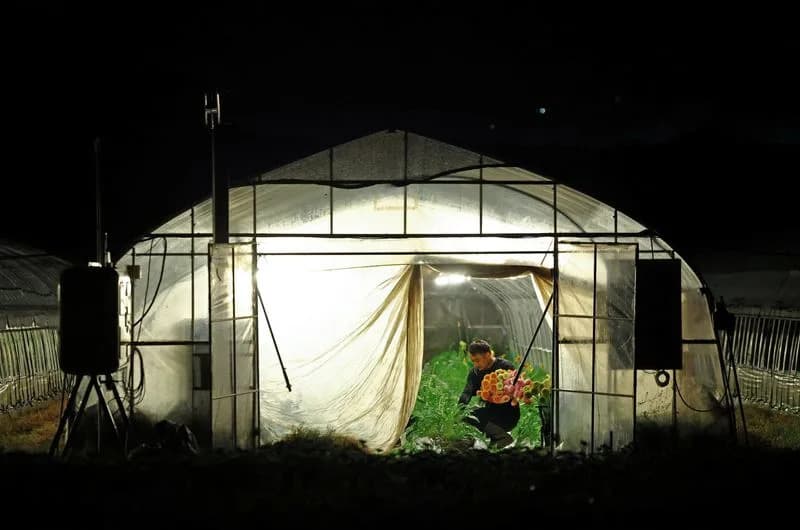
Motoaki Iijima, 36, owner of the Nikko Engei flower farm, harvests gerbera flowers inside an illuminated greenhouse at night in Nikko, Tochigi Prefecture, Japan, August 8, 2026. REUTERS/Issei Kato
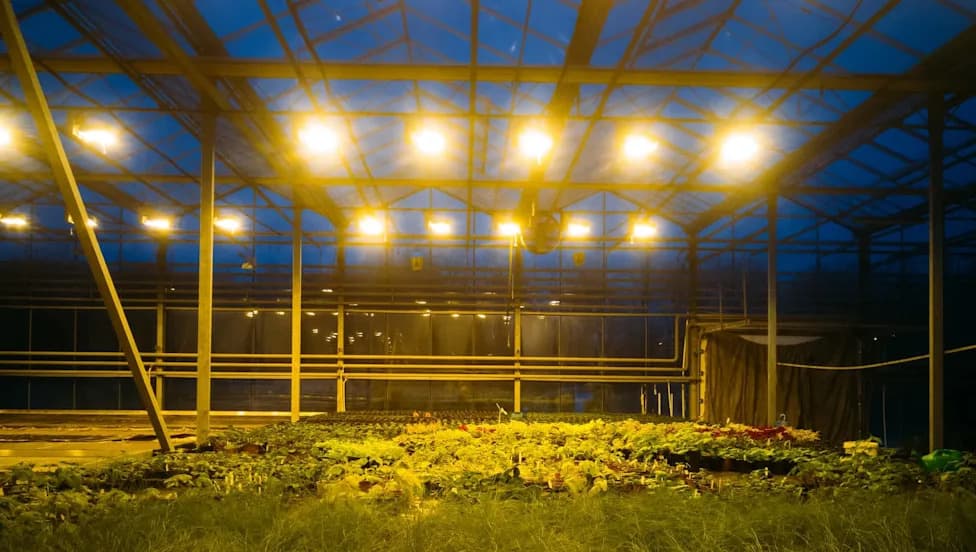
Long after sunset, Motoaki Iijima’s greenhouse north of Tokyo glows under halogen lamps as he harvests pink and orange gerberas, choosing the cooler night over a daytime sun that can be lethal. Across Japan, farmers from flower and asparagus growers to poultry producers are reshaping the workday as heatwaves grow hotter and more frequent.
Changing The Agrarian Clock
What used to be the busiest hours of the day are now the most dangerous. Farmers are shifting tasks to nights and early mornings to protect crops, livestock and themselves. Iijima, 36, converted his family’s centuries-old rice land in Nikko into a flower farm about a decade ago. After a part-time worker suffered heatstroke in a greenhouse three summers ago, he changed operations to avoid peak heat.
Outdoor temperatures above 35°C (95°F) — increasingly common in his area — can push greenhouse interiors above 40°C. Iijima now works through the night and stops when the morning sun becomes punishing. “The hours around dusk are really precious. That's when we can be outside,” he says, wiping sweat beneath rows of lamps. “We’ve gradually become nocturnal. It’s about protecting our bodies, and ultimately, our lives.”
An Ageing Workforce At Greater Risk
Japan is especially exposed: about 70% of its farmers are aged 65 or older, a demographic more vulnerable to heat stress. High humidity amplifies the danger, and the human toll is rising. A record 59 agricultural workers died from extreme heat in 2024 — more than double the toll in 2021.
Heat also hits productivity. Lancet Countdown estimates heat exposure cost Japan’s agricultural sector 926 million labour hours in 2024 — time workers could not safely spend in the fields. Across all sectors, labour hours lost to heat nearly doubled versus the 1990s average, equivalent to roughly $46 billion in lost income, or about 1% of Japan’s GDP.
On-the-Ground Adaptations
On Iijima’s farm, workers start up to two hours earlier or work overnight. Veteran worker Miyoko Asada, 68, arrives just after sunrise to harvest asters before temperatures climb. A few towns away, poultry farmer Tetsuya Usuba still bears the trauma of losing more than 500 laying hens during a three-day heat spell six summers ago. His current routine is rigid: at 2:30 a.m. lights switch on in two barns to wake 4,400 caged hens so they will eat before heat reduces their appetite. He has added fans, waters metal roofs, and supplements drinking water with citric acid — yet sudden spikes above 35°C still cost him 130 birds last month.
"Summer has become a new threat to producers like us, something as scary as an outbreak of avian influenza," Usuba says, watching birds pant with open beaks as the thermometer read 33°C one recent afternoon.
Policy And Technology Responses
The government introduced new workplace regulations in 2025 requiring employers to set up heatstroke reporting procedures and emergency response plans. Japan is also promoting smart farming technologies — including drones and robots — to reduce direct worker exposure to dangerous heat. But many farms, especially smaller operations, still rely on manual measures and altered schedules.
In the early morning on Iijima’s farm, workers hurriedly inspect harvested flowers for wilting leaves before loading them onto trucks. It is not yet 8 a.m., and the morning remains bearable — but everyone knows the heat will return soon.
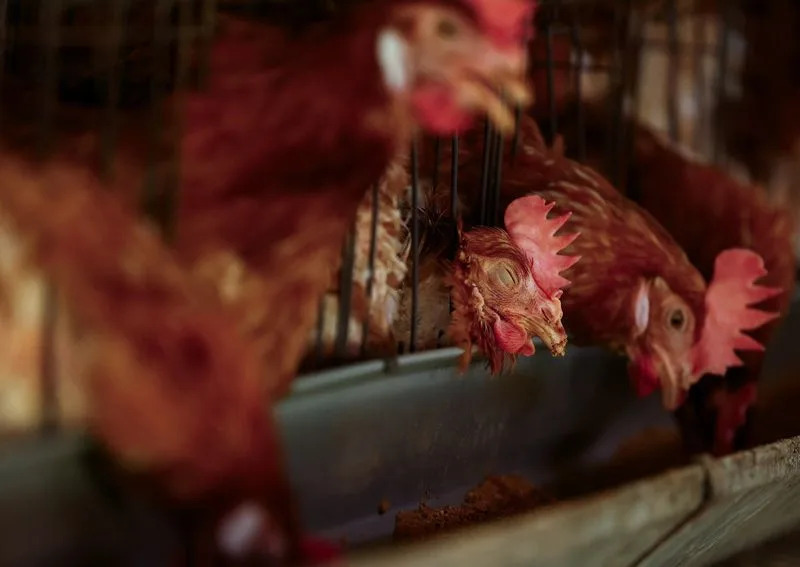
Boris Brown chickens inside cages at the Usuba poultry farm in Mashiko, Tochigi Prefecture, Japan, August 9, 2026. Usuba wakes hens to eat at 2:30 a.m. during the summer before daytime temperatures suppress their appetite. REUTERS/Issei Kato
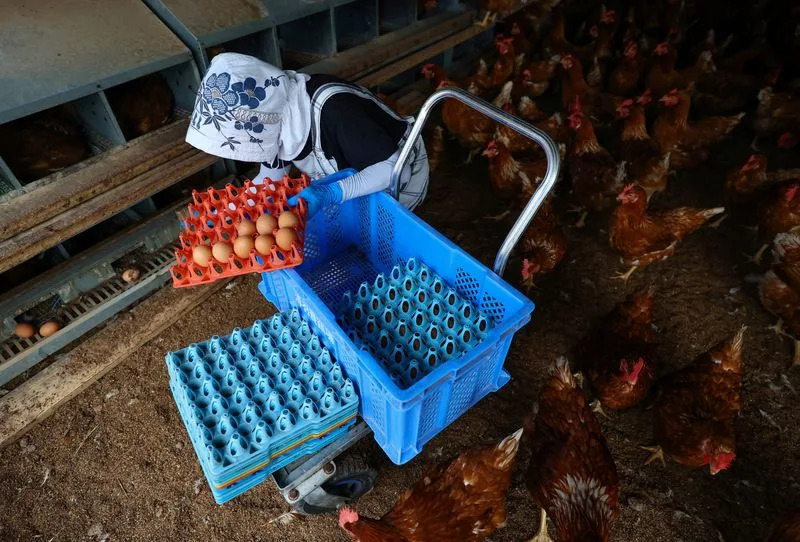
An employee at the Usuba poultry farm collects eggs inside a free-range coop housing Boris Brown chickens in Mashiko, Tochigi Prefecture, Japan, August 10, 2026. REUTERS/Issei Kato
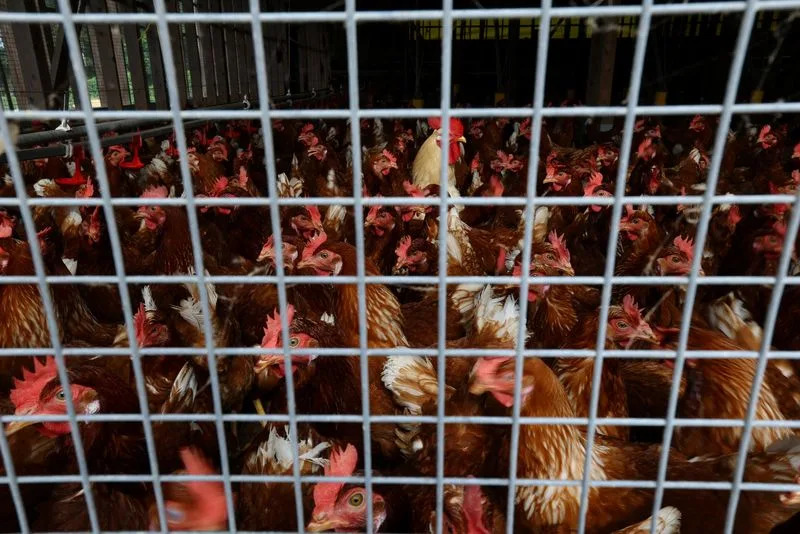
Boris Brown chickens inside a free-range coop at the Usuba poultry farm in Mashiko, Tochigi Prefecture, Japan, August 10, 2026. REUTERS/Issei Kato
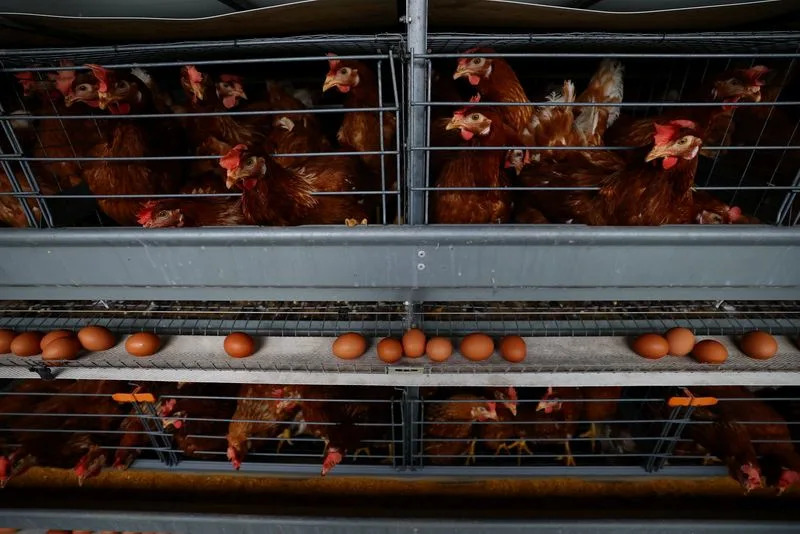
Boris Brown chickens and eggs inside cages at the Usuba poultry farm in Mashiko, Tochigi Prefecture, Japan, August 10, 2026. REUTERS/Issei Kato
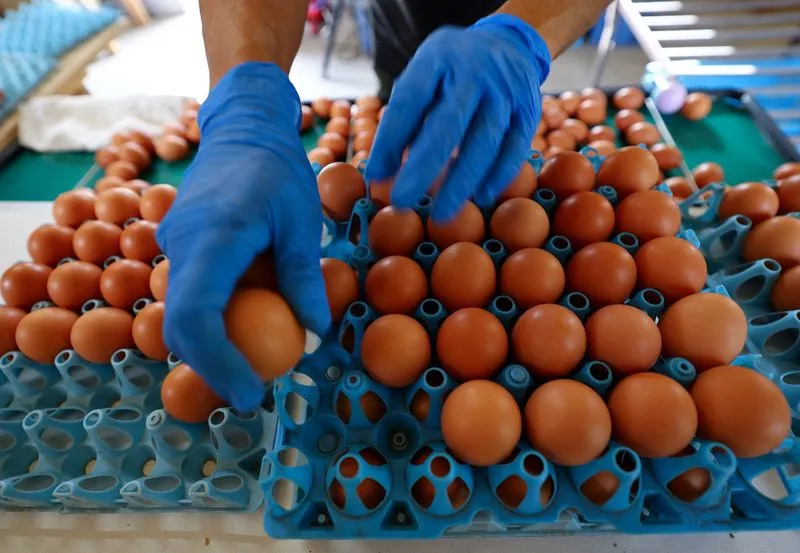
Tetsuya Usuba, 48, owner of the Usuba poultry farm, places eggs laid by Boris Brown chickens into trays in Mashiko, Tochigi Prefecture, Japan, August 10, 2026. REUTERS/Issei Kato
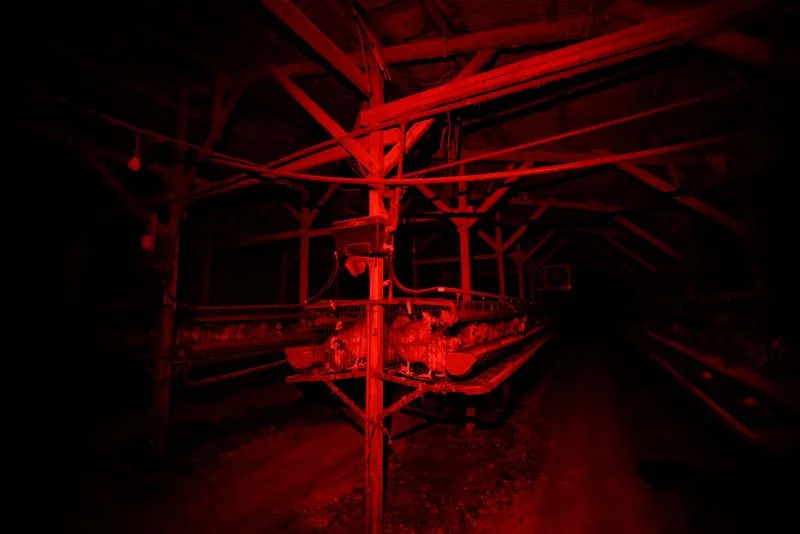
Boris Brown chickens inside cages before barn lights switch on automatically at the Usuba poultry farm in Mashiko, Tochigi Prefecture, Japan, August 10, 2026. REUTERS/Issei Kato
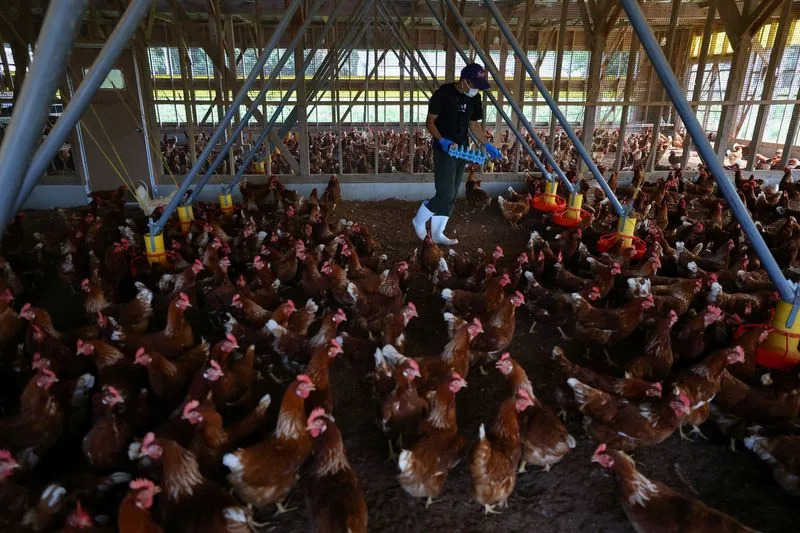
Tetsuya Usuba, 48, owner of the Usuba poultry farm, carries trays of eggs through a free-range coop housing Boris Brown chickens in Mashiko, Tochigi Prefecture, Japan, August 10, 2026. REUTERS/Issei Kato
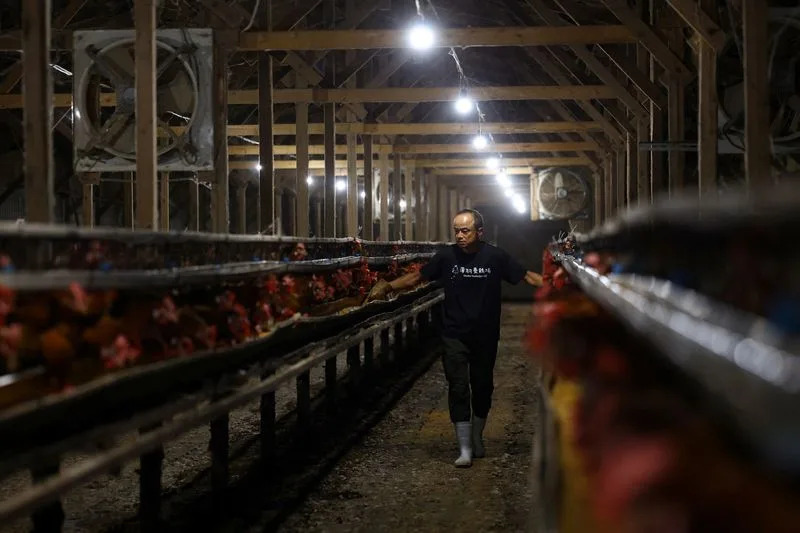
Tetsuya Usuba, 48, walks between cages housing Boris Brown chickens and stirs feed after barn lights switch on automatically at 2:30 a.m. at the Usuba poultry farm in Mashiko, Tochigi Prefecture, Japan, August 10, 2026. REUTERS/Issei Kato
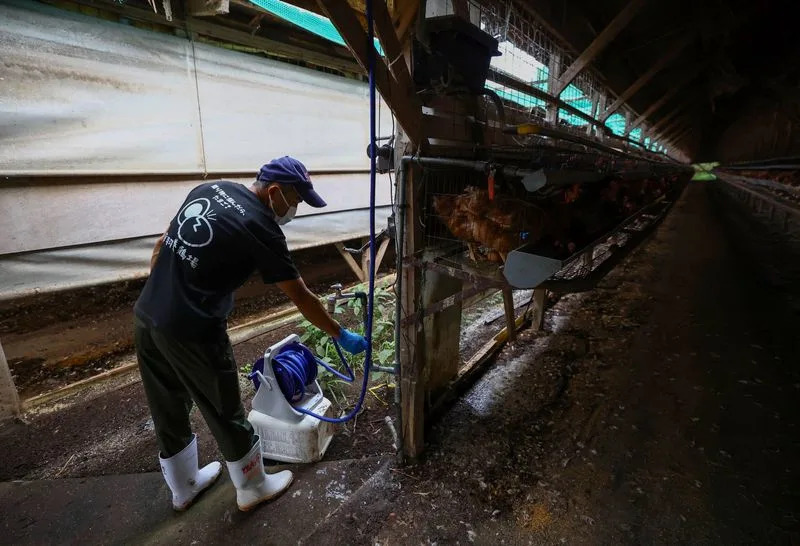
Tetsuya Usuba, 48, operates a system that sprays water onto the roofs of poultry barns to lower temperatures at the Usuba poultry farm in Mashiko, Tochigi Prefecture, Japan, August 10, 2026. REUTERS/Issei Kato
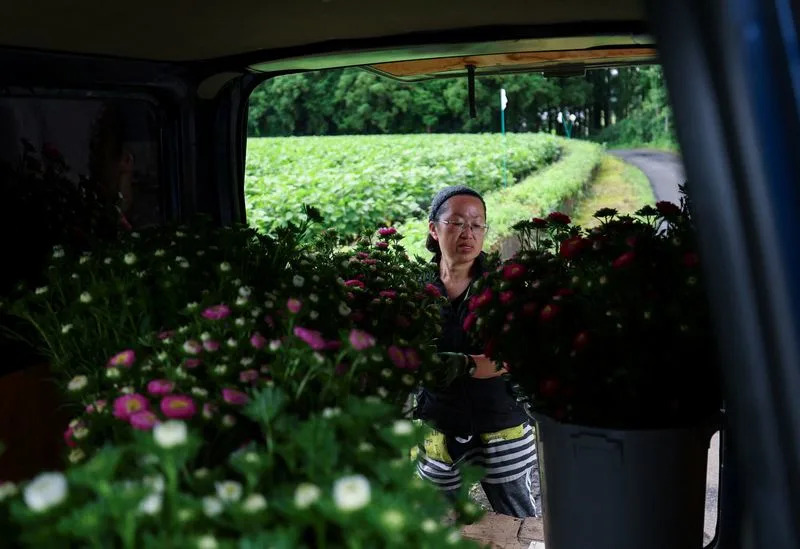
An employee at the Nikko Engei flower farm harvests asters during the early morning in Nikko, Tochigi Prefecture, Japan, August 9, 2026. REUTERS/Issei Kato
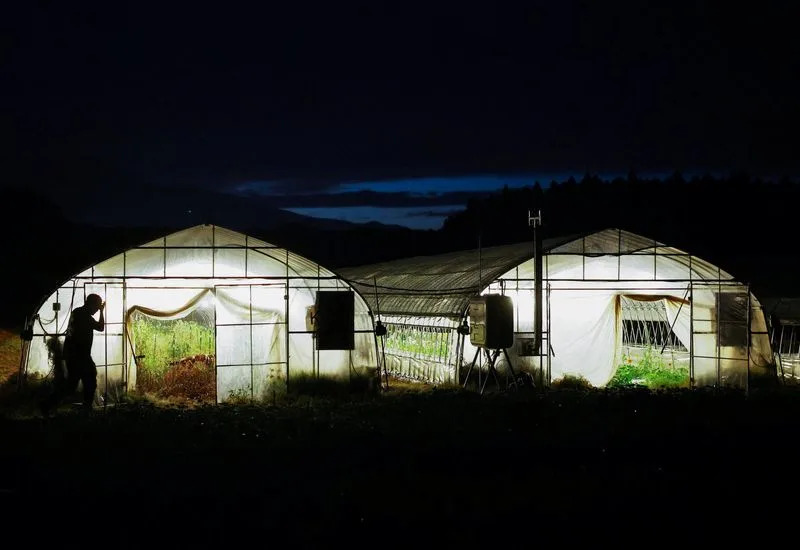
Greenhouses are illuminated as workers harvest gerbera flowers at night at the Nikko Engei flower farm in Nikko, Tochigi Prefecture, Japan, August 8, 2026. Some farmers in Japan are shifting work to cooler hours after sunset as increasingly intense summer heat affects agricultural production. REUTERS/Issei
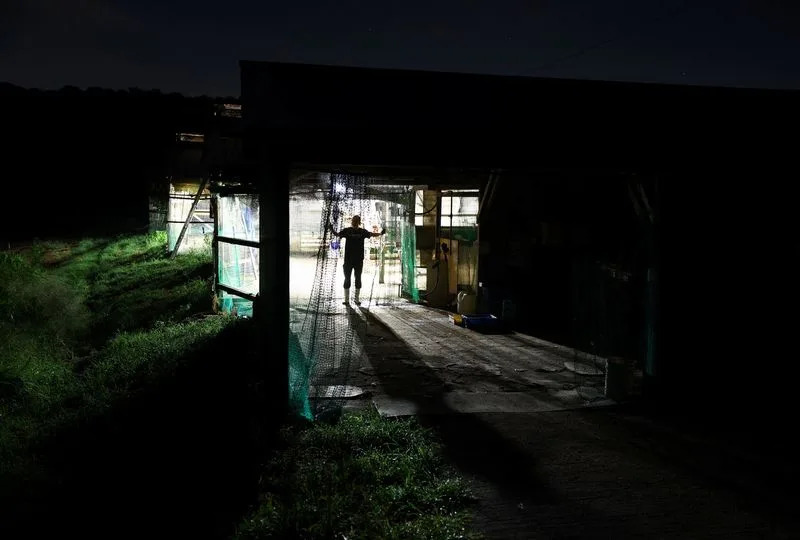
Tetsuya Usuba, 48, works inside a poultry barn after lights switch on automatically at 2:30 a.m. at the Usuba poultry farm in Mashiko, Tochigi Prefecture, Japan, August 10, 2026. Usuba turns on lights before dawn during the summer to encourage hens to eat before daytime heat suppresses their appetite. REUTERS/Issei Kato
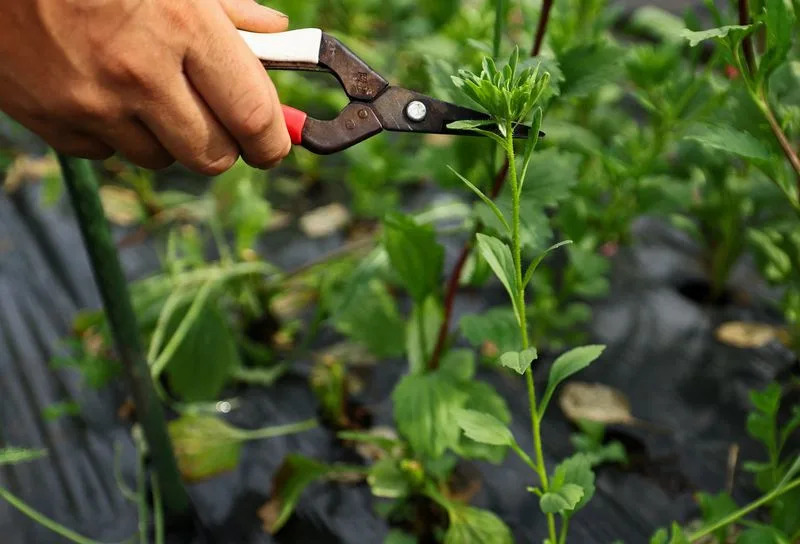
Aster branches showing severely stunted growth due to extreme heat at the Nikko Engei flower farm in Nikko, Tochigi Prefecture, Japan, August 9, 2026. REUTERS/Issei Kato
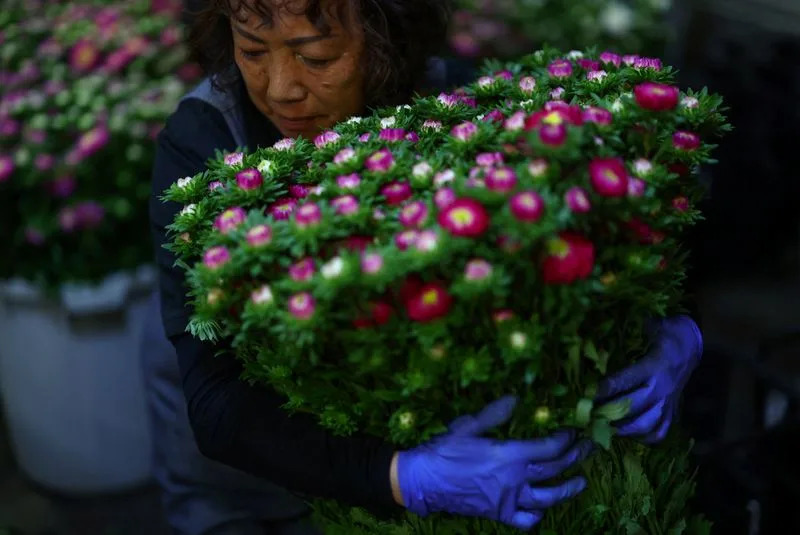
Miyoko Asada, 68, an employee at the Nikko Engei flower farm, prepares harvested asters for shipment in an air-conditioned workspace in Nikko, Tochigi Prefecture, Japan, August 8, 2026. REUTERS/Issei Kato
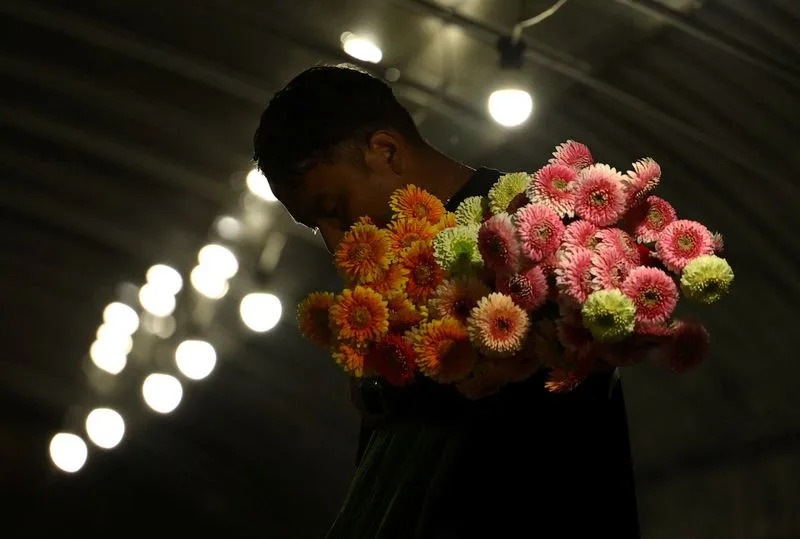
Motoaki Iijima, 36, owner of the Nikko Engei flower farm, harvests gerbera flowers inside an illuminated greenhouse at night in Nikko, Tochigi Prefecture, Japan, August 8, 2026. REUTERS/Issei Kato
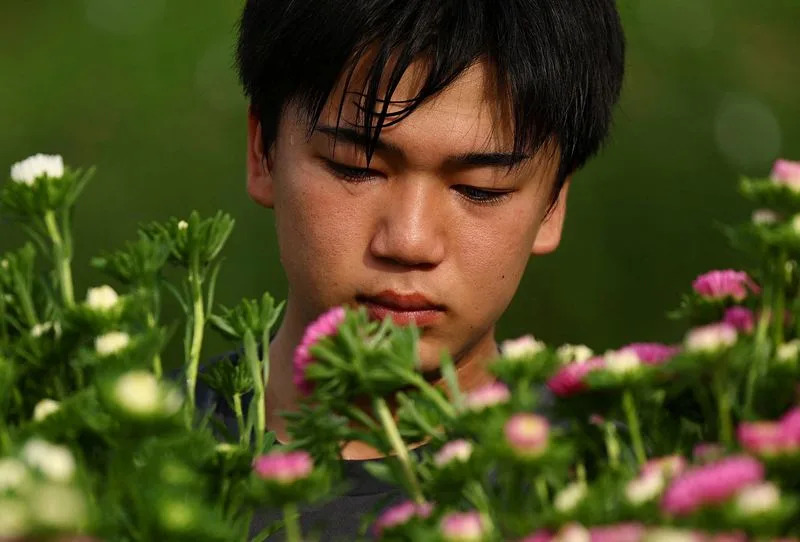
An employee at the Nikko Engei flower farm harvests asters in a field in Nikko, Tochigi Prefecture, Japan, August 9, 2026. REUTERS/Issei Kato
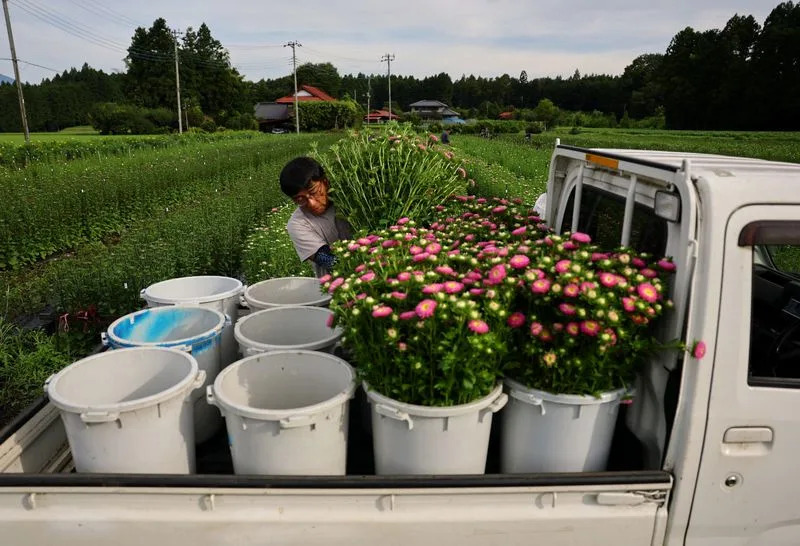
An employee at the Nikko Engei flower farm harvests asters during the early morning in Nikko, Tochigi Prefecture, Japan, August 9, 2026. REUTERS/Issei Kato
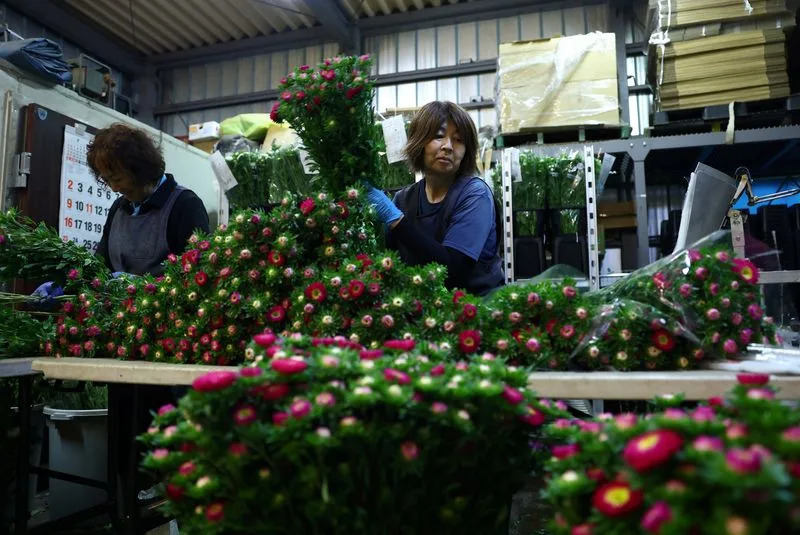
Yumiko Taniguchi, 63, and Miyoko Asada, 68, employees at the Nikko Engei flower farm, prepare asters for shipment in an air-conditioned workspace in Nikko, Tochigi Prefecture, Japan, August 8, 2026. REUTERS/Issei Kato
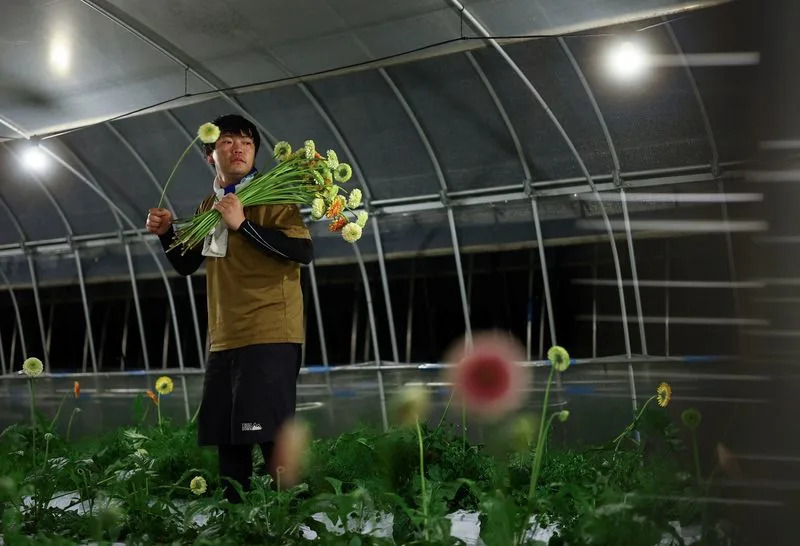
Akira Okada, 33, an employee at the Nikko Engei flower farm, harvests gerbera flowers inside an illuminated greenhouse at night in Nikko, Tochigi Prefecture, Japan, August 8, 2026. REUTERS/Issei Kato
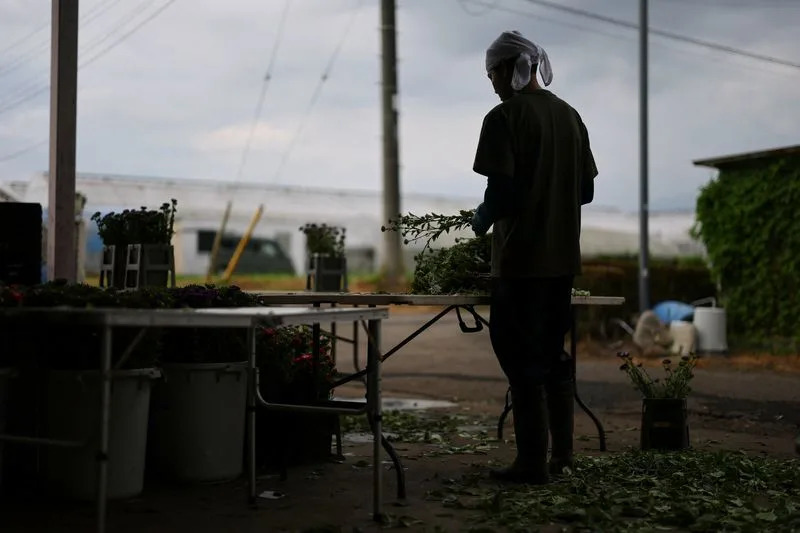
Ryo Hirota, 34, an employee at the Nikko Engei flower farm, prepares harvested asters for shipment in a shaded workspace in Nikko, Tochigi Prefecture, Japan, August 8, 2026. REUTERS/Issei Kato
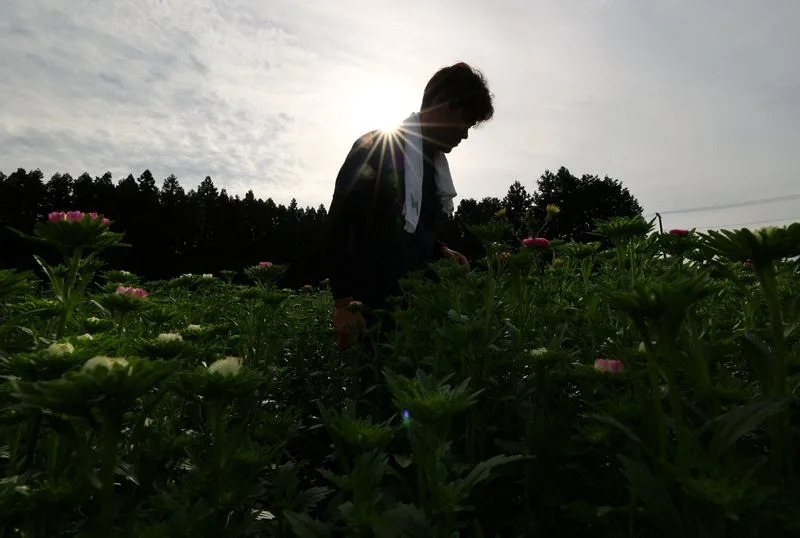
Ryo Hirota, 34, an employee at the Nikko Engei flower farm, harvests asters during the early morning in Nikko, Tochigi Prefecture, Japan, August 9, 2026. REUTERS/Issei Kato
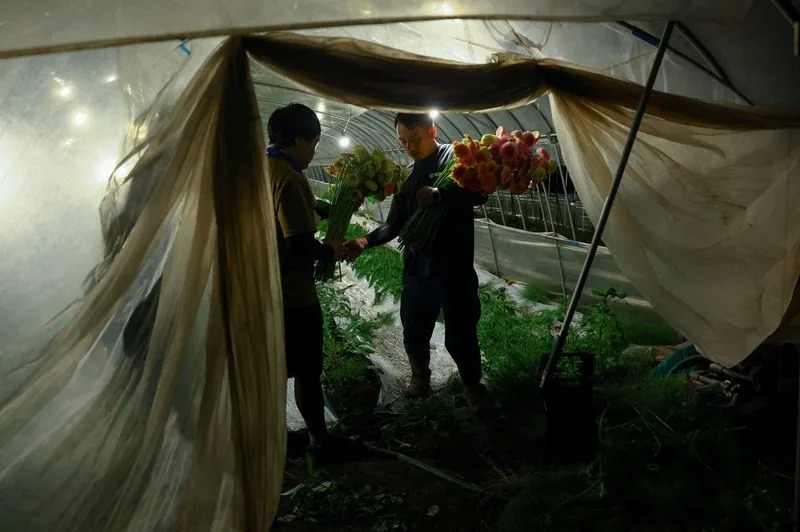
Motoaki Iijima, 36, owner of the Nikko Engei flower farm, and an employee harvest gerbera flowers inside an illuminated greenhouse at night in Nikko, Tochigi Prefecture, Japan, August 8, 2026. REUTERS/Issei Kato
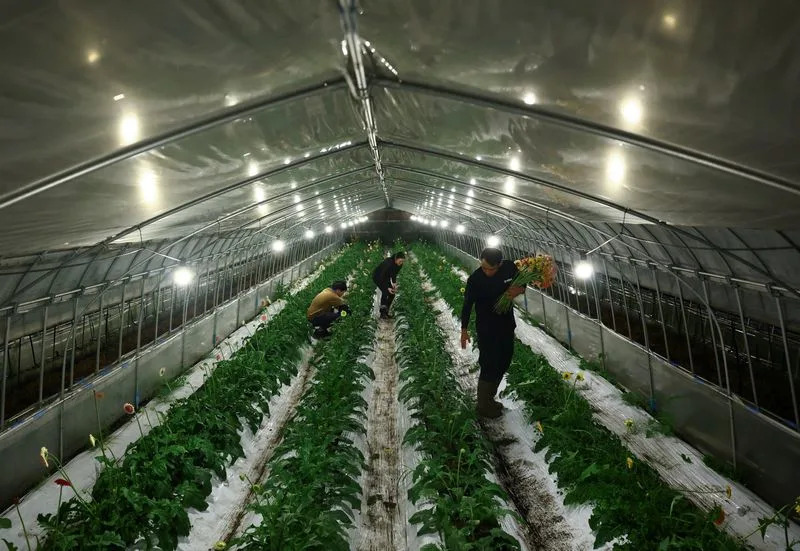
Motoaki Iijima, 36, owner of the Nikko Engei flower farm, and employees harvest gerbera flowers inside an illuminated greenhouse at night in Nikko, Tochigi Prefecture, Japan, August 8, 2026. REUTERS/Issei Kato
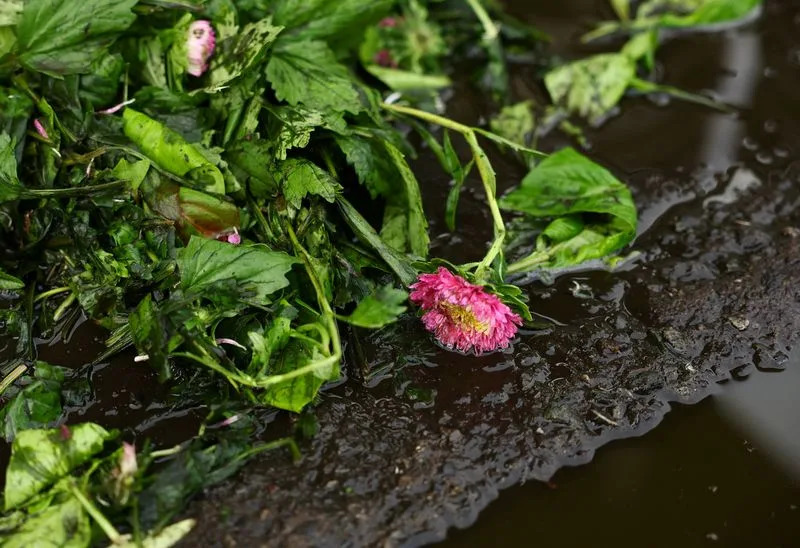
Excess flowers and leaves trimmed from asters during preparation for shipment at the Nikko Engei flower farm in Nikko, Tochigi Prefecture, Japan, August 8, 2026. REUTERS/Issei Kato
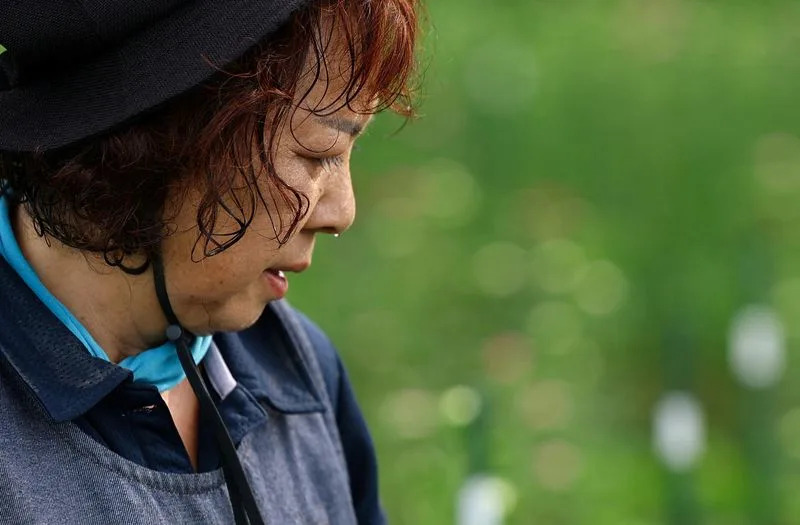
Miyoko Asada, 68, an employee at the Nikko Engei flower farm, harvests asters as sweat drips from her face in a field in Nikko, Tochigi Prefecture, Japan, August 9, 2026. REUTERS/Issei Kato
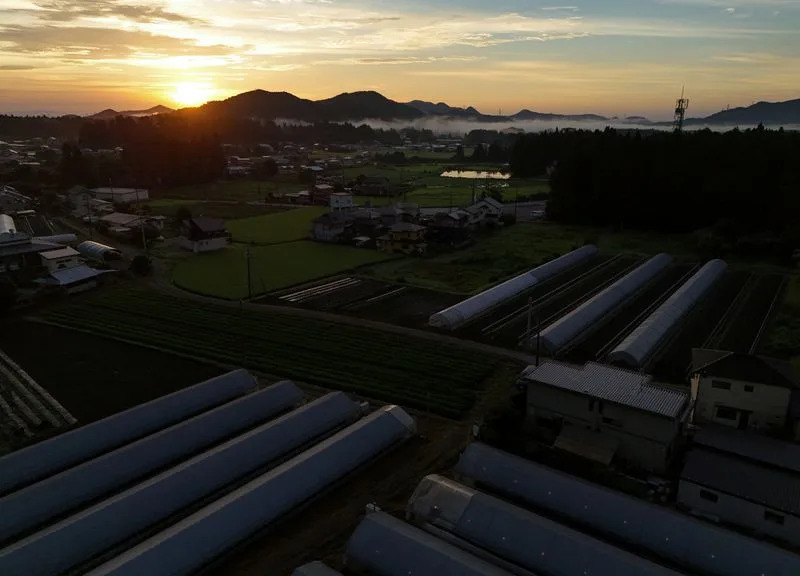
A drone view shows greenhouses and aster fields at sunrise at the Nikko Engei flower farm in Nikko, Tochigi Prefecture, Japan, August 9, 2026. REUTERS/Issei Kato
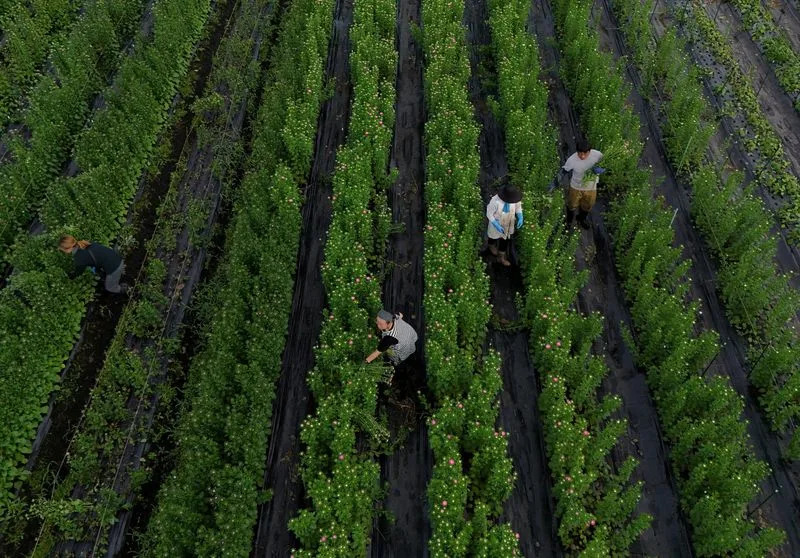
A drone view shows employees at the Nikko Engei flower farm harvesting asters during the early morning in Nikko, Tochigi Prefecture, Japan, August 9, 2026. REUTERS/Issei Kato
Help us improve.