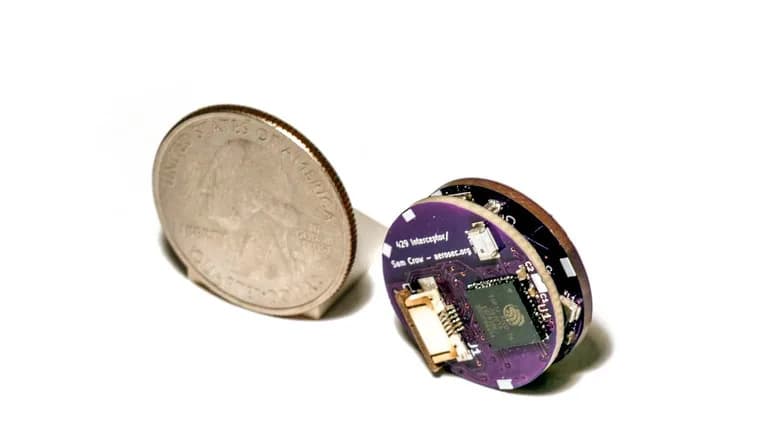
Researchers from UC San Diego and Oberlin College built a coin-sized, ~$100 module that can be plugged into an Open Maintenance Connector (OMC) and inject stronger signals to override a Boeing 737 mock-up's Flight Management Computer outputs. The method takes roughly 60 seconds and can make cockpit displays show false data, potentially causing unsafe takeoff calculations or off-course autopilot commands. The experiment was performed on an avionics mock-up, and Boeing says existing protections reduce real-world risk, but the vulnerability highlights a need for improved physical and data-authentication controls.
Researchers Demonstrate How a $100, Coin-Sized Device Could Feed False Data To A Boeing 737 In 60 Seconds
University of California San Diego
Researchers have revealed a low-cost, fast method to inject false data into cockpit displays by exploiting an unlocked maintenance port on Boeing 737 avionics. The demonstration highlights a tangible vulnerability that merits attention, mitigation and policy adjustments even though it was tested on a lab mock-up rather than an operational aircraft.
What the team did
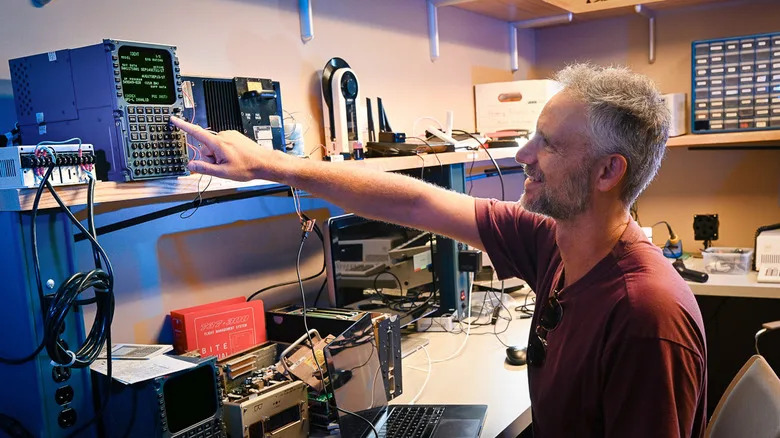
Cybersecurity researchers from the University of California, San Diego and Oberlin College published a paper describing how to assemble a coin-sized electronic module with off-the-shelf parts for roughly $100. In a lab mock-up of Boeing 737 avionics, the device was plugged into an Open Maintenance Connector (OMC) in about 60 seconds and used to inject false signals to cockpit displays.
How the device works
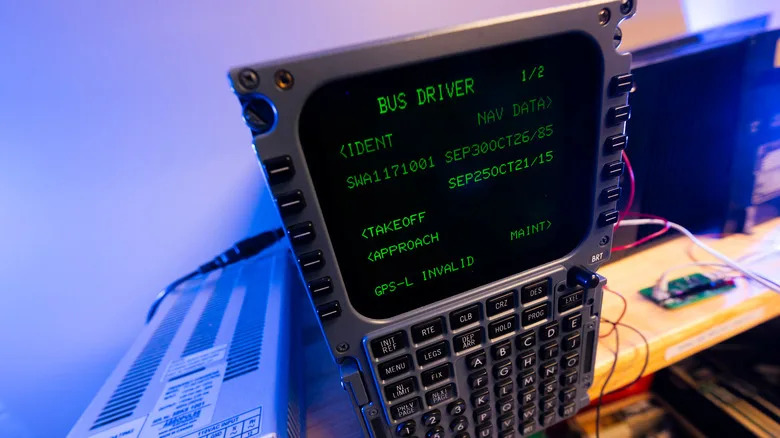
The OMC is a diagnostic access point that links the Flight Management Computer (FMC) — which computes critical values such as weight, fuel and navigation — to cockpit displays. The researchers showed the module can transmit a higher-power electrical signal at the same time the FMC sends its data, effectively overpowering the genuine signal so the displays present the forged values instead of the real ones. In short, the display "hears" the injected data and not the true system output.
Erik Jepsen/University of California San Diego
Why this matters
- Incorrect weight or balance information can lead to unsafe takeoff configurations.
- Faulty autopilot guidance could divert an aircraft far off course, risking fuel shortages or entry into hazardous or restricted airspace.
- Even short-lived display spoofing could complicate crew response and situational awareness during critical flight phases.
Limitations and context
The researchers emphasize this was a controlled experiment on an avionics mock-up, not a test on a fully operational airliner. They also told Boeing about the issue six years ago. Boeing responded to Wired saying that airplane system design and operating-environment protections significantly limit feasibility and risk of real-world attacks. The authors note they still choose to fly on 737s and do not present the vulnerability as an imminent daily threat — rather, as an unaccounted-for risk that should be addressed.
Practical mitigations
Addressing this vector calls for a combination of procedural, physical and technical steps:
Erik Jepsen/University of California San Diego
- Strict physical access controls and personnel vetting for areas and staff with access to maintenance ports.
- Tamper-evident seals and routine inspections of OMCs and other service connectors.
- Stronger authentication, encryption or message verification between avionics subsystems where feasible.
- Operational monitoring to detect unexpected signals, disconnections or anomalies at maintenance interfaces.
Bottom line: The research demonstrates a feasible, inexpensive attack pathway that deserves attention. While current protections and the fact that the work was performed on a mock-up reduce the immediacy of the threat, aircraft operators, manufacturers and regulators should review maintenance-interface security and implement layered mitigations to prevent misuse.
Note: The grad student who built the device is named Sam Crow — a coincidental name that the researchers mention with a light touch.
Help us improve.