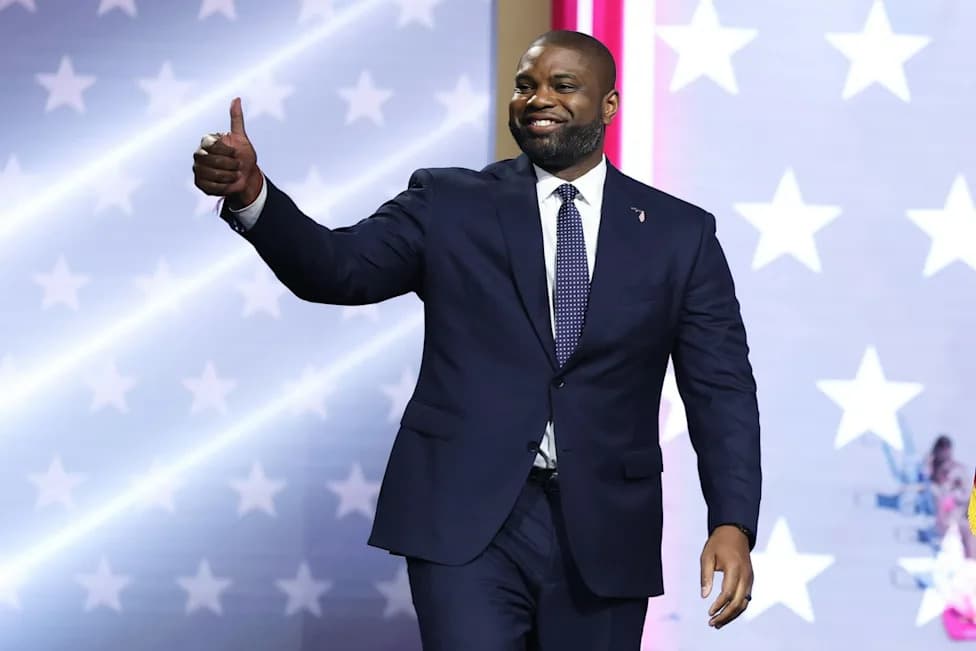
Florida's gubernatorial primary pits a Democratic candidate promising crossover, pragmatic governance against a Republican running on Trump-style base mobilization and cultural messaging. Polls show David Jolly leading the Democratic field and Byron Donalds leading Republicans, though a July University of North Florida poll put Donalds just five points ahead of Jolly in a hypothetical general election. Structural advantages — a 1.5 million GOP registration edge and recent Republican dominance — favor the GOP, but Florida's 3.3 million unaffiliated voters and recent close races keep the contest competitive.
Florida Governor Primary Tests Crossover Appeal Versus Trump-Style Base Mobilization
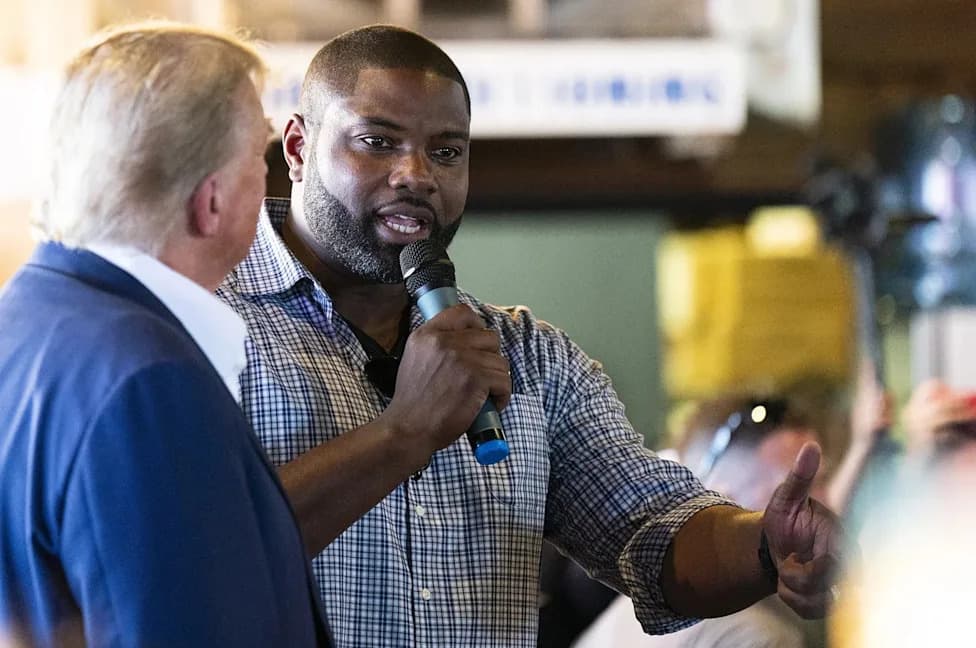
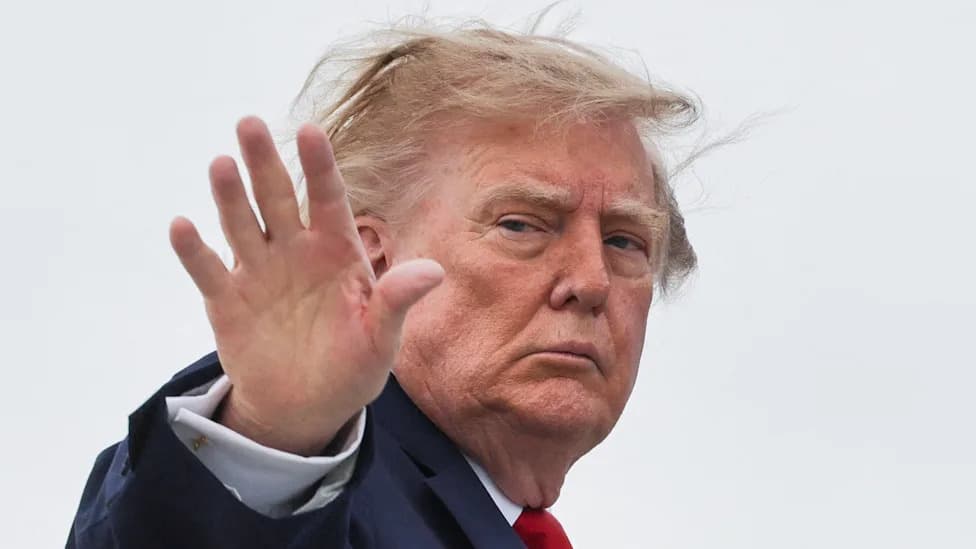
Florida GOP Rep. Byron Donalds speaks with Donald Trump at the Steer N’ Stein bar while attending the Iowa State Fair in Des Moines on Aug. 12, 2023.
As Florida voters head to the primaries, the gubernatorial contest has become a living experiment in two competing political strategies: persuading swing voters versus energizing the partisan base. The outcome will offer a snapshot of which approach has more traction in a major swing state.
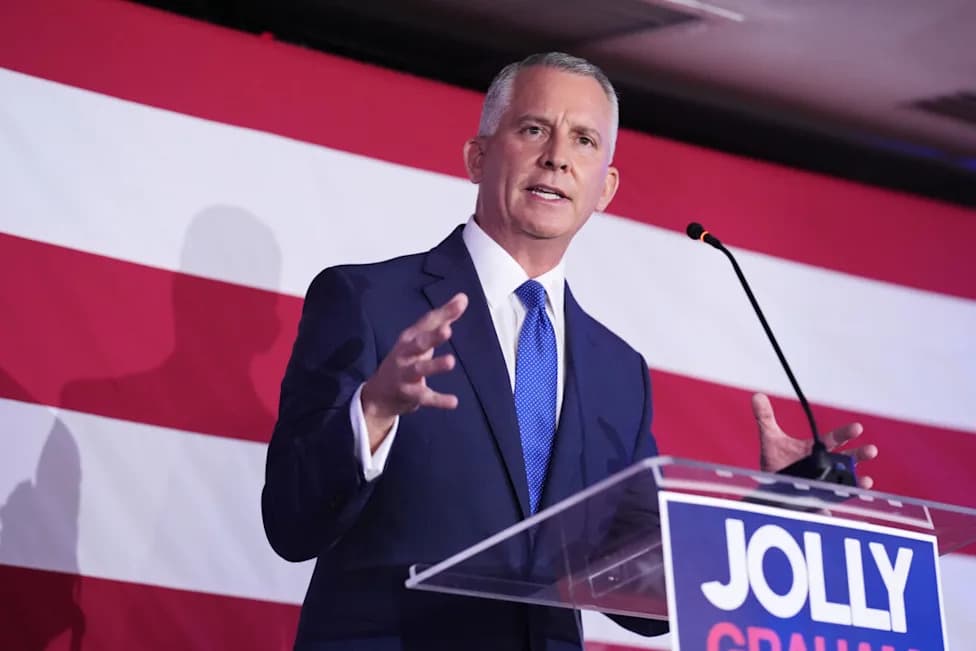
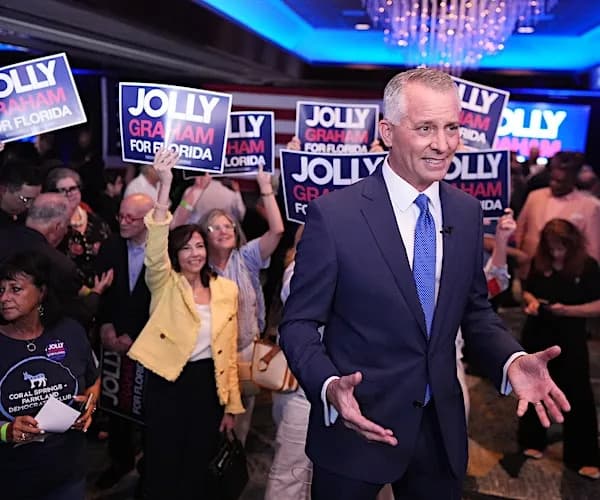
Democrats appear poised to nominate a candidate who explicitly courts crossover voters. Former Republican congressman David Jolly, who left the GOP during the Trump era and is now running in the Democratic primary, is presenting himself as a practical, kitchen-table candidate focused on everyday issues rather than partisan theater. His campaign emphasizes bipartisan problem-solving and has shown strong support in early Democratic primary polling.
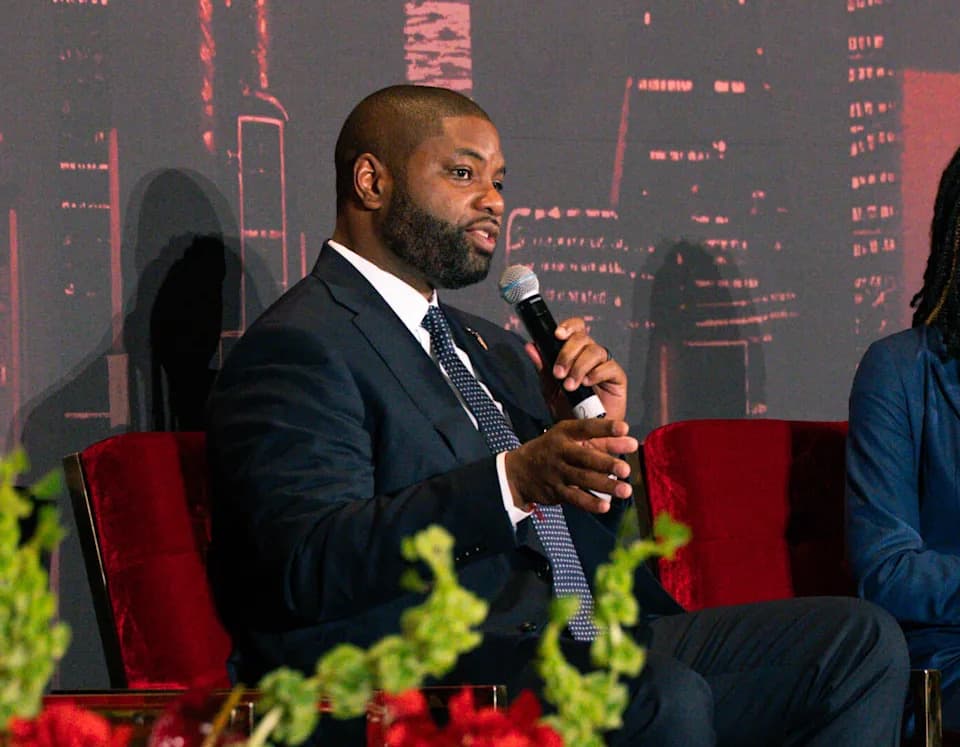
Republicans look likely to choose a candidate who leans into mobilization and partisan intensity. Rep. Byron Donalds, backed by former President Donald Trump, has risen to national prominence as a combative, pro-Trump surrogate. His campaign blends tougher immigration enforcement and deregulation with cultural messaging aimed at removing what it calls "radical woke ideology" from schools, along with unconventional proposals referenced as "DOGE-style" ideas on his site. Donalds leads Republican primary polls by double digits.
What The Numbers Say
Structural advantages favor Republicans: the GOP holds about a 1.5 million voter-registration edge in Florida, and Democrats have not won a statewide governor's race since 1994. In 2022, Gov. Ron DeSantis defeated Charlie Crist — a one-time Republican turned Democrat — by nearly 20 percentage points, a reminder of the state's recent partisan swings.
Yet the race remains competitive. Florida has roughly 3.3 million registered voters with no party affiliation, and tight margins are part of recent history: DeSantis won the open-seat 2018 race by less than half a percentage point. A July University of North Florida poll showed Donalds leading Jolly by only five points in a hypothetical general-election matchup, and some surveys report Jolly holding double-digit leads in the Democratic primary despite a significant number of undecided voters.
Why It Matters Beyond Florida
If Donalds wins comfortably in November, Republican strategists will point to another example that a Trump-style, base-focused strategy can secure statewide victories even when Trump himself isn’t on the ballot. If Jolly performs strongly — or wins — Democrats will argue that a candidate with crossover appeal can still capture persuadable voters in a state with a large bloc of unaffiliated voters.
Neither outcome will fully settle the broader debate over mobilization versus persuasion. But Florida’s governor race offers a clear, pragmatic test of how far each strategy can go in a high-stakes environment.
Note: This piece is a preview from MS NOW’s Project 47 newsletter. For in-depth analysis and weekly updates on the administration and national politics, consider subscribing to Project 47.
Help us improve.