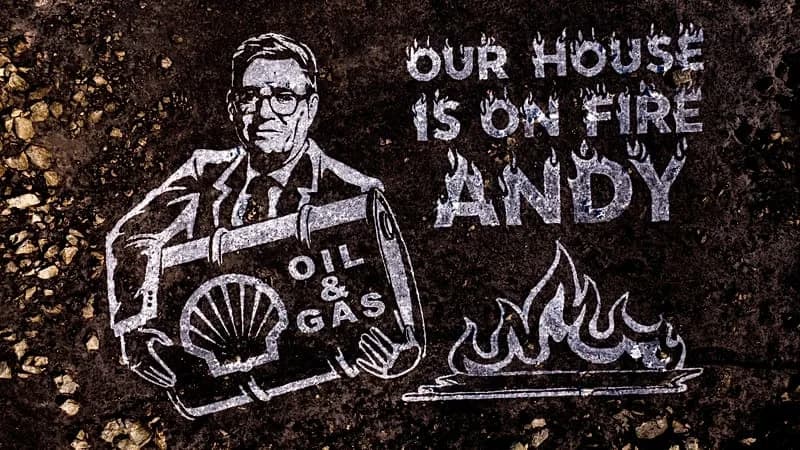
Activists from Greenpeace and the art collective A Letter From Lucy painted a 1,120m² message reading "Our house is on fire, Andy" on wildfire-scorched ground at Sychnant Pass in Eryri National Park to protest UK government handling of new North Sea oil and gas projects. The action coincided with the final public consultation on the Rosebank oil field and follows a separate Jackdaw consultation. Campaigners warn Rosebank could emit about 254 million tonnes of CO2 over its lifetime and, with Jackdaw, contribute to tens of thousands of excess heat deaths globally. Protesters say the move highlights a growing clash between declared climate commitments and plans to work with the oil and gas industry.
“Our House Is On Fire, Andy”: Activists Paint 1,120m² Climate Warning as Rosebank Consultation Closes
'Our house is on fire, Andy': Activists send stark message to PM over new oil and gas drilling
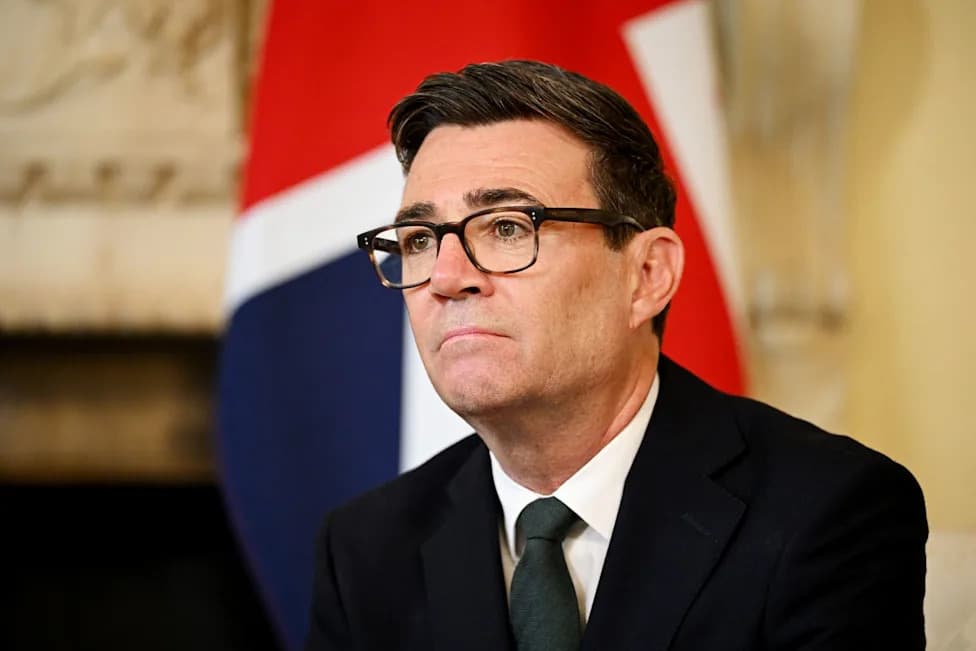
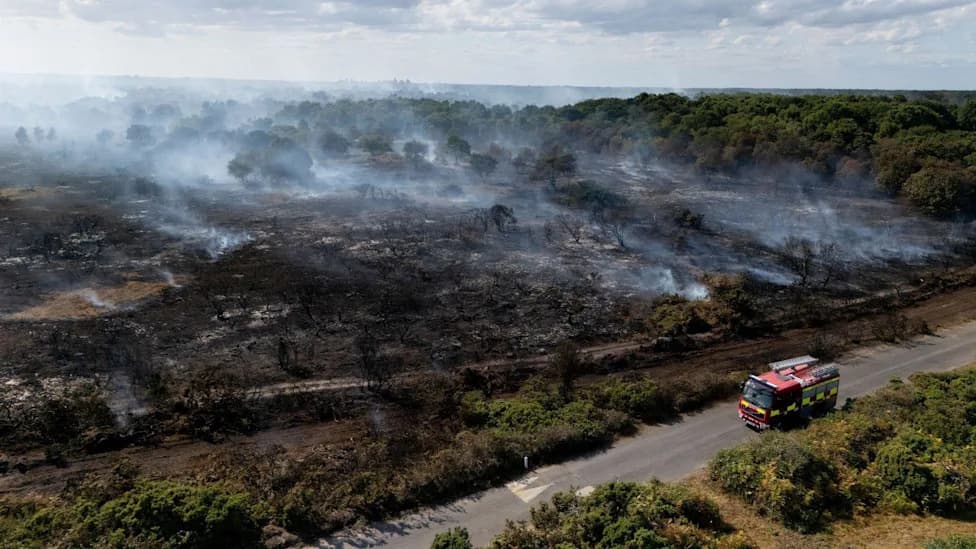
Newly installed British Prime Minister Andy Burnham has been criticised for his silence on the climate crisis during his opening weeks in office. Campaigners say that silence is starkly illustrated by a large-scale protest staged on a wildfire-scarred hillside in north Wales.
What happened — Activists from Greenpeace and the art collective A Letter From Lucy painted a 1,120-square-metre message on blackened ground at Sychnant Pass in Eryri National Park, Conwy. The artwork reads “Our house is on fire, Andy” and depicts Burnham tipping a barrel labelled "oil and gas" onto flames, deliberately echoing Greta Thunberg’s 2019 warning to political leaders that "our house is on fire."
Greenpeace says the image was applied directly to the fire-damaged earth using an eco-friendly, plastic-free paint commonly used on sports pitches. The action coincided with the final day of a public consultation on the Rosebank oil field; a parallel consultation on the Jackdaw gas field closed a week earlier.
Political context
Although Labour has set out climate commitments, Prime Minister Burnham has signalled a "more pragmatic" approach to North Sea oil and gas. Deputy Labour leader Lucy Powell described this as a "change of emphasis" rather than a reversal: the government says it will not issue new North Sea licences but intends to "work with the industry" so oil and gas can contribute to the energy transition "over the long term."
"There is nothing pragmatic about watching communities be battered by climate chaos while the Prime Minister flirts with expanding the very industry driving it," said Greenpeace campaigner Maja Darlington. "This summer has been an endless showreel of fossil-fuelled disasters playing out across the country."
Climate and public-health impacts
The protest comes after a summer of intense heat: the UK has experienced multiple record-breaking heatwaves and is on track for its warmest summer on record. Drought conditions now affect almost three-quarters of the country, and more than 27 million people have faced water restrictions.
Greenpeace cites an estimate of roughly 2,700 excess deaths linked to the May–June heatwaves. Campaigners say the burden falls hardest on workers and vulnerable people — firefighters, transport staff and healthcare workers — who already face the immediate impacts of extreme heat.
Rosebank, Jackdaw and emissions
Campaigners have branded Rosebank a "carbon bomb": Greenpeace cites an estimate that the field's lifetime emissions would reach about 254 million tonnes of CO2 — roughly 70% of the UK’s annual emissions in 2024. Research referenced by Greenpeace and attributed to Oxfam estimates that if both Rosebank and Jackdaw proceed, their combined lifetime emissions could be linked to an estimated 65,495 excess heat deaths globally.
Rosebank was originally approved in 2023 and Jackdaw in 2022, but a Scottish court ruled both consents unlawful in January 2025 because their assessments failed to account for emissions from burning the extracted fuels. Developers have resubmitted revised environmental assessments, and this week's consultations were the final regulatory step before ministers make a decision.
Darlington asked: "Does the Prime Minister really want to stand with the oil companies making billions, rather than the millions already paying the price? Our message is simple: be brave — say no."
Why it matters: The stunt is intended both to draw public attention to the human and environmental toll of new fossil-fuel projects and to pressure ministers as they weigh final decisions on contested North Sea developments.
Help us improve.