The Tiber has fallen low enough during a prolonged heatwave to reveal parts of the Pons Neronianus, a nearly 2,000-year-old bridge from Rome's imperial era. The structure—likely built around 39 AD under Caligula and later associated with Nero—once linked Campus Martius to the Circus of Nero near St. Peter's Basilica and Vatican City. Officials warn the exposure is symptomatic of a serious water crisis: the river is flowing at about 2,825 cubic feet (80 cubic meters) per second, roughly half the national average, and the drought is straining water supplies, agriculture and public health.
Drought in Rome Reveals Nearly 2,000-Year-Old Pons Neronianus and Exposes Tiber Riverbed
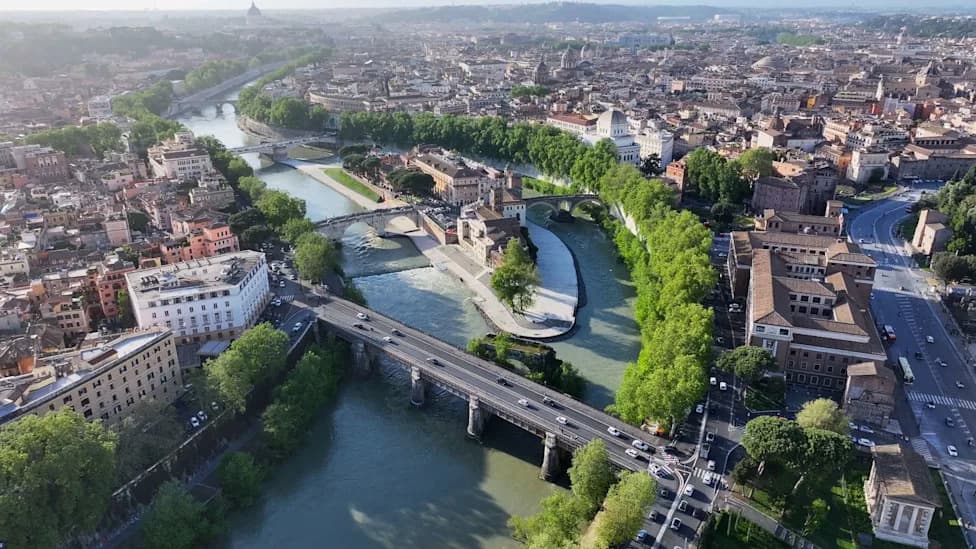
Photo Credit: iStock
After weeks of intense heat and scant rainfall, the Tiber in Rome has fallen to levels that have exposed sections of the Pons Neronianus, a nearly 2,000-year-old bridge from the city’s imperial era. What has drawn tourists and archaeologists alike is also being seen by officials as a stark sign of a worsening water emergency.
Ancient Bridge Emerges as River Recedes
The exposed remains belong to the Pons Neronianus, commonly called Nero’s Bridge. Most historians date its original construction to around 39 AD and attribute the commission to Emperor Caligula; the structure later became associated with his nephew, Emperor Nero, who is known to have renamed older monuments during his reign (54–68 AD).
In antiquity the bridge connected the Campus Martius to the Circus of Nero, the stadium traditionally linked with St. Peter’s martyrdom. That riverside later became the site of St. Peter’s Basilica and now borders Vatican City, giving the bridge unusual cultural and religious resonance.
Modern Consequences: Low Flows and Unexpected Finds
Rome’s civil protection coordinator, Giovanni Giganti, reported the Tiber is flowing at roughly 2,825 cubic feet (80 cubic meters) per second — about half the national average. The unusually low water has not only exposed ancient masonry but also revealed modern debris along the riverbed, including electric bikes and scooters, discarded refrigerators, and even a car.
"We are facing a major water crisis. And it is a crisis that is also due to the fact that this winter we did have quite abundant rainfall, but then the dry periods were quite long," Giovanni Giganti told the Associated Press.
For archaeologists, the low flow provides a rare opportunity to study portions of the bridge normally submerged; the Pons Neronianus was similarly exposed during a 2022 drought, indicating these low-flow events may be recurring.
Wider Impacts of Prolonged Drought
Long dry spells and extreme heat do more than change scenery. They strain drinking-water supplies, disrupt agriculture, increase wildfire risk, and raise health dangers linked to dehydration and heat-related illness. Public safety and local economies can be undermined as water systems and emergency services come under pressure.
Local officials emphasize the importance of monitoring river flow and water reserves to guide restrictions, emergency planning, and public warnings as conditions deteriorate. The bridge’s sudden visibility, they say, should be treated as both an archaeological opportunity and an urgent environmental warning.
What to Watch:
- Further changes in Tiber flow and water-reserve reports from authorities.
- Archaeological assessments of the newly exposed structures.
- Local advisories on water use and heat-safety measures for residents and visitors.
Help us improve.