The Causeway Cove waterfront proposal in Fort Pierce claims to qualify for a fast‑track under Florida’s 2023 Live Local Act by designating 40% of units as "affordable." Under the law, "affordable" can mean attainable for households earning up to 120% of area median income — roughly $88,000 using 2024 figures — a level unlikely to help many service workers. Locals also warn the project would reshape the skyline, strain a primary hurricane evacuation route, and test limits on local zoning control.
Florida’s ‘Affordable Housing’ Fix? Luxury Waterfront Condos That Could Bypass Local Zoning
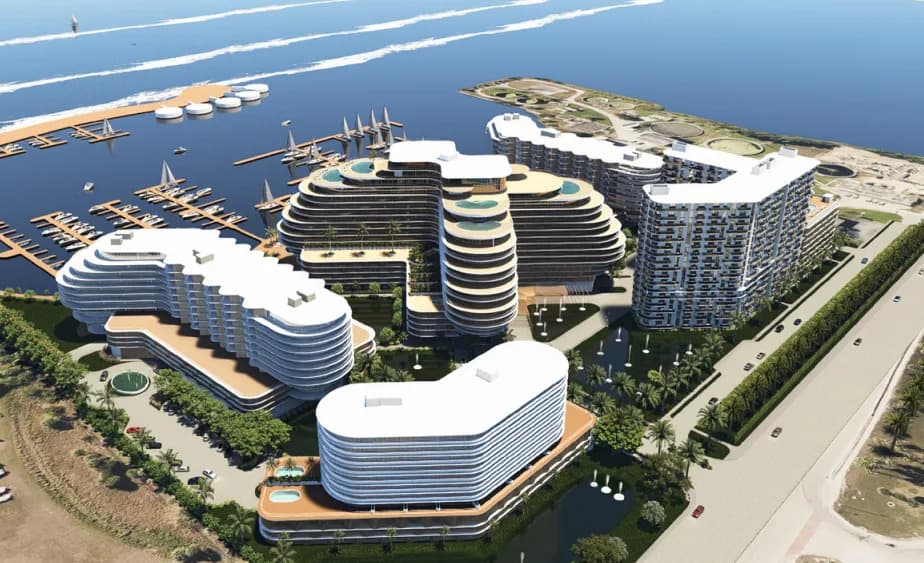
An artist's rendering shows the planned Causeway Cove development at 601 Seaway Drive. It would include over 1,000 apartments, over 200 hotel rooms and over 2,300 parking spots, and would use the Live Local Act to get around local height and density limits.
Finding an affordable place to live is among the most basic human needs, and recent polling shows 72% of Americans consider housing affordability a major problem. In Florida, a proposed waterfront development is testing whether a state law meant to expand housing access can be used to fast‑track a luxury project.
Project and Proposal
The Causeway Cove project in Fort Pierce — a city of about 50,000 roughly two hours north of Miami — would build high‑rise condominiums and apartments beside a convention center, hotel, marina and retail space. The developer says a portion of the units qualify as "affordable" under Florida’s 2023 Live Local Act, which could allow the entire project to move forward with reduced local review.
What the Live Local Act Allows
Enacted in 2023, the Live Local Act included incentives such as increased state funding and low‑interest loans to encourage workforce housing. Its most controversial provision lets developers bypass normal local land‑use review for residential or mixed‑use projects on land zoned commercial or industrial if at least 40% of the units are designated "affordable." Supporters said this could spur redevelopment of vacant shopping centers into housing; critics warned it risks undoing local planning safeguards.
Why This Case Matters
The Causeway Cove design would dramatically alter Fort Pierce’s skyline: most local buildings top out around 45 feet, while one proposed tower approaches 200 feet. Residents and city leaders have raised aesthetic concerns and worry the scale would change the town’s character. (Disclosure: I once rented kayak storage space at the marina where this development is proposed; I ended that arrangement months before the project was announced.)
Affordability Threshold Raises Questions
Under the law, a unit counts as "affordable" if it is attainable for households earning up to 120% of the area median income (AMI). Using the Federal Reserve’s 2024 county median income figures, that threshold would allow households earning roughly $88,000 annually to qualify. Because that level is well above many service and hospitality wages, the designation may do little to help the workers who staff local shops, restaurants and tourist amenities.
Local Safety and Zoning Concerns
Beyond affordability, the site sits at the foot of a bridge that serves as a primary hurricane evacuation route from Hutchinson Island, a barrier island with more than 8,000 residents nearby. Residents worry increased traffic at that chokepoint could endanger evacuations in an emergency. State Representative Dana Trabulsy has argued the project may not meet the Live Local Act’s conditions: she says nonresidential elements (the convention center, hotel, restaurants and retail) are not covered by the law and would still require city review, and that the land’s "aquatic development" zoning may not qualify as commercial or industrial zoning under the statute.
"Nonresidential uses are not covered by the act and would have to be approved separately by the city," Rep. Dana Trabulsy told city commissioners.
Legal And Policy Implications
If a court or state agency sides with the developer, the decision could set a precedent allowing similar, large‑scale projects to proceed statewide with limited local oversight. If the developer loses, the ruling could narrow how the Live Local Act is applied. Either outcome will shape the law’s practical reach and how communities balance housing goals with local planning, safety and character.
Takeaways
A one‑size‑fits‑all approach to housing policy across a large, diverse state like Florida risks unintended consequences. Expanding affordable housing is a pressing priority, but policies that give developers broad exemptions and limited local review may produce supersized, profit‑maximizing projects that do little for lower‑wage workers and may undermine local planning and public safety.
Blake Fontenay is USA TODAY’s commentary editor.
Help us improve.