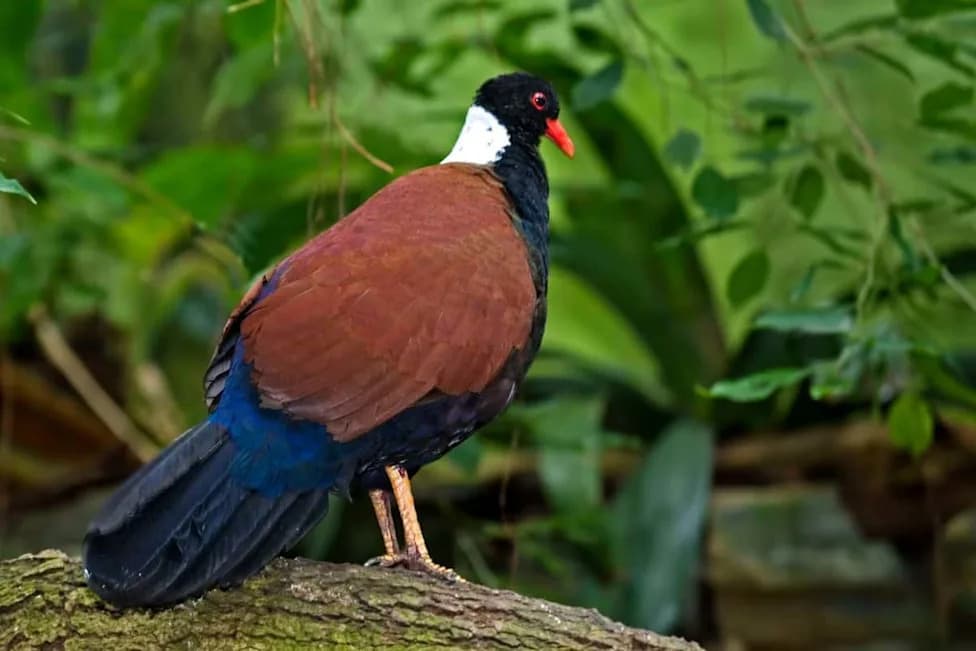
The black‑naped pheasant‑pigeon was captured on camera in 2022 on Fergusson Island, Papua New Guinea, ending about 140 years without a confirmed record. A Cornell University team working with local biologists and indigenous hunters obtained the footage on Mount Kilkerran. Current estimates place the population at roughly 50–249 individuals, and the species faces major threats from habitat loss, illegal logging, and poaching. Conservationists call for protected areas, sustainable forestry, habitat restoration, and indigenous‑led conservation.
After 140 Years, the Elusive Black‑Naped Pheasant‑Pigeon Is Filmed on Fergusson Island
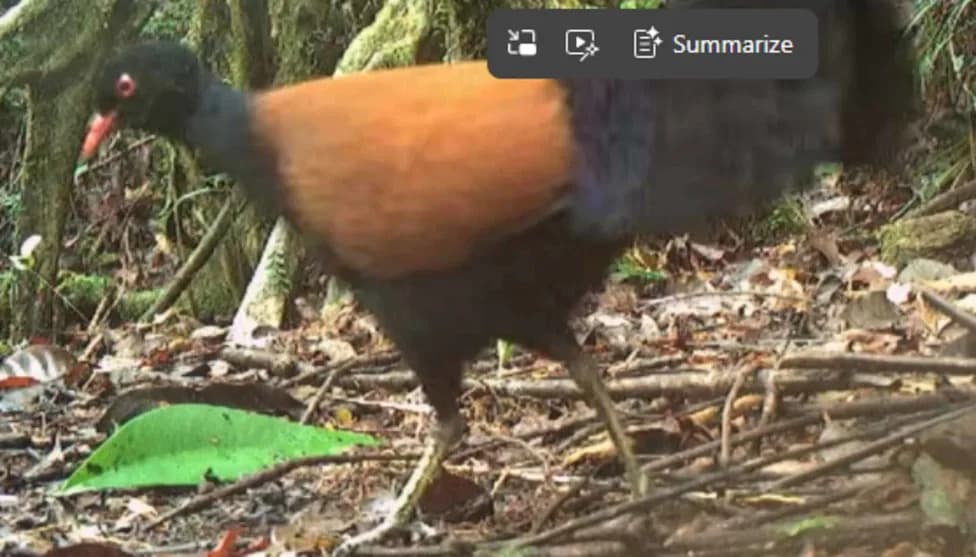
The black-naped pheasant-pigeon rediscovered in 2022© American Bird Conservancy / YouTube
The black‑naped pheasant‑pigeon — a bird long believed to be extinct — was photographed on Fergusson Island, Papua New Guinea, during a 2022 field expedition. The confirmed camera‑trap footage offers a rare second chance to protect a species known locally as the "auwo."
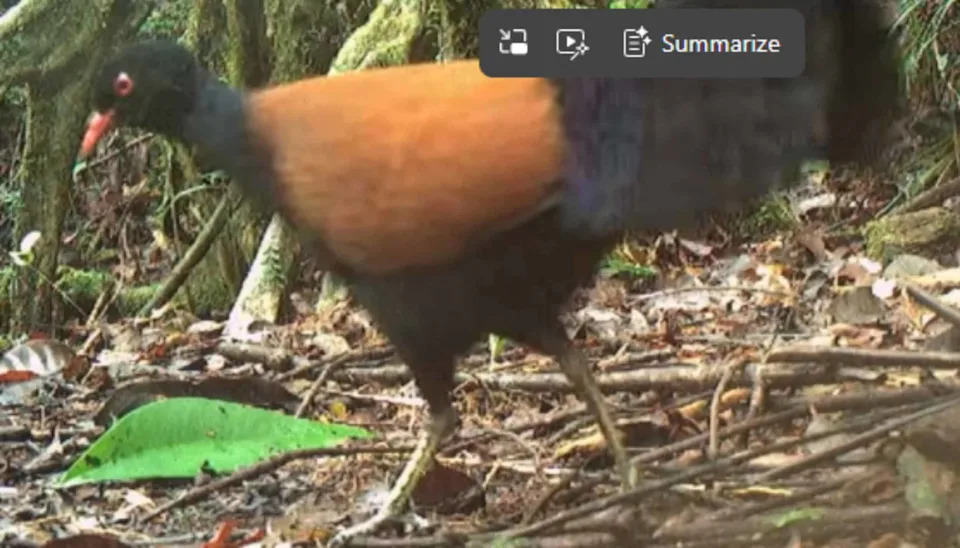
The black-naped pheasant-pigeon was scientifically rediscovered in 2022.©American Bird Conservancy / YouTube –Original
Rediscovery on Mount Kilkerran
A Cornell University team led by Jordan Boersma, working with local communities and biologist Doka Nason, deployed camera traps on Mount Kilkerran, the island's highest peak. After several days without results, researchers captured clear footage of the black‑naped pheasant‑pigeon just two days before the expedition ended. The Cornell Lab of Ornithology later released video from the expedition showing the moment researchers realized they had documented the species for the first time in roughly 140 years.
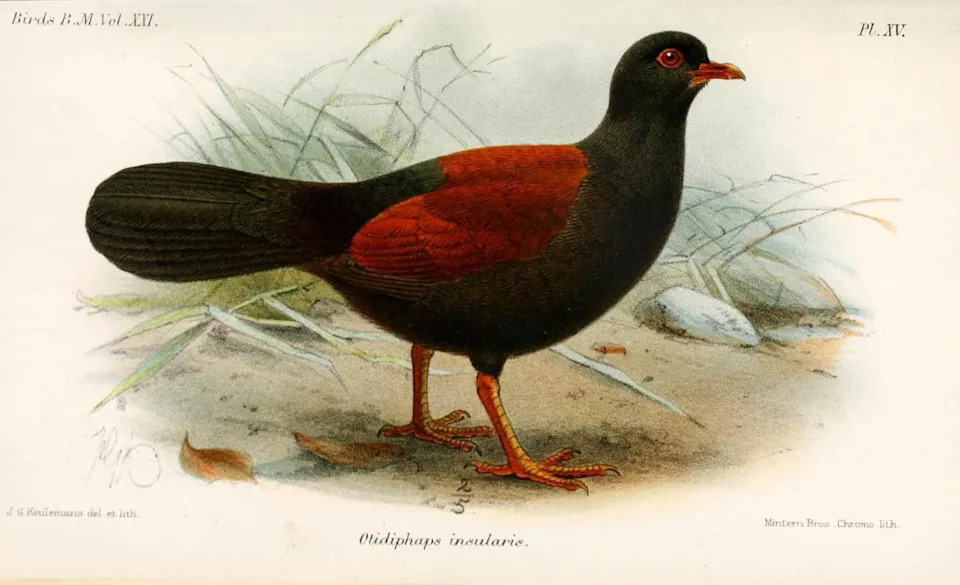
The last time Europeans saw the black-naped pheasant-pigeon was in 1882.©John Gerrard Keulemans, Public domain, via Wikimedia Commons –Original/License
Historical Context
Only a few scientific specimens were collected in 1882, and the species had no verified records for more than a century. Indigenous hunters reported occasional sightings — most recently in the 1990s — but those reports remained unconfirmed until the 2022 camera‑trap evidence. The bird's secretive behavior and dense rainforest habitat helped it remain undetected for decades.
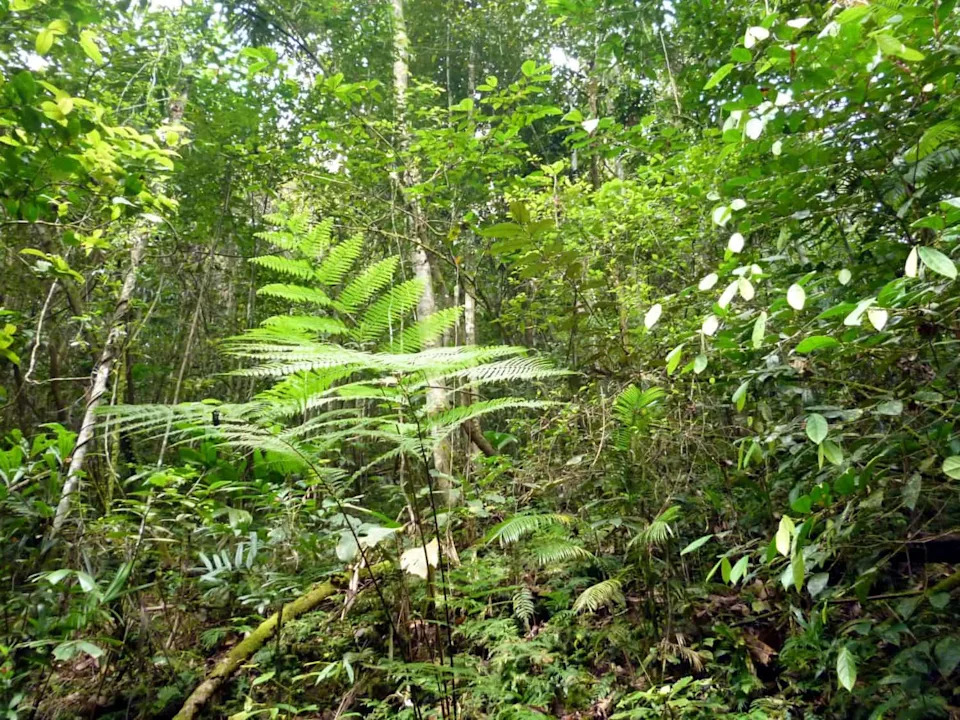
With their rainforest habitat decreasing, in addition to other environmental pressures, the black-naped pheasant-pigeon population is decreasing.©Sebastian 22/Shutterstock.com
Population Status and Threats
Current best estimates put the global population between about 50 and 249 individuals, most likely concentrated in a single, localized population on Fergusson Island. That small size makes the species vulnerable to stochastic events, disease, introduced predators, and human pressures.
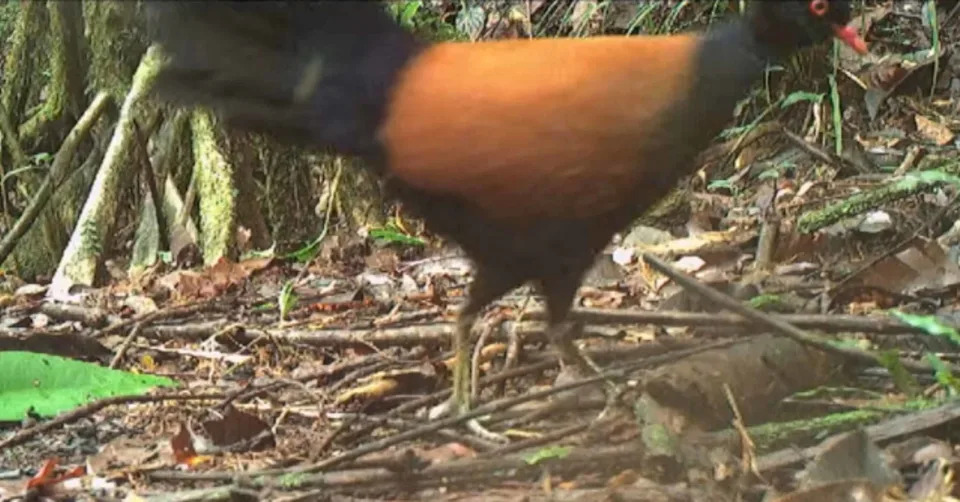
With somewhere between 50 and 249 of the black-naped pheasant-pigeons left, the time for conservation is now.©American Bird Conservancy / YouTube –Original
- Habitat loss: Ongoing logging and forest fragmentation reduce the rainforest the species depends on.
- Illegal logging: Despite protections enacted in 2001 for some tree species, estimates indicate a large share of exported timber from Papua New Guinea is illegally sourced, driving unsustainable practices.
- Low detectability and scarce records: No additional confirmed sightings have been reported since the 2022 footage, suggesting the population is small and hard to find.
- Poaching and local pressures: Hunting and other human activities add further risk.
Conservation Priorities
Conservationists urge immediate action to prevent the black‑naped pheasant‑pigeon from sliding back toward extinction. Recommended measures include:
- Establishing and enforcing protected areas on Fergusson Island
- Reducing illegal and unsustainable logging and promoting sustainable forestry practices
- Restoring and reconnecting fragmented rainforest habitat
- Supporting indigenous‑led conservation initiatives and involving local communities in decision‑making
- Strengthening monitoring, research, and anti‑poaching efforts
The 2022 rediscovery is a rare conservation opportunity: with decisive, community‑centered action, there is a realistic chance to secure habitat and stabilize or recover the species' population.
Help us improve.