David Crowley, a 40-year-old Milwaukee County executive and former community organizer, emerged in 2026 as Gov. Tony Evers' preferred successor — a signal that Democrats are redefining "electability." Crowley pairs pragmatic policy proposals — boosting school funding, expanding BadgerCare and pursuing repeal of Act 10 — with a personal story shaped by housing instability and family struggles. He emphasizes coalition-building, avoiding cultural flashpoints, and increasing turnout in communities of color while contrasting himself with Republican Rep. Tom Tiffany.
David Crowley Tapped By Evers Signals New Definition Of Electability In Wisconsin
Democrats' Pick In Wisconsin Shows A Shift In Priorities
In 2018, Wisconsin Democrats nominated Tony Evers — a cautious, veteran education administrator — as their candidate to unseat Republican Gov. Scott Walker. By 2026, Gov. Evers endorsed a very different successor: 40-year-old Milwaukee County Executive David Crowley, a community organizer and local official whose rise reflects a changing definition of "electability" within the Democratic Party.
The primary contest against Assemblywoman Francesca Hong, a democratic socialist, framed the choice for many voters as a test between pragmatic electability and a left-leaning agenda. Crowley emerged as the party's consensus pick: a candidate party strategists believed could both win statewide and deliver on priorities that matter to voters across suburban and urban communities.
What the Choice Signals
The shift from Evers to Crowley highlights several broader trends inside the Democratic Party: greater willingness to back candidates of color in high-stakes statewide races; heightened sensitivity to concerns about age and vigor following national setbacks; and a base that wants bolder policy goals while still prioritizing general-election viability.
"What Wisconsin proved in 2026 is that electability isn't a fixed thing — it reflects who steps up to lead, who voters trust to understand their lives, and who has delivered for their community," said Denise Feriozzi, a Wisconsin-based Democratic strategist and co-founder and executive director of The Pipeline Fund. "David Crowley didn't come out of nowhere. He grew up in Milwaukee, organized his community, served in the Assembly, and ran the county."
Crowley's Agenda
In interviews Crowley framed full Democratic control of state government as an opportunity to "go on offense" on affordability and public services. His priorities include:
- Increasing state funding for public schools
- Pursuing repeal of Act 10, the law that curtailed many public-sector union protections
- Expanding BadgerCare to improve health-care access and affordability
On culturally charged issues, Crowley has sought a pragmatic tone. He told reporters he supports "common-sense" gun measures while recalling duck-hunting outings with his father, and he has suggested that decisions about transgender participation in school sports be left to the state's high school athletics association.
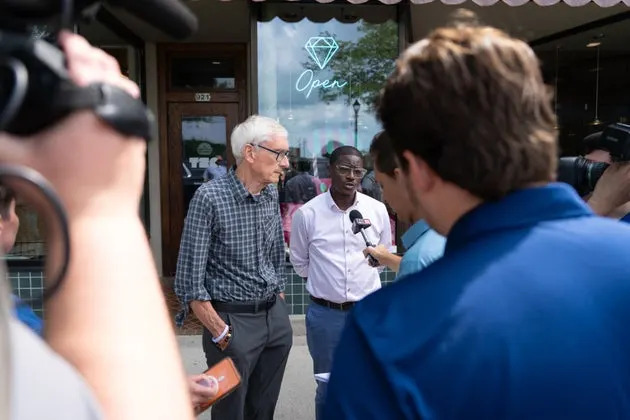
David Crowley, right, the Democratic candidate for Wisconsin governor, talks with members of the press as Wisconsin Gov. Tony Evers looks on during a campaign stop on Aug. 7, 2026, in Sheboygan, Wisconsin. AP Photo/Kayla Wolf
Personal Story And Governing Record
Crowley's life experience is central to his political narrative. The son of an IBEW master electrician, he grew up in Milwaukee in a family affected by parental substance addiction, moved frequently, and faced eviction twice before finishing high school. He left college to do community organizing, later returning to complete a bachelor's degree in 2024 while serving as county executive.
As Milwaukee County executive, Crowley worked with suburban leaders on homelessness and housing policy, and his office reports progress in reducing unsheltered homelessness — a record he highlights to show coalition-building across jurisdictions.
Campaign Strategy And Outlook
Crowley campaigned on turning out voters in communities of color and avoiding cultural flashpoints that national Republicans often exploit. He performed strongly in Latino neighborhoods during his 2022 reelection and is betting his local ties will boost turnout in Milwaukee's Black neighborhoods, where Democratic turnout lagged in 2022 and 2024.
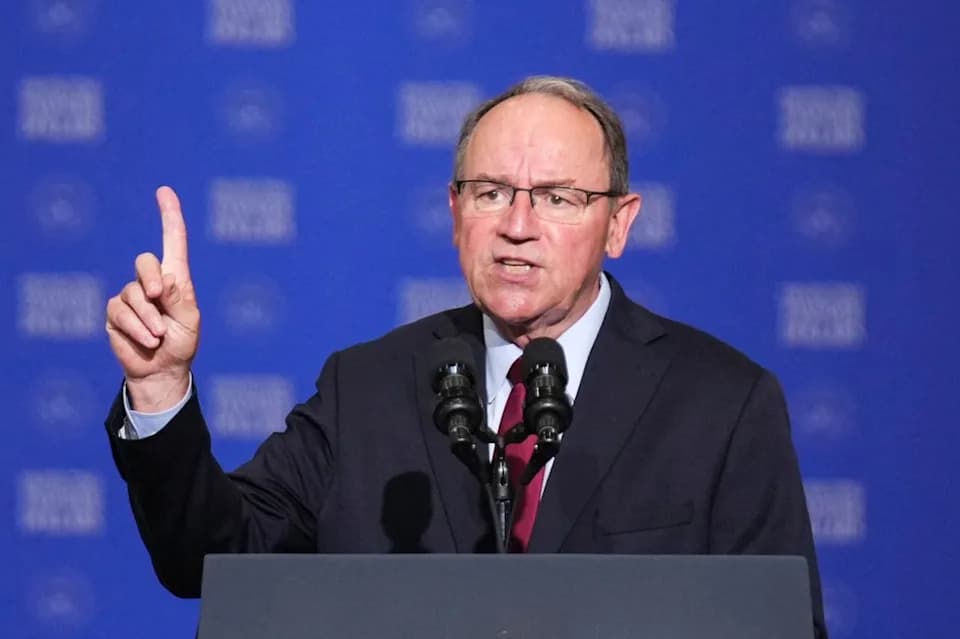
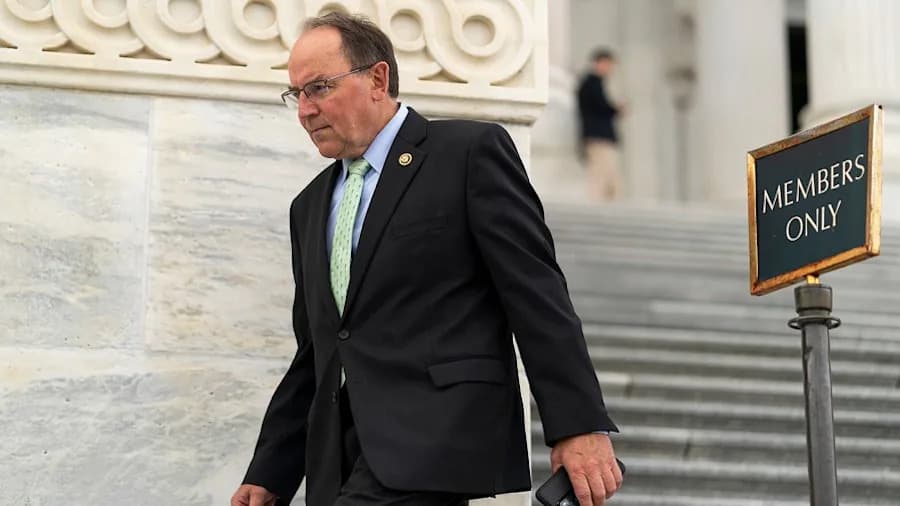
Heading into the general election, Crowley has positioned himself in contrast to Republican Rep. Tom Tiffany, casting Tiffany as a reliably partisan ally of an unpopular national administration and arguing Wisconsin needs pragmatic problem-solvers rather than partisan gridlock.
Whether Crowley's blend of lived experience, managerial record and pragmatic messaging will secure statewide victory remains a central question for Wisconsin Democrats and national observers alike.
Help us improve.