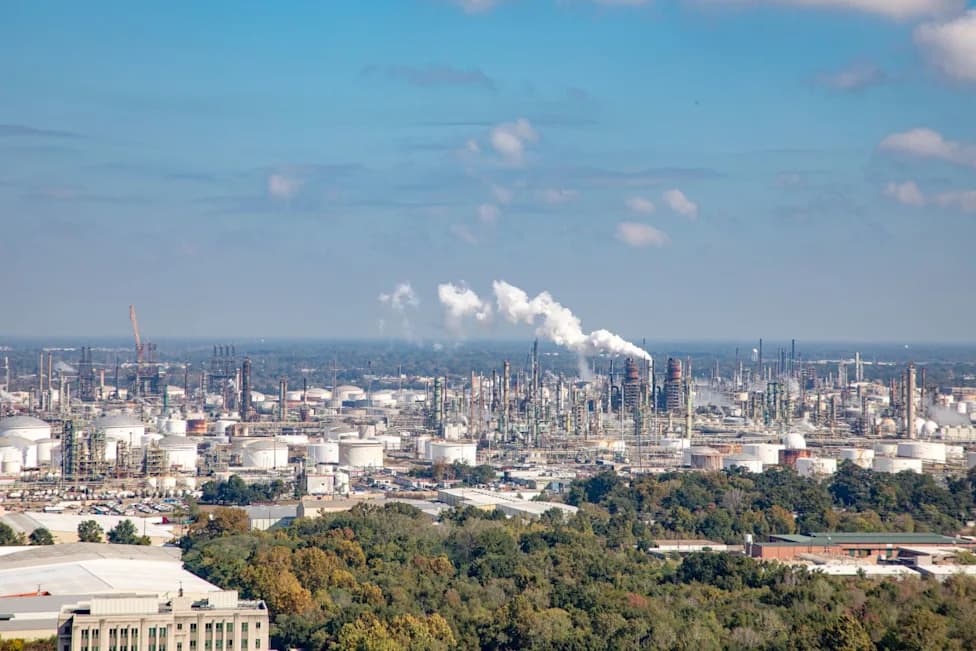
The EPA has stopped publishing calculated lifetime cancer-risk estimates in its latest national air-toxics update, leaving only raw emissions and concentration data available. Advocates say removing these public-facing risk calculations undermines communities, journalists, and nonprofits that rely on them to understand local health impacts from pollutants like ethylene oxide. The most recent public dataset covers 2021 emissions and arrived late; the agency has not explained why it omitted the risk estimates.
EPA Stops Publishing Public Cancer-Risk Estimates Alongside Air Pollution Data
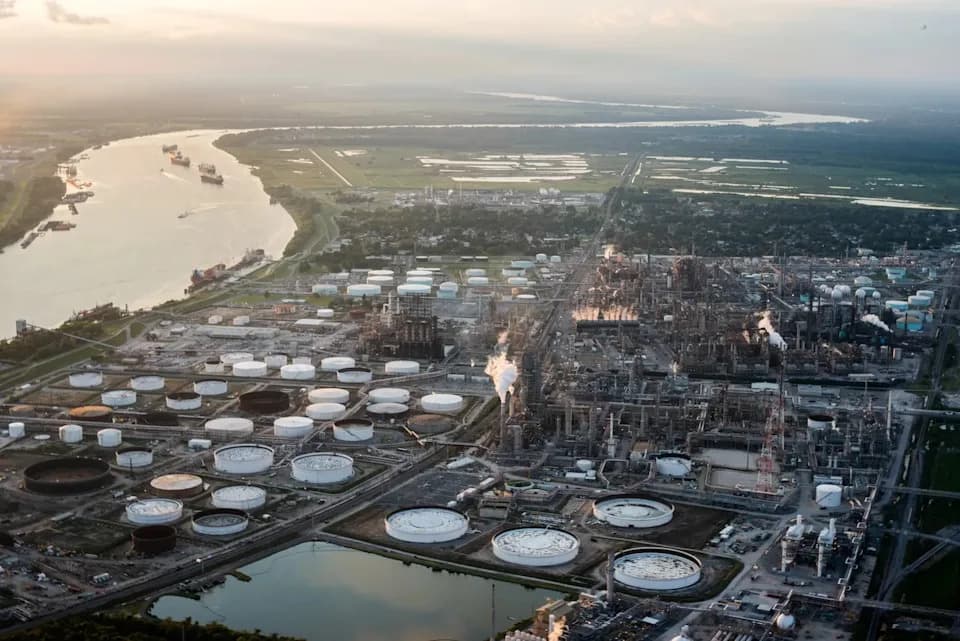
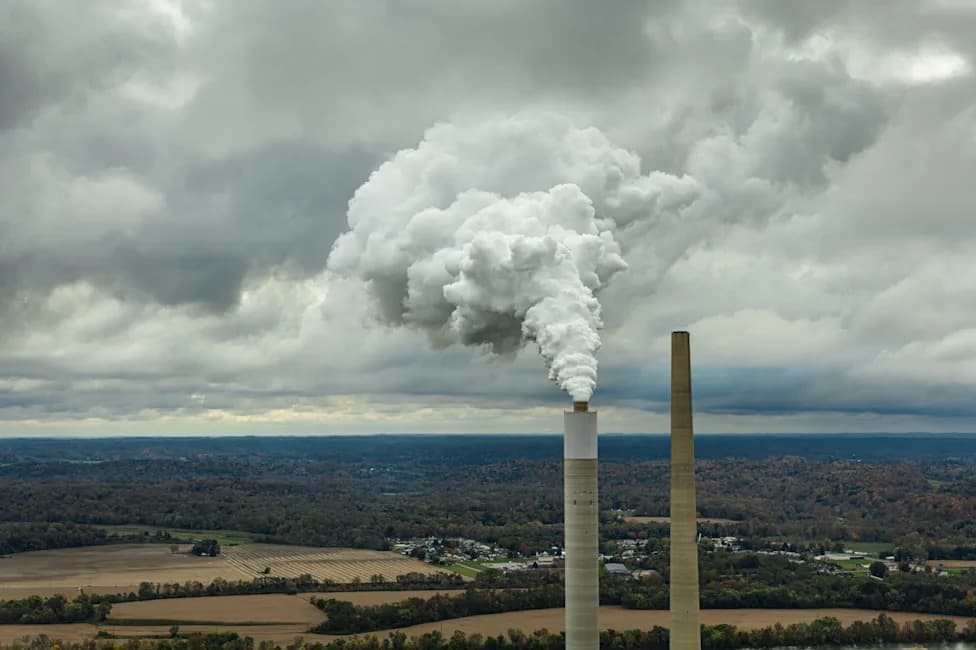
An aerial view of Louisiana's "Cancer Alley," an 85-mile stretch of land along the Mississippi River with hundreds of industrial facilities that pose a higher risk of cancer for local residents.
The Environmental Protection Agency has removed calculated lifetime cancer-risk estimates from its latest national air-toxics update, leaving only raw emissions and concentration numbers available to the public. Researchers, community advocates, and journalists say the change makes it harder for residents near industrial sources to understand what pollution means for their health and to hold polluters and regulators accountable.
What Changed
For more than two decades the EPA published cancer-risk assessments derived from modeled air toxics concentrations down to the census-block level through its Air Toxics Screening Assessment. Those estimates translated technical pollutant measurements into lifetime cancer-risk figures the public and advocates could use. In the most recent update the agency continues to post emissions and concentration data but has omitted the public-facing cancer-risk calculations and has not updated the searchable map that previously displayed those risks.
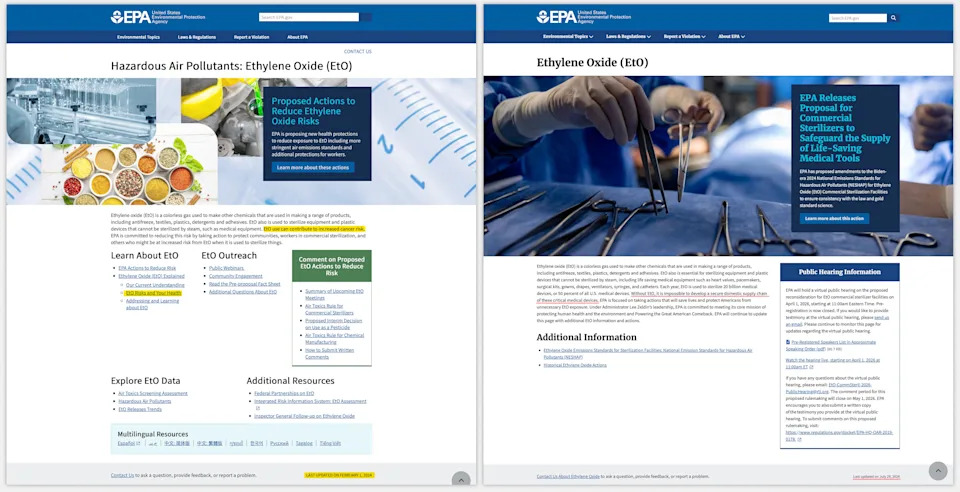
Left: The Environmental Protection Agency's webpage on ethylene oxide in 2024. Right: The updated page in 2026, which removes mentions of health risks and emphasizes the carcinogen's industrial usefulness.
Why This Matters
The missing risk calculations are more than a technical detail. They helped communities interpret how exposure to pollutants such as ethylene oxide, benzene, and formaldehyde could affect cancer risk. In 2023, researchers at the Union of Concerned Scientists used EPA calculations to show that more than 14 million people live within five miles of facilities that emit ethylene oxide, and highlighted 23 sterilization plants the EPA had identified as emitting ethylene oxide at levels that increase cancer risk.
"At the end of the day, the people who are living in communities with concentrated sources of pollution are frankly the ones to lose," said Darya Minovi, a researcher who worked on the ethylene oxide maps. "They end up caught in a bureaucratic and political tug of war, and they're not being protected as they should be."
Context and Timeline
The EPA has published these risk estimates intermittently since 2002 and began annual releases in 2022. Because of modeling and processing time, each release typically reflects emissions from previous years. The most recent public dataset released this year covers 2021 emissions and arrived a year late; the expected 2022-based risk calculations were not published. Tai Lung, a former EPA EJScreen lead and now senior advisor for federal data policy at the Federation of American Scientists, only gained access to the latest data after contacting the agency.
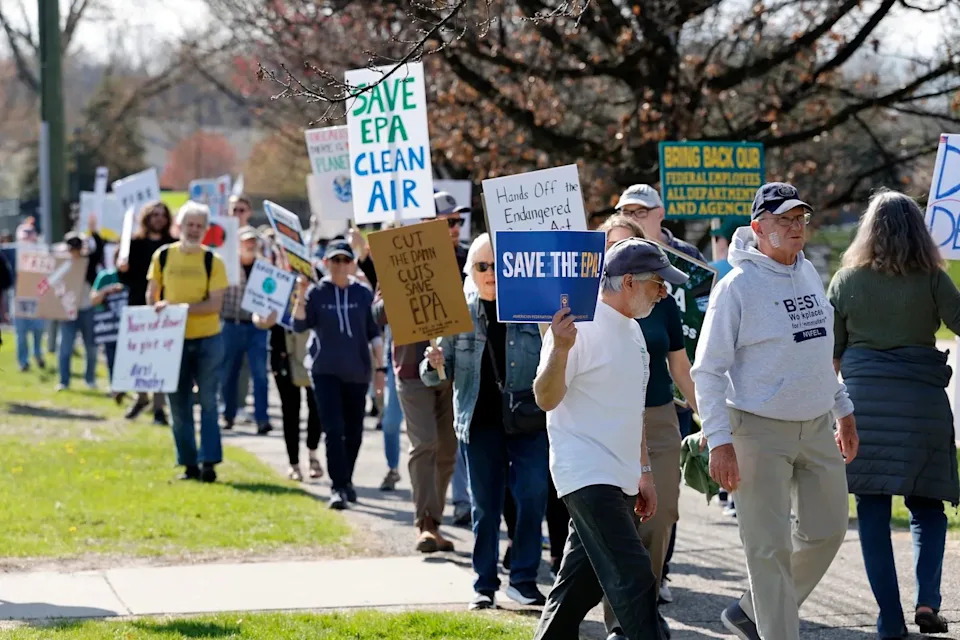
An Earth Day rally outside the EPA offices in Ann Arbor, Michigan, in 2025.
Broader Pattern and Legal Issues
Advocates say the omission fits a broader trend of reduced public access to environmental data, including the suspension of the EPA's EJScreen tool and removal of thousands of government webpages under prior administration actions. Critics point out that the OPEN Government Data Act of 2019 requires agencies to make data more accessible and to provide notice before substantially changing or ending major datasets, and they question whether the agency has followed those requirements here.
Voices From the Field
Environmental and public-health groups warn that providing only raw numbers shifts the burden of interpretation onto communities and local organizations — many of which lack the technical expertise and resources needed to convert pollutant concentrations into meaningful health-risk information. "The public deserves to have that information about that risk so that they can be equipped to push back," said Elizabeth Bechard of Moms Clean Air Force.
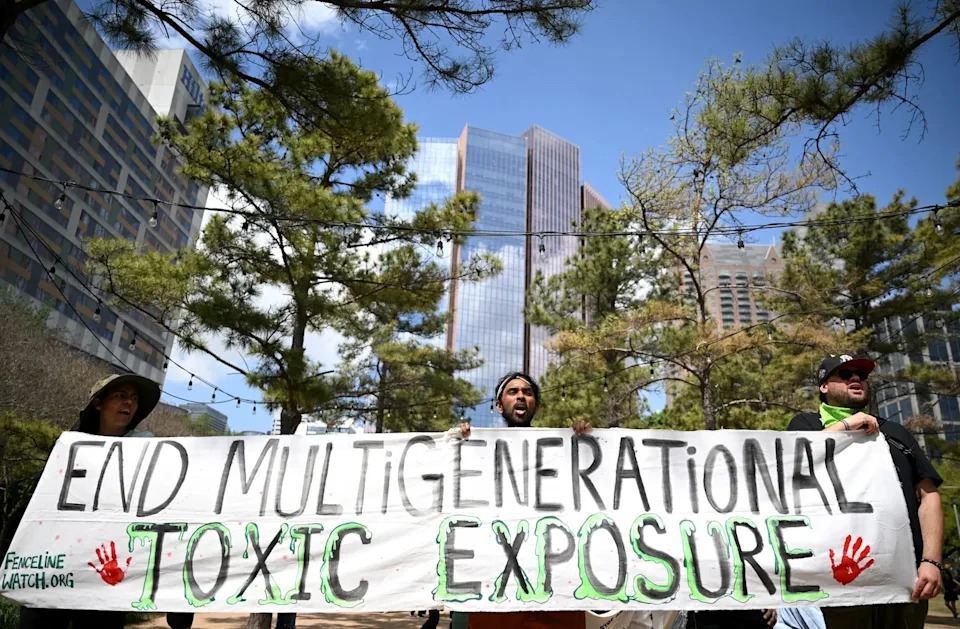
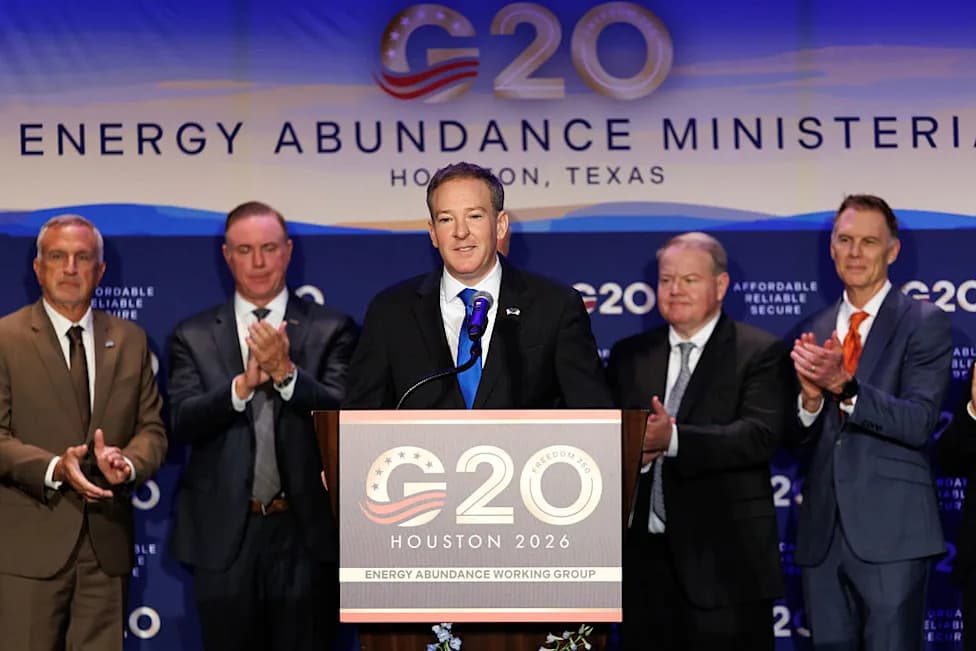
Protesters rally against a global energy conference in Houston earlier this year.
What To Watch
The EPA told reporters it will continue posting emissions and concentration data when available but did not explain why it omitted cancer-risk estimates or whether the agency still performs those calculations internally. Observers are watching for clarification about whether the calculations will return to public releases and whether the agency will provide notice explaining the change.
This story was originally published by Grist with the headline The EPA's data on cancer risk from air pollution has gone dark on Aug 14, 2026.
Help us improve.