Peggy Flanagan won the Minnesota Democratic primary, defeating Rep. Angie Craig, and is the likely next U.S. senator. She has accused Israel's conduct of genocide and supports banning offensive weapons sales while backing defensive aid such as the Iron Dome and a two‑state solution. Flanagan has strongly condemned antisemitic attacks in Minnesota, but some Jewish Democrats raised concerns about her targeting of AIPAC. She is endorsed by progressives like Bernie Sanders and Ilhan Omar and will face Republican Michele Tafoya in the general election.
Peggy Flanagan Wins Minnesota Primary — Israel Critic But Not An El‑Sayed Clone
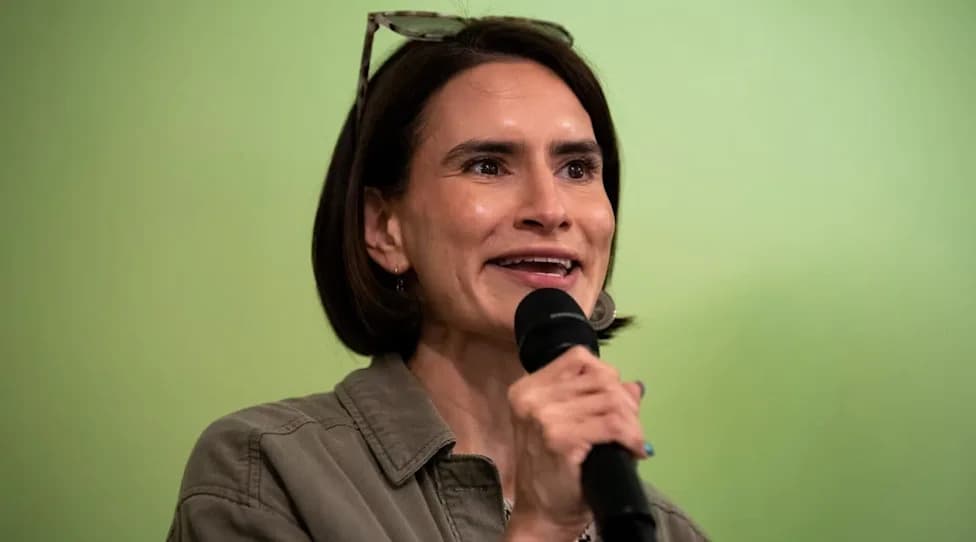
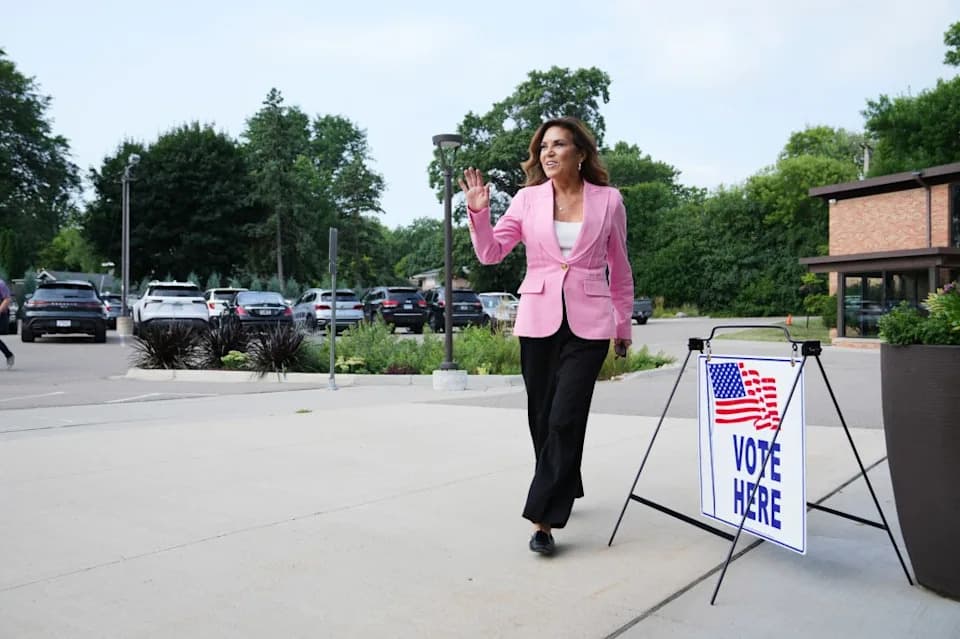
Democratic Senate candidate, Minnesota Lt. Gov. Peggy Flanagan speaks during a get out the vote event at the Leech Lake Band of Ojibwe Twin Cities Office on Aug. 8, 2026 in Minneapolis, Minnesota. (photo credit: STEPHEN MATUREN/GETTY IMAGES/JTA)
Peggy Flanagan, the likely next U.S. senator from Minnesota, defeated Rep. Angie Craig in the Democratic primary. Her campaign sharpened criticism of Craig's ties to the pro‑Israel lobby and positioned Flanagan as a progressive voice on U.S. policy toward Israel — while also signaling important distinctions from figures such as Michigan Democrat Abdul El‑Sayed.
Flanagan has called Israel's conduct in the recent war "genocide" and supports halting sales of offensive weapons to Israel. At the same time, she has not opposed U.S. support for defensive systems such as the Iron Dome. Her platform states she would have joined Minnesota's incumbent senators — Amy Klobuchar (who is running for governor) and Tina Smith — "in voting to halt offensive weapons sales to Israel." That stance aligns with a large majority of Senate Democrats: 40 of the 47 senators who caucus with the party supported the April measure restricting offensive weapons transfers.
On long‑term outcomes, Flanagan endorses a two‑state solution that she says would provide security for Israel while allowing Palestinian self‑determination. That contrasts with El‑Sayed, who has not committed to recognizing Israel explicitly as a Jewish state or endorsing a two‑state outcome.
Flanagan has been unequivocal in condemning antisemitism. After a violent attack near a Detroit synagogue earlier this year, she wrote:
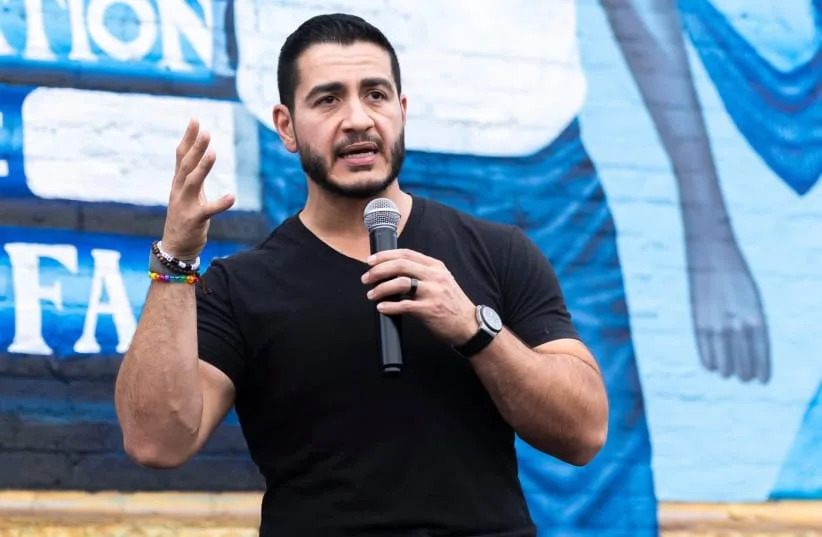
Democratic Senate candidate Abdul El-Sayed speaks in Detroit after a radio appearance on Dr. Horace Sheffield's GOTV Community Rally on August 01, 2026. (credit: Finn Gomez/Getty Images)
“Our Jewish communities are facing unprecedented levels of violence and threats. It is on all of us to call anti‑Semitism out when we see and hear it, and to make sure that all of our faith communities are treated with respect. Hate brings no one more safety, more dignity, or more peace.”
She reiterated that clarity when Minneapolis’ Temple Israel was vandalized in 2025 with graffiti that included two inverted triangles — a symbol tied to Hamas — and the phrase "Al‑Aqsa Flood," the name Hamas used for the October 7, 2023 attack. Flanagan wrote: "Last night, Temple Israel in Minneapolis was defaced with anti‑Semitic hate. My heart is with the congregants of Temple Israel and our entire Jewish community. Hate has no home in Minnesota, and every house of worship should be a safe place to pray."
Still, some Jewish Democrats and pro‑Israel advocates expressed unease over Flanagan's campaign rhetoric. During the primary she repeatedly criticized Craig's backing from the American Israel Public Affairs Committee, calling Craig "AIPAC's candidate," a tactic some said echoes progressive campaigns that have targeted AIPAC support. A Flanagan spokesperson told the Minnesota Star Tribune that she has "consistently condemned antisemitism and will continue standing with Jewish Minnesotans against hate."
Flanagan drew endorsements from Israel‑critical progressives, including Sen. Bernie Sanders — who authored the proposed ban on offensive weapons sales — and Rep. Ilhan Omar. She also won the endorsement of the progressive Jewish group Bend the Arc; CEO Jamie Beran called her "a close friend of the Twin Cities Jewish community and a trusted ally in the fight against antisemitism."
In the general election, Flanagan will face Republican Michele Tafoya, a former NFL sideline reporter who has expressed strong support for Israel. Minnesota has not elected a Republican U.S. senator since 2002, and the state has trended more Democratic in recent cycles, making Flanagan the frontrunner in most forecasts.
On Senate leadership, Flanagan has said she would not back Sen. Chuck Schumer if he seeks another term as party leader; Schumer is a prominent pro‑Israel figure. Republicans, who currently control the Senate, have uniformly opposed Sanders' resolutions to restrict offensive weapons transfers, leaving those measures largely symbolic. If progressive critics of Israeli policy win additional Senate seats this fall and Democrats flip control — and if party leadership changes — the political path to curbing weapons sales to Israel would become more feasible.
Help us improve.