A GeoHealth study tracked tree canopy and mortality across Chicago from 2011–2021 and found that year-to-year changes in canopy cover correlated with death rates. Each percentage-point gain in canopy was associated with about a 10% reduction in mortality, with the strongest drops for cardiovascular, respiratory and mental-health deaths. The study estimates a modest annual canopy increase of 0.03% (about 14,000 trees planted citywide) could prevent roughly 105 deaths per year, but notes this is a modeled estimate. Protecting mature trees — which provide immediate shade and benefits — may be more impactful in the short term than planting new saplings that take years to mature.
Protecting Mature Urban Trees May Save More Lives Than Planting New Ones, Chicago Study Finds
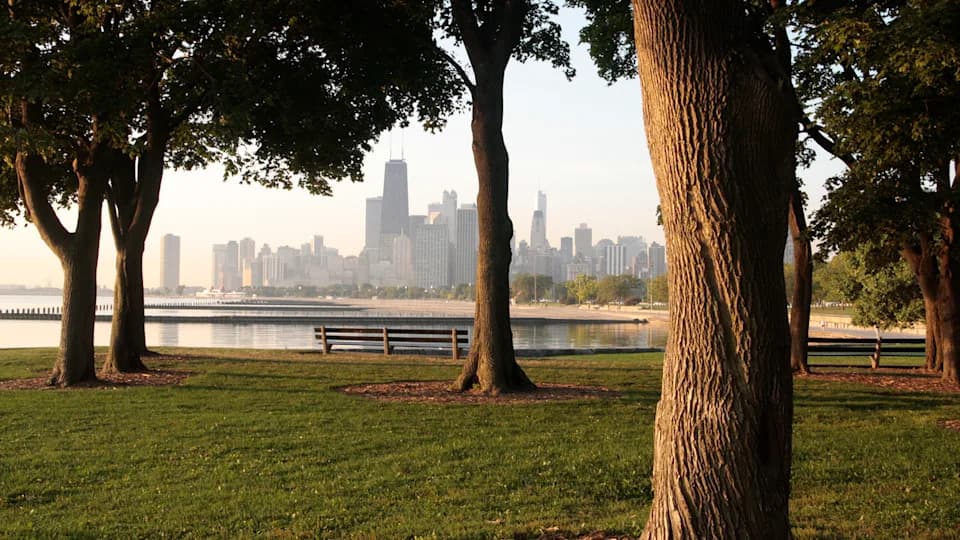
Neighborhoods that lost canopy cover year over year saw mortality rates rise, while those that gained canopy saw death rates fall. | Credit: Robert Abbott Sengstacke via Getty Images
A new 11-year study suggests preserving existing mature trees in cities could have a larger and more immediate benefit for public health than planting saplings alone. Published Aug. 5 in the journal GeoHealth, the research tracked annual changes in tree canopy and mortality across Chicago neighborhoods from 2011 to 2021.
The authors combined satellite-derived canopy measurements for every Chicago census tract with more than 220,000 death records provided by state and city health departments. Their statistical models controlled for summer temperature, air pollution, income and residential segregation, and still showed a strong relationship: neighborhoods that repeatedly lost canopy cover tended to experience rising mortality, while neighborhoods that consistently gained canopy saw mortality decline.
Key Findings
The effect size reported was substantial: each year-over-year percentage-point increase in canopy cover was associated with roughly a 10% reduction in mortality. The largest declines were observed in deaths attributed to cardiovascular, respiratory and mental-health causes. Geographically, declines in canopy, higher summer temperatures and higher mortality rates were concentrated on Chicago's South Side and West Side, while lakefront neighborhoods remained cooler and had lower mortality.
Methods and Limitations
Researchers used annual satellite imagery to estimate canopy cover from 2011–2021 and linked those changes to mortality trends across census tracts. This longitudinal approach differs from many prior studies that used a single snapshot of tree cover, allowing the team to examine how year-to-year gains or losses track with health outcomes.
'I noticed how much more exhausting it felt to walk through areas with little tree cover compared to nearby blocks lined with mature trees,' said study co-author Harrison Garcia, a Northwestern medical student, describing what helped spark the project.
Outside experts praised the study's design but noted limits common to observational work. The study shows canopy change and mortality moving together but cannot prove causation. Satellite-based canopy estimates can also miss newly planted, small-canopied trees and therefore underestimate short-term planting efforts. In addition, the association between canopy loss and higher mortality across a range of causes suggests that shade and cooling may not be the only protective mechanisms; trees also affect air quality, social conditions and mental well-being.
Policy Implications
To illustrate potential impacts, the researchers modeled a hypothetical citywide canopy increase of 0.03% per year — roughly matching Chicago's current planting pace of about 14,000 trees annually — and estimated this steady growth could prevent roughly 105 deaths per year. The authors and external commentators stressed that this is an approximate, model-derived estimate rather than a direct count of lives saved.
Because newly planted trees take years to develop large canopies and deliver full cooling benefits, the study argues that protecting existing mature canopy may be a higher-return public-health strategy in the near term. Urban planners and climate adaptation efforts should therefore emphasize preserving mature trees, especially in historically disinvested neighborhoods that are warming fastest and facing the greatest health burdens.
Bottom line: The study adds to growing evidence that urban tree canopy is linked to human health and highlights that year-to-year changes in canopy — and protection of mature trees — deserve attention from policymakers and planners.
Help us improve.