The remains of an ancient bridge—commonly called Nero's Bridge—have resurfaced in the Tiber near St. Peter's Basilica after weeks of little rain lowered river levels. Scholars say the structure may predate Nero and could have been built by Caligula as early as 39 AD. Officials report the Tiber's flow has fallen below 80 m3/s (≈2,825 cu ft/s), roughly half the historical July average, and warn Rome is confronting a major water crisis.
Ancient 'Nero's Bridge' Resurfaces in the Tiber Near St. Peter's as Rome Grapples With Severe Water Crisis
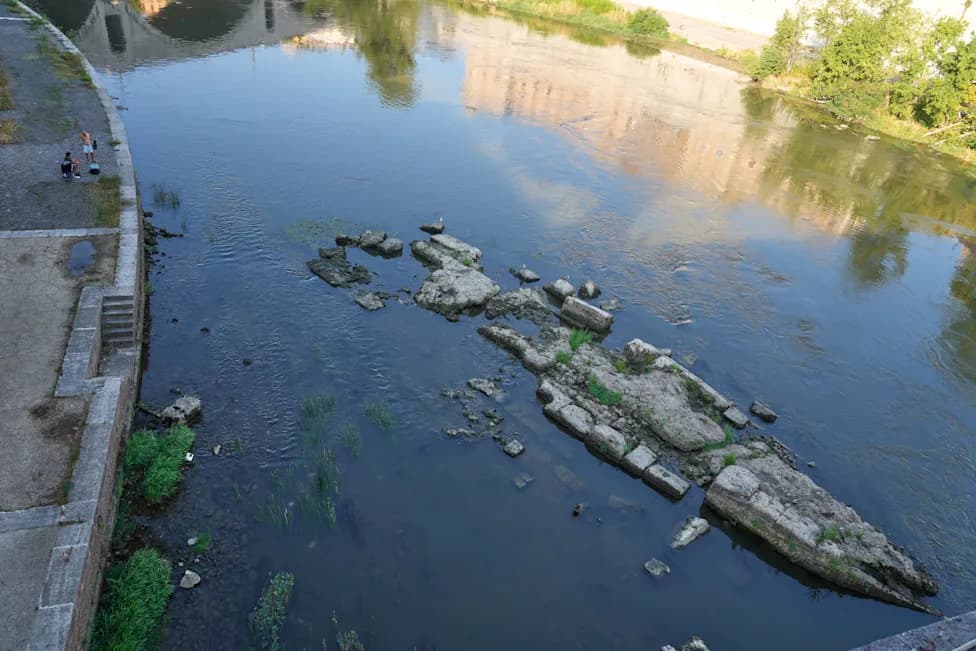
The ruins of the ancient Roman Neronian bridge, emerge from the riverbed of the Tiber river due to drought, in Rome, Thursday, Aug. 13, 2026. (AP Photo/Gregorio Borgia)(AP Photo/Gregorio Borgia)
The remains of an ancient bridge have reappeared in the Tiber River close to St. Peter's Basilica after weeks with virtually no rain caused river levels to plunge.
Commonly called Nero's Bridge for its traditional association with Emperor Nero, the visible ruins once linked Rome's city center with the Tiber's right bank.
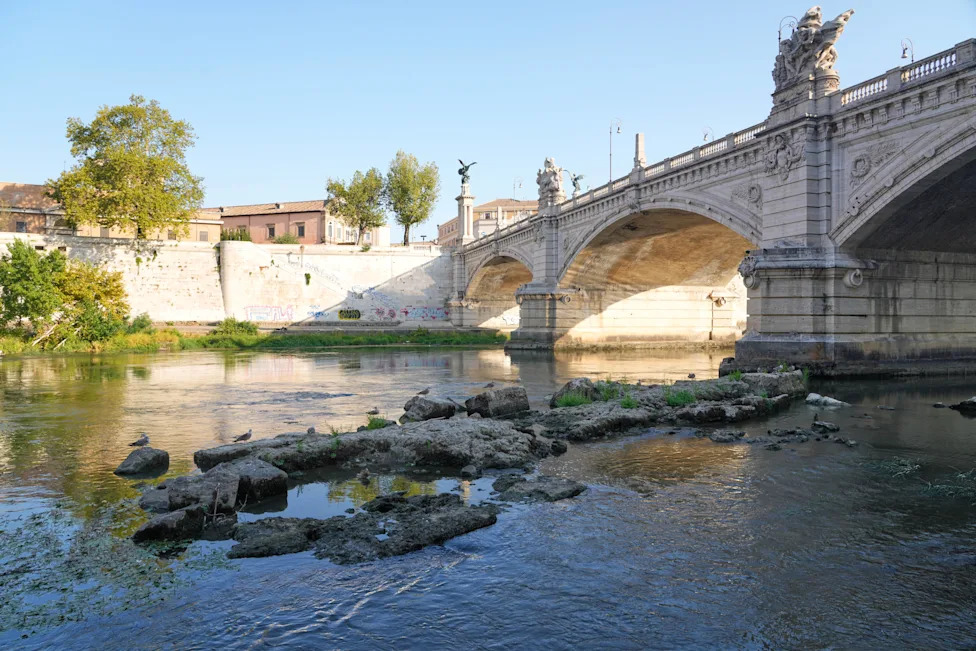
The ruins of the ancient Roman Neronian bridge, emerge from the riverbed of the Tiber river due to drought, in Rome, Thursday, Aug. 13, 2026. (AP Photo/Gregorio Borgia)(AP Photo/Gregorio Borgia)
Archaeological Perspective
Antonella Bonini, an archaeologist with Rome's cultural heritage superintendency, said the area is closely linked to Nero because of the emperor's circus, the site traditionally associated with the martyrdom of the Apostle Peter.
“Nero is the most famous person linked to this area, because precisely in Nero's circus, where the Vatican is now located, the Apostle Peter was martyred,” Bonini said.
Dating the Structure
Despite the popular name, scholars believe the bridge may predate Nero. Bonini noted that many experts attribute its construction to Caligula — Nero's uncle — and place its existence as early as 39 AD.
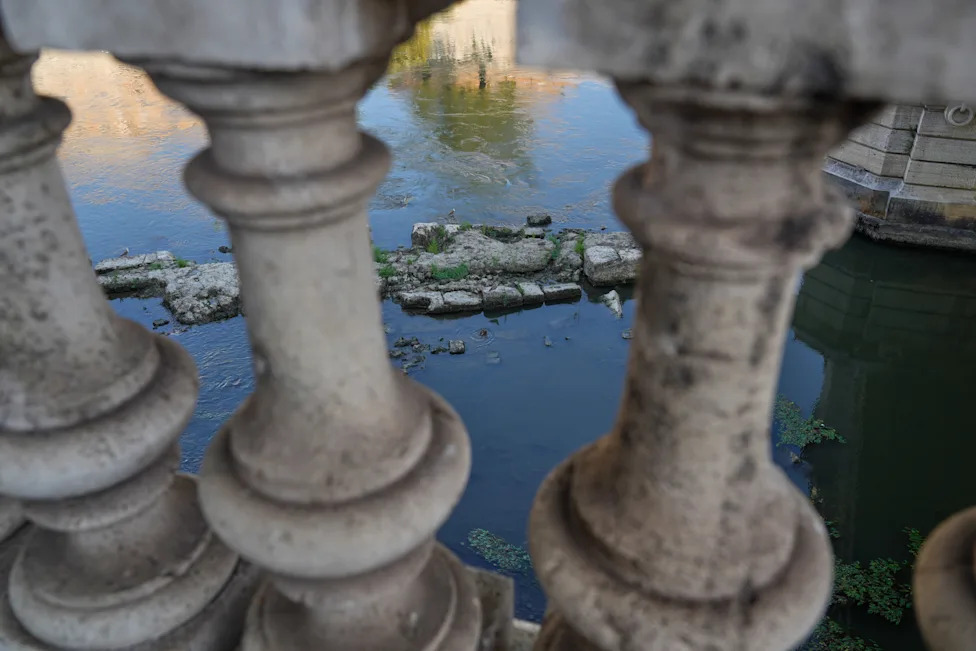
The ruins of the ancient Roman Neronian bridge, emerge from the riverbed of the Tiber river due to drought, in Rome, Thursday, Aug. 13, 2026. (AP Photo/Gregorio Borgia)(AP Photo/Gregorio Borgia)
Water Crisis That Revealed the Ruins
Officials say the Tiber's flow has dropped below 80 cubic meters per second (≈2,825 cubic feet per second), roughly half the historical average for July. Giovanni Giganti, coordinator of the Rome Civil Protection Service's center for water management, warned that the city is facing a significant water emergency.
“We are facing a major water crisis. And it is a crisis that is also due to the fact that this winter we did have quite abundant rainfall, but then the dry periods ... were quite long,” Giganti said.
The exposure of the bridge highlights both Rome's rich archaeological layering and the visible effects of prolonged dry spells on urban waterways. Authorities and heritage officials are monitoring the site while emphasizing the broader urgency of water management in the region.
Help us improve.