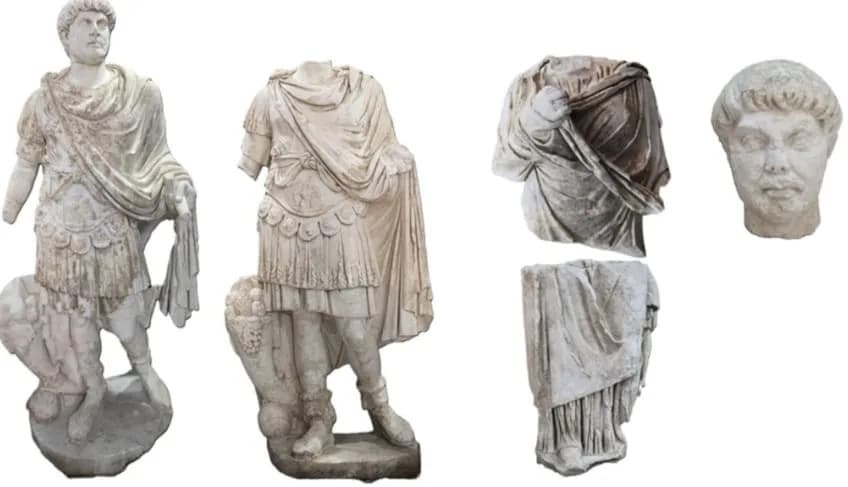
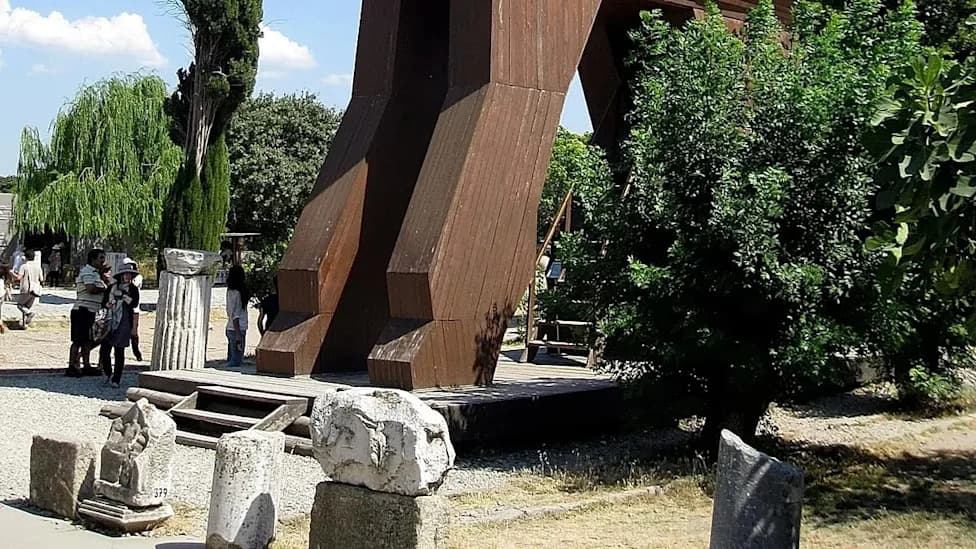
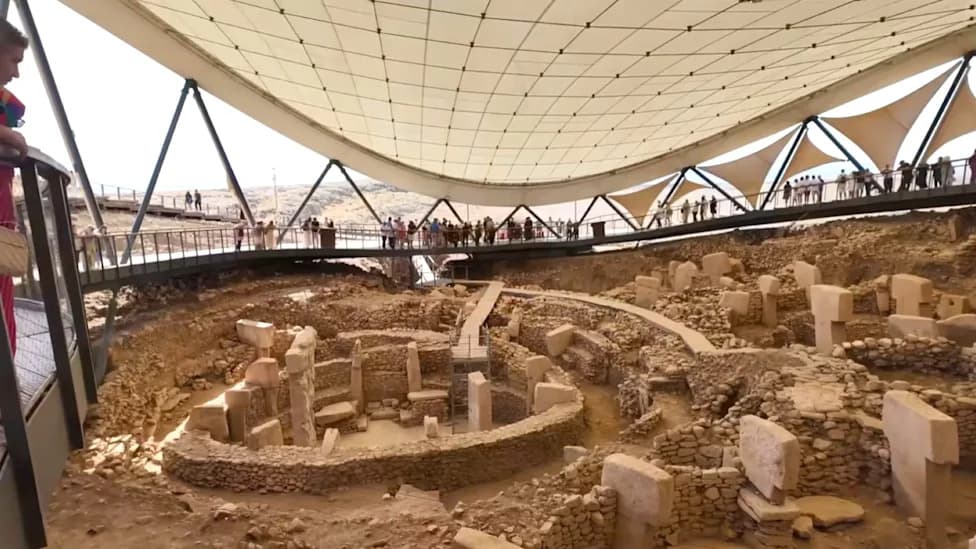
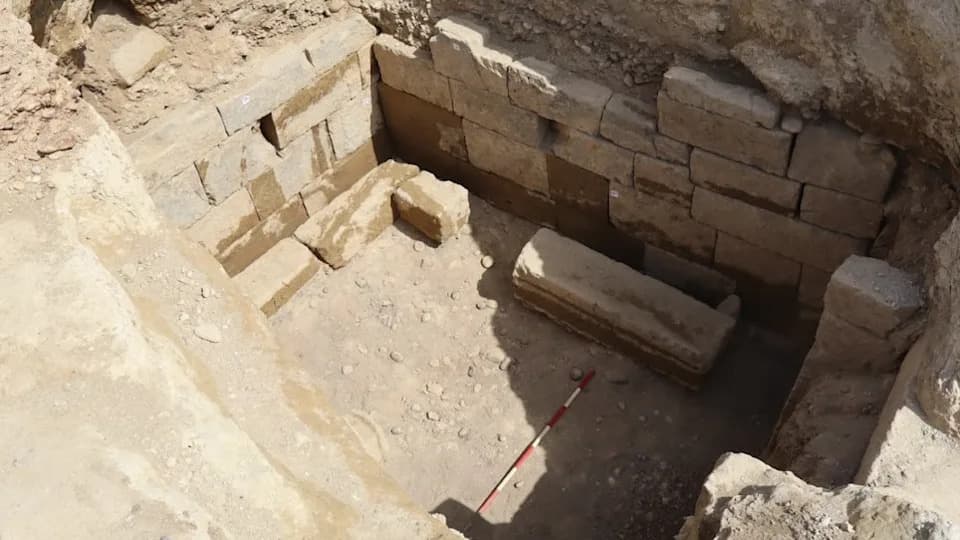
The Sardis excavation in Manisa, Turkey, has revealed a roughly 2,500-year-old, seven-foot statue of a youth holding fruit that had been reused as Roman pavement and thus preserved in exceptional condition. Dated to the first half of the 5th century BC, the sculpture blends 6th- and 5th-century stylistic traits, a hybrid that could reshape interpretations of art and life in ancient Lydia. The find is part of ongoing work by the Sardis Expedition, sponsored by Harvard and Cornell and conducted with Turkey’s culture ministry.
2,500-Year-Old Colossus Emerfaces at Sardis — Once a Roman Pavement, Now Rewriting Lydia's History
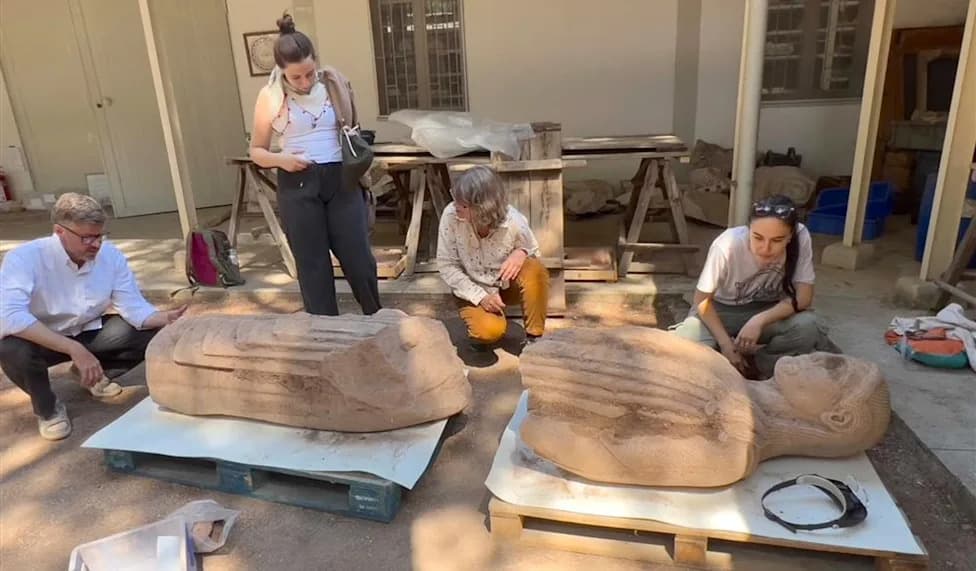
Photo Credit: Republic of Turkey Ministry of Culture and Tourism
Archaeologists excavating at Sardis in Manisa, western Turkey, have uncovered a colossal statue roughly 2,500 years old that was later reused as Roman paving. Broken into pieces but originally standing about seven feet tall, the figure—a youth holding fruit—has been exceptionally well preserved by its reuse and is already changing how scholars view the ancient kingdom of Lydia.
Details of the Discovery
The statue has been dated to the first half of the 5th century BC, near the dawn of the Classical period in Greek art. Officials say its remarkable condition is a direct result of Roman reuse: the sculpture was repurposed as a paving stone along a street, which helped shield it from weather and vandalism over the centuries.
Unusual Style and Dating
Researchers note that the work fuses stylistic features from different eras. The figure displays an upright pose and long hairstyle characteristic of 6th-century-BC sculpture, while the facial treatment and hands reflect techniques more typical of the 5th century BC. That hybrid combination has led experts to describe the find as unique for the region and potentially important for understanding shifting artistic traditions in Anatolia.
“It’s a wonderful piece, and we’re still kind of astounded and a bit perplexed by it,” said Nicholas Cahill, field director of the Sardis Expedition.
“One of the most unusual pieces of sculpture to emerge from excavations in western Turkey in the last decades,” added archaeologist Hector Williams.
Context and Ongoing Work
The discovery is part of ongoing excavations by the Sardis Expedition, a long-term project sponsored by Harvard and Cornell Universities and conducted with permission from Turkey’s Culture and Tourism Ministry. Sardis was the capital of Lydia, a wealthy Iron Age kingdom famed for early coin production.
Turkish authorities also announced related finds elsewhere: 1,800-year-old marble sculptures recovered at the UNESCO World Heritage site of Aspendos portray Asklepios, the Greek god of medicine, and his son Telesphoros, a figure associated with recovery and convalescence.
The Sardis site in Manisa was added to the UNESCO World Heritage list in 2025. Researchers say the new statue promises to shed light on cultural exchange and artistic evolution in western Anatolia during a transitional period between the Archaic and Classical ages.
Help us improve.