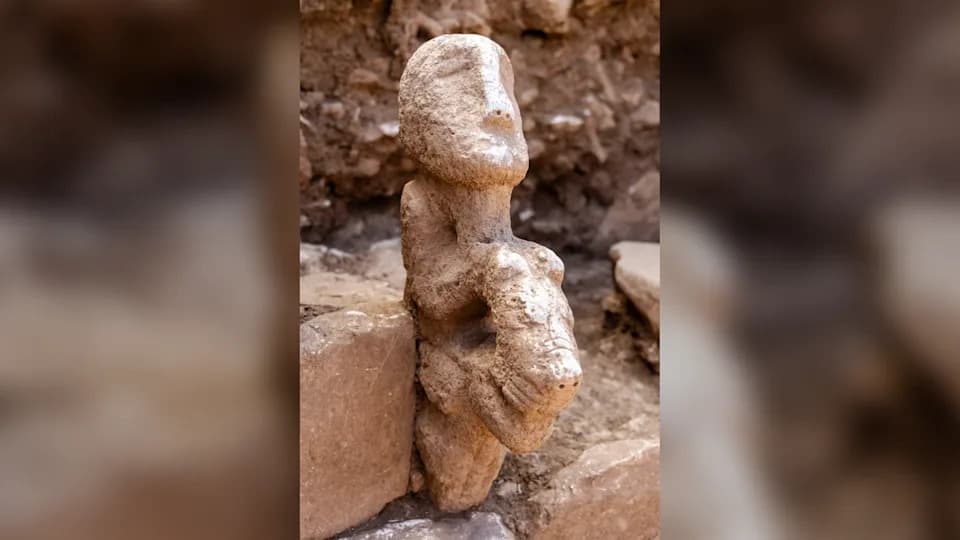
Archaeologists at Karahan Tepe in southeastern Turkey have uncovered a 28-inch (70 cm) Neolithic carving that appears to show a human riding a leopard. The figurine was found on seating at the rim of a roughly 10-foot (3 m) circular enclosure about 19 miles (30 km) from Göbekli Tepe. Officials say the discovery bolsters evidence that late hunter-gatherer communities created symbolic art and coordinated architectural planning long before cities and writing. Excavations continue under the Taş Tepeler project and Turkey's "Heritage to the Future" initiative.
Rare Neolithic Sculpture Showing a Human Riding a Leopard Unearthed at Karahan Tepe
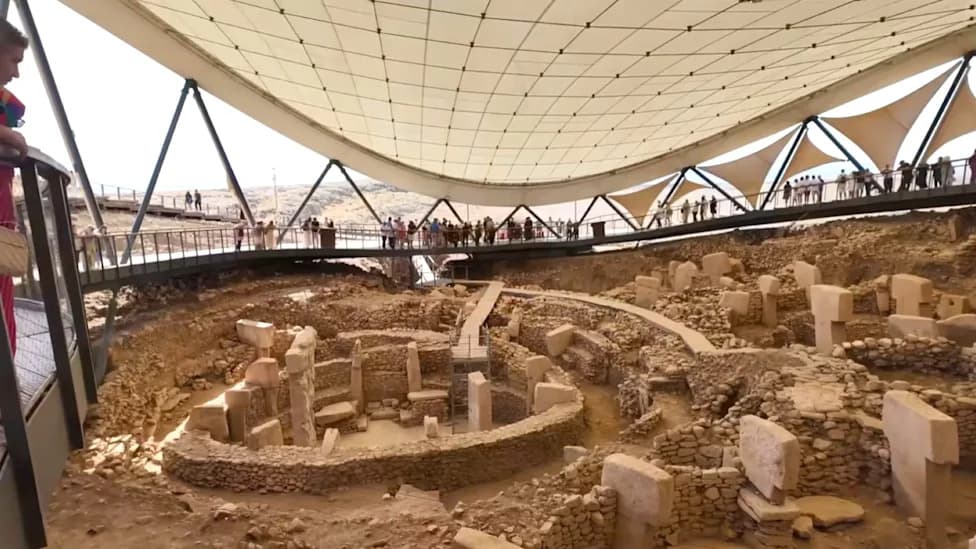
Photo Credit: YouTube
Archaeologists working at Karahan Tepe in southeastern Turkey have uncovered a rare Neolithic stone carving that appears to depict a human figure mounted on a leopard. The figurine stands about 28 inches (70 cm) tall and was recovered from seating at the rim of a circular enclosure roughly 10 feet (3 m) across, located about 19 miles (30 km) from the famed site of Göbekli Tepe.
Where and How It Was Found
Turkey's Ministry of Culture and Tourism said the piece was discovered on seating built along the edge of the small circular structure rather than inside one of Karahan Tepe's larger megalithic monuments. Excavators noted that flat stones covered the structure's floor, which officials cite as evidence of deliberate architectural planning "during an era predating the emergence of cities and written records."
Context and Dating
Karahan Tepe is part of the Taş Tepeler (Stone Hills) archaeological zone that includes Göbekli Tepe. Göbekli Tepe has been dated to roughly 11,500–12,000 years before present; Karahan Tepe appears to have been established a few centuries later. Together, these sites have prompted scholars to rethink the capacities of late hunter-gatherer communities in this region.
Significance and Caution
Officials and researchers say the carving strengthens evidence that late hunter-gatherer groups could produce symbolic art, coordinate complex construction projects and create durable ritual spaces well before urbanization and writing. Mehmet Nuri Ersoy, Turkey's culture and tourism minister, described the object as a "composite sculpture" not previously seen at the site and said the discovery "opens the door to new questions about the earliest periods of human history."
Minister Mehmet Nuri Ersoy: "This discovery opens the door to new questions about the earliest periods of human history."
Authorities were careful to Rule Out sensational interpretations: the find does not point to a lost super-civilization or overturn established timelines of human prehistory. Instead, it aligns with mainstream archaeological research showing that mobile, late-foraging groups in southeastern Anatolia were capable of sustained cooperation, shared ritual practice, and sophisticated stone work.
Ongoing Work and Preservation
Excavations at Karahan Tepe continue under the wider Taş Tepeler archaeological project. Officials also linked the work to Turkey's "Heritage to the Future" initiative, which supports excavation, documentation and conservation of Neolithic sites. As archaeologists record more structures and figurative art, they expect to refine how these communities gathered, worshipped and organized social life.
What We Still Don’t Know: The exact date of the sculpture within Karahan Tepe's sequence, its specific ritual or social role, and whether comparable "composite" figures existed elsewhere at the site will require further excavation and study.
Help us improve.