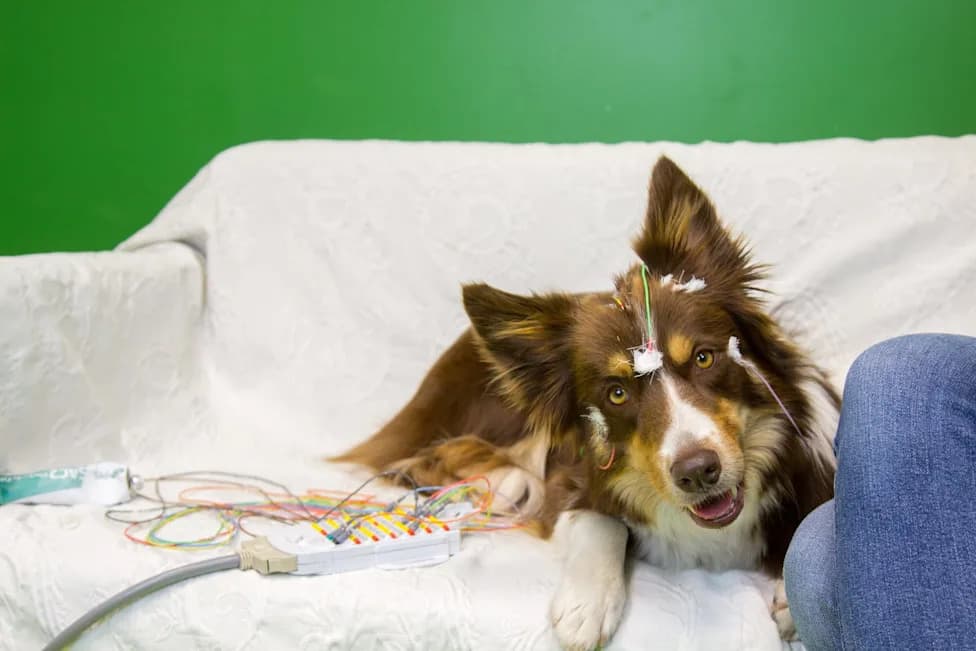
Researchers at the University of Vienna used fMRI and machine-learning analyses to show that dogs' brains respond differently to human facial emotions. Happy faces increased activity in reward-related regions such as the caudate nucleus and temporal cortex, while negative emotions produced distinct whole-brain patterns. The study used two groups (eight and 12 dogs), involved careful training and voluntary participation, and noted limitations including a small sample size and breed bias.
Study Finds Dogs’ Brains Distinguish Human Emotions — Happy Faces Trigger Reward Areas
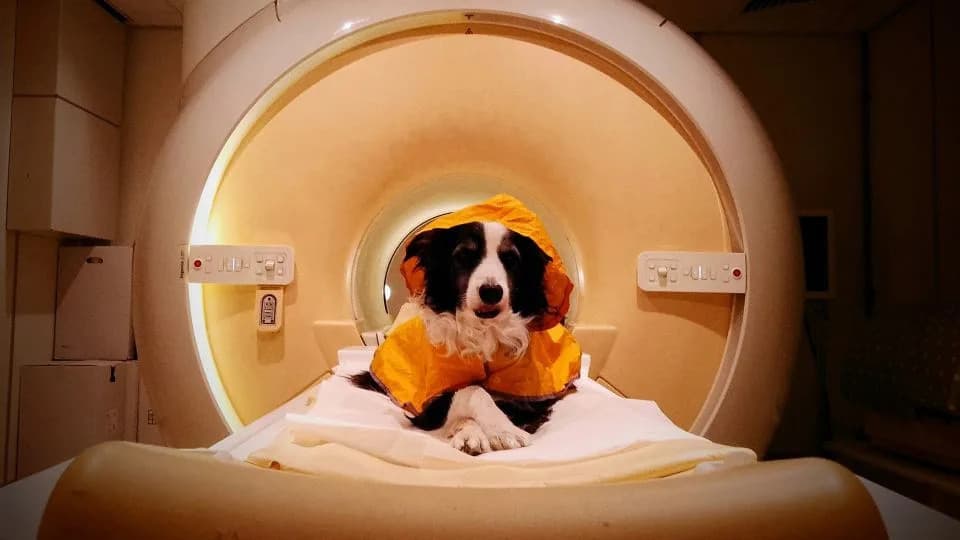
Trained pet dogs remained awake during fMRI scans as researchers measured their brain activity while they viewed images of human faces expressing happiness, anger, fear and sadness. - Laura V. Cuaya
New neuroscientific evidence suggests that dogs can distinguish human emotional expressions, and that happy faces in particular activate reward-related regions in their brains.
How the Study Was Conducted
Researchers at the University of Vienna used functional MRI (fMRI) and machine-learning analyses to examine how dogs process human facial expressions. In the first phase, the team scanned eight dogs (six border collies, one labrador and one golden retriever) while showing images of unfamiliar people with either happy or neutral expressions. In a second phase, 12 dogs viewed photos of people expressing happiness, anger, fear and sadness while researchers applied pattern-analysis techniques to the brain data.
Key Findings
Images of happy faces produced stronger activity in brain areas linked to higher cognition and reward processing, notably the temporal cortex and the caudate nucleus. The caudate is widely associated with reward across species and, in dogs, has been linked to both food and social rewards (for example, praise or the scent of a familiar person).
Negative emotions did not elicit the same reward-related activation as happiness, but whole-brain analyses revealed distinct neural patterns for angry, fearful and sad expressions—indicating dogs can discriminate between different negative affects even if those responses differ from the reward signal produced by happiness.
Training, Ethics and Limitations
The dogs were carefully selected and trained to remain still during scanning; participation was voluntary and animals could leave at any time. The authors stressed several limitations: the overall sample size was small and border collies were overrepresented, which could bias results because some breeds are especially attuned to human cues. All participating dogs came from caring homes, so findings may not generalize to stray dogs or animals with different life experiences.
"Although we cannot access dogs' subjective experience directly, our results suggest that seeing happy faces, even those of strangers, involves positive affective processing," said the research team.
What This Means
The study supports the idea that domestication has equipped dogs with social and emotional sensitivities that help them read humans. The authors advocate for more "dogcentric" research that combines facial information with voice, body language and scent to better understand how dogs interpret human emotions in real-world contexts.
Published in: iScience. Methods: fMRI and machine-learning pattern analysis. Sample: Two study phases (8 dogs; 12 dogs).
Help us improve.