Francesca Hong narrowly lost the Wisconsin Democratic gubernatorial primary to David Crowley by about 3,500 votes after struggling to put to rest a 2020 tweet suggesting Thanksgiving be "canceled." The episode was amplified by heavy Republican spending — the RGA spent roughly $3.6M and a pro‑Hong group $1.3M — that many interpreted as an effort to elevate a preferred November opponent. College‑educated, high‑information primary voters worried about Hong’s ability to withstand national scrutiny, helping Crowley consolidate undecided voters and stage a comeback.
How a 'Cancel Thanksgiving' Tweet and GOP Spending Shaped Wisconsin’s Democratic Primary
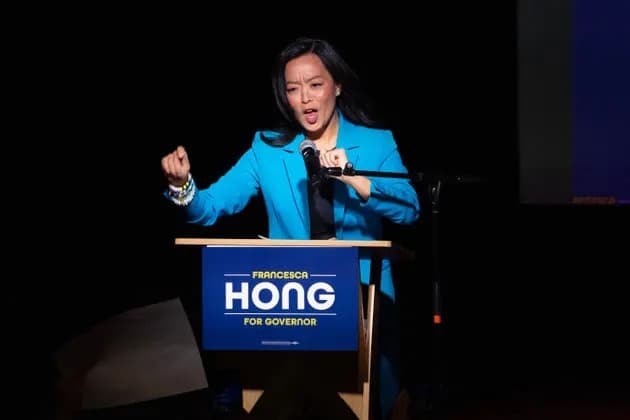
Wisconsin Democratic gubernatorial candidate Francesca Hong speaks to supporters during an election-night party on Aug. 11, 2026, in Madison, Wisconsin.Scott Olson via Getty Images
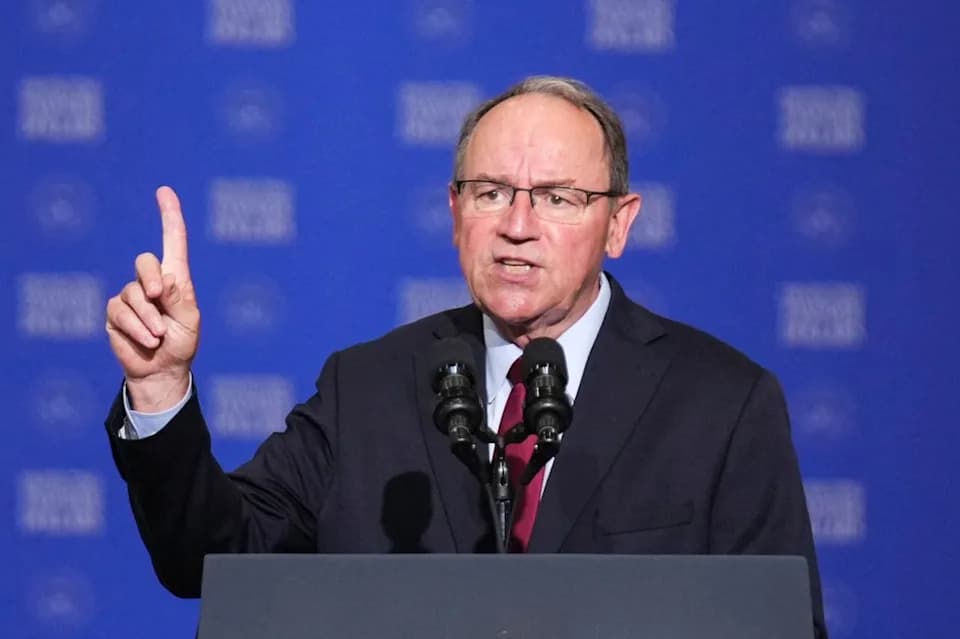
Republican Tom Tiffany wasted no time turning Assemblywoman Francesca Hong’s narrow defeat in the Wisconsin Democratic gubernatorial primary into a punchline, joking that "Thanksgiving may be saved this year." But beyond the quip, Hong — a democratic socialist who lost to Milwaukee County Executive David Crowley by roughly 3,500 votes — struggled to put to rest an old social-media post that suggested canceling Thanksgiving, and that difficulty helped cast doubt on her electability.
Why the Tweet Mattered
The November 2020 post — which read in part, "Cancel Thanksgiving. Should have done this in 1621…" — resurfaced in early August after renewed media attention. Hong’s initial responses were viewed as halting and inconsistent: she emphasized her work as a chef and the value of bringing people together, said Thanksgiving can be painful for some communities, and later told Politico she loves the holiday and "I don't want to cancel it." Those mixed messages enabled opponents to frame the episode as evidence she might be distracted by social media controversies in a high‑stakes general election.
"Cancel Thanksgiving. Should have done this in 1621. If it takes a worldwide pandemic for us to realize we should stop celebrating colonialism and the original superspreader even that killed Indigenous folx and women so be it." — Francesca Hong (Nov. 2020)
Outside Spending and Political Strategy
Republican groups played a major role in the contest. The Republican Governors' Association (RGA) spent about $3.6 million on ads attacking Hong, while a group called Middle Class Priorities — which Democrats have argued is a GOP front — spent roughly $1.3 million supporting her. Those buys were widely interpreted as an effort by Republicans to elevate a primary opponent they considered easier to beat in November.
Inside the Crowley campaign, operatives said they felt they were competing with the RGA’s resources as much as with Hong herself. Crowley had briefly dropped out of the race but re-entered in early July; his comeback depended on consolidating undecided voters and peeling support from other candidates in the final stretch.
Voter Reaction and Geography
Wisconsin’s highly informed, college‑educated Democratic primary electorate proved decisive. That demographic, concentrated in counties like Dane (Hong’s hometown), worried about how Hong would handle national scrutiny. Hong won Dane County 44% to 37% — a smaller margin than many expected — and underperformed in several other highly educated counties where Crowley prevailed by double digits.
Democratic strategists said Hong improved in media appearances as the campaign progressed, but early missteps and the perception that Republicans were boosting her candidacy created a credibility problem with the voters who typically decide competitive Democratic primaries.
Aftermath
Despite the primary’s rancor, both candidates appeared together at a unity brunch and rally shortly after the vote. Party leaders argued that Crowley’s nomination strengthens Democrats’ chances in November as they aim to win the governorship and flip the state legislature for the first time in over 15 years. Republicans acknowledged the general election path became more difficult without Hong at the top of the ticket.
The episode underscores two enduring risks for progressive candidates: combustible social‑media histories that are hard to fully repudiate, and the power of targeted outside spending to reshape primary dynamics.
Help us improve.