Federal courts are showing increased skepticism toward automatic deference when the executive invokes national security. While past rulings—such as Trump v. Hawaii and the 2024 TikTok decision—demonstrate broad judicial deference, a recent D.C. Circuit decision upholding an injunction against construction of President Trump’s proposed White House ballroom rejected national security as an automatic legal shield. The ruling makes clear courts may require statutory authority and will permit only narrowly tailored measures strictly necessary for presidential safety.
White House Ballroom Ruling May Push Courts to Reassess 'National Security' Deference
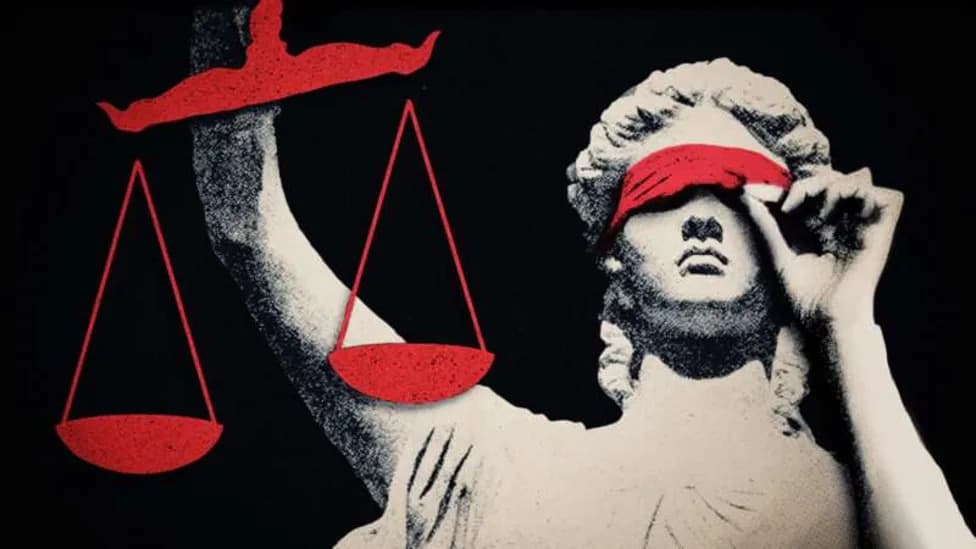
Vladimirfloyd/Dreamstime. Illustration: Fatima Ruiz/Midjourney
Recent court decisions suggest U.S. judges are growing less willing to give the executive branch an automatic pass when it invokes national security. Reason writer C.J. Ciaramella argued that President Donald Trump’s second administration "has lost the confidence of courts," noting that federal judges increasingly decline to extend the Justice Department the usual "presumption of regularity." That skepticism—partly attributed to inexperienced or politicized appointments—may be reshaping how courts treat national security claims.
What Scholars Mean By National Security Deference
Legal scholars describe national security deference not as a single doctrine but as a cluster of practices that limit judicial scrutiny. Political scientist Timothy S. Boylan observed that, while courts have the power to interpret laws and the Constitution, they often face procedural and practical constraints when national security is invoked. Stanford law professor Shirin Sinnar has noted that deference can take many forms: barring certain claims from judicial review, lowering the standard of review, or accepting the executive’s factual findings without searching inquiry.
High-Profile Examples of Deference
There are notable precedents in which the courts afforded broad leeway to the executive. In 2018, the U.S. Supreme Court upheld President Trump’s travel restrictions in Trump v. Hawaii. Chief Justice John Roberts, writing for the 5–4 majority, said there was "persuasive evidence" of a legitimate national security basis for the entry suspension and emphasized judicial restraint in matters of entry and national security.
In 2024, Congress passed a statute aimed at banning TikTok in the United States unless the China-based owner divested. The Supreme Court unanimously upheld the law days before it took effect, stressing the government’s regulatory "latitude" to design content-neutral solutions in response to national security concerns—even where the government acknowledged it lacked concrete intelligence that the platform had already been coerced to manipulate content.
The Ballroom Dispute: A Potential Turning Point
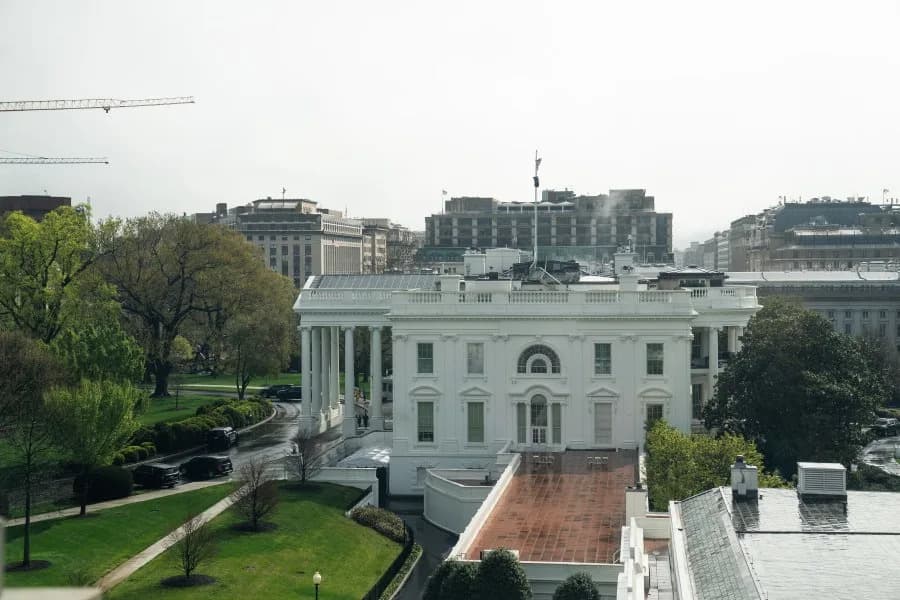
But a recent dispute over President Trump’s proposed White House ballroom may signal a more skeptical posture. Last year the East Wing was demolished and the administration proposed constructing a vastly larger formal ballroom. Plaintiffs sued, and U.S. District Judge Richard J. Leon granted an injunction, finding construction could not proceed without congressional authorization: "No statute comes close to giving the President the authority he claims to have," Leon wrote.
The administration appealed in part on national security grounds, arguing the previous East Wing was inadequate to protect "the safety and security of the president and others in the White House leadership." The U.S. Court of Appeals for the D.C. Circuit upheld Judge Leon’s injunction and explicitly rejected the notion that national security claims automatically override statutory limits.
"While this court accords great weight and deference to invocations of national security and the safety of the President, such arguments are not an automatic get-out-of-law-free card," Judge Patricia Millett wrote for the majority. "Nor do they require courts to stand by while the Executive acts without authority."
Millett also noted that Judge Leon narrowed the injunction to ensure it "does not prohibit measures strictly necessary to provide for the personal safety of the President and his staff," making clear courts will allow narrowly tailored safety measures even while blocking broader construction absent congressional authorization.
Why This Matters
This ruling does not end national security deference. But it is a clear reminder that courts may demand statutory or constitutional authority before acquiescing to broad executive claims. Alongside growing judicial skepticism of the DOJ’s presumption of regularity, the ballroom decision suggests a trend: judges are increasingly willing to examine government assertions rather than accept them at face value.
Key Takeaways
- Judges may be more inclined to scrutinize national security claims and refuse automatic deference to the executive.
- Court rulings can block major executive projects when statutory authority is lacking, even if safety concerns are invoked.
- Courts still allow narrowly tailored safety measures that are strictly necessary to protect the President and staff.
- High-profile precedents like Trump v. Hawaii and the 2024 TikTok decision illustrate earlier judicial deference.
- The trend toward skepticism complements judges' declining willingness to extend a presumption of regularity to DOJ actions.
Help us improve.