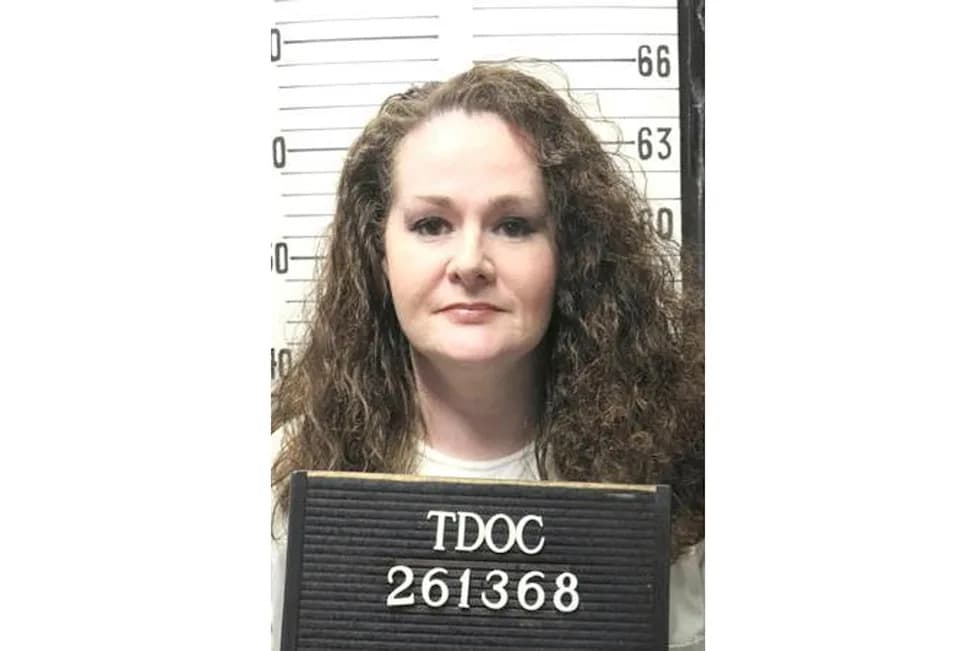
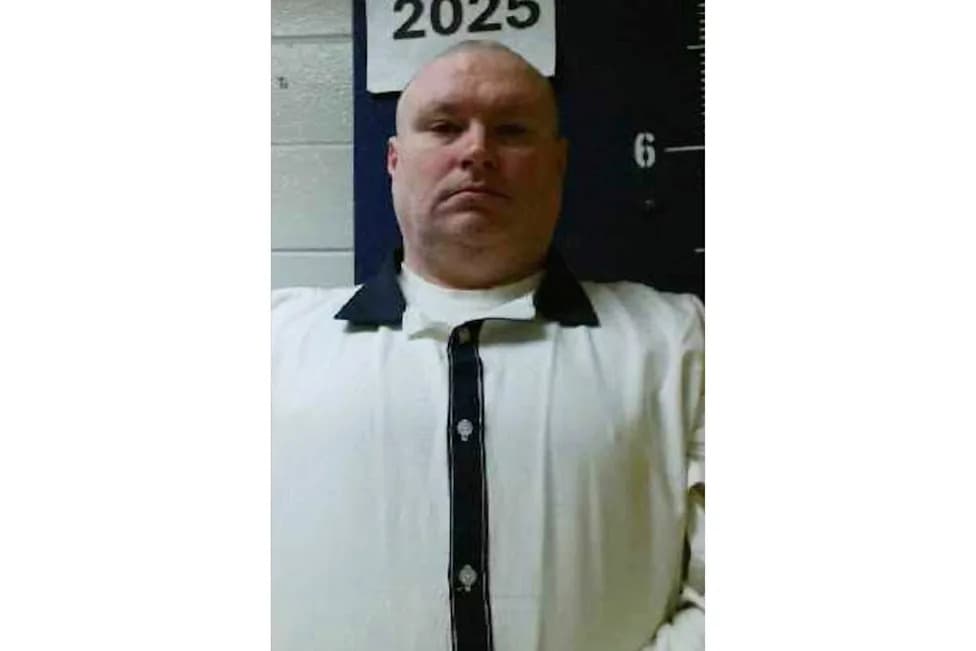
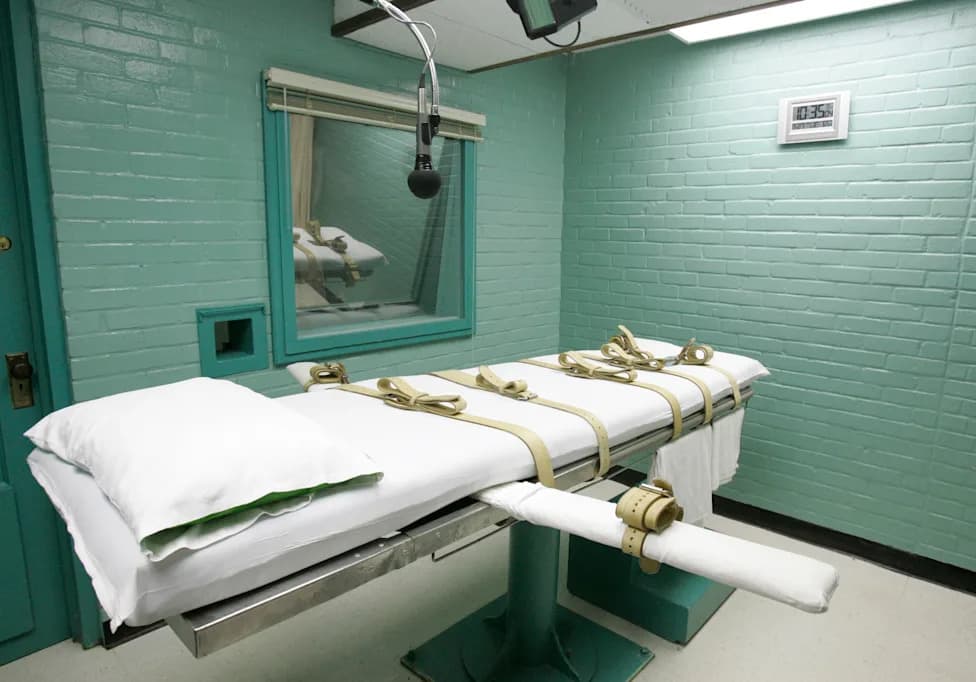
Tennessee plans to execute Darrell Hines this Thursday despite questions raised after a botched lethal injection on 21 May that lasted about 1 hour and 15 minutes before being stopped. Hines, 66, has stroke-related muscle atrophy and limited mobility, which lawyers say would make IV access especially difficult. Attorneys have asked the U.S. Supreme Court to intervene and raised concerns about personnel qualifications, oversight of execution drugs, and the management of executions. Governor Bill Lee has denied clemency and declined to pause executions.
Tennessee Moves Ahead With Darrell Hines Execution Despite Fears After Botched Lethal Injection
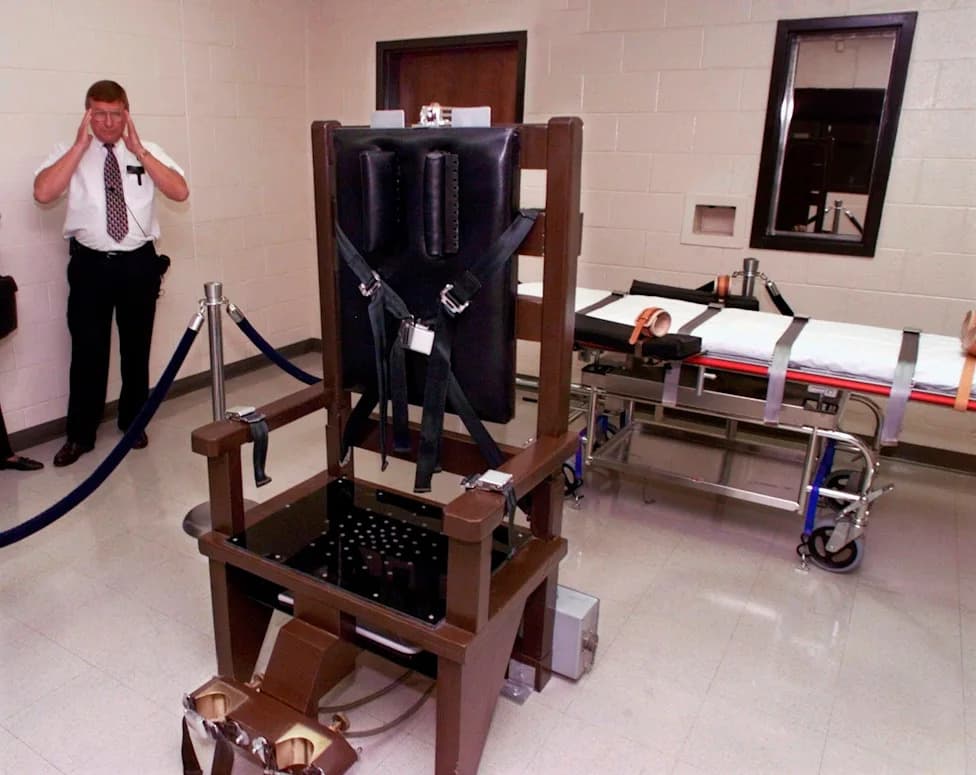
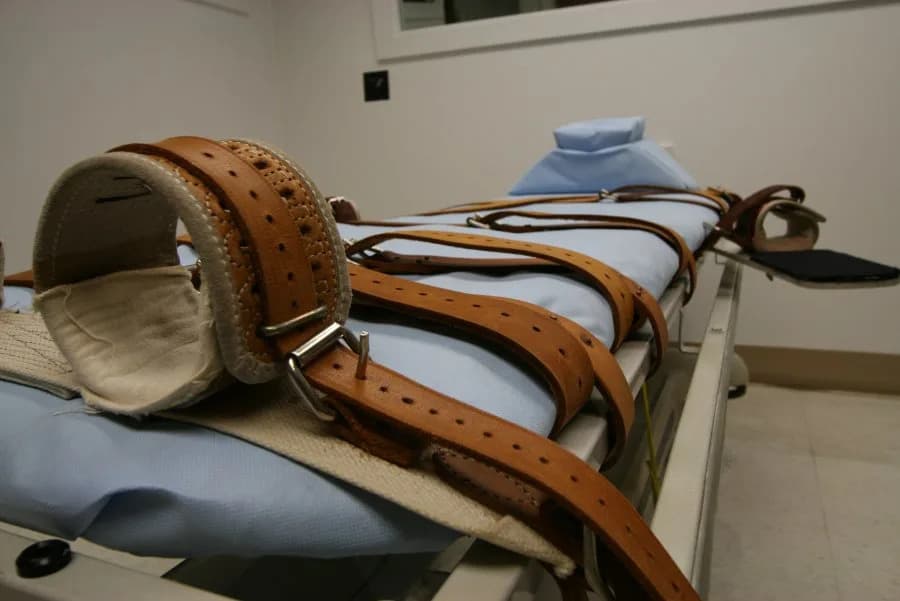
A warden at Riverbend maximum security institution in Nashville, Tennessee, gives a tour of the prison's execution chamber, on 13 October 1999.Photograph: Mark Humphrey/AP
Tennessee is scheduled to execute Darrell Hines this Thursday despite bipartisan concern and legal challenges following a botched lethal injection attempt in May that lasted roughly 1 hour and 15 minutes before being halted.
Background
Hines, 66, was convicted in the 1985 killing of motel housekeeper Catherine Jean Jackson Jenkins. He has long maintained his innocence. His lawyers have asked the U.S. Supreme Court to intervene, warning that Hines faces a substantial risk of suffering from a similarly prolonged, failed execution as experienced by Tony Carruthers in May.
The May 21 Failed Execution
On 21 May, an IV team and a physician spent approximately one hour and 15 minutes attempting to establish intravenous access for Carruthers, according to a court declaration from Maria DeLiberato of the ACLU's Capital Punishment Project. The team pierced Carruthers more than a dozen times and was ultimately unable to place a central line. A warden halted the procedure, and Governor Bill Lee granted Carruthers a one-year reprieve.
"He was sweaty, pale, tearful, and he seemed to be in shock and pain," DeLiberato said after seeing Carruthers following the aborted execution.
Medical Concerns in Hines's Case
Hines has suffered recent strokes that left him with significant muscle atrophy, stiffness in one arm (leaving his hand clenched in a fist), and limited mobility; he has generally been bed-bound or uses a wheelchair. Medical declarations filed by his lawyers argue these conditions would make establishing IV access unusually difficult and heighten the risk of a prolonged, painful procedure.
Questions About Personnel, Procedures and Drugs
Tennessee keeps the identities of personnel who carry out executions confidential, but after an inadvertent disclosure a physician connected to the Carruthers attempt — Dr. Mark Fowler — was publicly identified and deposed. Under questioning, Fowler reportedly said the last time he placed a central IV line was around 2013. Hines's lawyers sought confirmation from the Tennessee Supreme Court about Fowler's involvement in Hines's case; the court denied that request.
Attorneys also raised concerns about Frank Strada, head of Tennessee's Department of Correction, who previously served as a deputy director in Arizona. Hines's lawyers cited problematic executions overseen during Strada's tenure in Arizona, including lengthy or invasive attempts to establish IV access. A 2023 declaration by Arizona corrections officials highlighted "several critical issues," including staff training gaps and questions about drug efficacy.
Defense counsel asked state officials whether the drugs intended for Hines's execution are expired, whether quality-control testing has been performed, and whether storage and handling procedures were followed; the state has not responded to these inquiries. Spokespeople for the governor, the corrections department and the attorney general did not answer questions about Strada, Fowler, or the other concerns raised by Hines's lawyers.
Political And Legal Fallout
In June, nine Republican Tennessee state senators who support the death penalty called on Governor Lee to order an independent review of the Carruthers incident, asking for verification that staff are qualified and that independent testing of execution drugs take place before further executions proceed. Governor Lee has declined to pause executions and denied Hines's clemency petition.
Hines's counsel warned that attempting to execute a frail, partially paralyzed man risks "pain, suffering and humiliating" trauma for the inmate and others in the chamber.
Next Steps
Hines is one of three people scheduled for execution on Thursday nationwide; executions are also planned in Oklahoma and Alabama. Legal appeals, including the request to the U.S. Supreme Court, may affect whether Tennessee proceeds.
Help us improve.