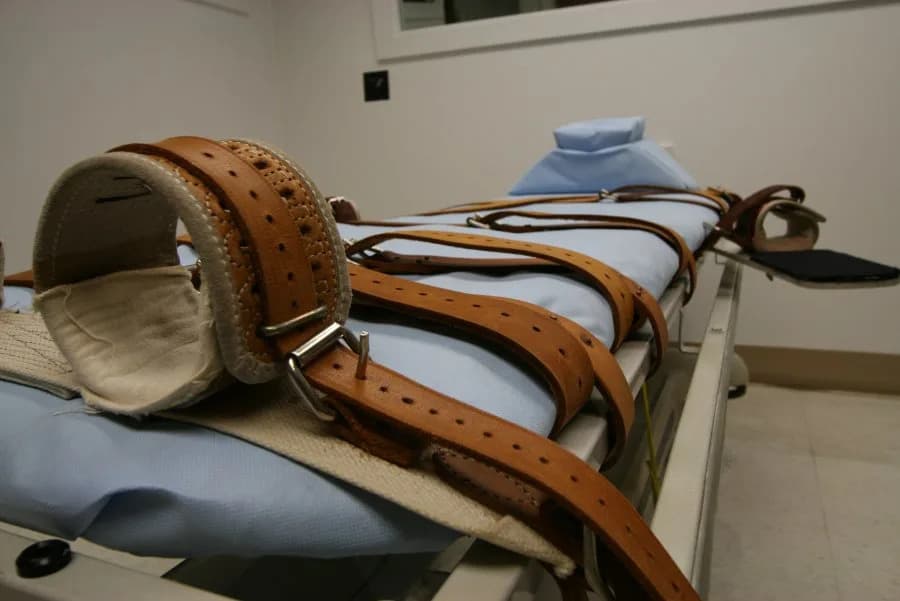
Christa Pike, serving a death sentence for a 1995 murder, has asked Tennessee officials to use an all-female execution team if her clemency and appeals fail. Her lawyers cite a documented history of childhood sexual abuse, PTSD and a 226-page clemency petition asking Governor Bill Lee to commute her sentence to life without parole. Pike has also challenged Tennessee's lethal injection protocol, saying a blood disorder could increase the risk of pain; her execution is scheduled for 10 a.m. CDT on September 30 at Riverbend Maximum Security Institution.
Christa Pike Requests All-Female Execution Team Ahead Of Sept. 30 Date

Mercy for Christa/Instagram and Tennessee Department of Correction
With her scheduled execution just days away, Tennessee death row inmate Christa Pike has asked state officials to assign an all-female team to carry out the sentence if her final appeals and clemency efforts fail. The request was reported by The New York Post and comes as Pike faces a 10 a.m. CDT execution date on September 30 at Riverbend Maximum Security Institution in Nashville.

Mercy for Christa/Instagram
Case Background
Pike, now 50, was 18 in 1995 when she and then-boyfriend Tadaryl Shipp were accused of brutally attacking 19-year-old Colleen Slemmer on the University of Tennessee agricultural campus in Knoxville. Prosecutors say Slemmer was beaten and stabbed, that a pentagram was carved into her chest, and that investigators later recovered a piece of Slemmer's skull. Shipp, who was 17 at the time, received a sentence of life with the possibility of parole; Pike was convicted and sentenced to death the following year.

Mercy for Christa/Instagram
Legal And Personal Arguments
Pike's attorneys filed a 226-page clemency petition describing years of childhood sexual abuse, neglect and later clinical diagnoses including bipolar disorder and post-traumatic stress disorder (PTSD). They argue these factors, along with Pike's age at the time of the offense and nearly three decades in custody, should weigh against execution and have asked Governor Bill Lee to commute the sentence to life without parole.

Christa Pike Faces Execution for 1995 Classmate Murder
As part of their immediate preparations, Pike's legal team asked that no men participate in the execution team, citing her documented history of sexual abuse by men and her PTSD. They also challenged Tennessee's lethal injection protocol, saying a blood disorder could make intravenous access difficult and increase the risk of severe pain. During an August hearing her lawyers even noted hanging as a preferred alternative, but prison officials testified that hanging is not authorized under Tennessee law (WBIR).
State Response And Current Status
The state has opposed Pike's procedural challenges, arguing she has not demonstrated that Tennessee's execution protocol would violate her constitutional rights. As of this week, Pike's clemency petition remains pending and legal challenges continue. In an interview featured in a documentary, Pike described significant anxiety and sleeplessness, saying, "My nerves are shredded. When I do sleep, my brain eats itself," a quote reported by The New York Post.
This case would be historically notable: if carried out, authorities say Pike would be the first woman executed in Tennessee in more than 200 years. Coverage of the case has cited reporting from The New York Post, Law & Crime and WBIR.
Help us improve.