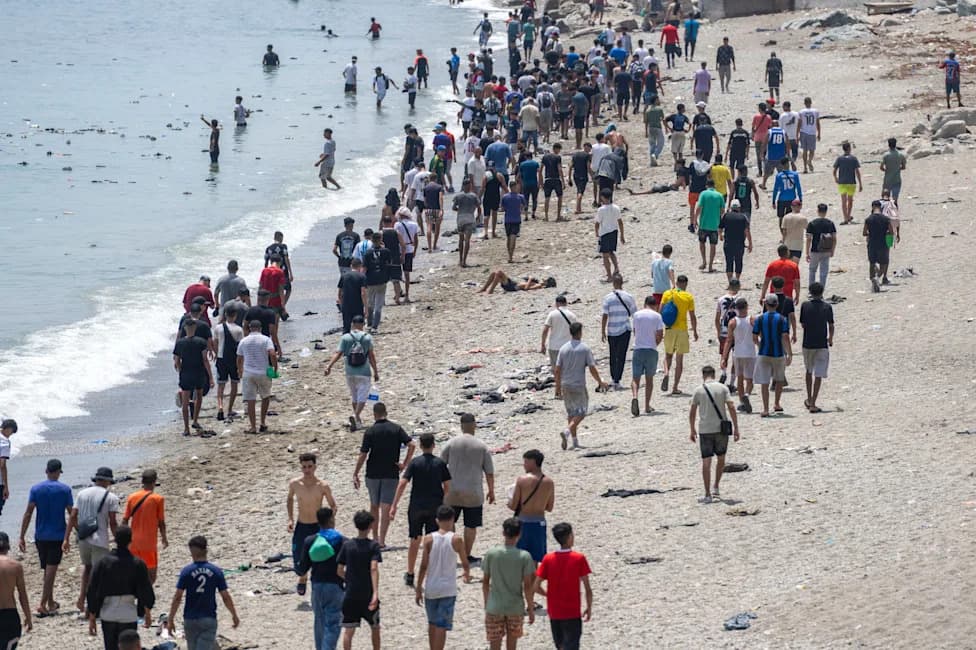
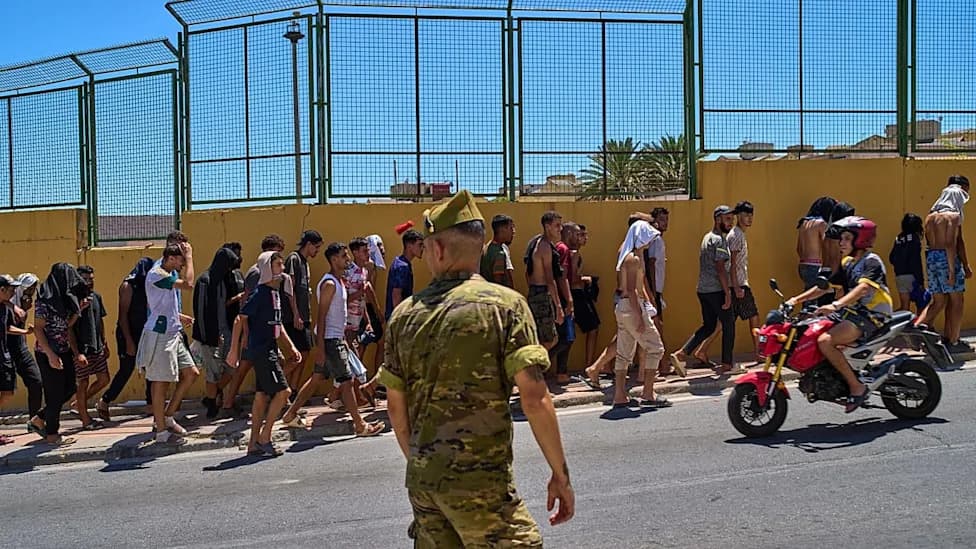
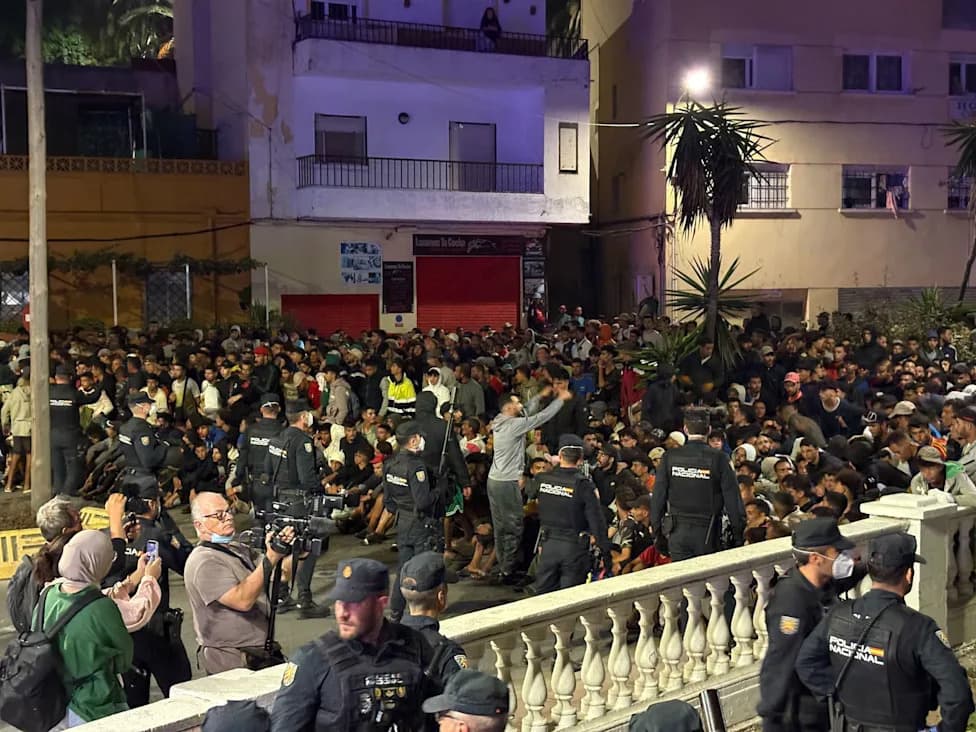
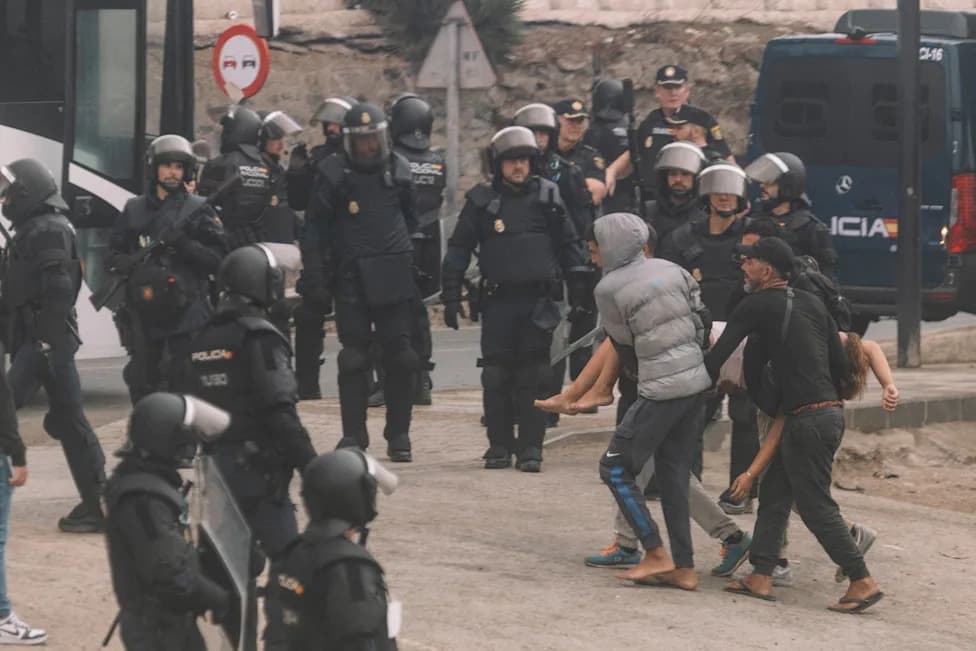
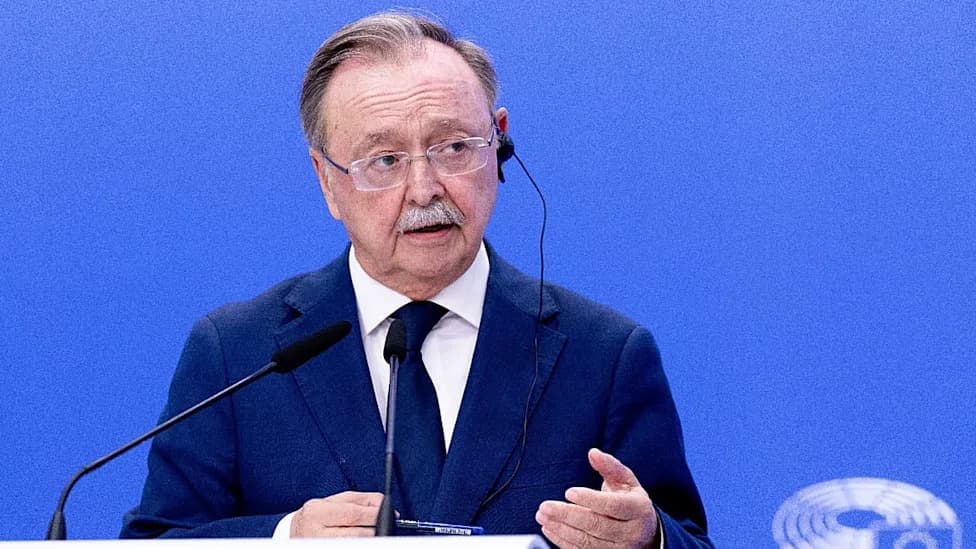
Morocco has reinforced security along its borders with Spain after social media calls urged new mass crossings into Ceuta and Melilla. Spanish authorities insist the borders are closed and warn that any attempt will be halted and unauthorized crossers returned. Videos show heavy Moroccan deployments near the enclaves, and Morocco says it has detained suspects accused of incitement. The July surge that brought about 72,000 people into Ceuta and left at least 80 dead continues to shape responses.
Morocco Tightens Security at Ceuta and Melilla After Social Media Calls for New Mass Crossings
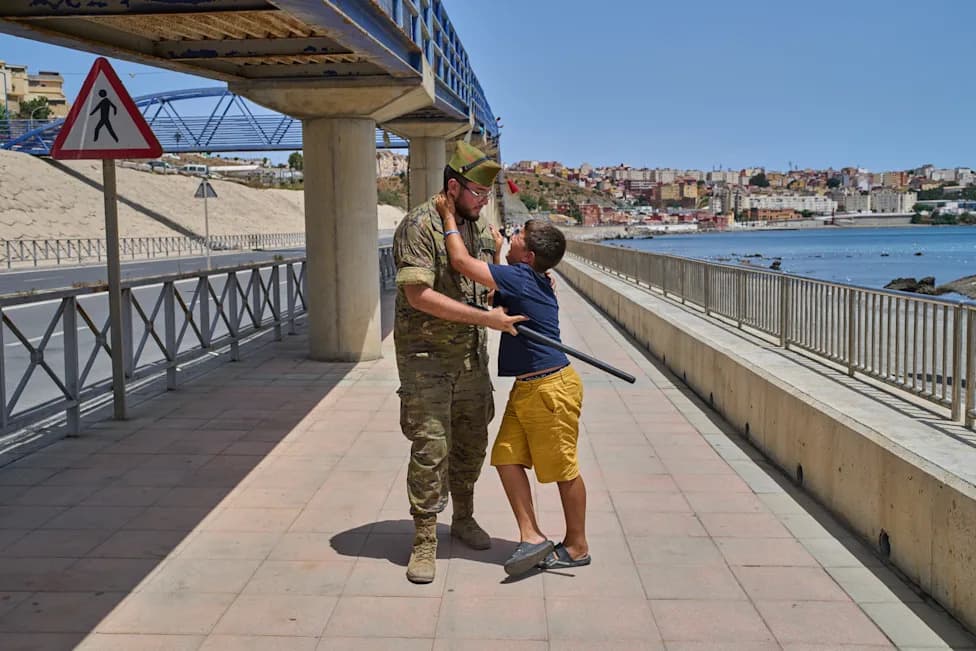
A 12-year-old unaccompanied minor who crossed into Spain is escorted by a Spanish soldier to the Spain-Morocco border as the child begs not to be sent back to Morocco from the Spanish enclave of Ceuta, Monday, Aug. 3, 2026. The forced deportation of the unaccompanied minor was stopped by a high-ranking official a few meters before the child reached the border after residents and journalists said the migrant was a minor. (AP Photo/Bernat Armangue)(AP Photo/Bernat Armangue)
CASABLANCA, Morocco — Moroccan authorities said Wednesday they have strengthened security along the frontier with Spain after renewed social media messages urged mass crossings into the Spanish city of Ceuta, raising fears of a repeat of last month's chaotic surge.
Spain's Civil Guard reiterated that the border remains closed, and Defense Minister Margarita Robles warned against any attempt at another mass entry into the Spanish North African exclaves of Ceuta and Melilla.
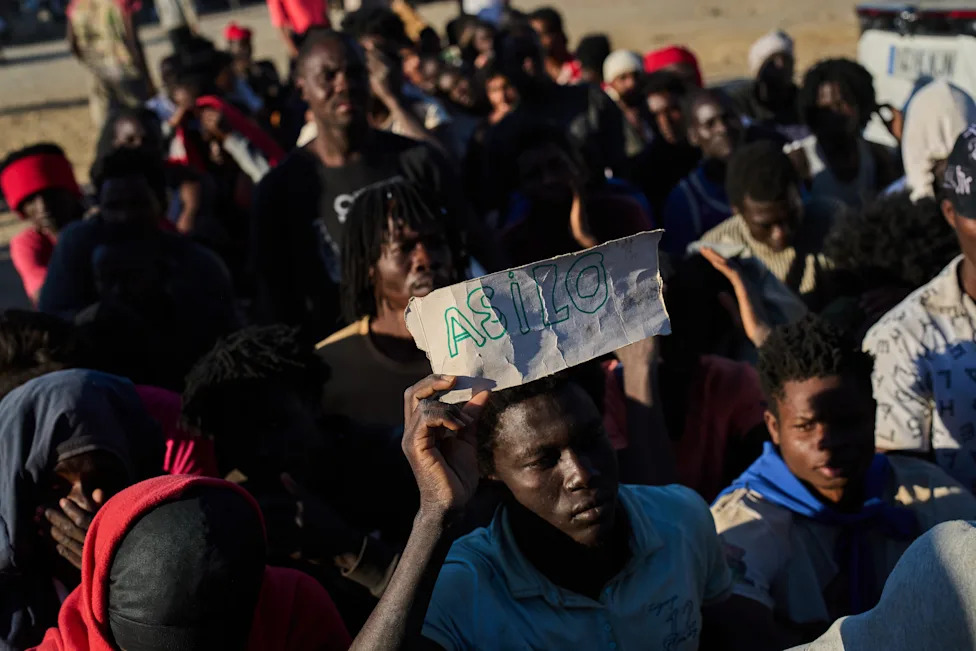
A migrant who crossed from Morocco into Spain holds a sign reading, in Spanish, "asylum" as he lines up for food distribution on a beach in the Spanish enclave of Ceuta, Monday, Aug. 3, 2026. (AP Photo/Bernat Armangue)(AP Photo/Bernat Armangue)
What Authorities Say
The Moroccan Interior Ministry said in a statement that 'all necessary measures have been taken to counter' any new 'illegal crossing attempt' and described security monitoring as part of a 'system of continuous vigilance — particularly in areas near the Ceuta and Melilla crossings.' The ministry did not specify the number of personnel or the exact equipment deployed.
Videos shared on social media show large numbers of police officers in riot gear on the Moroccan side of the border, alongside water-cannon vehicles and ambulances. Local outlet Hespress reported that gear for deploying tear gas and stun grenades had been moved to the frontier. Authorities also said they had detained a group suspected of carrying out incitement activities and are investigating.

A Ceuta resident shows a photo of body bags containing migrants who died while trying to cross into the Spanish enclave of Ceuta from Morocco, at the Port of Ceuta, Spain, Tuesday, Aug. 4, 2026. (AP Photo/Bernat Armangue)(AP Photo/Bernat Armangue)
Background
In late July, roughly 72,000 people swam or climbed past a breakwater to enter Ceuta, driven by economic hardship and false online claims that the border was open. Most of those who crossed have since returned to Morocco, but the episode had political repercussions across Europe.
Official tallies place the death toll from the July attempt at at least 80 people, though human rights organizations have reported higher figures.
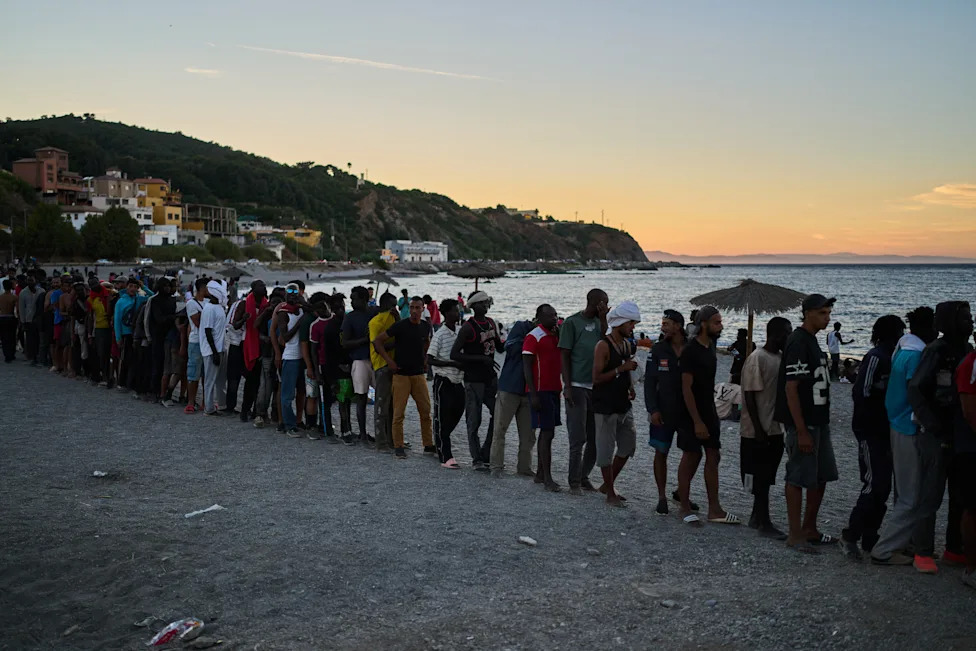
Migrants who crossed from Morocco into Spain line up for food distribution on a beach in the Spanish enclave of Ceuta, Monday, Aug. 3, 2026. (AP Photo/Bernat Armangue)(AP Photo/Bernat Armangue)
Spanish Response
Visiting Ceuta, Defense Minister Margarita Robles said it is 'everyone's responsibility to deal with those who are directing these movements, including through social media,' and described any aggression against Ceuta or Melilla as 'an aggression against Spain as a whole.' She added: 'This must be absolutely clear: what happened cannot happen again.'
The Civil Guard posted a message on social media in French and Spanish aimed at potential migrants: 'Neither the border with Spain is open; nor will it be. There are new containment barriers. If you cross them, you will be returned. Don't let yourself be deceived.' The post included a photograph of a containment barrier erected in Ceuta after the July breach.
Implications
Analysts say the episode highlights how rapidly false or misleading social media messages can trigger dangerous movements and strain bilateral relations. Spanish, Moroccan and European authorities say they are monitoring the situation closely and coordinating responses to prevent another large-scale breach.
Associated Press writer Suman Naishadham in Medinaceli, Spain, contributed to this report.
Help us improve.