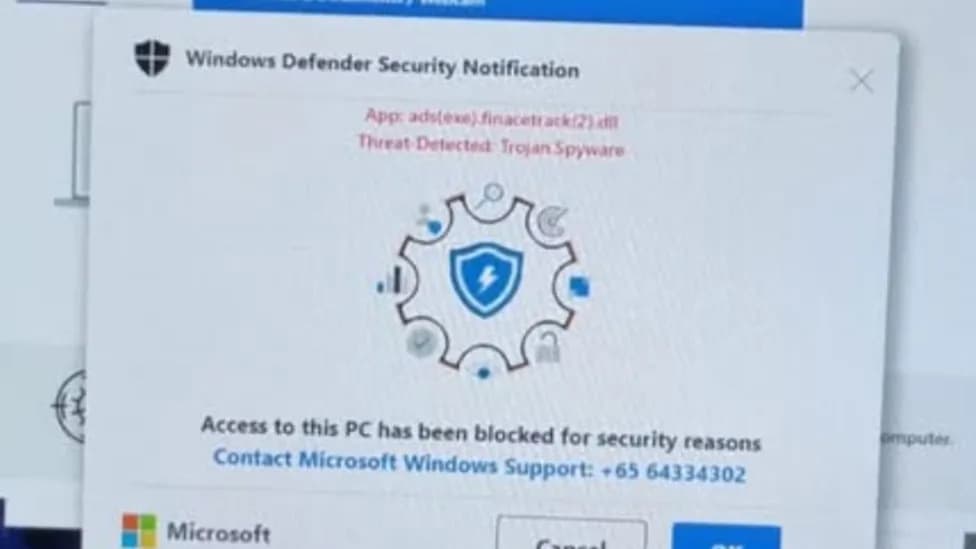
The "Phantom Hacker" tech‑support scam has cost Americans more than $2.1 billion, according to FBI IC3 complaint data, with over 47,000 reports in 2025. Roughly half of victims and losses involved people aged 60 and older. GuideStone intercepted an attempted fraud and urges consumers to verify contacts, avoid unsolicited remote access or links, and report incidents to local law enforcement and IC3.gov.
“Phantom Hacker” Tech‑Support Scam Cost Americans $2.1B — Seniors Hit Hardest
Photo Credit: iStock
A fast‑spreading tech‑support fraud known as the "Phantom Hacker" scam has led to more than $2.1 billion in reported losses across the United States, with older adults disproportionately affected, federal complaint data and industry warnings show.
How the Scam Works
Scammers persuade victims to move their own money into accounts controlled by criminals rather than stealing it directly. Calls typically involve multiple actors who rotate roles to build credibility: one caller poses as technical support claiming a device or account was breached, another pretends to be from a bank, and sometimes a fake government official pressures the victim to transfer funds into a so‑called "safe" account.
"These scams exploit both fear and trust," said Brandon Waldeck, Director of Enterprise Risk at GuideStone.
Scope and Impact
Federal records cited by The Baptist Paper show that in 2025 the FBI's Internet Crime Complaint Center (IC3) received more than 47,000 reports linked to tech‑support scams, with losses exceeding $2.1 billion. About half of both the reported victims and the monetary losses involved people aged 60 and older. For many seniors, losing retirement or emergency savings is devastating and difficult to recover from, and the effects can ripple through families, faith communities, and caregiving networks.
GuideStone's Intervention
GuideStone Financial Resources detected and stopped a fraud attempt targeting one of its members before funds left the account, prompting the organization to alert its community and issue consumer guidance. Hance Dilbeck, GuideStone's President and CEO, said:
"By sharing information and promoting awareness, we hope to help protect pastors, ministry leaders and retirees from becoming victims of fraud."
How To Protect Yourself
- Verify the caller: If you receive an unexpected call or message about a hack or security problem, hang up and call the institution back using a trusted number from a statement, account document, or the company’s official website.
- Never grant unsolicited remote access: Do not install software or allow remote control of your devices unless you initiated the support request and the provider is verified.
- Don't move money on demand: Legitimate banks, law enforcement, and government agencies will not instruct you to secretly transfer funds to an unknown account to "protect" them.
- Avoid unexpected links and pop‑ups: Do not click links or respond to pop‑ups, texts, or emails claiming your device or account was hacked.
- Report suspected fraud: Contact local law enforcement and file a complaint at IC3.gov. If the suspicious communication mentions a GuideStone account, report it to GuideStone at 1‑888‑98‑GUIDE.
Anyone who believes they have been targeted should act quickly: stop further transactions, contact their financial institutions immediately, file an IC3 complaint, and notify local law enforcement to improve the chances of recovery and help authorities track the fraud networks.
Reporting and data cited in this article are from The Baptist Paper and the FBI's IC3 complaint records for 2025.
Help us improve.