A new study in Communications Sustainability shows Colombia’s La Mojana wetlands were engineered by local family cooperatives, not centralized chiefs. Researchers analyzed a 1,235-acre sector and documented about 1,600 ridges and 63 raised housing platforms, dating from the first centuries BCE to about the 11th century CE. Modeling suggests a conservative workforce of 800 people could have built a canal–ridge system in under two months, and the techniques may offer resilient, locally managed solutions for today’s water problems.
Family Cooperatives, Not Chiefs: How Colombia’s La Mojana Built Vast Ancient Waterworks
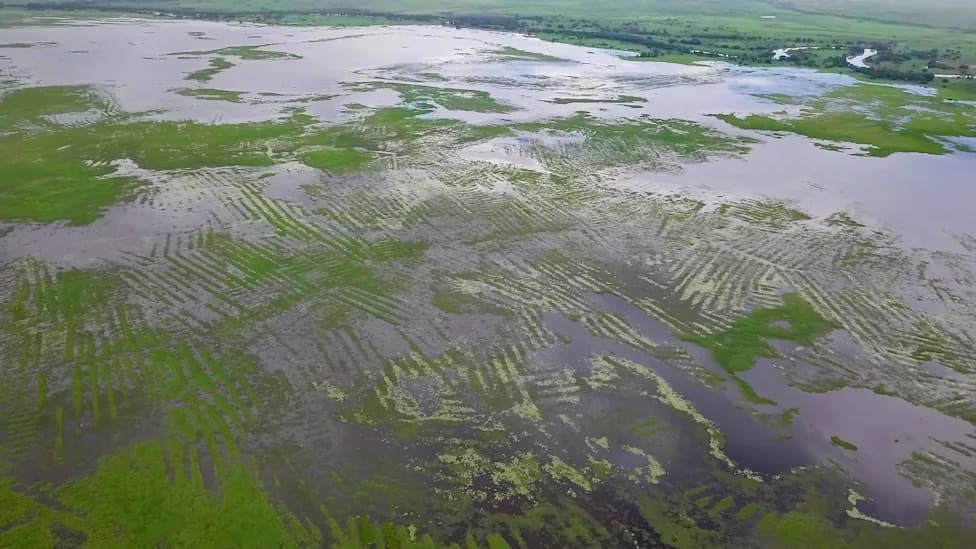
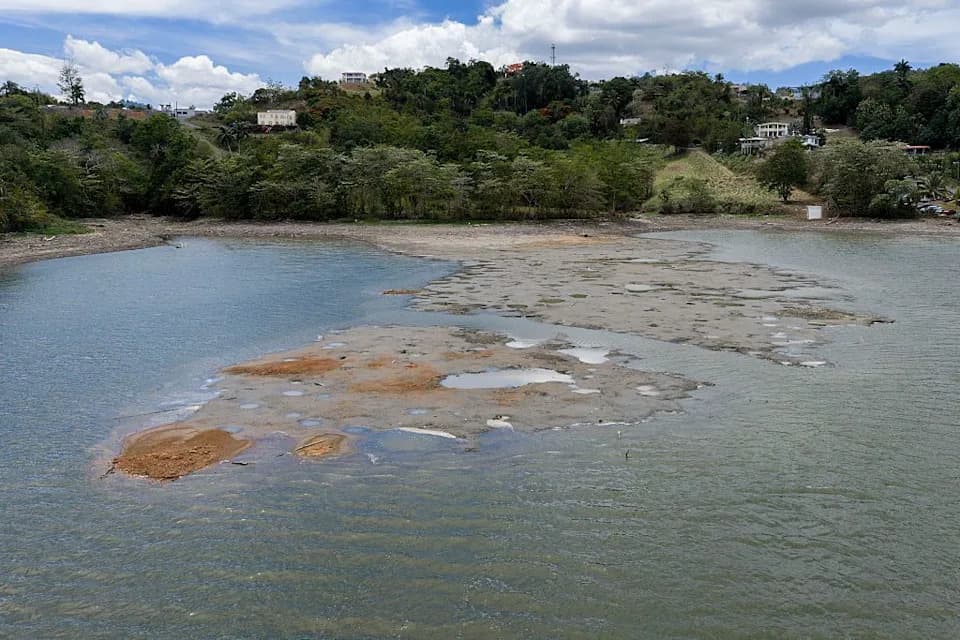
The canals and raised fields of La Mojana during wet season.
The wetlands of La Mojana in northern Colombia contain an extensive ancient network of canals and raised agricultural ridges—so extensive they are visible from aircraft. New research suggests these monumental engineering works were planned, built, and maintained by local family cooperatives rather than by a centralized chiefdom. The findings, published in Communications Sustainability, also highlight practical lessons for modern water management in the region.
What the Study Found
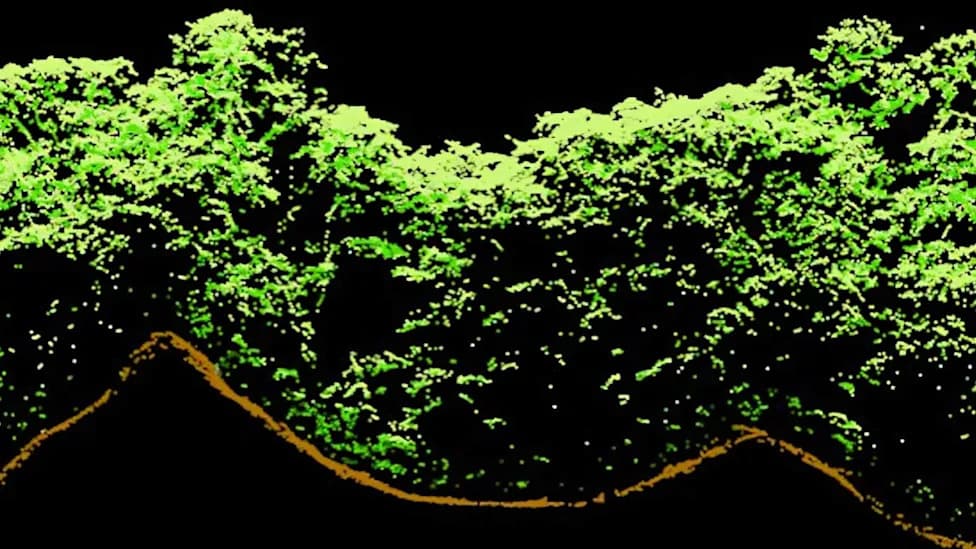
An international team led by archaeologists from the University of Cambridge, the Colombian Institute of Anthropology and History (ICANH), and the University of Santiago de Compostela analyzed satellite imagery and field data from a ~1,235-acre sector of La Mojana near San Marcos. Within that area they documented about 1,600 raised ridges and 63 raised housing platforms, with the earliest ridges reaching roughly 4.6 feet (1.4 m) in height.
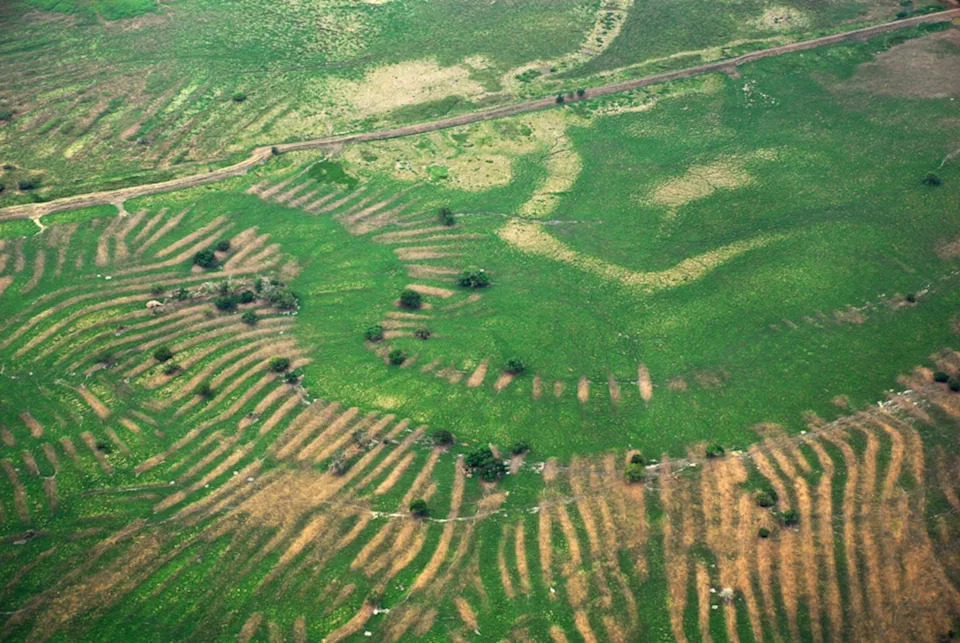
The raised fields were used for roughly 1,000 years. Credit: Sebastián Schrimpff / Museo del Oro / Banco de la República
How They Reached Their Conclusions
Researchers combined remote sensing with earth-moving estimates, local geology, likely contemporary technologies, population estimates and ethnographic records of indigenous labor practices. Using an estimated population of 1,600 people in the surveyed area, they applied a conservative construction workforce of 800 workers (noting actual participation may have been higher when including children and other helpers).
Modeling showed that a single canal–ridge system could plausibly be constructed in under two months—roughly half a dry season—if organized by cooperating family groups. The team argues this timeline and labor requirement are far lower than previously assumed and do not require hierarchical, top-down organization.
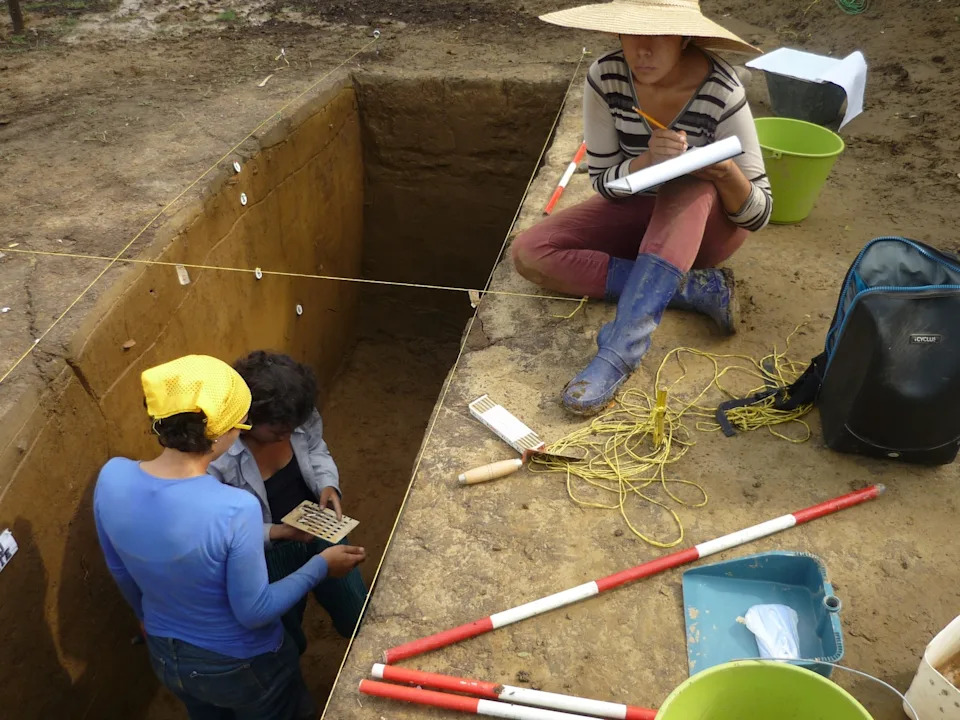
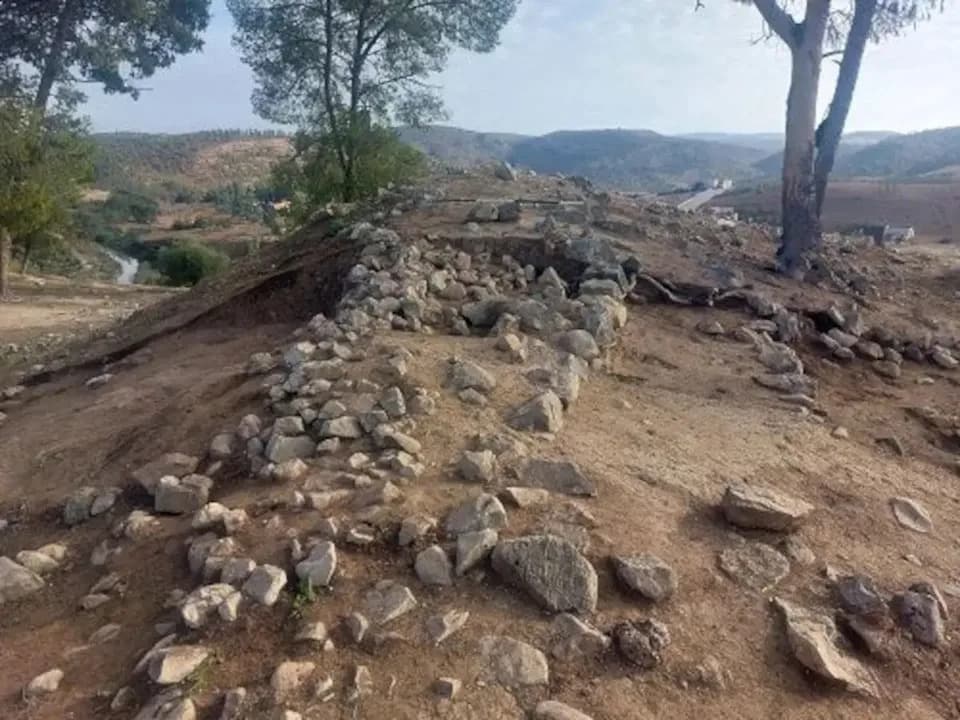
ICANH archaeologists seen recording an excavated section of a pre-Hispanic canal-ridge formation Credit: ICANH
“These field systems are so impressive that people have assumed they were achieved by hierarchical chiefdoms. Our data tells a very different story,” said Jasmine Vieri, archaeologist at the University of Cambridge and co-author of the study.
Historical Context
Construction of La Mojana’s raised fields began as early as the first centuries BCE, and the networks remained in use until about the 11th century CE—roughly a millennium of use. These systems stored water in permanent reservoirs during rainy seasons and redistributed it through canals in dry periods. In addition to agricultural benefits, the water infrastructure likely helped communities trap and harvest fish.
Modern Relevance
The researchers highlight the contemporary relevance of these designs amid Colombia’s ongoing water-management challenges. Recent government responses—such as building dykes to block natural flooding—have had mixed results. The Caregato dyke, for example, has breached multiple times since 2021, causing cycles of flooding and drought. The study suggests that adapted forms of La Mojana’s raised fields and canals could support more resilient, locally managed water strategies without requiring centralized control.
“Policymakers have shown interest in these ancient systems, but lacked data. Our study is the first to show that these sustainable solutions can be organized locally and collectively,” said ICANH archaeologist Fernando Montejo Gaitán.
Broader Implications
Beyond practical applications, this reassessment restores agency to pre-Hispanic indigenous communities. As co-author Marcos Martinon-Torres of the University of Cambridge warns, unfounded assumptions about top-down planning risk erasing the innovation and cooperation of these societies: they worked with natural systems rather than merely trying to dominate them.
Credit for field images and data: Sebastián Schrimpff / Museo del Oro / Banco de la República; ICANH.
Help us improve.