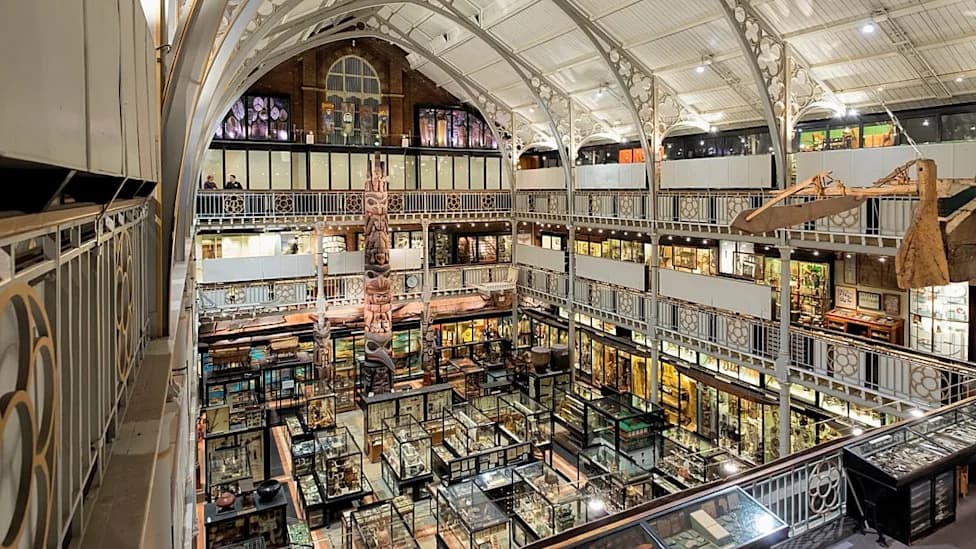
The Prairie Band Potawatomi Nation opened its #LandBack installation at Chicago’s Field Museum as part of the Native Truths exhibition, recounting the Tribe’s forced removals in the 1830s and the ceding of nearly 28 million acres. The display combines historical artifacts, regalia and contemporary art to trace the Nation’s journey from displacement to return. Recent 2024 actions — a state park transfer and the placement of Shab-eh-nay Reservation lands into federal trust — helped restore portions of the Tribe’s ancestral homeland. The installation emphasizes healing, cultural continuity and dialogue between Native and non-Native communities.
Prairie Band Potawatomi Nation Opens '#LandBack' Installation at Chicago’s Field Museum
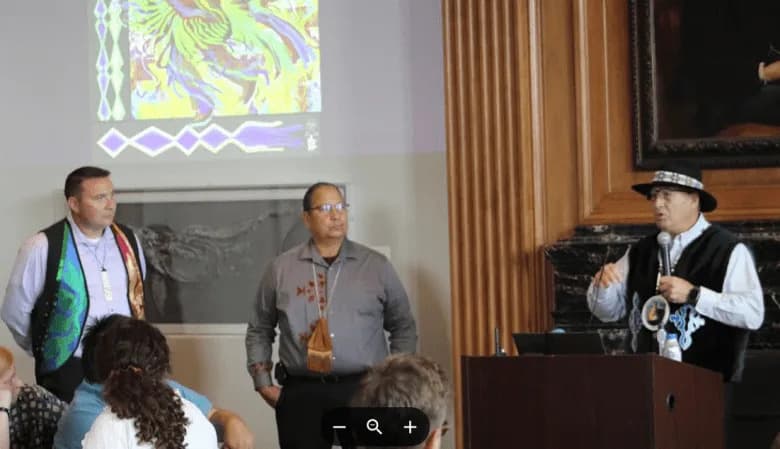
Prairie Band Potawatomi Nation Tribal Chairman Joseph "Zeke" Rupnick (right) provides a history lesson about the tribe as Tribal Councilors Raphael Wahwassuck (left) and Ronald "Tony" Wahweotten, Jr. listen. (Photo/Levi Rickert)
CHICAGO — The Prairie Band Potawatomi Nation marked a significant cultural and historical milestone with the opening of its #LandBack installation at the Field Museum, presented as part of the museum’s Native Truths: Our Voices, Our Stories exhibition.
A History Remembered
Tribal Chairman Joseph "Zeke" Rupnick recalled the Tribe’s forced removals in the 1830s, when Potawatomi people were labeled "combatant enemies of the government," expelled from Illinois and relocated to areas of present-day Kansas and Oklahoma. Rupnick described how the Nation was compelled to cede nearly 28 million acres across the Great Lakes region and, after years of hardship, many Potawatomi purchased land and settled in Kansas in 1846 on territory formerly ceded by the Kaw Nation.
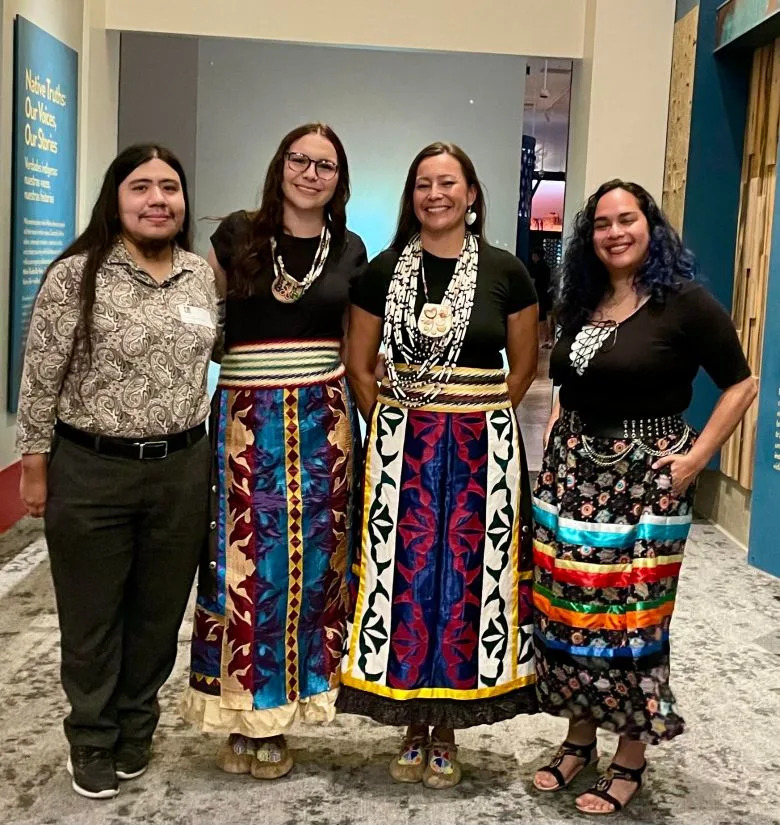
Gabe Marin, Panno Wahwassuck, Adele Wahwassuck, and Monica Rickert-Bolter (Photo/Levi Rickert)
Recent Restorations And Legal Actions
The installation arrives after important legal and political steps to restore a portion of the Tribe’s ancestral homeland. In March 2024, Illinois Gov. J.B. Pritzker signed legislation transferring an entire state park in southern DeKalb County to the Prairie Band Potawatomi Nation. On April 19, 2024, the U.S. Department of the Interior placed portions of the historic Shab-eh-nay Reservation into federal trust for the Nation, making the Prairie Band the only federally recognized tribe with trust land in Illinois.
The Exhibition
The #LandBack installation combines historical objects, contemporary regalia, and new artwork to tell a story of removal, resilience, and return. At the opening, Chairman Rupnick was joined by Tribal Council members Raphael Wahwassuck and Ronald "Tony" Wahweotten Jr.
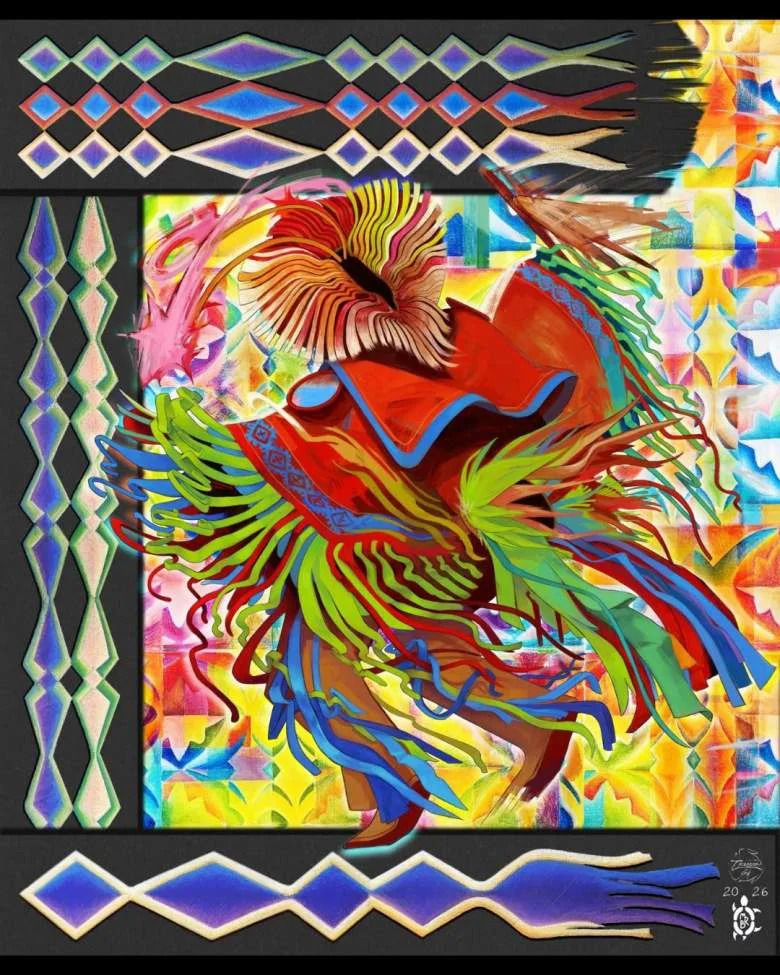
Pnowi shna ekogiweyėn, nt̅ėnttiwenmo egibyegiweyėn/It's been a long time since you were home; I'm happy you came home(Photo/Field Museum)
Featured objects include a warrior's roach headpiece (deer hair and turkey beard, Kansas, 1926); a leather saddle associated with travel between Illinois and Kansas (circa early 20th century); and a birch-bark travel basket from Wisconsin (1925), likely used during journeys between homelands. The display also references the 1829 Treaty of Prairie du Chien, which nominally promised Chief Shab-eh-nay 1,280 acres in Illinois, and the 1833 Treaty of Chicago, which resulted in the ceding of remaining Potawatomi lands in the region.
Contemporary cultural items are on view as well: Miss Potawatomi regalia made by Adele Wahwassuck and donated by Panno Wahwassuck, who served as Miss Potawatomi in 2023–2024; and a 2026 pastel digital composition titled "Pnowi shna ekogiweyėn, nt̅ėnttiwenmo egibyegiweyėn / It's been a long time since you were home; I'm happy you came home," created by Gabriel Marin and Monica Rickert-Bolter.
Art, Meaning, and Healing
The Marin and Rickert-Bolter composition celebrates resilience and renewal. It depicts a grass dancer moving counterclockwise against patterns drawn from museum shawls, with colors inspired by Potawatomi dress. The artists emphasize that #LandBack, to them, is not about dispossessing others but about healing, cultural continuity, and reclaiming ancestral homelands. The installation aims to foster dialogue between Native and non-Native communities about what land restoration means for the Nation.
"We still are in this area even though the government tried to wipe us out. Getting the land back was a huge improvement," Chairman Rupnick said, underscoring the installation’s themes of survival and return.
The Field Museum presentation preserves firsthand history while connecting those stories to contemporary victories in land restoration, cultural resilience, and community renewal.
Help us improve.