Extreme heat and low rainfall have pushed grape ripening forward in Italy’s Franciacorta, prompting harvests about 10 days earlier than expected and leading to pre-dawn picking to protect acidity for sparkling wines. Berlucchi began harvesting on Aug. 2 and is running presses day and night to process fruit exposed to 37–38 °C conditions. Experts cite mild winters, hail damage and broader heat patterns linked to climate change as drivers of the shift, and producers say careful monitoring and reorganized labor can preserve wine quality.
Extreme Heat Forces Pre-Dawn Harvests in Italy’s Franciacorta as Ripening Accelerates
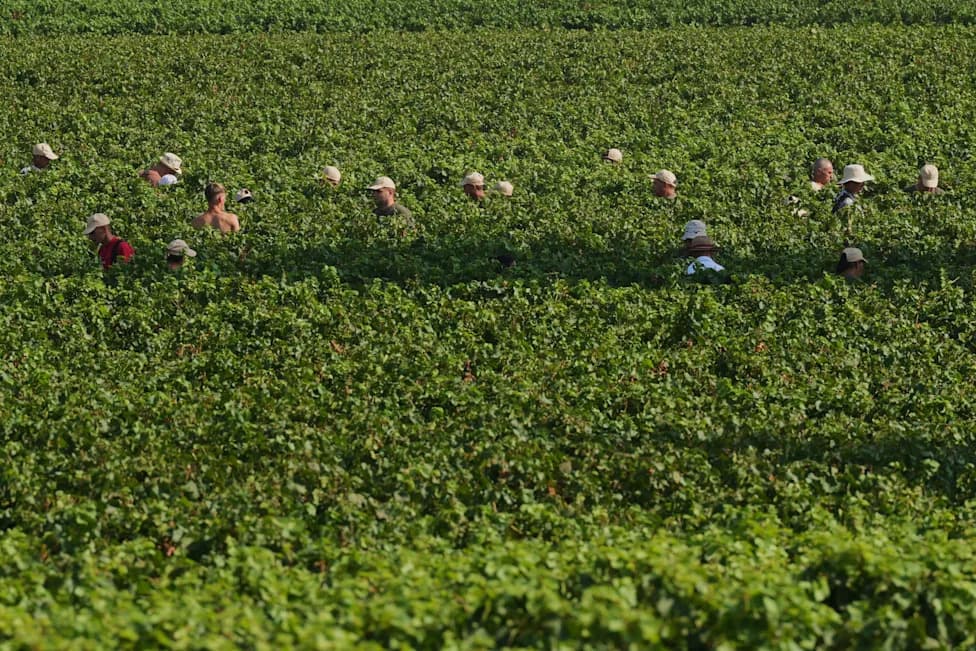
Workers pick wine grapes during the harvest in Corte Franca, northern Italy, Thursday, Aug. 6, 2026. (AP Photo/Antonio Calanni)(AP Photo/Antonio Calanni)
Workers in Corte Franca now begin clipping grape clusters before dawn to make Franciacorta sparkling wine, starting roughly 10 days earlier than expected after a heatwave accelerated ripening across the region.
Climate change is narrowing the margin for error in grape harvesting: when a matter of days can determine whether grapes are suitable for premium sparkling wine, producers must act fast and reorganize labor and equipment to protect acidity and overall quality.
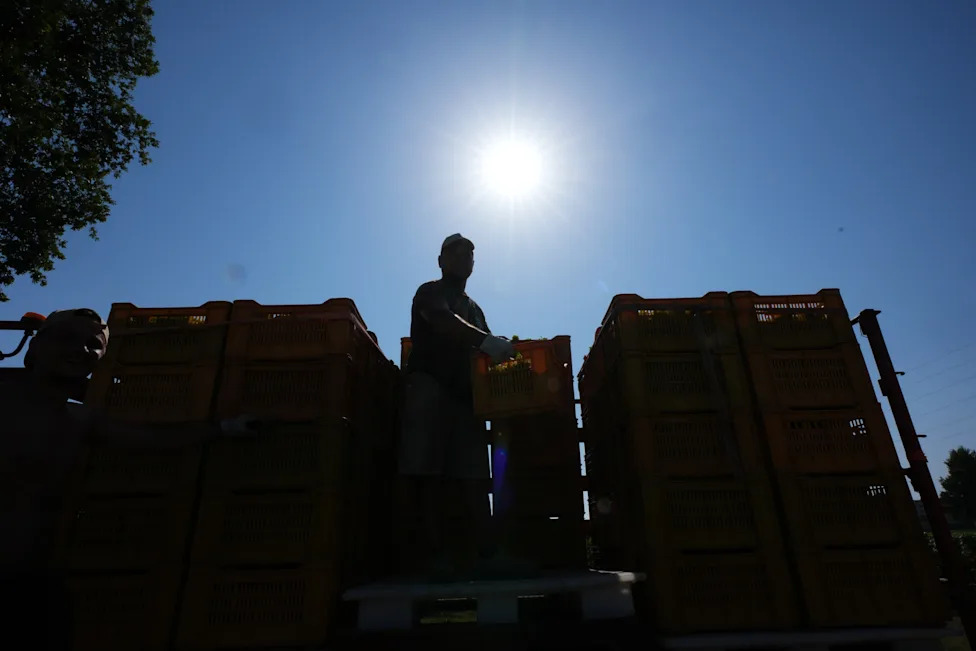
A worker unloads a crate of wine grapes on a tractor during the harvest in Corte Franca, northern Italy, Thursday, Aug. 6, 2026. (AP Photo/Antonio Calanni)(AP Photo/Antonio Calanni)
“These are delicate, frantic moments, and everything has to work perfectly,” said Arturo Ziliani, CEO of Berlucchi, whose father, Franco, pioneered classic-method sparkling wine in Franciacorta in 1961. Ziliani added that this year’s rapid ripening exceeded expectations.
Weeks of daytime highs around 37–38 °C (99–100 °F), combined with below-average rainfall, pushed some Franciacorta producers to begin harvests at record-early dates — about 10 days ahead of last year and nearly a month earlier than three decades ago. Contributing factors included a mild winter that prompted earlier bud break and recent hailstorms that reduced yields and sped maturation of remaining fruit.
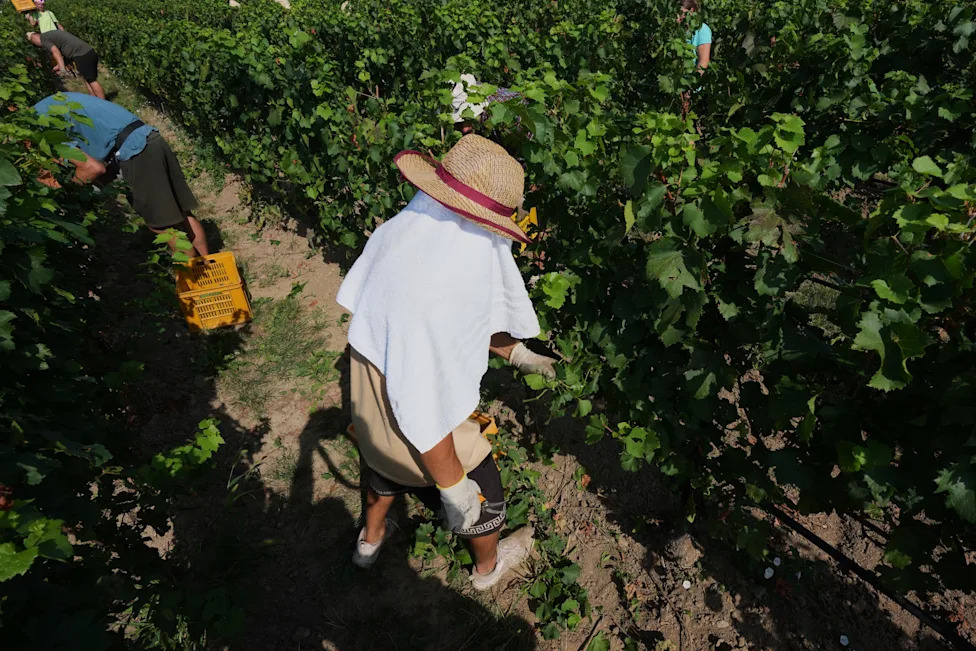
A worker picks wine grapes as he protects himself from the sun with a towel during the harvest in Corte Franca, northern Italy, Thursday, Aug. 6, 2026. (AP Photo/Antonio Calanni)(AP Photo/Antonio Calanni)
Berlucchi, the region’s oldest producer of traditional bottle-fermented sparkling wine, began picking on Aug. 2. Rapidly rising sugar readings showed Pinot Nero destined for blends and rosé was ready, and within 48 hours the workforce and presses were mobilized.
Because regional labor rules require a midday pause between 12:30 p.m. and 4 p.m., and because afternoon temperatures can overheat fruit, wineries shifted to 4 a.m. starts. Workers harvest under floodlights and grapes are cooled before gentle pressing to preserve the prized free-run juice that is critical for high-quality sparkling wine.
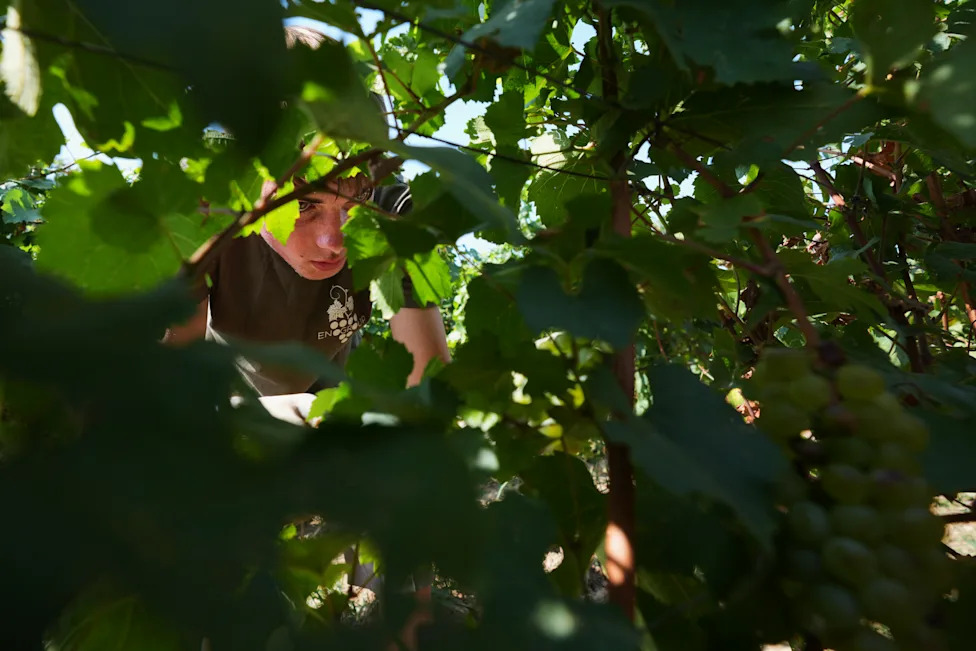
A hot worker picks wine grapes during the harvest in Corte Franca, northern Italy, Thursday, Aug. 6, 2026. (AP Photo/Antonio Calanni)(AP Photo/Antonio Calanni)
“The grapes are perfectly healthy,” said Ferdinando Dell’aquila, Berlucchi’s technical director and oenologist. “We just have to work as quickly as possible, harvest them and preserve their acidity.” To cope with the early crop, Berlucchi has been operating as many as 24 presses a day and running presses late into the night.
Producers across Italy are reporting similar shifts: Sicily began its still-wine harvest in late July, some areas of Tuscany have started early, and most sparkling-wine regions have moved up schedules. Makers of Champagne-style wines face a particular challenge because those wines require higher fixed acidity, lower pH and lower sugar levels than still wines.
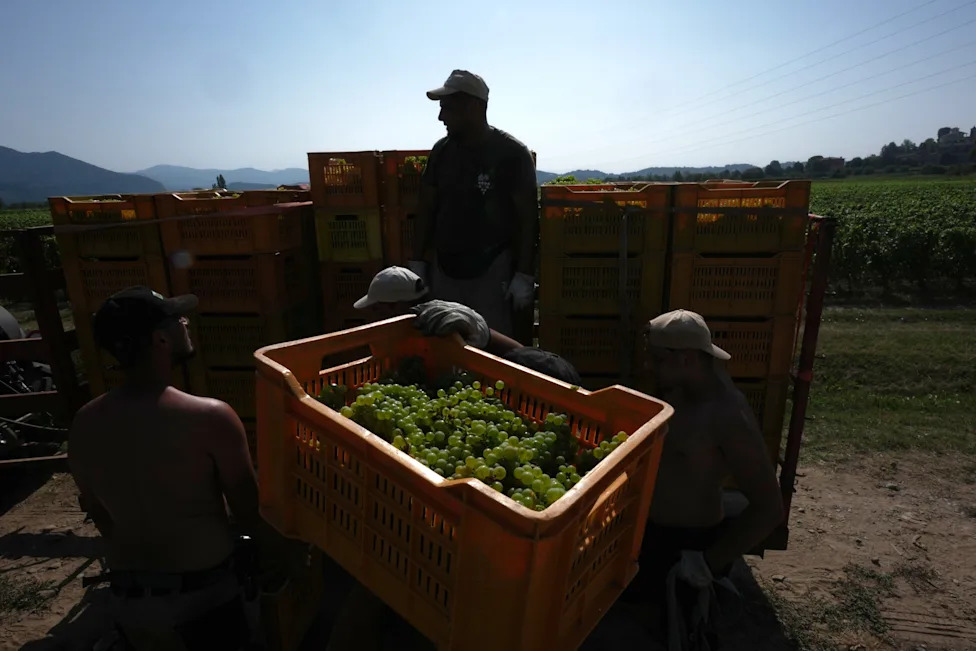
Workers unload crates of wine grapes on a tractor during the harvest in Corte Franca, northern Italy, Thursday, Aug. 6, 2026. (AP Photo/Antonio Calanni)(AP Photo/Antonio Calanni)
“Early-ripening varieties such as Chardonnay require great care, because a delay of just a couple of days can leave you with grapes unsuitable for sparkling wine. Sugar rises too quickly and acidity falls too quickly,” said Attilio Scienza, professor emeritus at the University of Milan.
Franciacorta remains an important player in Italy’s sparkling sector: Berlucchi produces about 4 million bottles annually — roughly 20% of the Franciacorta consortium’s estimated 20 million bottles — with about 90% sold domestically and the balance exported to markets including Germany, Switzerland, the United States and Japan.
“Climate change and the African weather systems settling over Europe are bringing extraordinary temperatures and forcing early picking, not only in Italy, but also in France and Germany,” said Paolo Castelletti, secretary general of the Italian Wine Union.
With earlier harvests becoming more frequent, winemakers say they will need to monitor vineyards sooner and adapt their logistics and staffing to avoid missing the narrow window for premium sparkling-wine quality. Industry leaders remain cautiously optimistic that, with careful vineyard work and experienced oenologists, the quality of Franciacorta can be preserved despite shifting harvest calendars.
Help us improve.