This article urges increasing the number of non-Jewish defenders who risked their lives to save Jews, celebrating historical "Righteous Among the Nations" and contemporary allies. It highlights Yad Vashem's role in commemorating rescuers and gives examples such as Oskar Schindler and Raoul Wallenberg. The piece notes the multigenerational impact of rescue, discusses modern movements like CUFI, and argues that expanding defenders of Jews is both moral and necessary.
Grow the Ranks of the Righteous: Honoring and Encouraging Those Who Saved Jews

Israeli Prime Minister Benjamin Netanyahu lays a wreath marking Israel's national Holocaust Remembrance Day at Yad Vashem Holocaust museum, in Jerusalem, April 14, 2026. Israel came to a standstill on April 14, as tribute to the 6 million Jews murdered by the Nazis during World War II. (Oren Ben Hakoon/Pool/AFP via Getty Images)
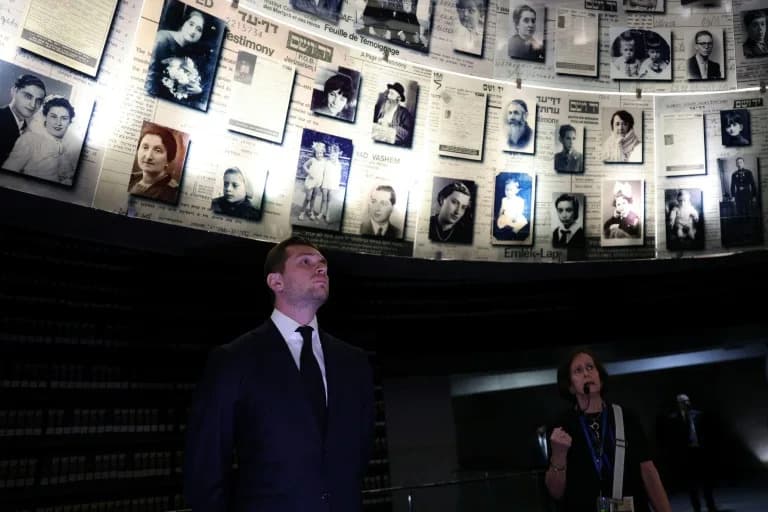
Israeli Prime Minister Benjamin Netanyahu laid a wreath at Yad Vashem in Jerusalem on April 14, 2026, as Israel observed its national Holocaust Remembrance Day. The nation paused to remember the roughly six million Jews murdered by the Nazis during World War II and to honor those who risked everything to save lives.
Righteous Among the Nations — often called Righteous Gentiles or, in contemporary usage by some, "Lovers of Israel" — refers to non-Jews who rescued Jews during the Holocaust. Yad Vashem popularized the formal designation and has recognized thousands of rescuers who sheltered, hid, or otherwise protected Jews without expectation of payment or public acclaim.
Many rescuers knowingly endangered themselves and their families. Their deeds sometimes remained secret for decades and came to light only when survivors or their descendants submitted nominations to Yad Vashem. When a nomination was accepted, Yad Vashem often planted a tree bearing the rescuer's name and country — a living memorial that still endures.
Examples and Legacy
Well-known figures honored for their courage include Oskar Schindler and Raoul Wallenberg. The Talmudic teaching that saving a single life is like saving an entire world highlights the long, multigenerational impact of rescue: a life saved in 1942 can multiply into hundreds or thousands of descendants by 2026.
Classical rabbinic sources describe non-Jewish supporters who act righteously as those who observe the Seven Noahide Laws; Maimonides teaches that such people merit a place in the world to come. Historical examples often cited as benevolent to the Jewish people include Melchizedek (Malki‑Tzedek) in Genesis and Cyrus the Great, the Persian king who allowed Jews to return to Jerusalem after the Babylonian exile.
Modern Defenders
In recent decades, organized movements and individual allies have become vocal supporters of Israel and Jewish communities. Pastor John Hagee founded Christians United For Israel (CUFI) in 2006; CUFI reports millions of supporters and is one of the most visible Christian Zionist organizations advocating for Jewish safety, humanitarian aid, and political backing for Israel. Contemporary political defenders of Jewish interests have come from across the spectrum — for example, the late Sen. Henry M. "Scoop" Jackson and current lawmakers such as Sen. Lindsey Graham and Sen. John Fetterman have been cited by some as champions of Jewish causes.
These modern allies often act from religious conviction or moral commitment rather than from a desire for interfaith dialogue alone. Many point to biblical passages such as Genesis 12:3 and Numbers 24:9 as inspiration: "Blessed are those who bless you, and cursed are those who curse you." Whatever the motive, their public advocacy, humanitarian work, and political lobbying help protect communities and amplify the memory of past rescuers.
Why We Must Increase Their Numbers
Recognizing and honoring rescuers is vital, but the author argues we should also actively encourage more people to stand against antisemitism and protect vulnerable populations. Increasing the number of modern defenders is framed not only as solidarity with Israel but as a universal moral duty: standing up for the persecuted is simply the right thing to do.
Anne Frank, for example, was hidden by non-Jewish helpers before her hiding place was discovered; her story underscores both the bravery of rescuers and the tragic consequences when betrayal occurs.
Micah D. Halpern is a columnist on social, political and foreign affairs. Follow him on Twitter @MicahHalpern.
Help us improve.