Preclinical research in Nature Aging shows that ovarian cancer cells made senescent by cisplatin secrete fructose, which alters mitochondrial metabolism in neighboring cells and reduces cholesterol synthesis. Lower membrane cholesterol weakens cell adhesion, increasing the likelihood that cancer cells detach and spread. Mouse experiments found greater metastasis after exposure to senescent cell secretions or a high-fructose diet, while blocking fructose metabolism reduced spread. These findings are early and apply to laboratory models; clinical confirmation is needed.
Common Sugar From Senescent Cancer Cells May Loosen Tumors And Promote Metastasis
Cancer cells secrete a cocktail of factors that affect how they grow and move. (Science Photo Library/Canva)
Cancer can behave like the villain in a horror film: it appears defeated after treatment only to return later. Chemotherapy kills many cancer cells, but some survive by entering a state called cellular senescence. Rather than becoming inert, these senescent cells remain metabolically active and secrete a complex mixture of proteins, lipids and small molecules that can reshape the tumor microenvironment.
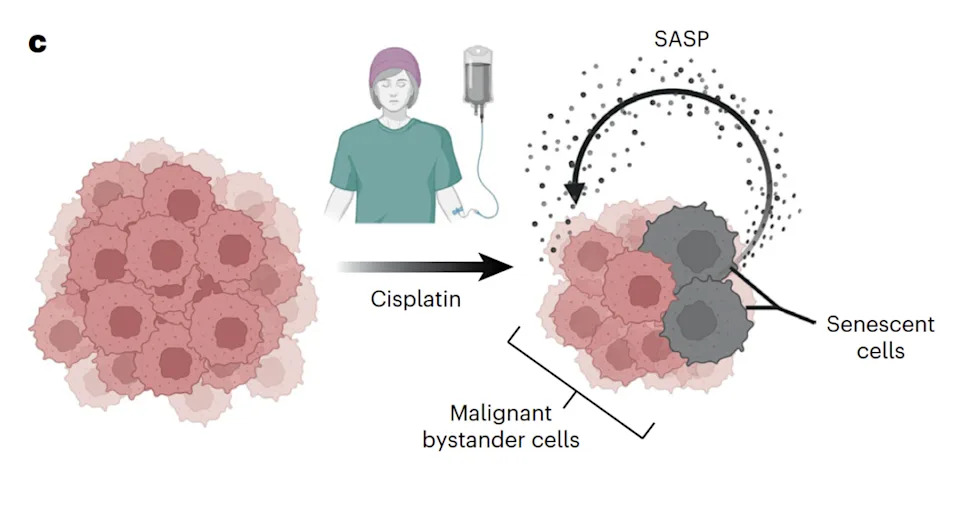
Senescent cancer cells are still metabolically active, releasing a mixture of molecules, collectively known as SASP (senescence-associated secretory phenotype), which affects neighboring cells. (Cole et al.,Nature Aging, 2026)
New preclinical research published in Nature Aging (2026) finds that one of those secreted molecules is fructose — the common sugar found in fruit and many sweetened foods — and that it may encourage surviving ovarian cancer cells to detach and spread. The study was led by Aidan Cole at The Wistar Institute in Philadelphia.

YouTube Thumbnail
What the researchers did
The team treated ovarian cancer cells with cisplatin, a chemotherapy drug known to induce senescence, then collected the conditioned media that contained the molecules released by those senescent cells over 48 hours. When untreated ovarian cancer cells were exposed to this media, they did not proliferate faster or become more resistant to cell death. Instead, they were far more likely to loosen contacts with neighboring cells and detach from three-dimensional tumor-like spheroids — a key early step in ovarian cancer spread across the abdominal cavity.
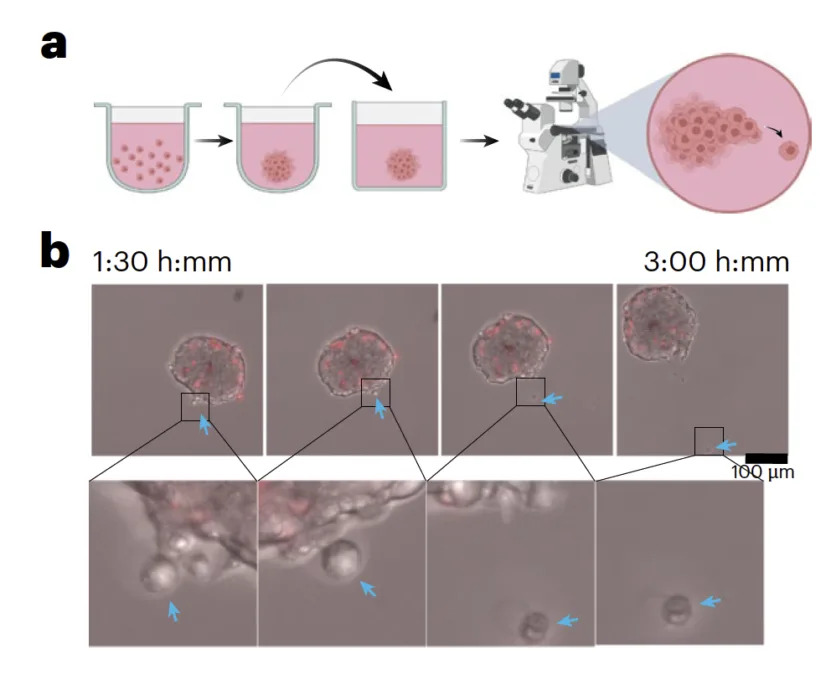
Spheroid cell cultures detached when treated with the secretome of senescent cancer cells. (Cole et al.,Nature Aging, 2026)
How fructose is implicated
By heat-inactivating and filtering the conditioned media, the researchers removed typical protein signaling molecules (for example, cytokines and growth factors) but the detachment effect persisted, pointing to a small non-protein factor. Metabolic analysis revealed that senescent cells consumed glucose but secreted elevated levels of fructose. Adding physiological concentrations of fructose to otherwise normal conditioned media reproduced the detachment behavior, while restoring glucose largely reversed the effect.

Subscribe to ScienceAlert's free fact-checked newsletter
Mechanism: mitochondria and cholesterol
The investigators traced how fructose changed cancer cell behavior. Fructose altered mitochondrial metabolism and led to reduced cholesterol synthesis. Because cholesterol helps stabilize cell membranes and supports cell–cell and cell–matrix adhesion, lower membrane cholesterol made cancer cells less adhesive and more prone to detach from the primary tumor mass.
Animal experiments and dietary relevance
Findings in cell models translated to mice. Mice implanted with ovarian cancer cells developed substantially more metastatic tumors when given the secretome from senescent cancer cells than when given material from non-senescent cells, despite no increase in proliferation. In another experiment, mice fed a high-fructose diet developed more widespread metastatic disease than animals fed glucose. Disabling the cancer cells' ability to metabolize fructose reduced their detachment and spread, supporting a causal role for fructose metabolism in this process.
Implications and limitations
This research suggests that chemotherapy-induced senescent cells can actively remodel the tumor's metabolic environment in ways that favor dispersion of surviving cancer cells. The authors propose that combining senolytics — drugs that selectively eliminate senescent cells — with targeted dietary interventions might reduce this unintended consequence of chemotherapy.
Important caveat: These are preclinical results from cell culture and mouse studies. They do not prove that dietary fructose causes ovarian cancer metastasis in people. Further clinical and epidemiological research is needed before changing medical or dietary recommendations.
The study appears in Nature Aging (2026).
Help us improve.