The article spotlights harsh conditions at traditional brick kilns in Sheikhupura, Pakistan, where fires exceed 1,000°C and ambient summer heat often tops 40°C. Hundreds of thousands work in an industry critics call poorly regulated and low paid, with many tied to employers by advance payments. Health experts warn of heightened risks—skin, respiratory and kidney disease—while limited moves to adopt cleaner "zigzag" kilns offer partial relief.
Scorched Above and Below: Pakistan’s Brickmakers Face Rising Heat, Debt and Health Risks
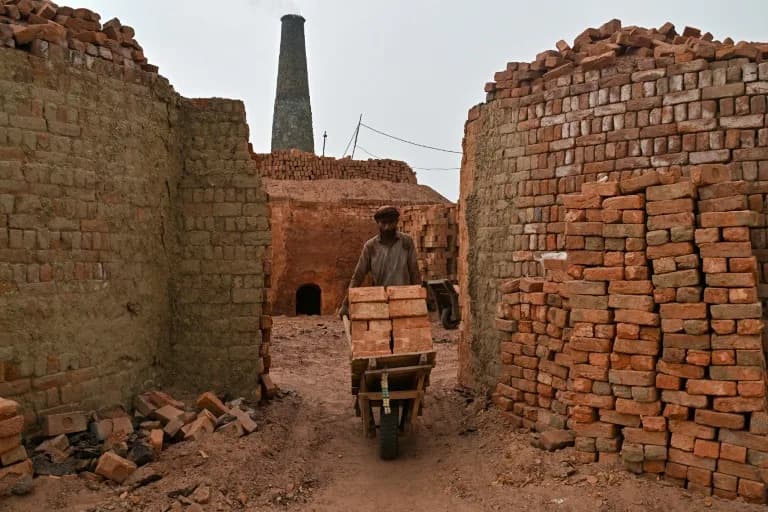
A worker pushes a wheelbarrow at a brick kiln in Sheikhupura, in Pakistan's Punjab province, on July 20, 2026. (Arif ALI)
Thick, dark plumes rise from high smokestacks as brickmakers at a kiln in Pakistan's Sheikhupura district grind coal through small openings beneath their feet into blazing chambers that exceed 1,000°C. The work is relentless: fires must be monitored constantly and bricks must be moved and moulded in searing conditions.
Trapped Between Sun and Fire
Workers already endure extreme conditions at traditional brick kilns, where ambient summer temperatures regularly climb above 40°C. Abid Hussain, 35, his clothes stained with soot, described the job as being “squeezed between flames below and increasingly oppressive heat from above.” He is one of hundreds of thousands employed in an industry labour advocates say is poorly regulated, low paid and growing more hazardous as climate change intensifies heatwaves.
“The heat is undoubtedly extreme but when you think about the financial pressures at home, you have no option but to keep working,” Hussain told AFP.
Debt, Low Pay and Limited Choices
Pakistan’s construction boom has increased demand for kiln labour, yet wages remain low—around $3 a day on average. Some workers report monthly incomes such as Hussain’s roughly 25,000 Pakistani rupees (about $90), which barely cover rent and basic family needs. Many are tied to employers through advance payments, a practice that can trap families in debt and leave labourers unable to refuse dangerous work.
Health Risks and Few Breaks
Health experts warn that prolonged exposure to extreme heat at traditional kilns raises the risk of skin disorders, respiratory illnesses and kidney disease. Supervisors say kiln temperatures must stay stable for production, and that extended rest breaks are often “not feasible” even in extreme weather, though they say drinking water and occasional short breaks are provided.
“I would describe these brick kilns as places of confinement,” said Syeda Ghulam Fatima, General Secretary of the Bonded Labour Liberation Front Pakistan. She says workers remain trapped in a cycle of debt, extreme heat and deteriorating health, risks that global warming only amplifies.
Scale and Possible Improvements
Sheikhupura is at the heart of Pakistan’s brick kiln industry. A 2018 Climate and Clean Air Coalition report estimates more than 18,000 kilns nationwide employing over one million people. The Punjab provincial government has promoted a transition to more modern “zigzag” kiln technology, which can cut air pollution and respiratory risks, but adoption remains uneven and will not immediately solve heat exposure or labour-model problems.
Outlook: Workers, advocates and health experts call for stronger labour protections, better pay, limits on advance-payment practices, and wider adoption of cleaner, safer kiln technologies to reduce both pollution and the health toll of relentless heat.
Help us improve.