Zurab Japaridze, founder of the libertarian party Girchi, has emerged as a leading voice against what critics call Georgia's authoritarian turn. After a six‑to‑seven‑month prison sentence in June 2025 for defying a parliamentary commission, he was released in December but now faces new charges that could carry 7–15 years behind bars. Widespread protests, election observers' warnings about irregularities, and a controversial "foreign agents" law have intensified concerns about shrinking civic space in Georgia.
Cannabis-Planting, Brothel-Opening Libertarian Zurab Japaridze Leads Georgia’s Fight Against Authoritarian Drift
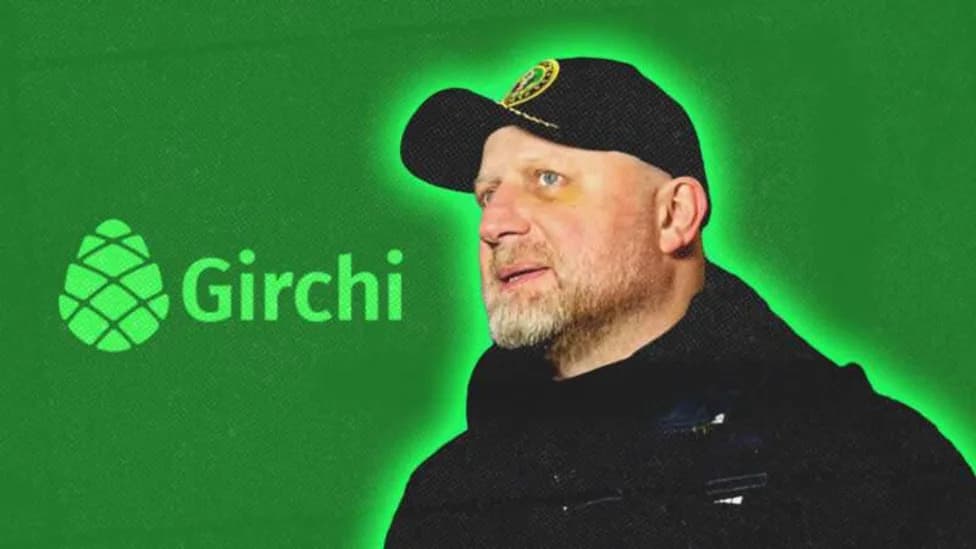
Illustration: zurabjaparidze/Instagram/Girchi
"This fight against Soviet totalitarianism, and now this fight against Russian influences in this country: this is my life," says Zurab Japaridze, founder of Girchi — also known as "More Freedom" — one of the few explicitly libertarian parties in the post‑Soviet space.
In June 2025 Japaridze was sentenced to seven months in Rustavi prison after refusing to cooperate with a parliamentary commission controlled by the ruling Georgian Dream party. Although the commission was ostensibly investigating the United National Movement (UNM), Japaridze — not a member of that government — was detained pretrial and declined to mount a formal defense on principle. Former President Salome Zourabichvili condemned the detention on Facebook as "shameful" and "purely political."
Mass Protests and Election Concerns
Since the contested October 26, 2024 election, Georgians have staged more than 500 consecutive days of protests. International observers raised alarm: the OSCE Office for Democratic Institutions and Human Rights reported "serious procedural inconsistencies," and the Georgian NGO International Society for Fair Elections and Democracy documented numerous violations, including multiple voting, ballot stuffing, voter bribery and threats of violence.
Crackdown on Civil Society
In the wake of the disputed vote, authorities linked to Georgian Dream have arrested peaceful protesters and independent journalists, frozen bank accounts of several civil society groups, and — according to a 2025 BBC investigation — been accused of employing a World War I–era chemical agent to disperse demonstrators. Critics say these measures are part of a broader campaign to silence dissent.
The "Foreign Agents" Law
Georgia's slide toward authoritarian methods accelerated with the Law on Transparency of Foreign Influence, widely known as the "foreign agents" law. Modeled on legislation enacted in Russia after 2012, it requires NGOs and media outlets receiving more than 20% of their funding from abroad to register with the Justice Ministry as "organizations serving the interests of a foreign power." A 2025 expansion extended similar obligations to individuals, drawing comparisons to elements of the U.S. Foreign Agents Registration Act. Supporters say the law increases transparency; critics — including the European Court of Human Rights and Human Rights Watch — argue it is designed to stifle civil society.
"They killed all these kinds of international organizations in Georgia, and basically killed civil society," Japaridze says, calling some NGOs "islands of freedom within this country."
From Rapid Reform To Renewed Repression
The current repression stands in sharp contrast to Georgia's reform era under President Mikheil Saakashvili and economy minister Kakha Bendukidze. After the 2003 Rose Revolution, Bendukidze simplified taxes, cut licenses and permits, and pushed mass privatization; Georgia's GDP grew rapidly and the country jumped on the World Bank's Ease of Doing Business ranking. Japaridze cites Bendukidze — and reading F.A. Hayek's The Fatal Conceit — as formative influences on his politics.
Provocative Activism
Girchi became known for theatrical stunts to spotlight libertarian causes: founding a mock church to oppose conscription, planting cannabis at party headquarters on New Year's Eve 2016 to challenge drug laws, and opening a symbolic brothel to protest restrictions on sex work. Some efforts yielded results: a 2018 constitutional decision protected recreational cannabis consumption, though part of that right has since been rolled back and possession of more than five grams made criminal by Georgian Dream.
Ongoing Threats And New Charges
Japaridze was released in December 2025, but he now faces fresh prosecution alongside eight other opposition figures, including Saakashvili, accused of crimes "committed against the state," such as "sabotage" and "assistance to a foreign state in hostile activities." Convictions could carry sentences of seven to 15 years. Despite the risks, Japaridze says he is ready to accept long imprisonment rather than abandon his cause.
Economic metrics offer a mixed picture: Georgia ranks in the top quartile of the Fraser Institute's economic freedom index (25th globally in 2023), yet activists and analysts warn that frozen accounts, arrests and an atmosphere of intimidation have severely weakened civil society. Human rights groups estimate roughly 50–60 political prisoners are detained.
Originally published on Reason.com.
Help us improve.