Mohammad Bagher Kharrazi, known for once claiming he would buy Manchester United, has resurfaced with explosive allegations aimed at officials negotiating to reopen the Strait of Hormuz. His claims prompted denials from the president’s and supreme leader’s offices and a criminal probe by a special clerical court. Coupled with tougher rhetoric from the IRGC, his actions reveal organised hardline resistance that could complicate any peace agreement.
Hardline Cleric Who Once Claimed He'd Buy Man United Is Trying To Sabotage Iran's Peace Talks
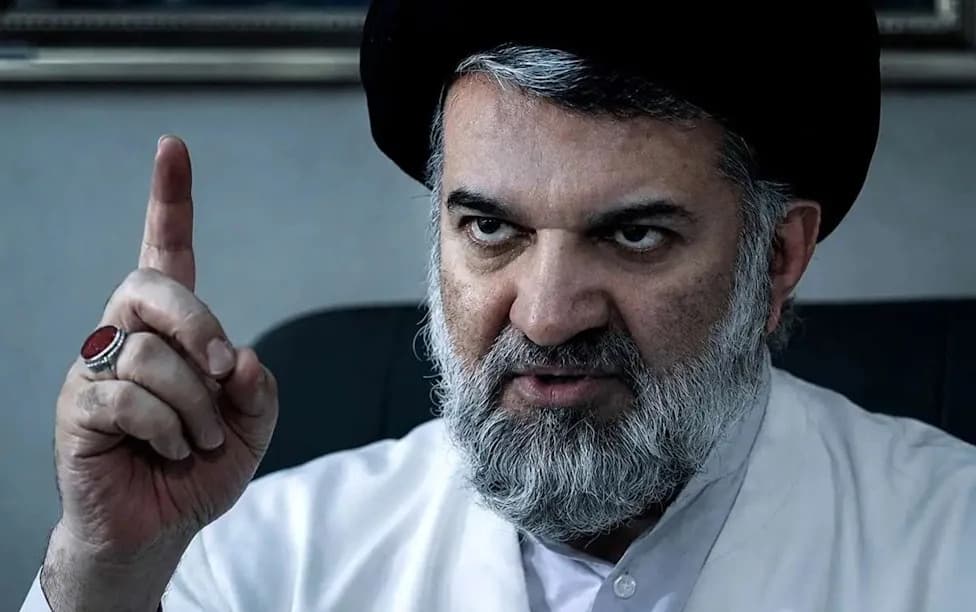
Mohammad Bagher Kharrazi has been placed under criminal investigation as he tries to undermine the peace talks
Mohammad Bagher Kharrazi, a provocative Iranian cleric once famous for claiming he would buy Manchester United, has reemerged to challenge Tehran’s delicate negotiations over reopening the Strait of Hormuz.
Nearly two decades ago Mr Kharrazi grabbed headlines by announcing his organisation would acquire the football club and rename it “Kheybar.” The claim never materialised, but it illustrated his flair for dramatic, headline-grabbing statements — a trait he has revived with fresh, explosive allegations aimed at senior officials involved in peace talks.
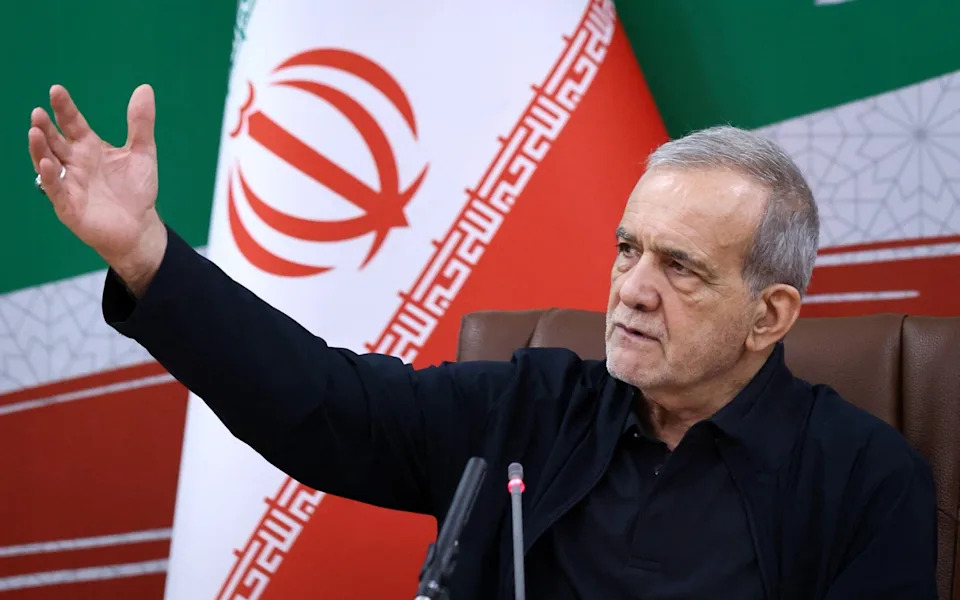
Masoud Pezeshkian has repeatedly attempted to resign as president, Mr Kharrazi claimed - Iranian Presidential Office/AFP via Getty Images
Claims, Denials and a Criminal Inquiry
Mr Kharrazi has accused President Masoud Pezeshkian of attempting to resign more than two dozen times and alleged that Mojtaba Khamenei, described in reports as Iran’s new supreme leader, signalled that another resignation would be accepted. He also claimed that Foreign Minister Abbas Araghchi had been barred from intervening in the negotiations.
Both the president’s office and the supreme leader’s office issued sharp denials. The president’s office called the resignation allegations “vain and utterly false,” while the supreme leader’s office described the account attributed to Mojtaba Khamenei as “fundamentally false,” warning that such rumours “sow division in society” and “serve the goals of the sworn enemies of the Iranian nation.”
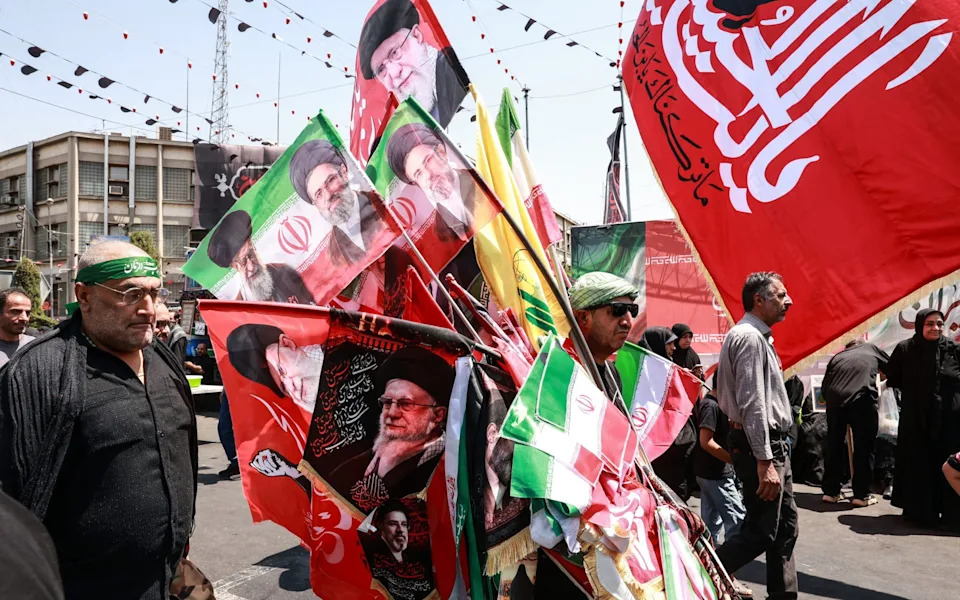
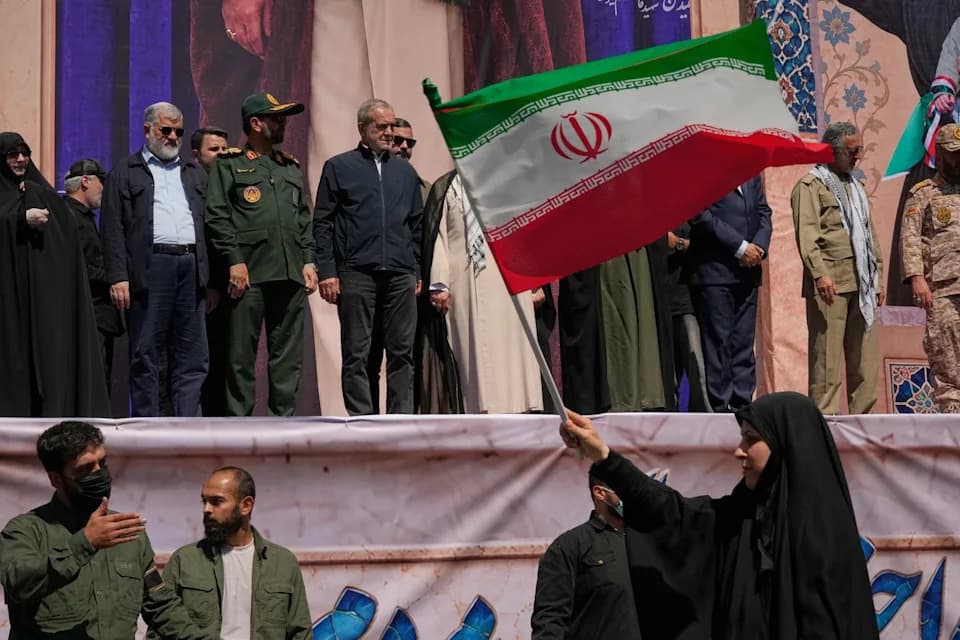
Flags are distributed bearing portraits of Mojtaba Khamenei and his slain father Ali Khamenei as part of a religious festival - AFP via Getty Images
On Saturday the judiciary said it had summoned Mr Kharrazi to the special clerical court, opened a criminal investigation and warned he could face multiple security charges and an arrest warrant if he failed to appear.
Hardline Resistance Within Iran
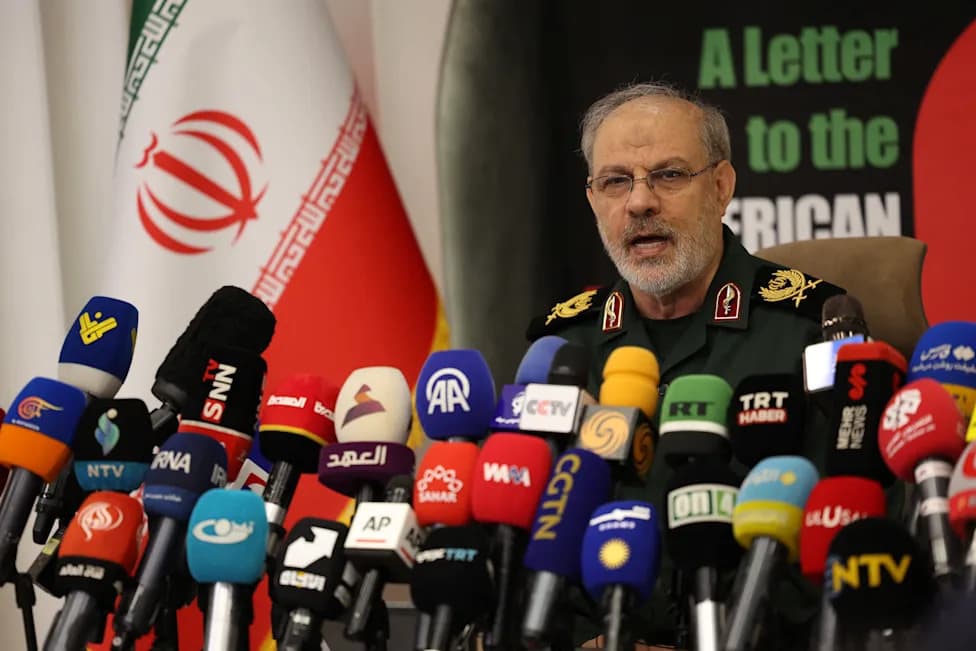
State-aligned outlets suggested the timing was deliberate: whenever momentum grows toward calm and an exit from conflict, hardline factions may try to sabotage a deal over the Strait of Hormuz. That same day, IRGC spokesman Gen Hossein Mohebbi took a tougher stance than the foreign ministry, saying the strait would reopen only when the United States fully accepted Iran’s terms and calling the waterway “a component of the geographic and strategic power” of the Islamic Republic.
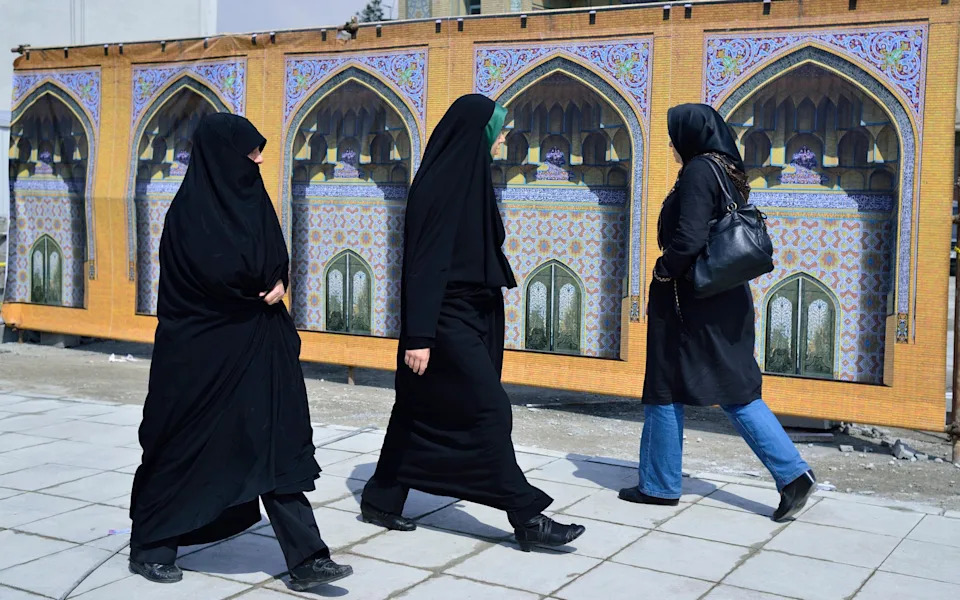
Mohammad Bagher Kharrazi has defended harsh enforcement of the mandatory hijab - Alireza Firouzi
The difference in tone between the IRGC and the government underscores the fault lines Mr Kharrazi is exploiting: organised hardline resistance inside Iran that could complicate any settlement.
Who Is Kharrazi?
Kharrazi fits a familiar Iranian archetype: an influential insider without a formal post whose proximity to power and family ties make his statements difficult to dismiss. His family network includes ties to senior figures: his sister Sousan Kharrazi is married into the Khamenei family; his brother Sadegh Kharrazi served in the foreign ministry and as ambassador to France; and his uncle Kamal Kharrazi was a former foreign minister and head of a strategic council.
He studied jurisprudence and philosophy in the seminary and, by his own account, continued studies in Canada. In a recent five-minute video he described building a so-called “shadow government,” claiming to hold “60 thick volumes” of plans for the organisation of state institutions and asserting the need to shift the Islamic Republic toward direct clerical rule.
Extremist Rhetoric and Organisational Claims
Mr Kharrazi’s record includes inflammatory and violent rhetoric. He has advocated extremely harsh enforcement of the mandatory hijab and once said deploying tens of thousands of his followers to confront unveiled women would “solve” the issue. He has also made other provocative claims, including dramatic threats against foreign targets and vows to reclaim territories he regards as separated from Iran.
Most recently he claimed to have organised 530 people in each city — a total he described as 250,000 “ready to move” on Tehran if ordered — a claim that, if true, would indicate significant mobilisation capacity. After the supreme leader’s office publicly denied his account, Kharrazi issued a statement that accepted the denial only “provisionally,” suggesting it could change after “important future changes.” Iranian media called his response “bizarre,” and the episode produced fresh speculation rather than closure.
What It Means For The Peace Process
The paradox of Mr Kharrazi is that a figure with no formal authority can compel official denials from the highest offices while appearing to suffer few consequences — at least so far. Whether the special clerical court’s inquiry results in meaningful sanctions or merely highlights internal divisions, the episode exposes how far entrenched hardline elements may go to prevent a negotiated end to conflict and control Iran’s strategic decisions.
Bottom line: Kharrazi’s return to the spotlight and the divergent tones from Iran’s institutions illustrate internal resistance that could complicate diplomatic efforts to reopen the Strait of Hormuz and stabilise the region.
Help us improve.