Former president Hassan Rouhani has urged asking Iranians whether to continue confronting the US, saying any ceasefire should reflect the "overwhelming majority." He criticised state media and warned a vocal minority does not speak for the nation. Hardline outlets and politicians condemned his remarks, some issuing threats. Separately, newly appointed security chief Mohsen Rezaei announced plans for a "prohibited zone" beyond the Strait of Hormuz and claimed recent missile testing, while Saudi Aramco's Jizan facilities were hit in a regional attack.
Rouhani Calls For Referendum On Ending War With The US, Urges Ceasefire Backed By Majority
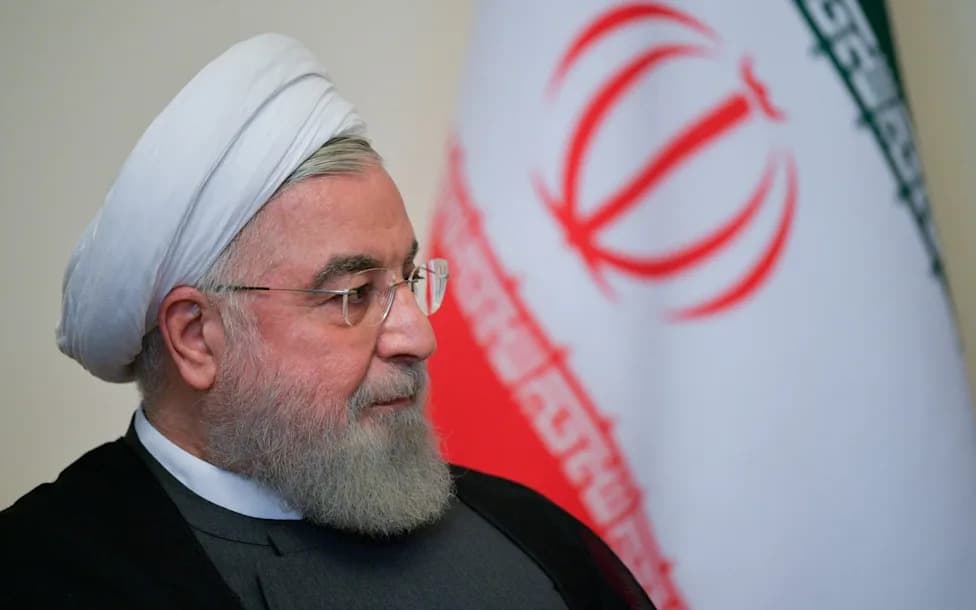
Hassan Rouhani has called for an 'honourable' end to Iran's war against the US - Alexei Druzhinin/Kremlin via Reuters
Former Iranian president Hassan Rouhani has urged that the Iranian public be asked whether the country should continue confronting the United States, suggesting any ceasefire should reflect the will of the overwhelming majority.
Speaking at a weekend meeting of former provincial governors, Rouhani argued that national goals must be clarified by leaders and then put before the people. He framed the choice starkly: if the government's plan is to "fight the world's big powers for another 20 years" and a majority accept that path, leaders should continue; but if the people propose an alternative, should their wishes be ignored?
"It is very important that the framework of our national goals is clear to ourselves first, and then we present it to the people," Rouhani said. "We say to the people: our plan is to fight the world's big powers for another 20 years. If the people say they accept it, very good, let's continue. But if the people do not accept it and show us another way, do we not want to accept that?"
Although Rouhani did not explicitly use the word "referendum," political observers interpreted his remarks as an appeal for a public vote on whether to pursue a prolonged confrontation with the US. He called for the conflict to be ended "honourably" and in line with "the overwhelming majority of the people," saying such a course would allow Iran to repair wartime damage and restore hope for investors and young people.
Rouhani also criticised state broadcasting, saying a national broadcaster that becomes "a centre for division" risks losing its audience "from the president down to ordinary people." He added that a small but loud minority "who now hold the megaphones and are making noise" does not represent the majority of Iranian society.
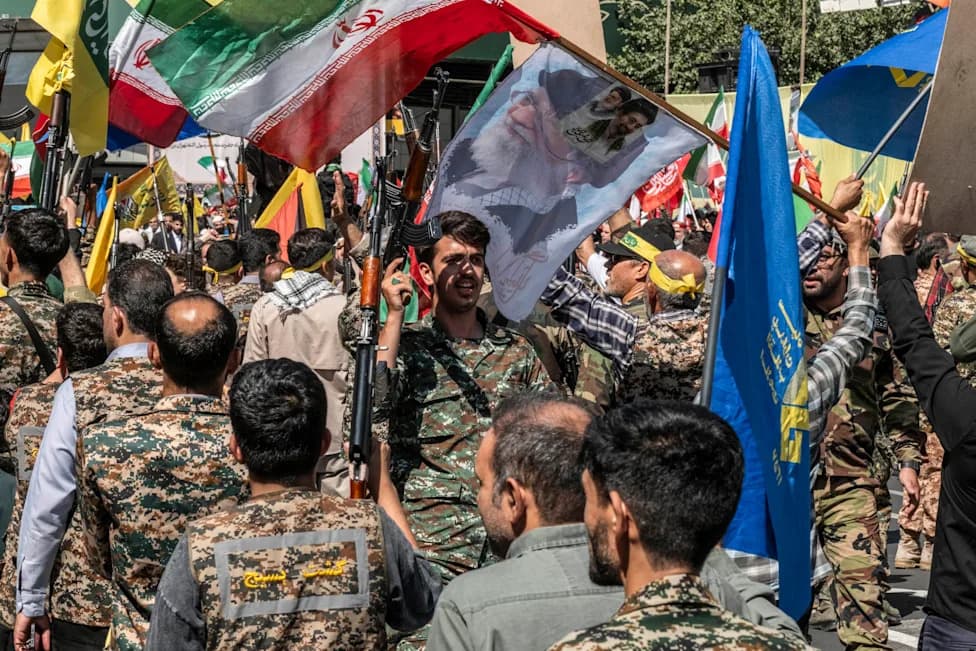
Responses from hardline circles were sharply critical. The Fars news agency warned Rouhani's comments were dangerous and should not be dismissed, while the IRGC-aligned Tasnim outlet mocked him. Hardline politicians described his remarks as divisive; some speakers at pro-government rallies used threatening rhetoric toward the former president.
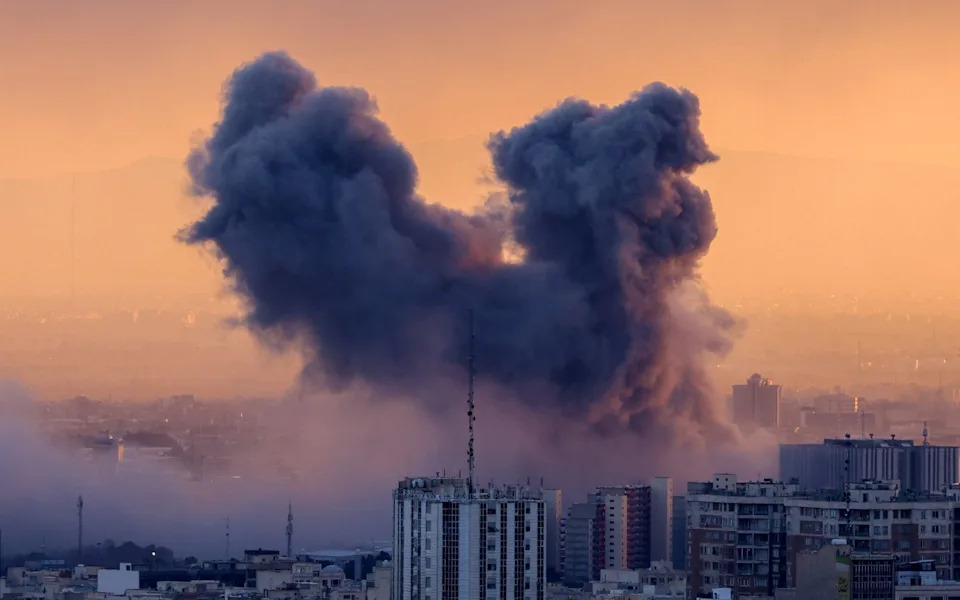
A US-Israeli strike on Tehran in March. Hassan Rouhani said the war should end if it was the will of the majority - Atta Kenare/AFP via Getty Images
Rouhani, who served as president from 2013 to 2021 and was a leading architect of the 2015 nuclear deal, now speaks from the margins of Iran's political establishment. Since the 2021 election that brought Ebrahim Raisi to power, hardliners aligned with the IRGC have consolidated influence across much of the state, reducing the formal power of moderates. Still, as a two-term president and cleric, Rouhani retains a constituency among Iranians who favour engagement with the West and a reduction in confrontation.
Some critics blame the diplomatic engagement of Rouhani's era for creating openings that opponents say weakened Iran's position, but calls to consider ending the war have also appeared across the political spectrum. Mohsen Hashemi, son of former president Akbar Hashemi Rafsanjani, has warned against prolonging the fighting.
Separately, Mohsen Rezaei, recently appointed secretary of the Supreme National Security Council, said Iran would soon declare a "prohibited zone" beyond the Strait of Hormuz. In his first state TV interview since taking the job, Rezaei dismissed claims that the strait is under US naval control and said American vessels have tried to transit the waterway's southern edge daily; he claimed some of those ships "usually get hit." He also said Iran had recently tested a "special anti-destroyer" missile over a US warship — a claim presented by Iranian officials and not independently verified.
Regional tensions continued to simmer: Saudi Aramco reported damage after an attack on its Jizan oil facilities, and Saudi authorities were assessing the impact on infrastructure.
Note: This article reports statements and claims made by political figures and state-aligned outlets; some operational and military claims remain unverified by independent sources.
Help us improve.