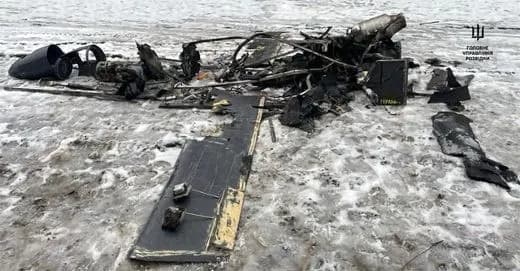
Russia has upgraded its Geran drone family — especially the jet‑powered Geran‑4 — and equipped many airframes with a Seeker electro‑optical guidance suite to strike Ukraine’s Black Sea ports and vessels. The Geran‑4 can reach about 500 km/h and carry roughly a 90 kg thermobaric warhead, while smaller Gerbera loitering munitions carry ~5 kg warheads. Since July 2026 these systems have reduced throughput at Odesa and nearby ports, prompted insurers and carriers to suspend operations, and accelerated Ukrainian efforts to field faster interceptors and bolster defenses.
Russia’s Upgraded Geran Drones With 'Seeker' Guidance Strike Black Sea Ports
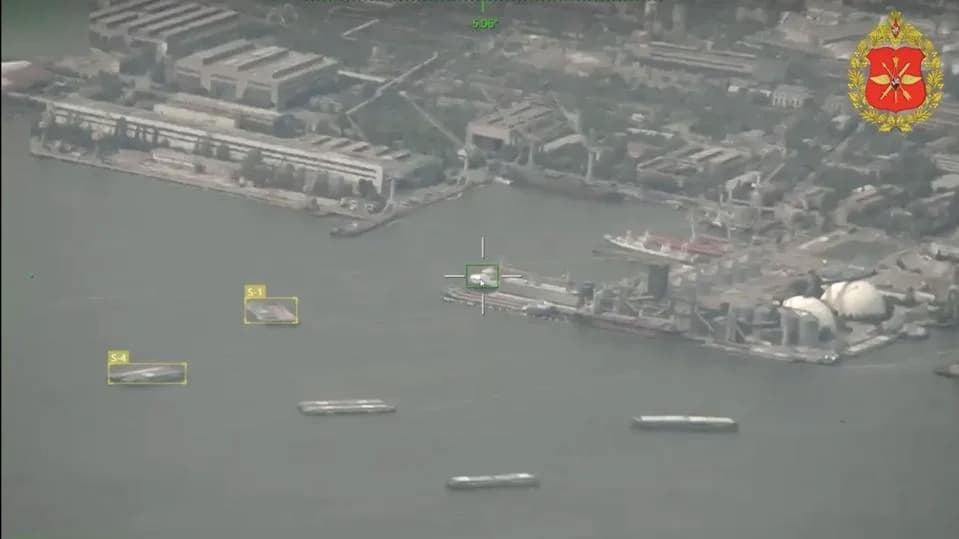
Imaged captured from video posted on Telegram by the Russian Ministry of Defense on July 28, 2026. The video shows Geran-4 Seeker drones engaging cargo ships at the port of Mykolaiv.Social Media Capture
Video released by the Russian Ministry of Defense in July–August 2026 shows upgraded Geran-series attack drones striking ships and port infrastructure along Ukraine’s Black Sea coast, including Mykolaiv and Odesa. Moscow has tried to blunt the decline in its long‑range strike effectiveness by fielding faster, jet‑powered Geran variants and by fitting many airframes with a Seeker electro‑optical guidance suite intended to improve terminal accuracy against moving and discrete targets.
What Has Changed in the Geran Family?
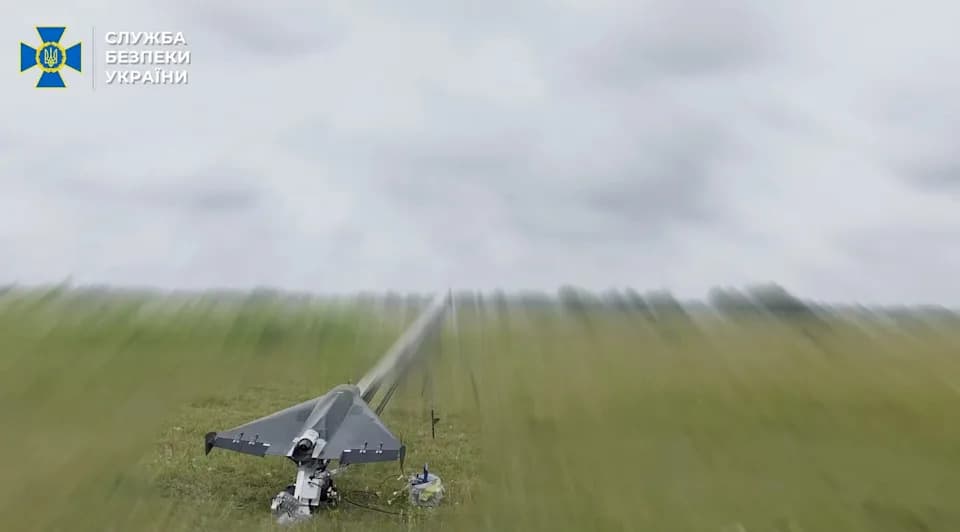
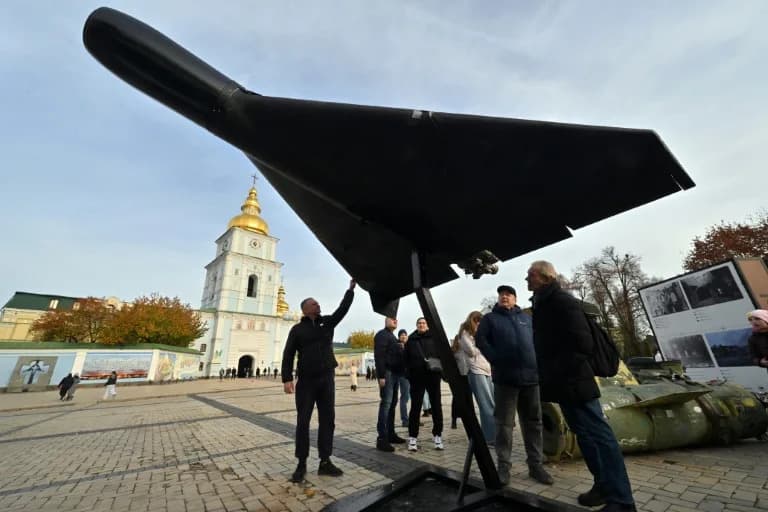
The Geran-2, a low‑cost derivative of the Iranian Shahed‑136, remained the backbone of Russia’s one‑way long‑range strikes because of its roughly 1,800 km range and high production rates. Its cruise speed (~200 km/h) made it vulnerable to mobile air defenses and interceptor drones. In response, Russia has introduced jet‑powered follow‑ons — notably the Geran‑3 and the extensively redesigned Geran‑4 — to improve survivability.
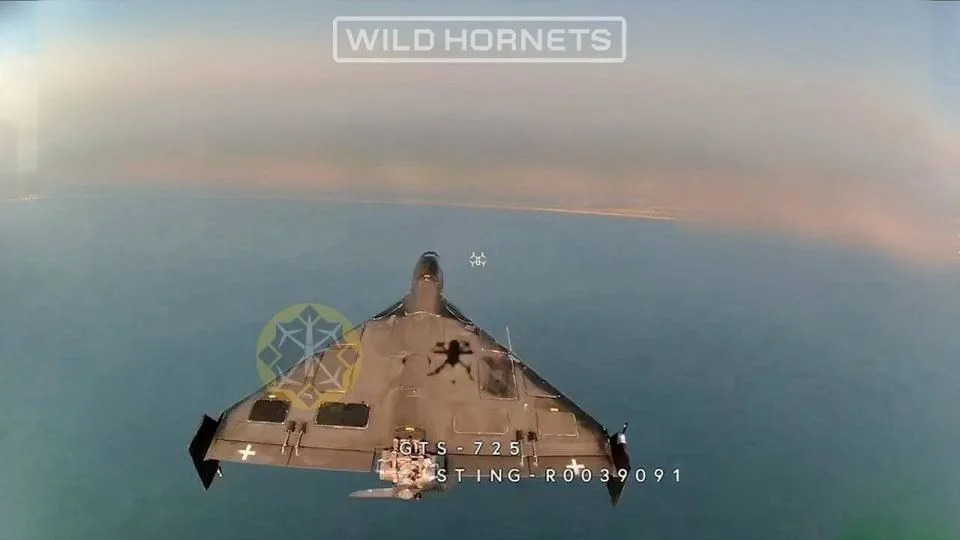
Image posted online by Wild Hornets showing the feed from a Sting Interceptor drone as it tracks a Geran-2 drone over the Black Sea on March 24, 2026.
Geran-4: A Significant Redesign
The Geran‑4 features a reinforced, aerodynamically optimized airframe and is powered by a Chinese‑made turbojet. It can carry an approximately 90 kg thermobaric warhead and reach speeds up to ~500 km/h, making it harder for Ukraine’s standard interceptors to catch. The Geran‑3 is a less radical evolution that retains more of the original airframe.
Seeker Guidance: Smarter Terminal Phase
Russia has deployed a Seeker package across portions of the Geran family. The Seeker combines electro‑optical cameras, onboard machine‑vision for automatic target recognition, and a mesh radio link. An operator designates the target, and the onboard computer guides the weapon during the terminal phase. That reduces reliance on satellite navigation, increases resistance to electronic interference, and enables the drones to track and strike moving targets such as ships, trains and vehicles.
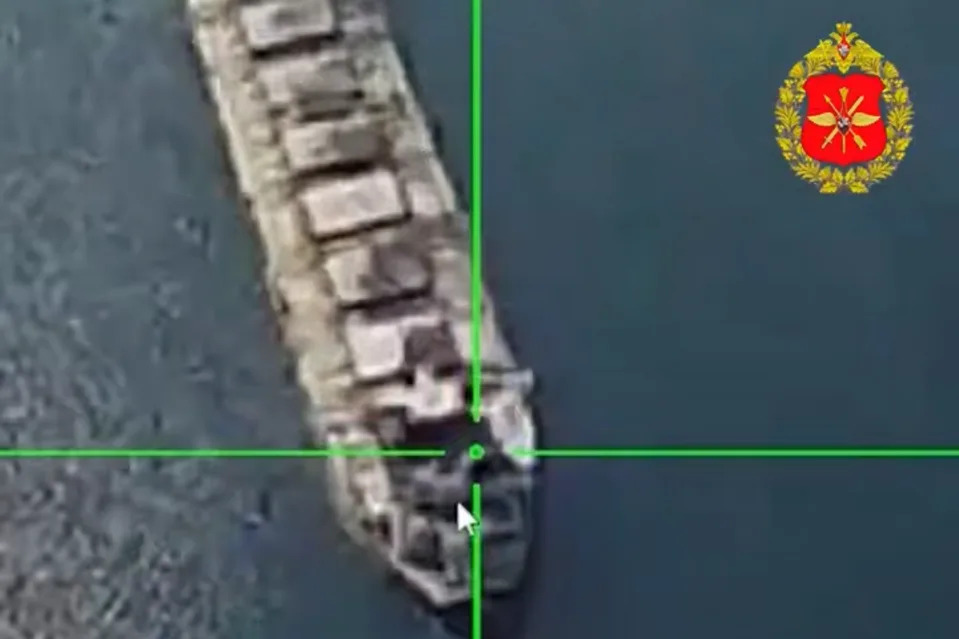
Image captured from a video posted on Telegram by the Russian Ministry of Defense on August 8, 2026. The image shows the feed from Geran-4 drones as they target vessels outside of the port of Odesa.
Tactics, Employment, And Open‑Source Evidence
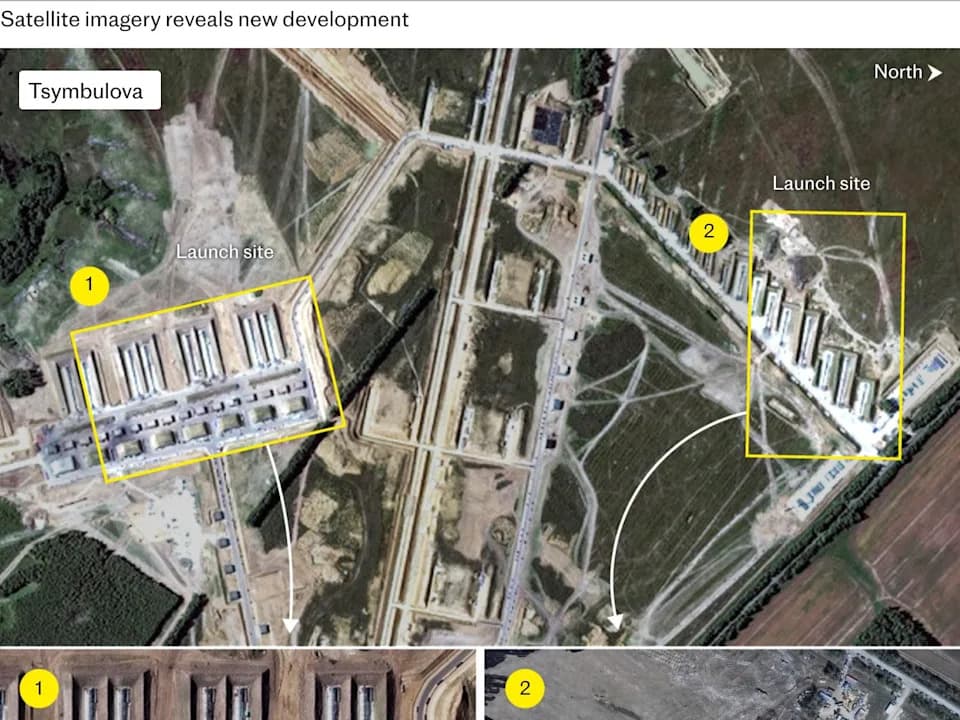
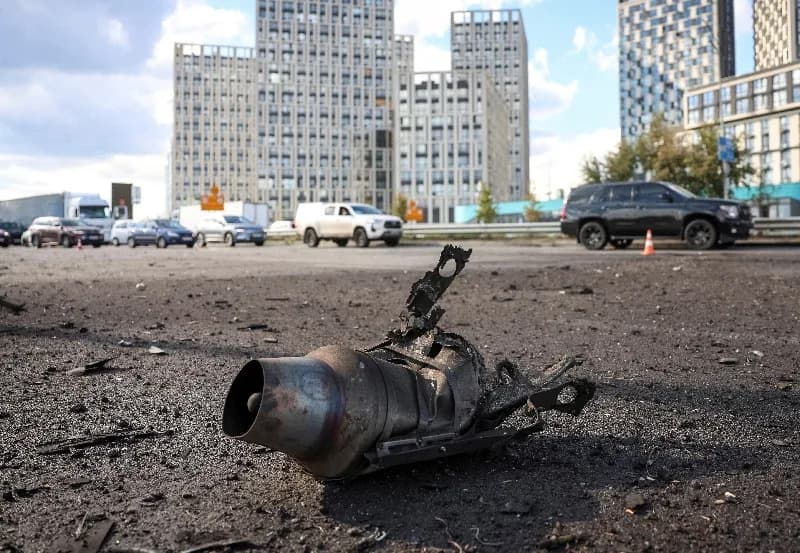
Since early July 2026, Russian forces have repeatedly used Seeker‑equipped Gerans to attack Ukrainian Black Sea ports — Odesa, Chornomorsk, Pivdennyi and Mykolaiv — and vessels operating nearby. Launches from occupied Crimea keep flight times short and compress Ukrainian reaction windows. Open‑source clips and imagery (including MoD Telegram posts and footage circulated by groups such as Wild Hornets) show strikes on fuel storage tanks, port facilities and commercial vessels. A March 24, 2026 clip displayed a Sting interceptor feed tracking a Geran‑2 over the Black Sea, and a July 24 social clip showed a Yak‑52 crewman’s first‑person view of downing Geran drones near Odesa.
Typical strike packages are small (two to four drones) and mix Geran‑4s, slower Geran‑2s and small Gerbera loitering munitions. The mix complicates defense: slower platforms can be chased by interceptors, while the faster Geran‑4s often force defenders to prioritize threats.
Economic And Maritime Impact
Greater Odesa and adjacent ports handle a large share of Ukraine’s seaborne exports, including grain. Repeated strikes on port infrastructure and visiting vessels have reduced throughput, raised shipping risk perceptions, and increased insurance costs. In July 2026 ship traffic dropped sharply; insurers paused new war‑risk policies, and major carriers — including Maersk and CMA CGM — suspended calls at Ukrainian ports.
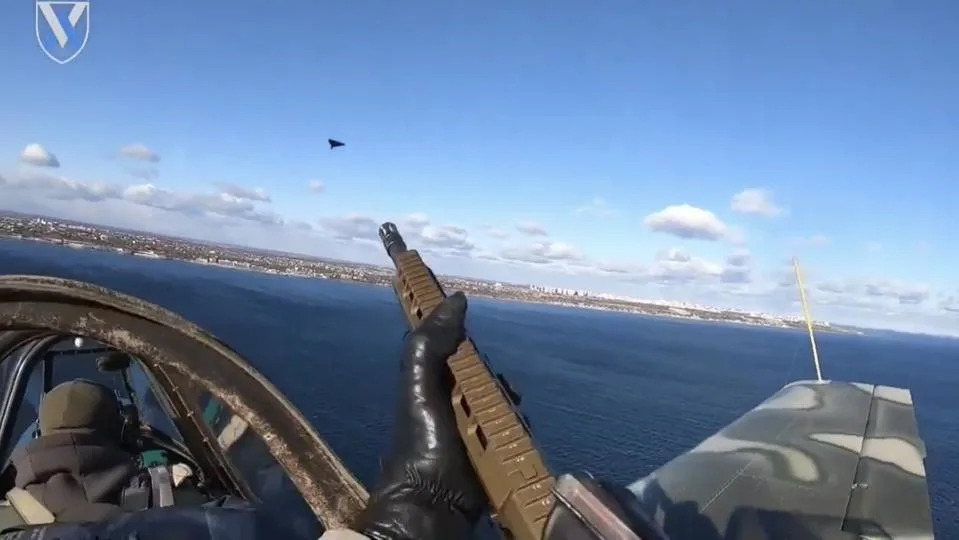
Image captured from a video posted on social media on July 24, 2026. The video shows the first-person view from a Ukrainan Yak-52 crewman as they shoot down Russian Geran drones over the Odesa region.
Ukrainian Responses
- Kyiv is developing faster interceptor drones designed to engage jet‑powered Geran‑4s and higher‑performance interceptors with improved hit probability.
- Air defenses around Odesa and other ports have been strengthened; footage shows manned aircraft (including an F‑16 and Yak‑52) and unmanned assets intercepting Geran‑4s.
- Ukraine has also employed unmanned surface vessels to contest Russian drone operations at sea.
Strategic Implications
Seeker‑equipped Gerans expand Russia’s low‑cost precision options by enabling terminal tracking of moving targets and more precise aim points. That raises the threat to military convoys, trains, and maritime traffic as well as to economic infrastructure. At the same time, Ukraine’s ongoing improvements in interceptors and layered defenses illustrate an iterative competition of adaptation and counter‑adaptation that will likely keep long‑range drone campaigns a central and evolving front of the conflict.
Image sources referenced: Russian MoD Telegram posts (late July–early August 2026), open‑source social videos (March–July 2026), and independent imagery shared by monitoring groups.
Help us improve.