Trinity College Dublin researchers report the first ancient smallpox genomes recovered from the Americas, reconstructed from two individuals buried in northern Chile and dated to the late 1400s–early 1600s. The viral sequences belong to an extinct variola branch positioned between medieval European forms and later strains, providing direct molecular evidence linking colonial-era outbreaks to Old World lineages. The study shows how colonization, population change and vaccination shaped the virus's evolutionary trajectory and highlights the value of ancient pathogen genomics for history and public health.
Ancient Smallpox Genomes from Chile Link Colonial Outbreaks to Old World Strains

Photo Credit: iStock
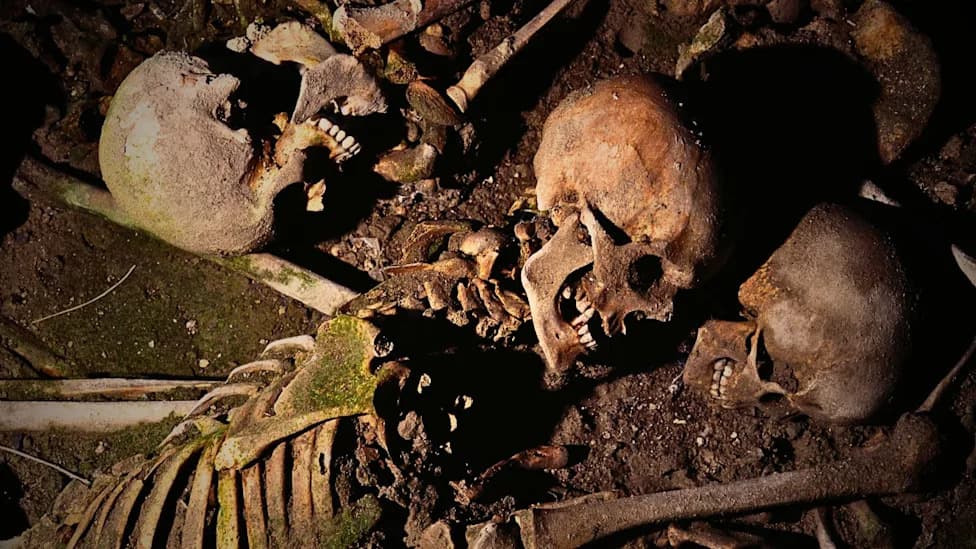
Ancient DNA recovered from two individuals buried in northern Chile provides the first direct genetic evidence connecting colonial-era smallpox outbreaks in the Americas to Old World lineages. Published in Science, the study reconstructs smallpox (variola virus) genomes dated to between the late 1400s and the early 1600s, a period that overlaps early European contact.
What the researchers found
Researchers at Trinity College Dublin reconstructed viral genomes from skeletal remains and identified an extinct branch of variola virus. Phylogenetic analysis places this lineage evolutionarily between medieval European forms of the virus and strains documented in later centuries, strengthening the case that colonial-era smallpox in the Americas descended from Old World variants.
Voices from the study
"Major historical events including colonization, population change and vaccination likely shaped the evolution" of the virus, said Bruno Romero González, a Ph.D. student in Trinity's School of Medicine.
Dr. Lara Cassidy of Trinity's School of Genetics and Microbiology noted that the virus appears to have evolved rapidly up to the 1500s, slowed through the 1600s and 1700s during major epidemics and colonial expansion, and may have accelerated again in the 1800s as vaccination and population immunity rose.
Broader significance
The findings add molecular evidence to historical and epidemiological records showing that pathogens brought across the Atlantic contributed to catastrophic population declines among Indigenous peoples after contact. Beyond resolving historical debates, the study demonstrates the power of ancient pathogen genomics to reveal how human movement, immunity and public-health interventions shape pathogen evolution.
What this means for science and history
The work strengthens the link between human history and viral evolution: migrations and colonization altered host populations and selective pressures, while later vaccination campaigns changed evolutionary dynamics again. Ancient genomes like these give historians and public-health researchers concrete timelines and evolutionary context for past epidemics, improving our understanding of how infectious diseases adapt.
Note: The study was published in the journal Science and led by teams at Trinity College Dublin. The genomic sequences come from two individuals buried in northern Chile and are dated approximately to the late 15th to early 17th centuries.
Help us improve.