Key findings: Ancient sheeppox DNA was recovered from medieval parchments (including the York Gospels) and Bronze Age sheep teeth, pushing the virus's origins to ~5,000 years ago. Researchers reconstructed 22 ancient genomes and identified a now‑extinct medieval European lineage. The 2025–26 Balkan outbreak is driven by a modern A1 lineage; from July 2025–Feb 2026 there were 1,759 reported outbreaks and Greece culled over 417,000 animals. The study and historical records show vaccines work, but gaps in biosecurity, enforcement and implementation limit control.
Ancient Sheeppox DNA Found in Medieval Manuscripts — And It Mirrors Today's Balkan Outbreak
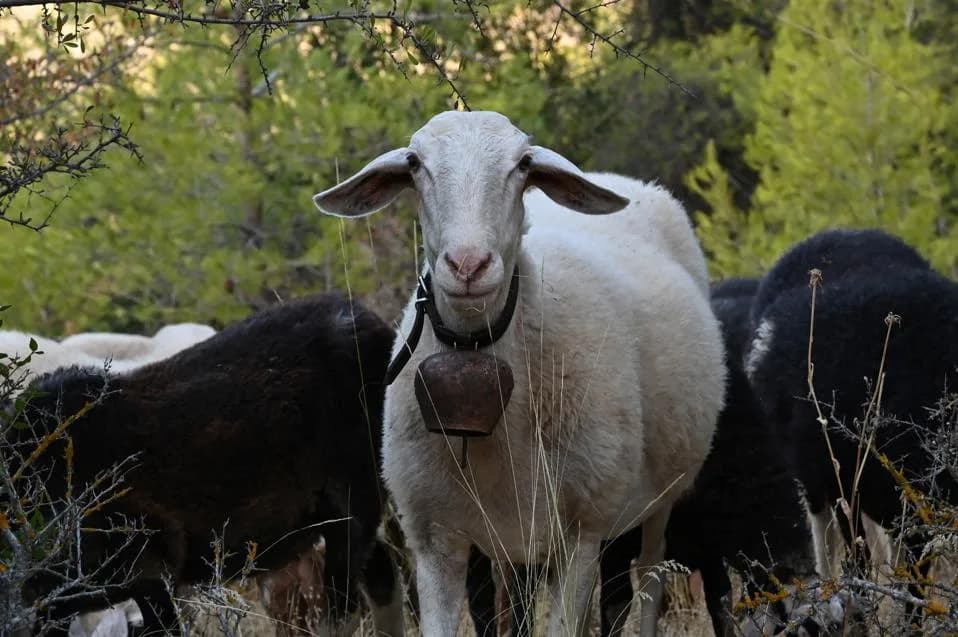
Healthy sheep graze in Mandra, Greece, on September 18, 2025. After more than 260,000 sheep and goats were culled, authorities call for tightened biosecurity measures to avoid a total ban on the movement of sheep and goats across the country, which results in increased prices of meat, milk, and the famous feta cheese. (Photo by Nicolas Koutsokostas/NurPhoto via Getty Images)NurPhoto via Getty Images
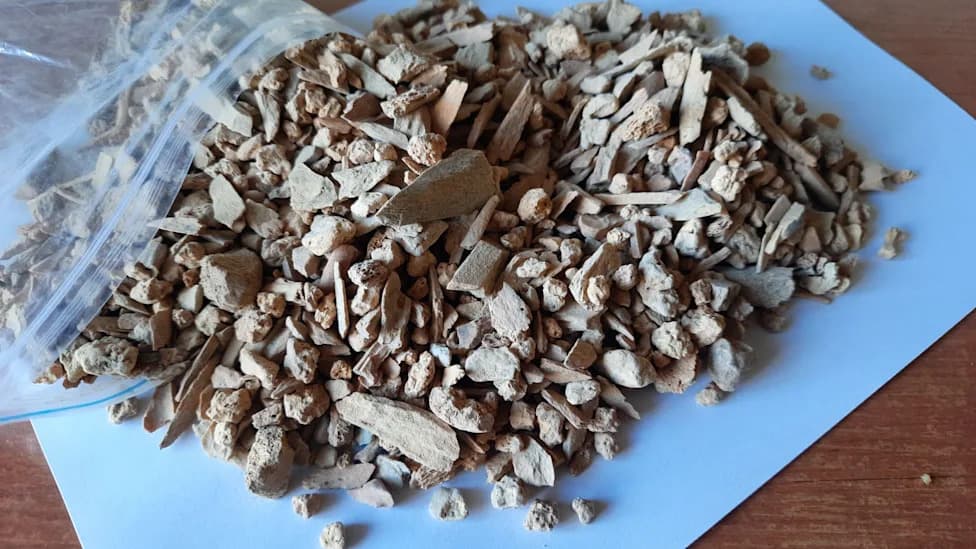
Researchers have discovered ancient sheeppox DNA in medieval parchment — including three folios of the York Gospels — revealing a surprising biological record preserved in books. Using a non‑destructive eraser‑sampling method called eZooMS, teams retrieved collagen and trace DNA from parchment shavings and, nearly a decade after initial sampling, re‑analysed stored libraries to detect viral sequences.
Calfskin Manuscripts and a Sheep Virus
The finding is striking because many positive folios — including the York Gospels — are made from calfskin, and sheeppox is not known to naturally infect cattle. The study screened 754 Eurasian samples and reconstructed 22 ancient sheeppox genomes. Of the detections, 17 came from medieval parchment produced between the early 8th and 14th centuries across Britain, the Upper Rhine, Austria and France.
Most positive folios carried sheep DNA alongside viral reads, consistent with contamination from sheep‑derived collagen or glue used in manuscript production. However, one Canterbury folio (TCCL02) yielded roughly 400 sheeppox reads without accompanying sheep DNA, suggesting a genuine infection of the hide used to make that parchment.

UNSPECIFIED - CIRCA 2002: The prophet Ezra's intention of drafting the New Bible, miniature from the Amiatinus Code, 8th Century. (Photo by DeAgostini/Getty Images)
Deep Time: Bronze Age Origins
Two Bronze Age sheep teeth from Kazakhstan and Russia produced the oldest poxvirus genomes yet recovered, dated to about 1875–1645 BCE and 1336–1130 BCE. These genomes push the origin of a sheep‑specific capripoxvirus back to roughly 5,000 years ago — coinciding with the rise of intensive wool production and long‑distance flock movements on the Eurasian steppe.
Genomic analysis shows that many adaptations to the sheep host were already established thousands of years ago. Nine genes inactive in modern sheeppox were disrupted in a ~3,700‑year‑old Kazakh genome, implying that host adaptation stabilized relatively early and that the sheeppox genome has been unusually conserved since.
A Lost Medieval Lineage and Modern Outbreaks
The medieval European viruses recovered belong to a lineage that is sister to all modern strains and appears to have gone extinct. Global modern diversity of sheeppox coalesces to about 330 years ago. Why the medieval lineage vanished — whether displaced by later strains or eliminated by local control measures — remains unresolved because genomes from the intervening centuries are missing.

Greek farmers drive their tractors in front of the Greek Parliament to protest over delayed payment of subsidies, rising production costs, and the crisis in livestock farming due to the extensive spread of sheeppox in Athens, Greece, on February 13, 2026. (Photo by Nicolas Koutsokostas/NurPhoto via Getty Images)
Importantly for today, the strain spreading across the Balkans in 2025–2026 belongs to a modern A1 clade. Between July 2025 and February 2026, five countries reported 1,759 outbreaks (Greece 1,549; Bulgaria 183; Romania 21; North Macedonia and Serbia three each). Greece culled more than 417,000 animals by December 2025; compensation ranged roughly €132–€220 per animal.
Tools Exist — Implementation Doesn’t
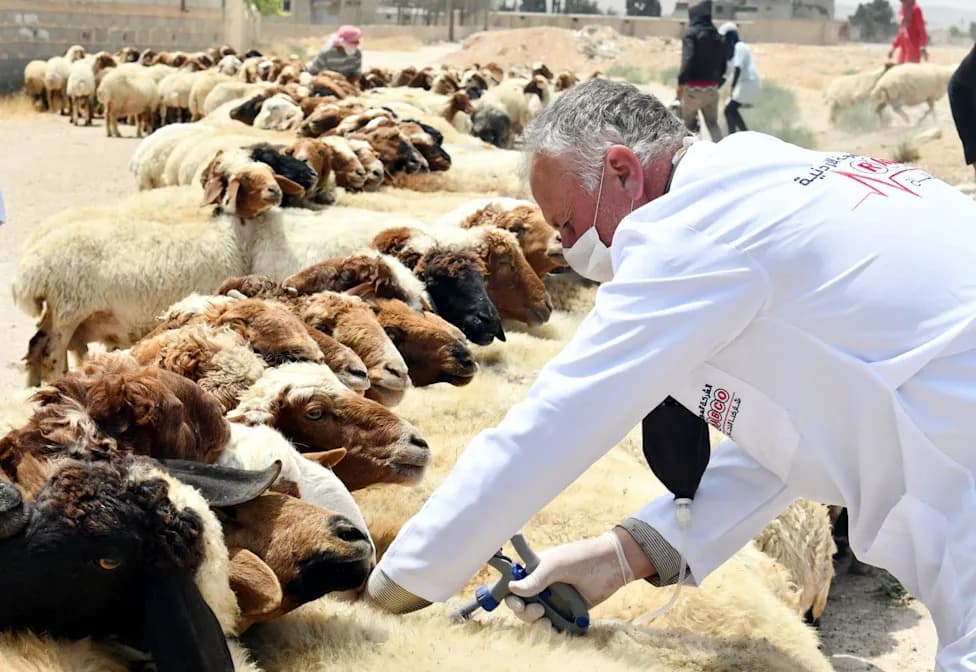
The European Food Safety Authority concluded in February 2026 that live attenuated sheeppox vaccines provide 80–100% protection and modelling suggested vaccination could accelerate eradication when combined with movement controls. Yet political decisions, concerns about vaccine safety and detection (unlicensed vaccines can obscure infection status), and uneven on‑the‑ground biosecurity have hindered mass vaccination campaigns.
Historical records underscore the same point. Eighteenth‑ and nineteenth‑century burial rules and documented attempts to hide pockmarks on hides show that animal movement and contaminated skins long drove transmission — problems that vaccines alone cannot solve without enforcement and farmer compliance.
Bottom line: Genomics and archives together show sheeppox is an ancient, stable pathogen preserved even in books; modern control is feasible, but social, logistical and policy barriers remain the primary obstacles to stopping outbreaks.
Help us improve.