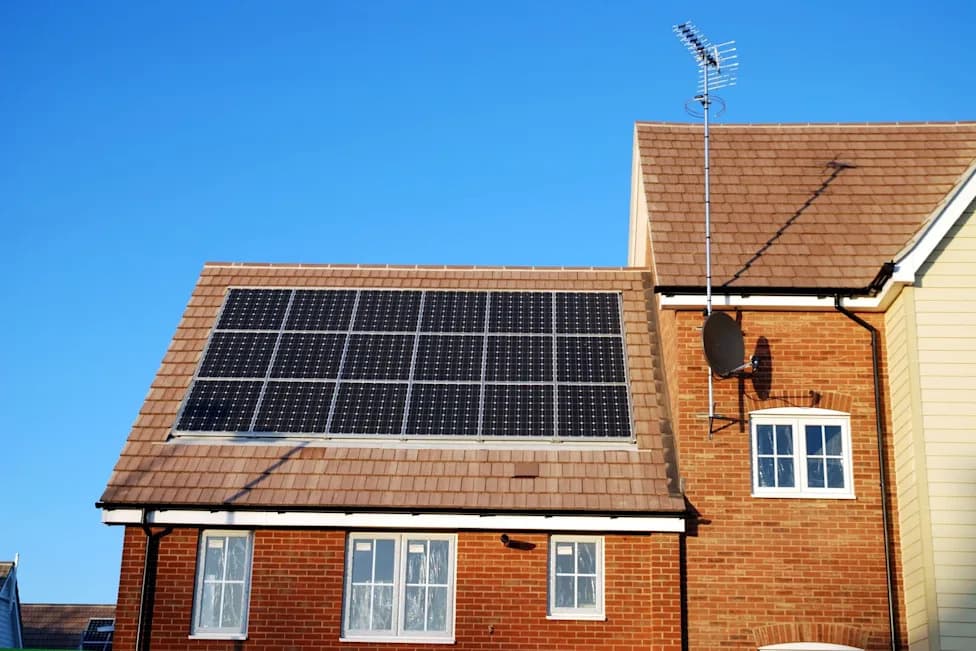
A 2024 modelling study suggests that widespread rooftop solar during London’s 2018 heat event could have modestly lowered outdoor temperatures across the city and reduced heat-related mortality. While these results are modelled rather than observed, they add to evidence that rooftop arrays can provide both energy and cooling benefits under certain conditions.
Modeling Findings
The study, published in Nature Cities in 2024 and highlighted by Techy44, modelled Greater London during the three-month 2018 heat episode. Researchers estimated an average citywide outdoor temperature reduction of about 0.5°F under a scenario of broad rooftop solar coverage. In that scenario the authors modelled 786 heat-related deaths for the period and estimated roughly 96 deaths (about 12%) could have been avoided with extensive rooftop solar deployment. These figures reflect modeled scenarios rather than direct, observed reductions tied to existing installations.
How Solar Can Cool Buildings
The cooling effect is partly straightforward: mounted panels shade roof surfaces and create an air gap that helps dissipate heat, reducing the amount of heat transferred into the building. In laboratory tests at the University of California San Diego, researchers measured daytime ceiling temperatures about 5°F lower beneath solar panels than beneath an exposed roof, and found the roof absorbed roughly 38% less heat when panels were present.
“There are more efficient ways to passively cool buildings, such as reflective roof membranes,” said Jan Kleissl, an environmental engineering professor at UC San Diego—highlighting that solar is one cooling tool among several.
Solar Output, Cooling Demand, and Resilience
Solar generation often peaks during the middle of the day—exactly when demand for air conditioning rises. Ember estimated that, in a June 2026 heat wave, a typical U.K. home with rooftop solar produced enough electricity to run a whole-home air-conditioning system for roughly five hours per day. That alignment can lower power bills, reduce some indoor heat gain, and supply cleaner electricity during peak demand.
Cool Roofs and Trade-Offs
The London modelling found that very reflective "cool" roofs would have produced a larger modeled temperature drop than rooftop solar in that scenario. That does not negate solar's benefits, but it does show rooftop solar is not a one-size-fits-all solution for urban heat; the optimal measure depends on local climate, building stock and policy goals.
Costs, Incentives and Practical Considerations
Practical factors that affect the value of rooftop solar include roof age and condition, nearby shade, panel layout, warranties, whether systems are owned or leased, and decisions about adding battery storage. Storage can improve resilience during outages and increase the household value of solar. Online comparison tools and regional solar maps (for example, platforms like EnergySage) can help homeowners estimate system size, costs, available incentives and potential savings.
Separately, Eurostat reported that renewables accounted for 45.5% of electricity generation in the European Union in Q1 2026, up from 42.7% in Q1 2025—context that underscores the broader growth of low-carbon generation in Europe.
Bottom line: The Nature Cities modelling suggests rooftop solar could provide modest local cooling and public-health benefits in heat waves, but cooling effectiveness varies by roof type and other measures (such as cool roofs) may sometimes deliver larger temperature reductions. Policymakers and homeowners should weigh solar’s combined energy, cooling and resilience benefits alongside alternative or complementary retrofit options.